
Anti-Gliadin IgA in Stool (GI-MAP): What a High Fecal Result Means
Other names: Anti-Gliadin IgA Stool, Anti-Gliadin IgA in Stool, Fecal Anti-Gliadin IgA, Anti-Gliadin sIgA, Anti-Gliadin Secretory IgA, Gliadin sIgA, Fecal Anti-Gliadin, Anti-Gliadin IgA GI-MAP, GI-MAP Anti-Gliadin, Anti-Gliadin IgA High in Stool, Stool Gliadin Antibody, Fecal Gliadin sIgA, Anti-Gliadin Stool Test, Secretory Anti-Gliadin IgA
 Optimal Result:
0 - 175 U/L.
Optimal Result:
0 - 175 U/L.

A high anti-gliadin IgA on a GI-MAP stool test means your gut immune system has recognized gluten. It does not diagnose celiac disease, and many people with an elevated result don't have celiac. Instead, this marker is read together with the rest of your GI-MAP panel to judge whether gluten may be contributing to gut inflammation. It also doesn't reliably track with the blood test of the same name.
This is the stool test. Looking for the blood (serum) anti-gliadin IgA used in celiac evaluation? See the serum anti-gliadin IgA page. The two share a name but measure different things.
At a glance
- What it is: secretory IgA (sIgA) against gliadin, measured in stool — a local gut immune response, not a blood level.
- Where it comes from: the GI-MAP stool panel (Diagnostic Solutions).
- A high result suggests: your gut is mounting an immune reaction to gluten.
- What it is not: a validated test for celiac disease.
- If celiac is the question: use the serum panel (tTG-IgA, total IgA, ± DGP) and biopsy where indicated.
Why does GI-MAP include anti-gliadin IgA?
Most people don't order this test — they receive a GI-MAP report and wonder why the marker is there. GI-MAP measures it because some functional and integrative practitioners use it as one clue to whether the gut immune system is reacting to gluten. It's meant to add context alongside the rest of the stool panel, not to diagnose celiac disease. Conventional gastroenterologists instead rely on blood antibody tests (tTG-IgA, DGP) and biopsy when evaluating celiac disease.
How practitioners actually use this marker
Most clinicians don't act on this marker alone — they read it as one line in the panel and ask a set of questions:
- Are your symptoms consistent with gluten sensitivity?
- Is your total secretory IgA normal (or low enough to distort the result)?
- Is zonulin elevated (suggesting increased intestinal permeability)?
- Is calprotectin elevated (suggesting active inflammation)?
- Does the microbiome picture suggest dysbiosis or inflammation?
- Have celiac blood tests already been done?
The interpretation comes from the pattern across those answers, not from this one number.
What GI-MAP anti-gliadin sIgA actually measures
Your gut lining secretes IgA antibodies (secretory IgA, or sIgA) as a first line of defense at mucosal surfaces. Anti-gliadin sIgA is the portion of that response aimed at gliadin, a gluten protein. Because it's produced and measured locally in the gut, it reflects something different from the blood test: circulating serum anti-gliadin IgA can be normal while the fecal sIgA is raised, and vice versa. The two aren't interchangeable, and one doesn't confirm the other.
My stool anti-gliadin IgA result is…
Within range
No significant gut immune reaction to gliadin was detected on this test. This doesn't rule out celiac disease — a normal stool result can't do that — so if you have symptoms or a reason to suspect celiac, serum testing is still the way to check.
Elevated (above the reference range)
Your gut is showing an immune response to gliadin. How far above the cutoff the result sits gives a rough sense of how strongly your gut is recognizing gluten — a slight elevation, a clear elevation, or a marked elevation. Crucially, these describe how far the result is above the laboratory cutoff, not disease severity: even a marked elevation isn't diagnostic of celiac disease, and a bigger number doesn't mean more intestinal damage.
About the number. GI-MAP reports this against its own reference range (your report shows the cutoff). A raw value only means something relative to that cutoff, so read your result against your report — not against other labs.
Should I stop eating gluten because this is high?
Not necessarily — and the order matters. If celiac disease hasn't been ruled out yet, don't remove gluten first: celiac blood tests and biopsy need gluten in your diet to be accurate, and going gluten-free early can hide the diagnosis. If celiac disease has already been properly excluded, then discussing a gluten-elimination trial with your clinician can be reasonable, using your symptoms and the rest of the panel to judge whether it helps.
Read it against the rest of your GI-MAP panel
This is the most useful way to read the marker — next to the panel lines it's meant to be interpreted with:
| Anti-gliadin sIgA | Secretory IgA | Zonulin | What the pattern suggests |
|---|---|---|---|
| High | Normal | Normal | Isolated gluten immune recognition |
| High | High | High | Gluten reactivity plus active intestinal immune activation |
| High | Low | Normal | Interpret cautiously — low total sIgA can distort the result |
| Normal | Low | High | Doesn't exclude gluten involvement — low sIgA may be masking it |
See Secretory IgA, Fecal Zonulin, and Beta-Glucuronidase for the neighboring markers.
Is a high stool anti-gliadin IgA celiac disease?
No — not on its own, and not reliably. It can be raised in people without celiac disease, and it can miss celiac disease in people who have it. The relationship between the stool result and your actual celiac status is best read against the blood tests:
| Your stool anti-gliadin sIgA | Blood celiac tests (tTG-IgA) | What it suggests | Sensible next step |
|---|---|---|---|
| Elevated | Not done | Gut reactivity to gluten; celiac not assessed | Serum panel if you have symptoms or risk factors |
| Elevated | Negative | Possible non-celiac gluten reactivity; celiac unlikely | Discuss a gluten trial; recheck if symptoms persist |
| Elevated | Positive | The blood test is the one that matters — pursue celiac work-up | Gastroenterology referral, usually biopsy |
| Within range | Any | Little gut sIgA reaction to gliadin — doesn't rule out celiac | Serum testing if celiac is still suspected |
If celiac disease is genuinely the question, go straight to the serum panel — see tTG IgA, Deamidated Gliadin Peptide (DGP) IgA, and the serum anti-gliadin IgA page.
Reading it against your symptoms
The result means the most next to how you actually feel:
| Stool anti-gliadin sIgA | Your symptoms | Interpretation |
|---|---|---|
| Elevated | Significant gluten-related symptoms | Supports gut reactivity to gluten |
| Elevated | No symptoms | Clinical significance uncertain |
| Within range | Strong symptoms | Doesn't exclude a gluten-related problem — consider serum testing |
What else can raise it
A high fecal anti-gliadin sIgA isn't automatically about gluten alone. On the GI-MAP it's read alongside the rest of the panel, and several things can contribute to or accompany a raised result:
| Contributor | Why it matters |
|---|---|
| Recent gluten exposure | Ongoing immune stimulation |
| Dysbiosis (imbalanced microbiome) | Can increase mucosal immune activation |
| Intestinal infection | Temporary immune activation |
| Inflammatory bowel disease | Increased gut immune response |
| Increased intestinal permeability | Greater antigen exposure to the immune system |
This is why it's interpreted with the panel's inflammation and microbiome markers rather than on its own.
When can I set this result aside?
A raised anti-gliadin sIgA carries the least weight when the rest of the picture is reassuring — for example when you have no symptoms, your celiac blood tests are normal, the rest of your GI-MAP panel is unremarkable, or it's a single mild elevation that hasn't been repeated. On its own, in that context, it rarely changes management. It matters more when it lines up with symptoms and other panel findings.
Check your total secretory IgA first
Just as a low total IgA makes the blood celiac tests unreliable, a low total secretory IgA can blunt every fecal antibody on the panel — including anti-gliadin sIgA — so a "normal" anti-gliadin sIgA may simply reflect low overall sIgA production rather than an absence of gluten reactivity. GI-MAP reports total secretory IgA; read your anti-gliadin sIgA in that context. See Secretory IgA.
How reliable is this test?
Fecal anti-gliadin sIgA is used mainly in functional and integrative medicine. The evidence base is still evolving, and it isn't part of the major celiac disease guidelines, which rely on serum antibodies and biopsy. Most research on gluten-related disorders uses blood antibody testing rather than fecal anti-gliadin IgA, so the evidence supporting stool testing specifically is more limited. That doesn't make it meaningless — it can add context about gut-level gluten reactivity when read alongside the rest of the GI-MAP panel — but it's best treated as one contextual clue, not a stand-alone diagnostic.
Common misconception. A high stool anti-gliadin IgA does not prove that gluten is damaging your intestine. It shows your gut immune system has recognized gluten — and recognition isn't the same as injury.
What to do next
- Decide what you're actually trying to answer. If it's "do I have celiac disease?", this test can't answer it — arrange serum testing while still eating gluten.
- Read it with the rest of your GI-MAP panel — inflammation, microbiome, and total secretory IgA — and your symptoms, not on its own.
- Check your total secretory IgA so a low value isn't hiding the result.
- Discuss next steps with your clinician, keeping the gluten-timing caution above in mind.
Tracking it over time
If you and your clinician act on a raised result, improvement is usually judged across several things together — not this number alone:
- symptoms improving
- anti-gliadin sIgA declining on repeat testing
- total secretory IgA normalizing
- other GI-MAP inflammation and microbiome markers improving
That panel-wide view is how GI-MAP is meant to be tracked over time.
Common interpretation mistakes
- Treating a high stool result as a celiac diagnosis. It isn't one — celiac is diagnosed on serum tests and biopsy.
- Assuming the stool and blood tests agree. They measure different things and often don't match.
- Reading it alone. It's meant to be interpreted with the rest of the GI-MAP panel and your total secretory IgA.
- Going strictly gluten-free before celiac testing. That makes serum tests and biopsy unreliable — if celiac is still a question, test first.
The bottom line
A high stool anti-gliadin IgA tells you that your intestinal immune system has reacted to gluten. It does not tell you whether gluten is causing symptoms, intestinal damage, or celiac disease. That answer comes from combining this marker with your symptoms, the rest of your GI-MAP panel, and — when appropriate — standard celiac blood testing.
FAQ about Anti-gliadin IgA
-
What does a high anti-gliadin IgA in stool mean?
It means your gut lining is producing a secretory IgA (sIgA) response to gliadin, a gluten protein — in other words, a local immune reaction to gluten in the intestine. In functional-medicine practice this is read as gut-level gluten reactivity. It is not, by itself, a diagnosis of celiac disease. -
Is a high stool anti-gliadin IgA the same as celiac disease?
No. Fecal anti-gliadin sIgA isn't a validated celiac test — it can be raised without celiac disease and can be normal in people who have it. Celiac disease is diagnosed with blood tests (tTG-IgA, total IgA, sometimes DGP) and, where needed, an intestinal biopsy. If celiac is your concern, use the serum route. -
What's the difference between the stool and blood anti-gliadin IgA tests?
They share a name but measure different things. The stool test measures secretory IgA made locally in the gut; the blood test measures circulating antibodies used in celiac evaluation. The two don't reliably track together — one can be high while the other is normal — so a result from one doesn't confirm the other. -
My stool anti-gliadin IgA is high but my blood celiac tests were negative. What does that mean?
This is a common combination. It suggests a gut-level immune reaction to gluten without the specific serology of celiac disease — often interpreted as possible non-celiac gluten reactivity. Celiac disease is unlikely if the blood tests were done properly while you were eating gluten, but persistent symptoms are worth discussing with a clinician. -
Should I go gluten-free based on a high stool anti-gliadin IgA?
Discuss it with your clinician rather than deciding on this test alone. One important caution: if formal celiac testing is still on the table, don't start a strict gluten-free diet first — celiac blood tests and biopsy need gluten in your diet to be accurate, and going gluten-free early can hide the diagnosis. -
What is secretory IgA (sIgA)?
Secretory IgA is the main antibody your body uses at mucosal surfaces, including the gut lining, as a first line of immune defense. Anti-gliadin sIgA is the part of that response directed at gliadin. Because it's measured locally in stool, it reflects gut immune activity rather than what's circulating in your blood. -
Can low total secretory IgA affect this result?
Yes. If your total secretory IgA is low, every fecal antibody on the panel — including anti-gliadin sIgA — can read low, so a "normal" result might reflect low overall sIgA rather than a true absence of gluten reactivity. GI-MAP reports total secretory IgA, and your anti-gliadin sIgA should be read in that context. -
What is the GI-MAP test?
GI-MAP (Diagnostic Solutions Laboratory) is a stool test that uses DNA analysis to assess gut microbes and also reports several immune and digestive markers, including anti-gliadin secretory IgA. It's used mainly in functional and integrative medicine to evaluate gut health, and its markers are interpreted together rather than one at a time.
Lab Results Explained and Tracked
What does it mean if your Anti-gliadin IgA result is too high?
A high anti-gliadin IgA on your GI-MAP stool test means your gut immune system has reacted to gluten. It does not diagnose celiac disease — many people with an elevated result don't have celiac — and it doesn't reliably match the blood test of the same name.
What it means depends on the rest of your panel and your symptoms. It carries more weight when it lines up with gluten-related symptoms, a raised zonulin or calprotectin, or signs of dysbiosis, and much less weight when you feel well and the rest of the panel is unremarkable. Check your total secretory IgA alongside it, since a high reading is read in that context.
If celiac disease is your actual concern, that's answered by serum testing (tTG-IgA, total IgA, ± DGP) and biopsy — and don't start a gluten-free diet before that testing is done, because it can hide the diagnosis.
Related Health Conditions

All Your Lab Results.
One Simple Dashboard.
Import, Track, and Share Your Lab Results Easily
Import, Track, and Share Your Lab Results
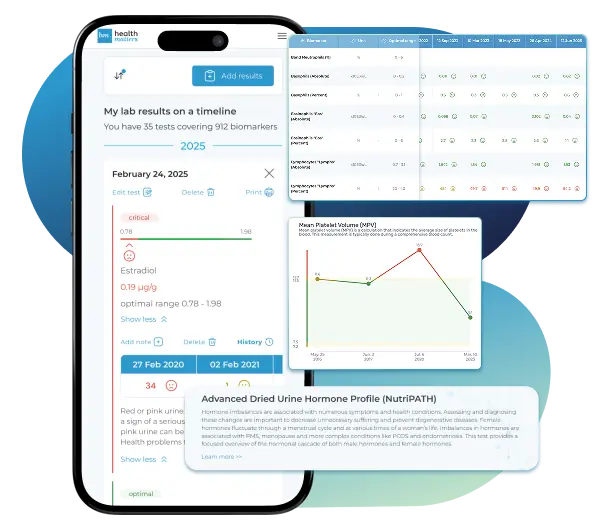
Import lab results from multiple providers, track changes over time, customize your reference ranges, and get clear explanations for each result. Everything is stored securely, exportable in one organized file, and shareable with your doctor—or anyone you choose.
Cancel or upgrade anytime
What does it mean if your Anti-gliadin IgA result is too low?
A low or undetectable anti-gliadin IgA on a GI-MAP stool test is a normal, reassuring finding — it means no meaningful gut immune reaction to gliadin was picked up.
One caveat worth checking: if your total secretory IgA is also low, this result can read low simply because your gut is producing little sIgA overall, rather than because there's no gluten reactivity — so read it alongside your total secretory IgA. A low result also doesn't rule out celiac disease; if you have symptoms or a reason to suspect it, that's assessed with serum testing, not this stool marker.
Related Biomarkers
Article Review & Sources
All our content is backed by peer-reviewed studies, academic research, and trusted medical sources. We're committed to accuracy and transparency — see our editorial policy for details.
Laboratories
Bring All Your Lab Results Together — In One Place
We accept reports from any lab, so you can easily collect and organize all your health information in one secure spot.











Pricing Table
Gather Your Lab History — and Finally Make Sense of It
Finally, Your Lab Results Organized and Clear

Personal plans

$79/ year
Advanced Plan
Access your lab reports, explanations, and tracking tools.
- Import lab results from any provider
- Track all results with visual tools
- Customize your reference ranges
- Export your full lab history anytime
- Share results securely with anyone
- Receive 5 reports entered for you
- Cancel or upgrade anytime
$250/ once
Unlimited Account
Pay once, access everything—no monthly fees, no limits.
- Import lab results from any provider
- Track all results with visual tools
- Customize your reference ranges
- Export your full lab history anytime
- Share results securely with anyone
- Receive 10 reports entered for you
- No subscriptions. No extra fees.
$45/ month
Pro Monthly
Designed for professionals managing their clients' lab reports
- Import lab results from any provider
- Track lab results for multiple clients
- Customize reference ranges per client
- Export lab histories and reports
- Begin with first report entered by us
- Cancel or upgrade anytime
About membership
What's included in a Healthmatters membership
 Import Lab Results from Any Source
 See Your Health Timeline
 Understand What Your Results Mean

 Visualize Your Results

 Data Entry Service for Your Reports
 Securely Share With Anyone You Trust
Let Your Lab Results Tell the Full Story
Once your results are in one place, see the bigger picture — track trends over time, compare data side by side, export your full history, and share securely with anyone you trust.




Bring all your results together to compare, track progress, export your history, and share securely.
What Healthmatters Members Are Saying

I have been using Healthmatters.io since 2021. I travel all over the world and use different doctors and health facilities. This site has allowed me to consolidate all my various test results over 14 years in one place. And every doctor that I show this to has been impressed. Because with any health professional I talk to, I can pull up historical results in seconds. It is invaluable. Even going back to the same doctor, they usually do not have the historical results from their facility in a graph format. That has been very helpful.
Anthony
Unlimited Plan Member since 2021
What fantastic service and great, easy-to-follow layouts! I love your website; it makes it so helpful to see patterns in my health data. It's truly a pleasure to use. I only wish the NHS was as organized and quick as Healthmatters.io. You've set a new standard for health tracking!
Karin
Advanced Plan Member since 2020
As a PRO member and medical practitioner, Healthmatters.io has been an invaluable tool for tracking my clients' data. The layout is intuitive, making it easy to monitor trends and spot patterns over time. The ability to customize reports and charts helps me present information clearly to my clients, improving communication and outcomes. It's streamlined my workflow, saving me time and providing insights at a glance. Highly recommended for any practitioner looking for a comprehensive and user-friendly solution to track patient labs!
Paul
Healthmatters Pro Member since 2024

We implement proven measures to keep your data safe.
At HealthMatters, we're committed to maintaining the security and confidentiality of your personal information. We've put industry-leading security standards in place to help protect against the loss, misuse, or alteration of the information under our control. We use procedural, physical, and electronic security methods designed to prevent unauthorized people from getting access to this information. Our internal code of conduct adds additional privacy protection. All data is backed up multiple times a day and encrypted using SSL certificates. See our Privacy Policy for more details.