
Transferrin Saturation (Iron Saturation, TSAT): What High and Low Results Mean
Other names: Transferrin saturation, iron saturation, TSAT, percent saturation, Iron, % Sat., Iron % Saturation
 Optimal Result:
15 - 55 %.
Optimal Result:
15 - 55 %.

QUICK ANSWER
Transferrin saturation is the percentage of your body's iron-transport protein (transferrin) that is currently loaded with iron. It answers: "Of all the transferrin available to carry iron, how much is actually carrying iron right now?"
| Result | What it means |
|---|---|
| Low transferrin saturation (below ~15–20%) | Less iron than expected is bound to transferrin — most commonly iron deficiency |
| Normal transferrin saturation (~20–50%) | Expected proportion of transferrin is iron-loaded |
| High transferrin saturation (above ~45–50%) | More iron than expected is bound to transferrin — most commonly iron overload; evaluate for hemochromatosis |
Common questions at a glance:
| Question | Short answer |
|---|---|
| Is iron saturation the same as transferrin saturation? | Yes — iron saturation, transferrin saturation, TSAT, percent saturation, and iron percent saturation are all the same measurement |
| What does high iron saturation mean? | More transferrin is iron-loaded than expected — most commonly iron overload or hemochromatosis |
| What does low iron saturation mean? | Less transferrin is iron-loaded than expected — most commonly iron deficiency anemia |
| Is iron saturation the same as serum iron? | No — serum iron is the absolute amount of iron; transferrin saturation is the percentage of transferrin that is iron-loaded |
| What is a normal transferrin saturation? | Approximately 20–50%; check your lab's stated range |
| What is TSAT? | TSAT = Transferrin Saturation — a common abbreviation used on lab reports and in medical records |
THE COMPLETE TERMINOLOGY DECODER — ALL THESE TERMS MEAN THE SAME THING
Transferrin saturation appears under a large number of different names on blood test reports. All of the following refer to the same measurement:
| Term on your report | Same as transferrin saturation? |
|---|---|
| Iron Saturation | Yes — the most common patient-facing term |
| Transferrin Saturation | Yes — the standard clinical term |
| TSAT | Yes — common abbreviation in medical records |
| Percent Transferrin Saturation | Yes |
| Iron Percent Saturation | Yes |
| Percent Iron Saturation | Yes |
| % Saturation | Yes — the shortest form; appears on some CBC-adjacent panels |
| Iron % Saturation | Yes |
| Transferrin % Saturation | Yes |
| Iron Sat | Yes |
| Iron Sat % | Yes |
| TRF SAT | Yes — LabCorp abbreviation |
| TRFN SAT | Yes — variant abbreviation |
| TFN SATN | Yes — variant abbreviation |
| T SAT / Trans Sat / Trans % Sat | Yes — abbreviated forms |
| Calc Iron Sat / Calc % Iron Sat | Yes — indicates the value was calculated from serum iron and TIBC rather than measured directly |
| PCT Saturation / PCT Sat (Calc) | Yes |
| Fe Sat / Fe Saturation / F Saturation | Yes — Fe is the chemical symbol for iron |
| S TRF SAT | Yes — "S" prefix indicates serum |
| Iron Satn / Iron Satn MFR Serpl | Yes |
| Saturation (Calc) | Yes — indicates calculated value |
| Transferrin Saturation Index | Yes |
| Iron Saturation Index | Yes |
| Haematinics Saturation | Yes — haematinics = iron-related blood markers in UK/Australian lab terminology |
| TS / T-Sat | Yes |
HOW TRANSFERRIN SATURATION IS CALCULATED
Transferrin saturation is not measured directly — it is calculated from two other iron panel values:
TSAT (%) = (Serum Iron ÷ Total Iron Binding Capacity) × 100
| Component | What it measures | Normal range |
|---|---|---|
| Serum Iron | The total amount of iron circulating in the blood | ~60–170 µg/dL (varies by lab) |
| TIBC (Total Iron Binding Capacity) | The maximum amount of iron transferrin could carry if fully loaded | ~250–370 µg/dL (varies by lab) |
| Transferrin Saturation | Serum Iron ÷ TIBC × 100 = the percentage of transferrin that is iron-loaded | ~20–50% |
Example calculation:
- Serum iron: 85 µg/dL
- TIBC: 300 µg/dL
- TSAT = (85 ÷ 300) × 100 = 28.3% — normal
Why "calculated"? Some lab reports show "Calc Iron Sat" or "Saturation (Calc)" — this means the transferrin saturation value was computed from the serum iron and TIBC values rather than measured through a separate assay. This is the standard approach and does not indicate a less reliable result.
IS IRON SATURATION THE SAME AS SERUM IRON?
No — these are related but different measurements that answer different questions:
| Measurement | What it measures | What it tells you |
|---|---|---|
| Serum Iron | The absolute amount of iron in the blood (µg/dL) | How much iron is currently circulating |
| Transferrin Saturation (TSAT) | The percentage of transferrin that is iron-loaded (%) | How efficiently iron is being transported relative to available capacity |
| TIBC | The maximum iron-carrying capacity of transferrin (µg/dL) | How much capacity exists to carry more iron |
| Ferritin | The amount of iron stored in tissues (ng/mL or µg/L) | How much iron is stored long-term |
Why TSAT matters more than serum iron alone: Serum iron fluctuates significantly throughout the day (morning values are higher than evening values), with meals, and with acute illness. Transferrin saturation is more stable and more clinically meaningful because it compares the iron to the available transport capacity — a serum iron of 150 µg/dL with a TIBC of 250 µg/dL (TSAT = 60%) is more concerning than the same serum iron with a TIBC of 400 µg/dL (TSAT = 37.5%).
TRANSFERRIN SATURATION VS FERRITIN — KEY DIFFERENCES
These two markers are both part of the iron panel but answer fundamentally different questions and behave differently in clinical conditions:
| Feature | Transferrin Saturation (TSAT) | Ferritin |
|---|---|---|
| What it measures | % of transferrin currently carrying iron — reflects circulating iron supply | Iron stored in tissues (liver, bone marrow, macrophages) — reflects long-term iron reserves |
| Normal range | ~20–50% | ~12–150 ng/mL (women), ~12–300 ng/mL (men) — varies widely by lab |
| In iron deficiency | Falls early — one of the first markers to drop | Falls — but may still be low-normal while TSAT is already low |
| In iron overload | Rises — often the earliest marker to become abnormal in hemochromatosis | Rises later than TSAT in hemochromatosis; may be normal in early disease |
| Affected by inflammation? | No — TSAT is not an acute-phase reactant | Yes — ferritin rises in infection, inflammation, and liver disease even when iron stores are normal |
| Affected by meals or supplements? | Yes — serum iron (and therefore TSAT) rises after iron-rich meals or supplements | No — ferritin reflects long-term storage and does not change acutely with diet |
| Best for detecting | Acute iron status and transport efficiency; early hemochromatosis | Long-term iron stores; severity of iron overload in established hemochromatosis |
| Which to trust when they conflict | If TSAT is normal but ferritin is high — suspect inflammation, not iron overload | If ferritin is low but TSAT is borderline — iron deficiency is more likely |
Which marker is more reliable? They are complementary rather than competing. In iron deficiency, ferritin is the more specific single marker because it reflects true depletion of stores. In hemochromatosis screening, TSAT is the more sensitive early marker because it rises before significant iron accumulates in tissues. Using both together gives the most complete picture of iron status.
YOUR TRANSFERRIN SATURATION VALUE — WHAT DOES YOUR NUMBER MEAN?
| TSAT value | Interpretation |
|---|---|
| Below 10% | Severely low — significant iron deficiency; evaluate for cause and treatment |
| 10–15% | Very low — likely iron deficiency; clinical evaluation warranted |
| 15–20% | Low to borderline — possible iron deficiency; interpret with ferritin and serum iron |
| 20–45% | Normal range for most labs |
| 45% | At or near upper limit of normal for most labs |
| 47–50% | Borderline high — requires clinical context; may be within range on some lab scales |
| 51–59% | Mildly to moderately elevated — clinically meaningful; hemochromatosis evaluation indicated if unexplained |
| 60–70% | Significantly elevated — evaluate for iron overload; hemochromatosis workup recommended |
| Above 70% | Markedly elevated — strongly associated with iron overload; urgent hemochromatosis evaluation |
What do specific values mean?
- Iron saturation 47–50% — borderline high; significance depends on ferritin, symptoms, and lab reference range; some labs flag above 45%, others above 50%
- Iron saturation 51–55% — mildly elevated; combined evaluation with ferritin is essential; hemochromatosis testing typically warranted if no other cause
- Iron saturation 56–59% — moderately elevated; hemochromatosis workup indicated; check ferritin and consider HFE gene testing
- Iron saturation 60%+ — significantly elevated; strongly associated with iron overload; full hemochromatosis evaluation recommended
MOST COMMON TRANSFERRIN SATURATION RESULTS
| TSAT result | Typical interpretation |
|---|---|
| Below 10% | Significantly low — evaluate for severe iron deficiency or malabsorption |
| 10–15% | Low — likely iron deficiency; check ferritin and CBC |
| 15–20% | Borderline low — possible iron deficiency; interpret with ferritin |
| 20% | Lower end of normal range |
| 25–35% | Typical mid-normal result in a healthy adult |
| 40–44% | Upper-normal range |
| 45% | At or near upper limit of normal for most labs |
| 50% | Borderline elevated — recheck fasting; evaluate with ferritin |
| 55% | Mildly elevated — hemochromatosis evaluation indicated if persistent |
| 60% | Moderately elevated — evaluate for iron overload; HFE gene testing |
| 70% | Significantly elevated — strongly associated with iron overload |
| Above 75% | Markedly elevated — iron overload very likely; prompt clinical evaluation |
Always compare your result to your lab's stated reference range. Different labs use slightly different cutoffs — some report normal as 15–50%, others 20–45% or 20–55%. The flag on your report is the most reliable guide for your specific lab's threshold.
WHAT DOES HIGH TRANSFERRIN SATURATION MEAN?
High transferrin saturation (TSAT above approximately 45–50%) means that a greater proportion of transferrin is iron-loaded than expected. This most commonly indicates either excess iron in the blood or reduced transferrin carrying capacity.
Common causes of high transferrin saturation:
| Cause | Notes |
|---|---|
| Hereditary hemochromatosis | The most important cause to evaluate — an inherited condition (most commonly HFE gene mutations C282Y and H63D) causing progressive iron overload; TSAT is typically the earliest abnormal iron panel finding, often elevated before ferritin rises significantly |
| Acute liver disease | Liver releases stored iron into the blood; hepatitis and cirrhosis can cause elevated TSAT |
| Hemolytic anemia | Destruction of red blood cells releases iron, transiently elevating TSAT |
| Ineffective erythropoiesis | Thalassemia, sideroblastic anemia — iron is not being incorporated into red blood cells effectively |
| Excessive iron supplementation or transfusion | Too much supplemental iron or multiple blood transfusions can saturate transferrin |
| Alcoholic liver disease | Alcohol impairs iron regulation and increases intestinal iron absorption |
| Viral hepatitis | Acute viral hepatitis can transiently elevate TSAT |
Why hemochromatosis matters: Hereditary hemochromatosis is one of the most common genetic disorders, affecting approximately 1 in 200–300 people of Northern European descent. A persistently elevated TSAT above 45–50%, particularly combined with elevated ferritin, is the key screening finding. The HFE gene test (genetic testing for C282Y and H63D mutations) is the confirmatory next step. If untreated, hemochromatosis causes iron to accumulate in the liver, heart, pancreas, joints, and skin, leading to cirrhosis, diabetes, heart disease, and arthropathy. When identified early, treatment with therapeutic phlebotomy (regular blood removal) is effective and prevents organ damage.
CAN TRANSFERRIN SATURATION BE HIGH TEMPORARILY?
Yes — a single elevated TSAT reading does not always reflect a persistent iron overload condition. Several common situations can temporarily raise TSAT significantly:
| Cause of temporary elevation | How much TSAT can rise | Notes |
|---|---|---|
| Iron supplements taken before the test | Can push TSAT to 60–80%+ within hours | The most common cause of a spuriously high single reading; fasting and withholding supplements before testing is essential |
| Iron-rich meal the evening before | Can elevate TSAT by 10–20 percentage points | Red meat, shellfish (particularly oysters), and iron-fortified foods all raise serum iron transiently |
| Testing in the afternoon vs morning | TSAT is naturally 20–30% higher in the morning | Serum iron follows a diurnal rhythm — morning values are highest; afternoon draws may underestimate or overestimate iron status differently |
| Recent blood transfusion | Transfused red blood cells release iron as they break down, transiently elevating TSAT | Iron studies should generally be deferred 1–2 weeks after transfusion |
| Acute viral hepatitis | Liver cell damage releases stored iron into circulation | TSAT can be markedly elevated in acute hepatitis; will normalize as hepatitis resolves |
| Alcohol consumption | Alcohol acutely raises serum iron and TSAT | Heavy drinking before testing can produce a falsely elevated reading |
The practical implication: A single elevated TSAT is a reason to repeat the test fasting the next morning — not a reason to immediately conclude hemochromatosis. Most hemochromatosis evaluation guidelines recommend confirming an elevated TSAT on at least one or two fasting morning draws before proceeding to HFE gene testing.
When does TSAT suggest hemochromatosis?
| TSAT level | Hemochromatosis likelihood |
|---|---|
| Below 45% | Less likely — hemochromatosis not typically suspected from TSAT alone |
| 45–55% | Possible early iron overload — confirm with repeat fasting test; consider HFE gene testing if persistent |
| 55–70% | Stronger suspicion — HFE gene testing recommended; evaluate ferritin and liver function |
| Above 70% | Highly suggestive of iron overload — hemochromatosis or other iron overload condition; hepatology evaluation warranted |
| Any persistent elevation + family history of hemochromatosis | HFE gene testing recommended regardless of ferritin level |
HIGH TSAT WITH NORMAL FERRITIN — WHAT DOES IT MEAN?
A common and confusing pattern is an elevated TSAT (above 45–50%) with a normal ferritin level.
| TSAT | Ferritin | Most likely interpretation |
|---|---|---|
| High (>45%) | Normal | Possible early hemochromatosis — iron is elevated in transport but not yet extensively stored; HFE gene testing recommended |
| High (>45%) | High | Established iron overload — hemochromatosis, liver disease, or excessive iron administration |
| High (>45%) | Very high | Advanced iron overload — organ iron deposition may be occurring |
| Normal | High | Inflammation or chronic disease (ferritin is an acute-phase reactant); evaluate for infection or inflammatory condition |
In early hemochromatosis, TSAT rises before ferritin because iron first accumulates in the transport phase before tissue storage increases. A high TSAT with normal ferritin should not be dismissed — it warrants HFE gene testing and clinical follow-up.
TSAT AND FERRITIN TOGETHER — WHAT YOUR COMBINATION MEANS
Most patients receive both TSAT and ferritin on the same iron panel report. Interpreting them together is more clinically meaningful than either value alone.
| TSAT | Ferritin | Most likely interpretation |
|---|---|---|
| High (>45%) | Normal | Possible early hemochromatosis — iron elevated in transport before tissue storage rises; HFE gene testing recommended |
| High (>45%) | High | Iron overload likely — established hemochromatosis, liver disease, or excessive iron administration |
| High (>45%) | Very high (>500–1000 ng/mL) | Advanced iron overload — significant tissue iron deposition; hepatology evaluation warranted |
| High (>45%) | Low | Unusual pattern — recent high iron intake before testing, or lab variation; repeat fasting morning test |
| Normal | High | Elevated ferritin from inflammation, fatty liver, metabolic syndrome, or alcohol — ferritin is an acute-phase reactant; TSAT being normal argues against iron overload |
| Normal | Normal | Normal iron status |
| Low (<15–20%) | Low | Iron deficiency anemia — classic pattern; both markers depleted |
| Low (<15–20%) | Normal-High | Anemia of chronic disease — iron present but sequestered; not available for transport |
| Low (<15–20%) | Very high | Marked inflammatory state or hemolytic process — iron trapped in storage despite depleted transport |
Why this combination matters more than either alone: Ferritin rises in inflammation even when iron stores are normal (it is an acute-phase reactant), which can falsely suggest iron overload. TSAT is not affected by inflammation in the same way. When TSAT is normal but ferritin is high, iron overload is less likely than when both are elevated together.
WHAT DOES LOW TRANSFERRIN SATURATION MEAN?
Low transferrin saturation (below approximately 15–20%) means less iron than expected is bound to transferrin. This most commonly reflects insufficient iron to fill available transferrin capacity.
Common causes of low transferrin saturation:
| Cause | Notes |
|---|---|
| Iron deficiency anemia | The most common cause — insufficient dietary iron, malabsorption, chronic blood loss; TSAT typically below 15%; ferritin is also low |
| Anemia of chronic disease | Iron is sequestered in storage and not available for transport — TSAT is low to borderline-low (10–20%), but ferritin is normal or elevated |
| Malnutrition | Insufficient iron intake |
| Malabsorption | Celiac disease, inflammatory bowel disease, gastric bypass — impaired intestinal iron absorption |
| Chronic blood loss | Gastrointestinal bleeding (ulcers, polyps, cancer), heavy menstruation — sustained iron loss exceeding intake |
| Pregnancy | Increased iron demand with normal or borderline intake — third trimester TSAT often falls |
What level of iron saturation is dangerously low? A TSAT below 10% combined with low ferritin and symptomatic anemia (fatigue, pallor, dyspnea) indicates significant iron deficiency requiring evaluation and treatment. A TSAT below 10% on its own, without other clinical context, warrants repeat testing and evaluation for cause.
SYMPTOMS ASSOCIATED WITH HIGH AND LOW TRANSFERRIN SATURATION
Transferrin saturation is a laboratory finding, not a symptom — but it often reflects an underlying iron status problem that produces characteristic symptoms. These symptoms should be interpreted alongside the laboratory values, not in isolation.
Symptoms associated with high TSAT / iron overload:
| Symptom | Notes |
|---|---|
| Fatigue and weakness | The most common and often earliest symptom of iron overload |
| Joint pain | Particularly knuckles of the index and middle fingers — characteristic of hemochromatosis |
| Abdominal pain | Right upper quadrant — related to liver iron deposition |
| Loss of libido / hypogonadism | Iron deposition in the pituitary gland impairs hormone regulation |
| Elevated liver enzymes (ALT, AST) | Reflects hepatic iron accumulation |
| Skin bronzing or darkening | Bronze-colored skin from iron and melanin deposition — a late sign |
| Diabetes | Iron deposition in the pancreas impairs insulin production — a later complication |
| Heart palpitations or arrhythmia | Cardiac iron deposition — a serious late complication |
Symptoms associated with low TSAT / iron deficiency:
| Symptom | Notes |
|---|---|
| Fatigue and weakness | Most common symptom of iron deficiency |
| Dizziness or lightheadedness | From reduced oxygen-carrying capacity of blood |
| Shortness of breath on exertion | Anemia reduces oxygen delivery to tissues |
| Restless leg syndrome | Iron deficiency is a common and underrecognized cause |
| Hair loss or thinning | Iron is required for hair follicle function |
| Brittle nails or spoon-shaped nails (koilonychia) | Classic sign of significant iron deficiency |
| Pallor (pale skin, gums, or nail beds) | From reduced hemoglobin |
| Pica (craving for non-food substances) | Ice, clay, or starch cravings — unusual but characteristic of iron deficiency |
THE FULL IRON PANEL — HOW ALL FOUR MARKERS WORK TOGETHER
Transferrin saturation is most meaningful when interpreted alongside the other iron panel markers. The four markers answer different questions:
| Marker | What it measures | High means | Low means |
|---|---|---|---|
| Serum Iron | Iron in blood right now | Excess circulating iron or liver release | Iron deficiency or anemia of chronic disease |
| TIBC | Maximum iron-carrying capacity | Iron deficiency (more carriers available when iron is scarce) | Iron overload or liver disease (fewer carriers made) |
| Transferrin Saturation (TSAT) | % of iron-carrying capacity in use | Iron overload — carriers are full | Iron deficiency — carriers are mostly empty |
| Ferritin | Stored iron in tissues | Iron overload or inflammation | Iron deficiency (most specific marker) |
Iron panel pattern interpretation matrix:
| Serum Iron | TIBC | TSAT | Ferritin | Most likely interpretation |
|---|---|---|---|---|
| Low | High | Low (<15%) | Low | Iron deficiency anemia — classic pattern |
| Low-Normal | Normal | Low-Normal (10–20%) | Normal-High | Anemia of chronic disease — iron trapped in stores |
| High | Low | High (>45%) | High | Iron overload / hemochromatosis — classic pattern |
| High | Low | High (>45%) | Normal | Early hemochromatosis — iron elevated before storage rises |
| High | Normal | High (>45%) | Variable | Hemolysis or liver disease — evaluate acute causes |
| Normal | High | Low (<15%) | Normal | Iron depletion without overt anemia — early iron deficiency or malabsorption |
| Low | Low | Variable | High | Anemia of chronic disease or inflammatory state |
MOST COMMON CLINICAL SCENARIOS
| Pattern | Most likely interpretation | Recommended next step |
|---|---|---|
| TSAT high (>45%) + ferritin high + elevated liver enzymes | Hemochromatosis or liver disease | HFE gene testing; hepatology evaluation |
| TSAT high (>45%) + ferritin normal | Possible early hemochromatosis | HFE gene testing; repeat iron panel in 3–6 months |
| TSAT high + currently taking iron supplements | Supplement-related iron elevation — very common | Discuss with doctor; may need to pause iron supplementation before retesting |
| TSAT low (<15%) + ferritin low + microcytic anemia | Iron deficiency anemia — classic presentation | Identify and treat cause; iron supplementation |
| TSAT low + ferritin normal-to-high + chronic illness | Anemia of chronic disease | Evaluate and treat underlying chronic condition |
| TSAT mildly elevated (45–55%) + asymptomatic + no family history | Borderline finding — may be normal variant or early iron elevation | Repeat fasting iron panel; consider HFE gene testing if persistent |
| TSAT very high (>70%) + ferritin very high | Significant iron overload | Prompt hemochromatosis evaluation; hepatology referral |
| TSAT normal + ferritin very high | Elevated ferritin from inflammation — ferritin is an acute-phase reactant | Evaluate for infection, inflammation, or metabolic syndrome |
| TSAT high + high serum iron + low TIBC | Classic iron overload pattern | Full hemochromatosis workup |
| TSAT low + high TIBC + low serum iron | Classic iron deficiency pattern | Dietary assessment; treat underlying cause; iron supplementation |
TRANSFERRIN SATURATION IN MEN VS WOMEN
Iron status and the clinical significance of transferrin saturation differ between men and women due to hormonal effects, menstruation, and different baseline iron stores.
| Group | Key considerations |
|---|---|
| Premenopausal women | Iron deficiency is significantly more common due to menstrual blood loss; a TSAT of 15–25% with low ferritin is frequently seen and often requires iron supplementation; a TSAT above 45% in a premenopausal woman is less likely to indicate hemochromatosis than the same value in a man, but still warrants evaluation if persistent |
| Postmenopausal women | Iron deficiency from menstruation ends; iron overload becomes more clinically relevant; post-menopausal women with elevated TSAT should be evaluated for hemochromatosis in the same way as men |
| Men | No regular iron losses from menstruation; iron accumulates more readily; a persistent TSAT above 45% in a man is more likely to reflect genuine iron overload and should prompt HFE gene testing and ferritin evaluation |
| Pregnant women | Iron requirements increase significantly in the second and third trimester; TSAT often falls during pregnancy due to expanded plasma volume and increased demand; low TSAT in pregnancy is common and does not always indicate pathological iron deficiency |
Some labs use slightly different reference ranges for men and women; always compare your result against your lab's sex-specific range if provided.
WHEN SHOULD I FOLLOW UP?
| Finding | Concern level | Recommended action |
|---|---|---|
| TSAT mildly elevated (45–55%) single reading, no symptoms | Low-Moderate | Repeat fasting morning iron panel; review supplements |
| TSAT persistently above 45% across two readings | Moderate | HFE gene testing; discuss with doctor |
| TSAT above 60% with elevated ferritin | Moderate-High | Hemochromatosis evaluation; hepatology referral |
| TSAT above 70% | High | Prompt clinical evaluation for iron overload |
| TSAT below 15% with symptoms (fatigue, pallor) | Moderate | Iron deficiency evaluation; check ferritin and CBC |
| TSAT below 10% | Moderate-High | Evaluate cause; CBC; ferritin; treat iron deficiency |
| TSAT elevated + family history of hemochromatosis | Moderate-High | HFE gene testing; liver function tests |
TREND INTERPRETATION
For HealthMatters users tracking transferrin saturation over time:
| Trend pattern | Clinical meaning |
|---|---|
| 60% → 55% → 45% across sequential tests | Improvement — declining toward normal range; may reflect treatment or natural variation |
| 45% → 55% → 65% over months | Progressive iron accumulation — evaluate for hemochromatosis; HFE gene testing if not already done |
| 12% → 15% → 22% during iron supplementation | Recovery from iron deficiency — TSAT rising toward normal as iron stores replete |
| 55% → 35% after stopping iron supplements | Supplement-driven elevation confirmed — TSAT normalizes when supplementation ceases; hemochromatosis less likely |
| 30% → 55% → 30% (fluctuating around one high reading) | Possible non-fasting sample causing spurious elevation — repeat with fasting morning draw to confirm |
| Persistently above 45% on three consecutive fasting tests | Consistent iron overload pattern — proceed with HFE gene testing and clinical evaluation |
| Below 15% across multiple tests despite supplementation | Evaluate for malabsorption — celiac disease, IBD, gastric bypass impair iron absorption despite adequate intake |
FAQ about Transferrin saturation (Iron Saturation)
-
Is iron saturation the same as transferrin saturation?
Yes — iron saturation and transferrin saturation are different names for the same measurement. Both express the percentage of transferrin (the body's iron-transport protein) that is currently bound to iron. On blood test reports this measurement also appears as TSAT, percent transferrin saturation, iron percent saturation, percent saturation, % saturation, TRF SAT, TRFN SAT, TFN SATN, trans sat, iron sat, calc iron sat, Fe sat, and several other abbreviations. Regardless of which term appears on your report, the clinical interpretation is the same. -
What does high transferrin saturation mean?
High transferrin saturation (above approximately 45–50%) means that a greater proportion of transferrin is loaded with iron than expected. The most clinically important cause to evaluate is hereditary hemochromatosis — an inherited condition causing progressive iron accumulation in organs including the liver, heart, and pancreas. Other causes include acute liver disease, hemolytic anemia, ineffective erythropoiesis (such as thalassemia), excessive iron supplementation, and alcoholic liver disease. Transferrin saturation is typically the earliest abnormal finding in hemochromatosis, often rising before ferritin becomes significantly elevated. A persistently elevated TSAT above 45–50% warrants HFE gene testing regardless of whether ferritin is normal or elevated. -
What does low transferrin saturation mean?
Low transferrin saturation (below approximately 15–20%) means that less iron than expected is bound to transferrin — transferrin carriers are mostly empty. The most common cause is iron deficiency anemia, where insufficient iron is available to load onto transferrin. Other causes include anemia of chronic disease (where iron is present but sequestered in storage and not available for transport), malabsorption conditions (celiac disease, IBD, gastric bypass), chronic blood loss, malnutrition, and pregnancy. The clinical significance depends on the ferritin level — a low TSAT with low ferritin strongly indicates iron deficiency, while a low TSAT with normal or elevated ferritin suggests anemia of chronic disease. -
What does "Calc Iron Sat" or "Saturation (Calc)" mean?
"Calc Iron Sat" and "Saturation (Calc)" mean the transferrin saturation value was calculated from the serum iron and TIBC values using the formula: TSAT (%) = (Serum Iron ÷ TIBC) × 100. This is the standard method for reporting transferrin saturation — it is not measured through a separate assay but derived from two other iron panel values. The "(Calc)" notation does not indicate a less reliable result; it simply indicates the calculation method. Most iron panel reports include this calculated value alongside the individual serum iron and TIBC measurements. -
What is the transferrin saturation formula?
Transferrin saturation is calculated as: TSAT (%) = (Serum Iron ÷ Total Iron Binding Capacity) × 100. For example, if serum iron is 100 µg/dL and TIBC is 300 µg/dL, TSAT = (100 ÷ 300) × 100 = 33.3%. If serum iron is 160 µg/dL and TIBC is 280 µg/dL, TSAT = (160 ÷ 280) × 100 = 57.1% — which would be elevated and warrant evaluation. The calculation requires both serum iron and TIBC values from the same blood draw. -
What does high iron saturation with normal ferritin mean?
A high transferrin saturation (above 45–50%) with a normal ferritin level is an important finding that should not be dismissed. In early hereditary hemochromatosis, transferrin saturation rises before ferritin becomes significantly elevated — iron is accumulating in the transport phase before tissue storage increases. This pattern is often the earliest detectable sign of hemochromatosis and should prompt HFE gene testing (genetic testing for C282Y and H63D mutations) even when ferritin is normal. Other causes of this pattern include acute iron ingestion and certain liver conditions. Repeat fasting iron panel testing is recommended to confirm persistence before proceeding with genetic testing. -
What is the difference between serum iron and iron saturation?
Serum iron is the absolute amount of iron circulating in the blood, measured in µg/dL or µmol/L. Iron saturation (transferrin saturation) is the percentage of the blood's iron-carrying protein (transferrin) that is currently loaded with iron. They measure different aspects of iron status. A serum iron of 150 µg/dL might be normal if TIBC is 350 µg/dL (TSAT = 43%) but elevated if TIBC is only 200 µg/dL (TSAT = 75%). Serum iron also fluctuates significantly throughout the day and with meals, while transferrin saturation is more stable and clinically informative. For most clinical decisions about iron overload or deficiency, transferrin saturation and ferritin are more useful than serum iron alone. -
What causes low iron saturation?
Low iron saturation most commonly reflects insufficient iron in the bloodstream relative to the available transferrin transport capacity. The leading cause is iron deficiency anemia — from inadequate dietary intake, poor absorption (celiac disease, gastric bypass), or chronic blood loss (gastrointestinal bleeding, heavy menstruation). Anemia of chronic disease causes a similar pattern but through a different mechanism: iron exists in the body but is sequestered in macrophages and unavailable for transport, lowering TSAT while ferritin remains normal or elevated. Other causes include pregnancy (increased demand), malnutrition, and inflammatory states that redirect iron away from circulation. -
What does it mean if my transferrin saturation is above 45–50% on a single test?
A single elevated TSAT reading above 45–50% is clinically meaningful but should be confirmed with a repeat test before proceeding to genetic testing. Iron levels and TSAT fluctuate with time of day (morning values are highest), recent meals (iron supplements and iron-rich meals can transiently elevate TSAT), and acute illness. For the most accurate result, transferrin saturation should be measured fasting in the morning. If a repeat fasting TSAT remains above 45%, HFE gene testing is generally recommended to evaluate for hereditary hemochromatosis. -
Can iron supplements increase transferrin saturation?
Yes — iron supplements taken in the hours before a blood test can temporarily raise serum iron substantially, which in turn raises the calculated TSAT. This is one of the most common causes of a single unexpectedly high TSAT reading. A person taking oral iron supplements may have a post-dose TSAT of 60–80% that would normalize to 25–35% on a fasting morning draw before the next supplement dose. This is why fasting morning testing is recommended when evaluating iron status, particularly when hemochromatosis is being considered. If you take iron supplements and received an elevated TSAT, discuss with your doctor whether to pause supplementation and repeat the test fasting before pursuing genetic testing.
Lab Results Explained and Tracked
What does it mean if your Transferrin saturation (Iron Saturation) result is too high?
Elevated transferrin saturation (TSAT above approximately 45–50%) means that more of the blood's iron-carrying protein — transferrin — is loaded with iron than expected. The most clinically important cause to evaluate is hereditary hemochromatosis, an inherited condition that affects approximately 1 in 200–300 people of Northern European descent and causes progressive iron accumulation in organs including the liver, heart, pancreas, and joints. Transferrin saturation is characteristically the earliest abnormal finding in hemochromatosis — it rises before ferritin becomes significantly elevated, making an elevated TSAT with normal ferritin a particularly important early signal rather than a reason for reassurance. Other causes of elevated TSAT include acute liver disease, hemolytic anemia, ineffective erythropoiesis (such as thalassemia or sideroblastic anemia), excessive iron supplementation or multiple blood transfusions, and alcoholic liver disease. For the most clinically reliable result, TSAT should be measured in a fasting morning blood draw, as values fluctuate with meals and time of day. A persistently elevated fasting TSAT above 45–50% on repeat testing warrants HFE gene testing (genetic analysis of C282Y and H63D mutations) regardless of the ferritin level.
Related Health Conditions
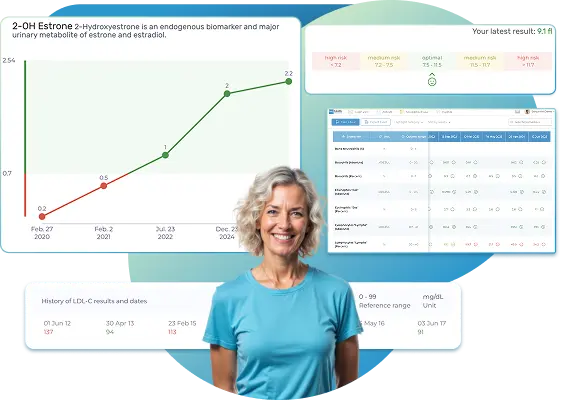
All Your Lab Results.
One Simple Dashboard.
Import, Track, and Share Your Lab Results Easily
Import, Track, and Share Your Lab Results
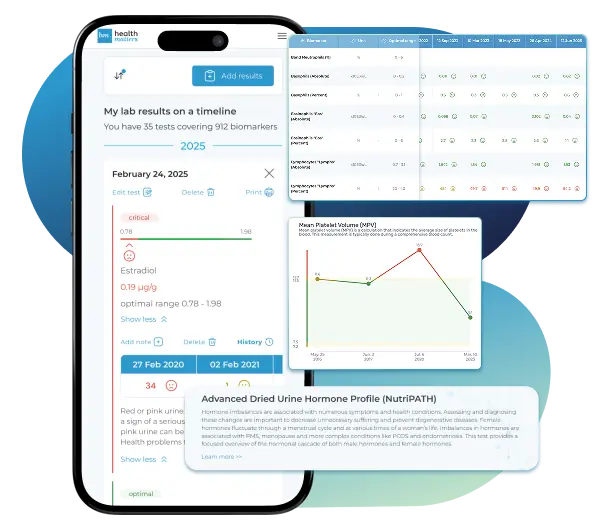
Import lab results from multiple providers, track changes over time, customize your reference ranges, and get clear explanations for each result. Everything is stored securely, exportable in one organized file, and shareable with your doctor—or anyone you choose.
Cancel or upgrade anytime
What does it mean if your Transferrin saturation (Iron Saturation) result is too low?
Low transferrin saturation (TSAT below approximately 15–20%) means that less iron than expected is bound to transferrin — the blood's iron-carrying proteins are mostly empty. The most common cause is iron deficiency anemia: when the body is iron-depleted, less iron is available to load onto transferrin, leaving a large proportion of the carrying capacity unoccupied. In iron deficiency, TSAT is typically below 15% and ferritin is also low — this combined pattern is the most specific laboratory finding for iron deficiency. Anemia of chronic disease produces a similar low TSAT pattern through a different mechanism: iron exists in the body but is sequestered in macrophages as part of the inflammatory response and becomes unavailable for transport, resulting in low TSAT with normal or elevated ferritin. Other causes of low TSAT include malabsorption conditions such as celiac disease and inflammatory bowel disease, chronic gastrointestinal or menstrual blood loss, malnutrition, and the increased iron demands of pregnancy. A TSAT below 10% combined with symptoms of anemia (fatigue, pallor, shortness of breath) and low ferritin indicates clinically significant iron deficiency requiring evaluation for underlying cause and treatment.
Related Biomarkers
Article Review & Sources
All our content is backed by peer-reviewed studies, academic research, and trusted medical sources. We're committed to accuracy and transparency — see our editorial policy for details.
Laboratories
Bring All Your Lab Results Together — In One Place
We accept reports from any lab, so you can easily collect and organize all your health information in one secure spot.











Pricing Table
Gather Your Lab History — and Finally Make Sense of It
Finally, Your Lab Results Organized and Clear

Personal plans

$79/ year
Advanced Plan
Access your lab reports, explanations, and tracking tools.
- Import lab results from any provider
- Track all results with visual tools
- Customize your reference ranges
- Export your full lab history anytime
- Share results securely with anyone
- Receive 5 reports entered for you
- Cancel or upgrade anytime
$250/ once
Unlimited Account
Pay once, access everything—no monthly fees, no limits.
- Import lab results from any provider
- Track all results with visual tools
- Customize your reference ranges
- Export your full lab history anytime
- Share results securely with anyone
- Receive 10 reports entered for you
- No subscriptions. No extra fees.
$45/ month
Pro Monthly
Designed for professionals managing their clients' lab reports
- Import lab results from any provider
- Track lab results for multiple clients
- Customize reference ranges per client
- Export lab histories and reports
- Begin with first report entered by us
- Cancel or upgrade anytime
About membership
What's included in a Healthmatters membership
 Import Lab Results from Any Source
 See Your Health Timeline
 Understand What Your Results Mean

 Visualize Your Results

 Data Entry Service for Your Reports
 Securely Share With Anyone You Trust
Let Your Lab Results Tell the Full Story
Once your results are in one place, see the bigger picture — track trends over time, compare data side by side, export your full history, and share securely with anyone you trust.




Bring all your results together to compare, track progress, export your history, and share securely.
What Healthmatters Members Are Saying

I have been using Healthmatters.io since 2021. I travel all over the world and use different doctors and health facilities. This site has allowed me to consolidate all my various test results over 14 years in one place. And every doctor that I show this to has been impressed. Because with any health professional I talk to, I can pull up historical results in seconds. It is invaluable. Even going back to the same doctor, they usually do not have the historical results from their facility in a graph format. That has been very helpful.
Anthony
Unlimited Plan Member since 2021
What fantastic service and great, easy-to-follow layouts! I love your website; it makes it so helpful to see patterns in my health data. It's truly a pleasure to use. I only wish the NHS was as organized and quick as Healthmatters.io. You've set a new standard for health tracking!
Karin
Advanced Plan Member since 2020
As a PRO member and medical practitioner, Healthmatters.io has been an invaluable tool for tracking my clients' data. The layout is intuitive, making it easy to monitor trends and spot patterns over time. The ability to customize reports and charts helps me present information clearly to my clients, improving communication and outcomes. It's streamlined my workflow, saving me time and providing insights at a glance. Highly recommended for any practitioner looking for a comprehensive and user-friendly solution to track patient labs!
Paul
Healthmatters Pro Member since 2024

We implement proven measures to keep your data safe.
At HealthMatters, we're committed to maintaining the security and confidentiality of your personal information. We've put industry-leading security standards in place to help protect against the loss, misuse, or alteration of the information under our control. We use procedural, physical, and electronic security methods designed to prevent unauthorized people from getting access to this information. Our internal code of conduct adds additional privacy protection. All data is backed up multiple times a day and encrypted using SSL certificates. See our Privacy Policy for more details.