
 Optimal Result:
101 - 187 mg/dL.
Optimal Result:
101 - 187 mg/dL.

Alpha-1 antitrypsin is a protein in the blood that protects the lungs from damage caused by activated enzymes.
Alpha-1 antitryps helps to inactivate several enzymes, the most important of which is elastase.
What is elastase?
Elastase is an enzyme produced by white blood cells called neutrophils and is part of the body's normal response to injury and inflammation. Elastase breaks down proteins so that they can be removed and recycled by the body. If its action is not regulated by Alpha-1 antitrypsin, elastase will also begin to break down and damage lung tissue.
Inherited genes that code for Alpha-1 antitrypsin:
Each individual inherits two copies of the gene that codes for Alpha-1 antitrypsin. It is called the protease inhibitor (SERPINA1) gene. This gene is co-dominant, which means that each SERPINA1 gene copy is responsible for producing half of the body's Alpha-1 antitrypsin. If there is a change or mutation in one or both of the gene copies, then less Alpha-1 antitrypsin and/or Alpha-1 antitrypsin with reduced function is produced.
Low Alpha-1 antitrypsin production:
When Alpha-1 antitrypsin production drops below 30% of normal, the affected person will experience a disorder called alpha-1 antitrypsin deficiency. People with this disorder are at a considerable risk of developing emphysema, a progressive lung disease, in early adulthood. If they smoke or are exposed to occupational dust or fumes, the lung damage tends to occur sooner and be more severe.
Certain types of dysfunctional Alpha-1 antitrypsin accumulate in the liver cells, where it is produced. As Alpha-1 antitrypsin builds up in these cells, it forms abnormal protein chains and begins to destroy the cells and damage the liver. About 10% of newborns with Alpha-1 antitrypsin deficiency have liver damage and are jaundiced. In severe cases, these infants may require a liver transplant to survive. Alpha-1 antitrypsin deficiency is currently the most common genetic cause of liver disease in the pediatric population.
Increased risk for chronic liver disease:
In adults with Alpha-1 antitrypsin deficiency, the risk of developing chronic liver disease, cirrhosis, and liver cancer (hepatocellular carcinoma) is increased. Few adults with Alpha-1 antitrypsin deficiency actually have signs or symptoms of liver disease, however. The amount and function of the Alpha-1 antitrypsin depends on the gene mutation that is inherited. While there are more than 120 different alleles in the SERPINA1 gene, only a few are common. Most people in the U.S., about 90%, have two copies of the normal "wild type" M gene (MM). The most common abnormal genes are labeled S and Z.
Lab Results Explained and Tracked
What does it mean if your Alpha-1-Antitrypsin, Serum result is too high?
Alpha-1-Antitrypsin is an acute phase reactant. This means that it will be elevated in acute and chronic inflammatory conditions, infections, and with some cancers. Increased levels of Alpha-1-Antitrypsin may also be seen with oral contraceptive use, pregnancy, and stress. These temporary or chronic Alpha-1-Antitrypsin increases may cause levels to appear normal in people with mild to moderate Alpha-1-Antitrypsin deficiency.

All Your Lab Results.
One Simple Dashboard.
Import, Track, and Share Your Lab Results Easily
Import, Track, and Share Your Lab Results
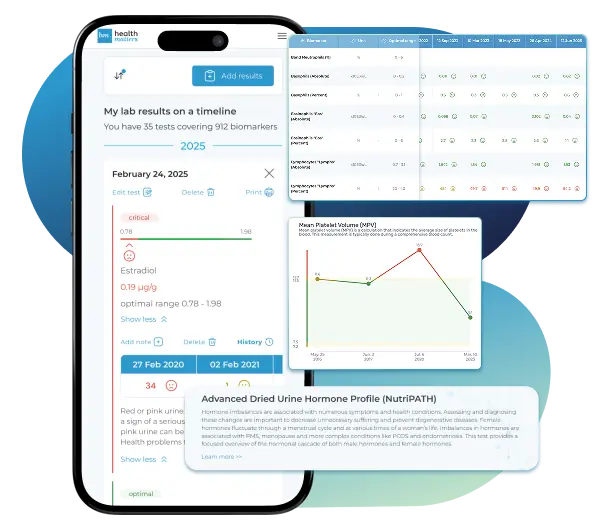
Import lab results from multiple providers, track changes over time, customize your reference ranges, and get clear explanations for each result. Everything is stored securely, exportable in one organized file, and shareable with your doctor—or anyone you choose.
Cancel or upgrade anytime
What does it mean if your Alpha-1-Antitrypsin, Serum result is too low?
If your results show a lower than normal amount of Alpha-1 antitrypsin, it probably means you have one or two mutated Alpha-1 antitrypsin genes. The lower the level, the more likely it is you have two mutated genes and Alpha-1 antitrypsin deficiency.
- Alpha-1 antitrypsin deficiency is caused by an inherited gene mutation.
- Infants may develop jaundice and liver damage.
- Cirrhosis can develop during childhood.
- Adults commonly develop emphysema, with shortness of breath, wheezing, and coughing, and some adults develop cirrhosis.
- Tests that measure the amount of the enzyme in the blood and that detect the gene mutations are used for diagnosis.
- People with emphysema take drugs to improve breathing and sometimes receive infusions of alpha-1 antitrypsin by vein.
- Some people need lung or liver transplants.
Less than 125 mg/dL:
If clinically indicated, patients with serum levels less than 125 mg/dL should be proteotyped in order to identify heterozygous individuals. Heterozygotes do not appear to be at increased risk for early emphysema.
Less than 70 mg/dL:
People with serum levels less than 70 mg/dL may have a homozygous deficiency and are at risk for early lung disease. Alpha-1-antitrypsin proteotyping should be done to confirm the presence of homozygous deficiency alleles.
What does homozygous and heterozygotes mean?
Alternative forms of a given gene are called alleles, and they can be dominant or recessive. When an individual has two of the same allele, whether dominant or recessive, they are homozygous. Heterozygous means having one each of two different alleles.
Low alpha-1-antitrypsin levels may result from liver disease, and alpha-1-antitrypsin proteotyping should be done to confirm deficiency disease.
Potential symptoms:
Symptoms may first appear during infancy, childhood, or adulthood. About 10 to 20% of affected people have symptoms during infancy. Affected infants develop yellowing of the skin and the whites of the eyes (jaundice) and an enlarged liver during the first week of life. Jaundice disappears at about age 2 to 4 months. However, about 20% of these infants later develop cirrhosis, and some die before reaching adulthood.
Adults commonly develop emphysema, with progressively increasing shortness of breath, difficulty breathing, coughing, and wheezing. Emphysema rarely develops before age 25. It develops earlier and is more severe in smokers than in nonsmokers. The severity of symptoms also varies depending on the form of the deficiency, other disorders people have, environmental exposure to lung irritants, and other factors. If people have never smoked, their symptoms tend to be moderate, and most have a normal life expectancy.
Even if they did not have liver problems during infancy, about 10% of adults develop cirrhosis, which may eventually lead to liver cancer.
People with panniculitis have painful, tender bumps or discolored patches on the lower abdomen, buttocks, and thighs. The bumps may feel hard to the touch.
Potential treatment:
Emphysema: People who smoke are advised to stop. Bronchodilators, drugs that relax the muscles around the small airways and thus widen the airways, such as albuterol may help ease breathing and relieve cough. Lung infections that develop are treated promptly.
Alpha-1 antitrypsin may be given by vein to replace the deficient enzyme. It is collected from a group of donors and screened for bloodborne disorders. Thus, it is expensive and is most beneficial to people who have only moderate symptoms due to emphysema and do not smoke. This treatment is thought to prevent further damage but does not reverse damage already done.
If people are younger than 60 and have severe symptoms, lung transplantation may be done. A few medical centers sometimes do transplantations in highly selected people as old as 70. A few medical centers also sometimes do lung volume reduction surgery.
Liver damage: Taking alpha-1 antitrypsin does not treat or prevent liver damage because liver damage is caused by production of an abnormal enzyme, not by enzyme deficiency. If the liver is severely damaged, liver transplantation may be done. The transplanted liver does not become damaged because the alpha-1 antitrypsin it produces is normal and thus does not accumulate in the liver.
Panniculitis: Doctors may give corticosteroids, antimalarial drugs, or certain antibiotics (tetracyclines) to relieve inflammation. But whether these drugs are effective is unclear.
Article Review & Sources
All our content is backed by peer-reviewed studies, academic research, and trusted medical sources. We're committed to accuracy and transparency — see our editorial policy for details.
Laboratories
Bring All Your Lab Results Together — In One Place
We accept reports from any lab, so you can easily collect and organize all your health information in one secure spot.











Pricing Table
Gather Your Lab History — and Finally Make Sense of It
Finally, Your Lab Results Organized and Clear

Personal plans

$79/ year
Advanced Plan
Access your lab reports, explanations, and tracking tools.
- Import lab results from any provider
- Track all results with visual tools
- Customize your reference ranges
- Export your full lab history anytime
- Share results securely with anyone
- Receive 5 reports entered for you
- Cancel or upgrade anytime
$250/ once
Unlimited Account
Pay once, access everything—no monthly fees, no limits.
- Import lab results from any provider
- Track all results with visual tools
- Customize your reference ranges
- Export your full lab history anytime
- Share results securely with anyone
- Receive 10 reports entered for you
- No subscriptions. No extra fees.
$45/ month
Pro Monthly
Designed for professionals managing their clients' lab reports
- Import lab results from any provider
- Track lab results for multiple clients
- Customize reference ranges per client
- Export lab histories and reports
- Begin with first report entered by us
- Cancel or upgrade anytime
About membership
What's included in a Healthmatters membership
 Import Lab Results from Any Source
 See Your Health Timeline
 Understand What Your Results Mean

 Visualize Your Results

 Data Entry Service for Your Reports
 Securely Share With Anyone You Trust
Let Your Lab Results Tell the Full Story
Once your results are in one place, see the bigger picture — track trends over time, compare data side by side, export your full history, and share securely with anyone you trust.




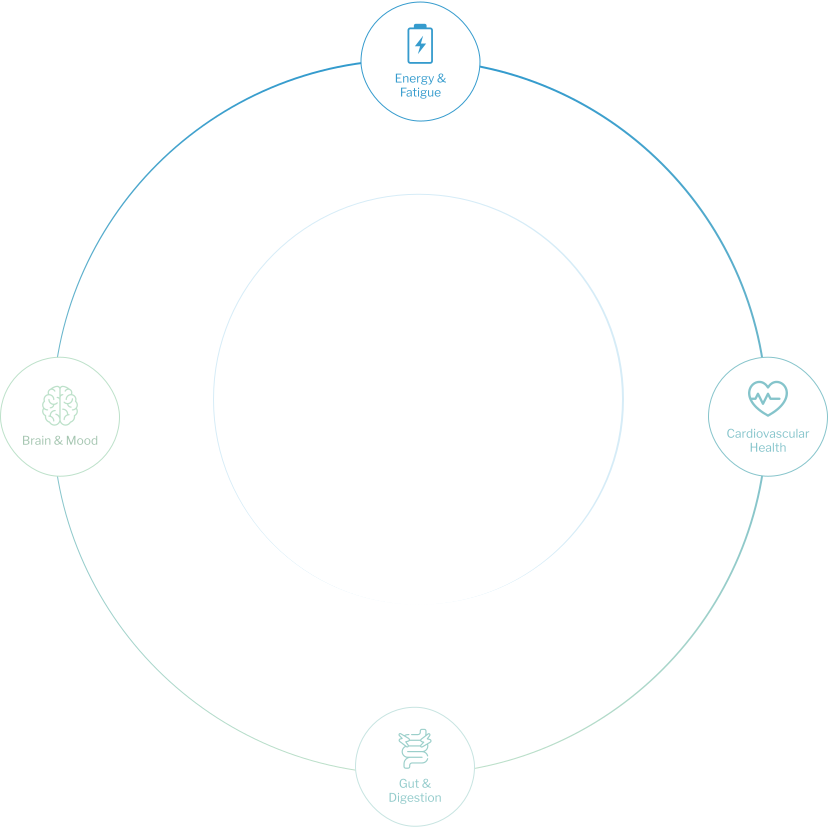
Bring all your results together to compare, track progress, export your history, and share securely.
What Healthmatters Members Are Saying

I have been using Healthmatters.io since 2021. I travel all over the world and use different doctors and health facilities. This site has allowed me to consolidate all my various test results over 14 years in one place. And every doctor that I show this to has been impressed. Because with any health professional I talk to, I can pull up historical results in seconds. It is invaluable. Even going back to the same doctor, they usually do not have the historical results from their facility in a graph format. That has been very helpful.
Anthony
Unlimited Plan Member since 2021
What fantastic service and great, easy-to-follow layouts! I love your website; it makes it so helpful to see patterns in my health data. It's truly a pleasure to use. I only wish the NHS was as organized and quick as Healthmatters.io. You've set a new standard for health tracking!
Karin
Advanced Plan Member since 2020
As a PRO member and medical practitioner, Healthmatters.io has been an invaluable tool for tracking my clients' data. The layout is intuitive, making it easy to monitor trends and spot patterns over time. The ability to customize reports and charts helps me present information clearly to my clients, improving communication and outcomes. It's streamlined my workflow, saving me time and providing insights at a glance. Highly recommended for any practitioner looking for a comprehensive and user-friendly solution to track patient labs!
Paul
Healthmatters Pro Member since 2024

We implement proven measures to keep your data safe.
At HealthMatters, we're committed to maintaining the security and confidentiality of your personal information. We've put industry-leading security standards in place to help protect against the loss, misuse, or alteration of the information under our control. We use procedural, physical, and electronic security methods designed to prevent unauthorized people from getting access to this information. Our internal code of conduct adds additional privacy protection. All data is backed up multiple times a day and encrypted using SSL certificates. See our Privacy Policy for more details.