
CD3-/CD16+CD56+ (Absolute)
Other names: NK Cells CD3-CD16+CD56+ABS, Absolute CD3-/CD16+/CD56+ Count
 Optimal Result:
70 - 760 cells/mcL.
Optimal Result:
70 - 760 cells/mcL.

The "CD3-/CD16+CD56+ (Absolute)" marker is a crucial measure for evaluating the absolute count of Natural Killer (NK) cells in your blood. NK cells are a vital type of lymphocyte, which is a category of white blood cells that play a key role in your body's first line of defense in its immune response. These cells are unique because they lack the CD3 marker, a characteristic typically found on T cells, and instead, are identified by the presence of CD16 and CD56 markers.
Understanding the absolute count of NK cells, rather than just their percentage among lymphocytes, provides a clearer picture of how equipped your immune system is to combat infections and potentially cancerous cells. NK cells are essentially the body’s natural surveillance system, capable of destroying cells that have become infected or have undergone malignant transformation, without the need for prior activation.
The clinical relevance of the NK cell count is significant. Variations in the number of NK cells can indicate a variety of health conditions. For instance, a decreased count of NK cells might leave an individual more susceptible to infections, autoimmune disorders, and certain types of cancer, pointing to a weakened immune system. On the other hand, elevated levels of NK cells could be observed in situations such as chronic fatigue syndrome, specific viral infections, or in response to certain cancer treatments, reflecting an activated immune response.
-----------------
T cells (marked by the CD3 surface protein) and Natural Killer (NK) cells are both crucial components of the body's immune system, but they differ significantly in their origins, functions, and mechanisms of action.
Origin and Development
- T Cells: These cells develop from precursor cells in the bone marrow but mature in the thymus (which is what the "T" stands for). The maturation process involves the selection of T cells that can recognize foreign antigens while being tolerant of the body’s own cells.
- NK Cells: NK cells also originate from precursor cells in the bone marrow but do not require maturation in the thymus. They are part of the innate immune system, which means they can respond to infected or malignant cells without prior sensitization to specific antigens.
Surface Markers
- T Cells: The presence of the CD3 molecule on their surface is a defining characteristic of T cells. This molecule is part of the T-cell receptor (TCR) complex and plays a crucial role in antigen recognition and signal transduction.
- NK Cells: NK cells are characterized by the absence of CD3 and the presence of other markers, such as CD16 and CD56. These markers are involved in recognizing stressed or altered cells and do not require antigen presentation to initiate an immune response.
Function and Mechanism of Action
- T Cells: They are primarily involved in the adaptive immune response, which is antigen-specific and includes memory capabilities. T cells can be further divided into several subtypes, including helper T cells (which assist other cells in the immune response), cytotoxic T cells (which kill virus-infected cells and tumor cells), and regulatory T cells (which modulate the immune response). Their activation requires the recognition of specific antigens presented by major histocompatibility complex (MHC) molecules on the surface of antigen-presenting cells.
- NK Cells: NK cells are part of the innate immune system and can kill virus-infected cells and tumor cells without prior sensitization to antigens. They are able to recognize stressed cells in the absence of antibodies and MHC, primarily through a mechanism that involves the balance of activating and inhibitory signals received through their surface receptors.
Role in Immune Response
- T Cells: They play a key role in specifically targeting and remembering pathogens, providing long-lasting immunity. This specificity and memory are crucial for vaccines' effectiveness and for fighting off repeated infections by the same pathogen.
- NK Cells: They provide a rapid response to infected cells and cancer cells, often acting before the adaptive immune system is fully mobilized. They are also involved in shaping the adaptive immune response through the secretion of cytokines.
While both T cells and NK cells are essential for the body’s defense against infections and cancer, they differ in their development, surface markers, functions, and roles in the immune system. T cells are central to the adaptive immune response, offering specificity and memory, while NK cells are key players in the innate immune response, providing a rapid and non-specific defense mechanism.
Lab Results Explained and Tracked

All Your Lab Results.
One Simple Dashboard.
Import, Track, and Share Your Lab Results Easily
Import, Track, and Share Your Lab Results
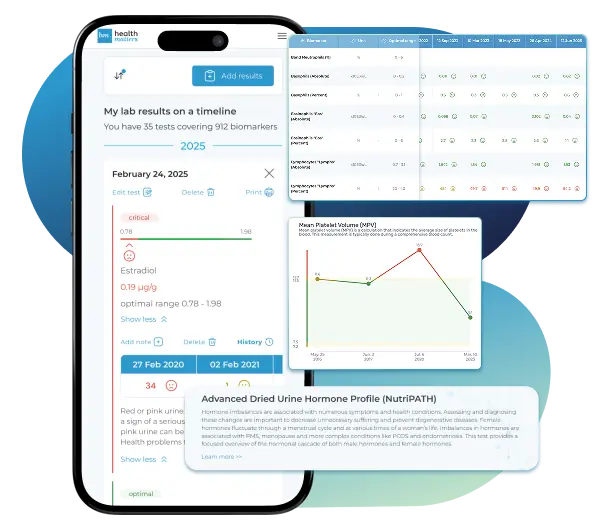
Import lab results from multiple providers, track changes over time, customize your reference ranges, and get clear explanations for each result. Everything is stored securely, exportable in one organized file, and shareable with your doctor—or anyone you choose.
Cancel or upgrade anytime
What does it mean if your CD3-/CD16+CD56+ (Absolute) result is too low?
What Does a Low CD3-/CD16+CD56+ (Absolute) Count Indicate?
A low CD3-/CD16+CD56+, Absolute count means there are fewer natural killer (NK) cells in your bloodstream than expected. These cells are part of the innate immune system and are responsible for rapidly targeting and destroying virus-infected cells, cancer cells, and other abnormal cells—without prior exposure or the need for antigen presentation.
Understanding the Marker
-
CD3-: Excludes T lymphocytes (which express CD3), helping isolate NK cells.
-
CD16+/CD56+: These are surface markers that identify natural killer (NK) cells.
-
Absolute count: Refers to the actual number of NK cells per microliter (μL) of blood.
Normal Range
-
Typical reference range: 90 to 600 cells/μL
-
Values may vary depending on the lab and patient age.
-
Possible Causes of Low CD3-/CD16+CD56+ (NK Cell) Counts
1. Primary Immunodeficiency Disorders
-
Genetic disorders such as NK cell deficiency, Severe Combined Immunodeficiency (SCID), or Common Variable Immunodeficiency (CVID) may cause chronically low or absent NK cells.
2. Viral Infections
-
Some chronic or severe viral infections, like HIV or hepatitis B/C, can suppress NK cell production or function.
3. Bone Marrow Suppression
-
Conditions like aplastic anemia, myelodysplastic syndromes, or bone marrow infiltration (e.g., by leukemia) can reduce NK cell output.
4. Chemotherapy or Immunosuppressive Therapy
-
These treatments often lower all types of white blood cells, including NK cells.
5. Chronic Stress or Cortisol Excess
-
Prolonged physiological stress and high cortisol levels (e.g., Cushing’s syndrome) have been associated with reduced NK cell activity and number.
6. Autoimmune or Inflammatory Conditions
-
Some autoimmune diseases (like systemic lupus erythematosus) may disrupt NK cell development or survival.
Potential Consequences of Low NK Cell Levels
-
Increased susceptibility to viral infections, especially herpesviruses like CMV, EBV, or HSV
-
Reduced tumor surveillance, which may theoretically increase long-term cancer risk
-
Delayed immune response during acute infection
-
Persistent or recurrent infections, particularly in individuals with other immune abnormalities
Symptoms
There are usually no symptoms directly caused by low NK cell counts, but patients may experience:
-
Frequent or severe viral infections
-
Recurrent fevers
-
Poor response to vaccines or slower recovery from infections
Next Steps if NK Cells Are Low
Your healthcare provider may:
-
Review recent illnesses, medications, and immune history
-
Order additional immune function tests (e.g., total lymphocyte subsets, immunoglobulin levels)
-
Investigate for underlying conditions like HIV, autoimmune disease, or bone marrow dysfunction
-
Monitor NK cell counts over time if part of a treatment or recovery process (e.g., after chemo or transplant)
Summary
A low CD3-/CD16+CD56+, Absolute count indicates reduced levels of natural killer (NK) cells, which play a vital role in innate immunity. Low levels can reflect immune suppression, bone marrow dysfunction, or genetic immune deficiency. While often asymptomatic, it may contribute to increased vulnerability to infections and impaired early immune responses. Evaluation should include broader immune system testing and a review of clinical context.
Article Review & Sources
All our content is backed by peer-reviewed studies, academic research, and trusted medical sources. We're committed to accuracy and transparency — see our editorial policy for details.
Laboratories
Bring All Your Lab Results Together — In One Place
We accept reports from any lab, so you can easily collect and organize all your health information in one secure spot.











Pricing Table
Gather Your Lab History — and Finally Make Sense of It
Finally, Your Lab Results Organized and Clear

Personal plans

$79/ year
Advanced Plan
Access your lab reports, explanations, and tracking tools.
- Import lab results from any provider
- Track all results with visual tools
- Customize your reference ranges
- Export your full lab history anytime
- Share results securely with anyone
- Receive 5 reports entered for you
- Cancel or upgrade anytime
$250/ once
Unlimited Account
Pay once, access everything—no monthly fees, no limits.
- Import lab results from any provider
- Track all results with visual tools
- Customize your reference ranges
- Export your full lab history anytime
- Share results securely with anyone
- Receive 10 reports entered for you
- No subscriptions. No extra fees.
$45/ month
Pro Monthly
Designed for professionals managing their clients' lab reports
- Import lab results from any provider
- Track lab results for multiple clients
- Customize reference ranges per client
- Export lab histories and reports
- Begin with first report entered by us
- Cancel or upgrade anytime
About membership
What's included in a Healthmatters membership
 Import Lab Results from Any Source
 See Your Health Timeline
 Understand What Your Results Mean

 Visualize Your Results

 Data Entry Service for Your Reports
 Securely Share With Anyone You Trust
Let Your Lab Results Tell the Full Story
Once your results are in one place, see the bigger picture — track trends over time, compare data side by side, export your full history, and share securely with anyone you trust.




Bring all your results together to compare, track progress, export your history, and share securely.
What Healthmatters Members Are Saying

I have been using Healthmatters.io since 2021. I travel all over the world and use different doctors and health facilities. This site has allowed me to consolidate all my various test results over 14 years in one place. And every doctor that I show this to has been impressed. Because with any health professional I talk to, I can pull up historical results in seconds. It is invaluable. Even going back to the same doctor, they usually do not have the historical results from their facility in a graph format. That has been very helpful.
Anthony
Unlimited Plan Member since 2021
What fantastic service and great, easy-to-follow layouts! I love your website; it makes it so helpful to see patterns in my health data. It's truly a pleasure to use. I only wish the NHS was as organized and quick as Healthmatters.io. You've set a new standard for health tracking!
Karin
Advanced Plan Member since 2020
As a PRO member and medical practitioner, Healthmatters.io has been an invaluable tool for tracking my clients' data. The layout is intuitive, making it easy to monitor trends and spot patterns over time. The ability to customize reports and charts helps me present information clearly to my clients, improving communication and outcomes. It's streamlined my workflow, saving me time and providing insights at a glance. Highly recommended for any practitioner looking for a comprehensive and user-friendly solution to track patient labs!
Paul
Healthmatters Pro Member since 2024

We implement proven measures to keep your data safe.
At HealthMatters, we're committed to maintaining the security and confidentiality of your personal information. We've put industry-leading security standards in place to help protect against the loss, misuse, or alteration of the information under our control. We use procedural, physical, and electronic security methods designed to prevent unauthorized people from getting access to this information. Our internal code of conduct adds additional privacy protection. All data is backed up multiple times a day and encrypted using SSL certificates. See our Privacy Policy for more details.