
 Optimal Result:
11 - 61 cells/mcL.
Optimal Result:
11 - 61 cells/mcL.

Class-switched CD27+IgD-IgM- Antibodies: Key Components of Adaptive Immunity
Class-switched CD27+IgD-IgM- antibodies are immunoglobulins produced by class-switched memory B cells that express CD27 but lack surface IgD and IgM. These antibodies are generated through immunoglobulin class switch recombination (CSR), a critical process that allows B cells to produce isotypes such as IgG, IgA, or IgE, replacing IgM and IgD. CSR occurs via a deletional recombination event between switch (S) regions associated with heavy chain constant (CH) region genes, driven by activation-induced cytidine deaminase (AID). AID initiates the process by converting cytosines in S regions to uracils, resulting in DNA double-strand breaks that are repaired through non-homologous end-joining (NHEJ).
Class-switched antibodies are essential for adaptive immunity, providing high-affinity responses tailored to neutralize specific pathogens or toxins encountered during previous infections or vaccinations. The class-switching process follows a hierarchical pattern, with IgM/IgD predominantly switching to IgG1 or IgA1 (~85% of switches). Downstream classes, such as IgG4, IgE, and IgA2, typically arise through indirect switching from these intermediate isotypes.
Dysregulation of class-switched antibody production can signify immune dysfunction. Reduced levels are linked to primary immunodeficiencies, such as hyper-IgM syndromes, caused by defects in genes involved in CSR. Conversely, aberrant production, particularly of IgG4 subclass antibodies, is implicated in autoimmune diseases and organ-specific autoimmunopathies.
Assessing class-switched antibodies provides critical insights into the immune system’s ability to generate long-term, antigen-specific defenses. However, interpretation of these levels must consider the overall immune function and clinical presentation, ensuring accurate diagnosis and treatment planning.
Lab Results Explained and Tracked
What does it mean if your Class-switched CD27+IgD-IgM- Abs result is too high?
Elevated levels of Class-switched CD27+IgD-IgM- Abs (or class-switched memory B cells) typically indicate an activated immune system and may suggest specific immune responses or disorders. Here's a breakdown of what these elevated levels could indicate:
1. Chronic or Recurrent Infections
-
Class-switched memory B cells are important for long-term immunity, as they produce high-affinity antibodies following an initial infection or vaccination.
-
Elevated levels may occur after an ongoing or repeated infection, where the immune system is trying to maintain a long-term defense against pathogens.
2. Autoimmune Diseases
-
Conditions like Systemic Lupus Erythematosus (SLE), Rheumatoid Arthritis, or Multiple Sclerosis can lead to an increase in class-switched memory B cells. In these conditions, the immune system attacks the body's own tissues, and class-switched B cells are involved in producing autoantibodies that target these tissues.
3. Post-Vaccination Response
-
After vaccination, class-switched memory B cells are produced to provide long-lasting immunity against the specific pathogen. If a person has recently been vaccinated, elevated levels may be observed as part of a normal immune response.
4. Chronic Inflammatory Conditions
-
Inflammation due to chronic conditions (like inflammatory bowel disease or chronic infections) can trigger an increase in class-switched memory B cells. This may reflect ongoing immune activation as the body tries to control inflammation.
5. B Cell Dysregulation or Lymphoproliferative Disorders
-
Lymphomas or leukemias involving B cells could also cause an abnormal elevation in class-switched memory B cells.
-
B cell hyperactivation seen in some forms of immunodeficiencies or malignancies might lead to higher numbers of these cells.
6. Immune System Overactivity
-
Conditions where the immune system is overactive, such as immune complex diseases, may result in elevated class-switched B cells as part of the body's attempt to maintain an immune defense against perceived threats.
In essence, class-switched memory B cells are part of the immune system's mechanism to "remember" infections and produce specific antibodies over time. Elevated levels could indicate the immune system's heightened activity, either due to an ongoing immune response or an autoimmune process.
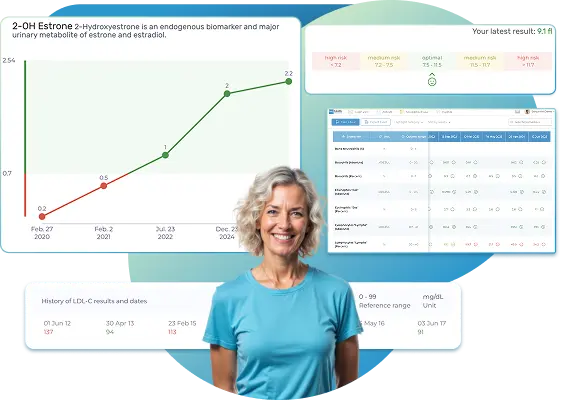
All Your Lab Results.
One Simple Dashboard.
Import, Track, and Share Your Lab Results Easily
Import, Track, and Share Your Lab Results
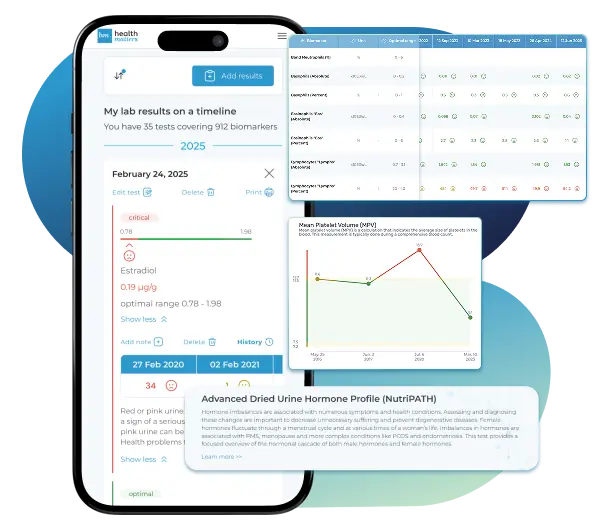
Import lab results from multiple providers, track changes over time, customize your reference ranges, and get clear explanations for each result. Everything is stored securely, exportable in one organized file, and shareable with your doctor—or anyone you choose.
Cancel or upgrade anytime
What does it mean if your Class-switched CD27+IgD-IgM- Abs result is too low?
Low levels of Class-switched CD27+IgD-IgM- Abs can indicate potential issues related to immune system function. These cells play a crucial role in the adaptive immune response, particularly in immune memory and antibody production. Understanding the implications of low levels is important for diagnosing and managing immune-related disorders. Below are the key considerations:
1. Immunodeficiency
Low levels of class-switched CD27+IgD-IgM- B cells are often associated with immunodeficiency, as these cells are essential for producing antibodies like IgG, IgA, and IgE. This may point to conditions such as:
-
Common Variable Immunodeficiency (CVID): A disorder where B cells fail to produce sufficient functional antibodies, leading to recurrent infections and poor vaccine responses. Reduced class-switched memory B cells are a hallmark of CVID.
-
X-linked Agammaglobulinemia (XLA): A condition characterized by defective B-cell maturation, resulting in very low levels of all immunoglobulins, including class-switched antibodies.
-
Hyper IgM Syndrome: A rare genetic disorder where B cells cannot undergo class switching effectively, causing high IgM levels but low IgG, IgA, and IgE.
These conditions highlight the importance of evaluating class-switched B cells as part of an immunodeficiency workup.
2. Impaired Immune Memory
Class-switched B cells are critical for long-term immunity and the formation of memory responses after infection or vaccination. Low levels may indicate:
-
Weakened immune memory: The immune system may struggle to retain information about past infections or vaccinations, leading to diminished protection over time.
-
Increased susceptibility to infections: Without sufficient class-switched B cells, the body may have difficulty mounting effective responses to pathogens or vaccines.
This underscores the importance of these cells in maintaining robust immunity.
3. Autoimmune Diseases
While autoimmune diseases can affect B-cell regulation and antibody production, the connection to low class-switched CD27+IgD-IgM- B cells is less direct and context-dependent. Potential links include:
-
Impaired class switching in autoimmune diseases: Some autoimmune conditions, such as systemic lupus erythematosus (SLE), may involve abnormalities in B-cell differentiation and antibody production. However, this is not universally observed across all autoimmune diseases.
-
Dysregulation of B-cell responses: In certain cases, poor control of B-cell function may lead to altered populations of class-switched cells, though this is more commonly associated with non-switched B-cell subsets (e.g., CD27+IgD+).
Further research is needed to fully understand the relationship between autoimmune diseases and low class-switched B-cell levels.
4. Failure of Immune Response After Vaccination
Class-switched B cells are essential for generating specific antibodies following vaccination. Low levels may indicate:
-
Poor vaccine response: Insufficient class-switched memory B cells can reduce the effectiveness of immunizations, leaving individuals vulnerable to preventable diseases.
This finding may prompt clinicians to evaluate vaccine efficacy in affected individuals.
5. Chronic Infections
Chronic infections can deplete or exhaust B-cell populations over time, potentially leading to low levels of class-switched CD27+IgD-IgM- B cells. This may reflect an overburdened immune system struggling to control persistent infections.
Conclusion
Low levels of Class-switched CD27+IgD-IgM- Abs often point to issues with immune function, such as immunodeficiency, impaired immune memory, or chronic infection. While some autoimmune diseases may involve abnormalities in class switching, this connection is less definitive and varies by condition. If low levels are identified, further clinical investigations—such as immunoglobulin testing or genetic analysis—are typically warranted to determine the underlying cause and guide treatment or management strategies.
Article Review & Sources
All our content is backed by peer-reviewed studies, academic research, and trusted medical sources. We're committed to accuracy and transparency — see our editorial policy for details.
Laboratories
Bring All Your Lab Results Together — In One Place
We accept reports from any lab, so you can easily collect and organize all your health information in one secure spot.











Pricing Table
Gather Your Lab History — and Finally Make Sense of It
Finally, Your Lab Results Organized and Clear

Personal plans

$79/ year
Advanced Plan
Access your lab reports, explanations, and tracking tools.
- Import lab results from any provider
- Track all results with visual tools
- Customize your reference ranges
- Export your full lab history anytime
- Share results securely with anyone
- Receive 5 reports entered for you
- Cancel or upgrade anytime
$250/ once
Unlimited Account
Pay once, access everything—no monthly fees, no limits.
- Import lab results from any provider
- Track all results with visual tools
- Customize your reference ranges
- Export your full lab history anytime
- Share results securely with anyone
- Receive 10 reports entered for you
- No subscriptions. No extra fees.
$45/ month
Pro Monthly
Designed for professionals managing their clients' lab reports
- Import lab results from any provider
- Track lab results for multiple clients
- Customize reference ranges per client
- Export lab histories and reports
- Begin with first report entered by us
- Cancel or upgrade anytime
About membership
What's included in a Healthmatters membership
 Import Lab Results from Any Source
 See Your Health Timeline
 Understand What Your Results Mean

 Visualize Your Results

 Data Entry Service for Your Reports
 Securely Share With Anyone You Trust
Let Your Lab Results Tell the Full Story
Once your results are in one place, see the bigger picture — track trends over time, compare data side by side, export your full history, and share securely with anyone you trust.




Bring all your results together to compare, track progress, export your history, and share securely.
What Healthmatters Members Are Saying

I have been using Healthmatters.io since 2021. I travel all over the world and use different doctors and health facilities. This site has allowed me to consolidate all my various test results over 14 years in one place. And every doctor that I show this to has been impressed. Because with any health professional I talk to, I can pull up historical results in seconds. It is invaluable. Even going back to the same doctor, they usually do not have the historical results from their facility in a graph format. That has been very helpful.
Anthony
Unlimited Plan Member since 2021
What fantastic service and great, easy-to-follow layouts! I love your website; it makes it so helpful to see patterns in my health data. It's truly a pleasure to use. I only wish the NHS was as organized and quick as Healthmatters.io. You've set a new standard for health tracking!
Karin
Advanced Plan Member since 2020
As a PRO member and medical practitioner, Healthmatters.io has been an invaluable tool for tracking my clients' data. The layout is intuitive, making it easy to monitor trends and spot patterns over time. The ability to customize reports and charts helps me present information clearly to my clients, improving communication and outcomes. It's streamlined my workflow, saving me time and providing insights at a glance. Highly recommended for any practitioner looking for a comprehensive and user-friendly solution to track patient labs!
Paul
Healthmatters Pro Member since 2024

We implement proven measures to keep your data safe.
At HealthMatters, we're committed to maintaining the security and confidentiality of your personal information. We've put industry-leading security standards in place to help protect against the loss, misuse, or alteration of the information under our control. We use procedural, physical, and electronic security methods designed to prevent unauthorized people from getting access to this information. Our internal code of conduct adds additional privacy protection. All data is backed up multiple times a day and encrypted using SSL certificates. See our Privacy Policy for more details.