
Absolute CD45 Count: Normal Range, What High & Low Results Mean
Other names: Absolute CD45 Count, CD45 Absolute Count, CD45 Total Lymph Count, CD45 Normal Range, CD45 Absolute, CD45 Count, CD45 Marker, CD45 Positive, CD45 Positive Cells, CD45+ Cells, CD45 Normal, CD45 Reference Range, CD45 Oranı (Turkish), CD45 Kaç Olmalı (Turkish), CD45 Oranı Kaç Olmalı (Turkish), CD45 Referans Aralığı (Turkish), CD45 100 Ne Demek (Turkish), CD45 Oranı 100 Ne Demek (Turkish), CD45 Oranı Nedir (Turkish), CD45 Dim, CD45 Dim Normal Range, CD45 Dim Meaning, CD45 Dim Positive, CD45 Bright, Leukocyte Common Antigen (LCA), CD45 LCA, CD45 Pan Leukocyte Marker, CD45 Blood Test, CD45 Total Lymphocyte Count, CD45 Lymphocytes, CD45+ Abs Lymph Count, Cellules CD45 en Suspension (French), Marqueur CD45 (French), CD45 Marker Positive, CD45 Normal Range Percentage, CD45 Valores Normales (Spanish), Linfocitos CD45 Valores Normales (Spanish), CD45 Маркер (Russian), CD45 Норма (Russian), CD45 Dodatni Co To Znaczy (Polish)
 Optimal Result:
0.99 - 3.15 thou/mcL.
Optimal Result:
0.99 - 3.15 thou/mcL.

QUICK ANSWER
CD45 is a surface protein (leukocyte common antigen) expressed on virtually all white blood cells — T cells, B cells, NK cells, monocytes, and granulocytes. The Absolute CD45 Count measures the total number of these CD45-positive cells per microlitre of blood.
Normal range: 0.99–3.15 thou/mcL (ages 18–55) | 1.00–3.33 thou/mcL (over 55 years)
CD45 percentage of 99–100% is normal. In a lymphocyte subset panel (flow cytometry), CD45 is used as the gating marker to define the white blood cell population — virtually all lymphocytes are CD45-positive, so a ratio at or near 100% is expected and not a cause for concern.
Key takeaway: CD45 is a universal white blood cell marker. A CD45 percentage near 100% simply means the lymphocyte gate is correctly identifying white blood cells. In most cases, clinicians pay far more attention to the absolute lymphocyte subset counts than the CD45 percentage itself. The clinically important values are the absolute count and the counts of individual lymphocyte subsets (CD3, CD4, CD8, CD19, NK cells) — not the CD45 percentage.
WHAT DOES A CD45 RATIO OF 100% (OR 99%) MEAN?
This is the most common question from users who receive a CD45 result on a lymphocyte subset panel.
A CD45 ratio of 99–100% is completely normal.
CD45 is expressed on virtually all white blood cells — every lymphocyte, monocyte, and granulocyte carries this marker. In flow cytometry lymphocyte subset testing, CD45 is used as the primary "gating" marker to identify and separate white blood cells from red blood cells, platelets, and debris in the sample. Because virtually all lymphocytes express CD45, the CD45-positive percentage within the lymphocyte gate should be at or near 100%.
What this means practically:
- CD45 = 100%: All cells in the analysed gate are confirmed white blood cells. Normal.
- CD45 = 99%: Same interpretation — normal. The 1% that is CD45-negative may be debris, aggregates, or very rare CD45-negative cells.
- Values clearly below the expected near-100% range: May indicate a significant proportion of CD45-negative or CD45-dim cells in the gate — this can occasionally be seen with abnormal blast populations or certain haematological conditions, though gating strategies vary between laboratories. Worth reviewing with your clinician if the value is substantially lower than expected.
WHAT IS THE NORMAL RANGE FOR ABSOLUTE CD45 COUNT?
| Age group | Normal range | Units |
|---|---|---|
| 18–55 years | 0.99–3.15 | thou/mcL (×10³/μL) |
| Over 55 years | 1.00–3.33 | thou/mcL (×10³/μL) |
The absolute CD45 count represents the total white blood cell count within the lymphocyte gate — effectively the total lymphocyte count as measured by flow cytometry. It is closely related to the absolute lymphocyte count (ALC) on a standard CBC, though the two may differ slightly due to gating methodology.
Units: "thou/mcL" means thousands per microlitre (×10³/μL). A result of 1.5 thou/mcL means 1,500 CD45-positive cells per microlitre.
WHAT DOES CD45 POSITIVE MEAN?
"CD45 positive" simply means the cell carries the CD45 surface marker — which is true of virtually all white blood cells.
In different clinical contexts, "CD45 positive" means different things:
In a lymphocyte subset panel (flow cytometry blood test): CD45-positive = a white blood cell. A result showing 99–100% CD45-positive cells in the lymphocyte gate is normal and expected.
In pathology / immunohistochemistry (IHC) of a tissue biopsy: CD45-positive staining confirms the tissue is of haematopoietic (blood cell) origin. This is used to distinguish lymphomas and leukaemias from other tumour types. A CD45-positive lymphoma or biopsy finding means the abnormal cells are confirmed to be white blood cell derivatives — not that "positive = cancer." CD45 positivity is expected in all normal lymph node tissue.
Is CD45 positive bad? No — being CD45-positive is a property of all white blood cells. It is not a finding associated with disease. The clinical question is never "is CD45 positive?" (the answer is always yes for white blood cells) but rather: what is the absolute count, what is the distribution of subsets, and are any cells CD45-negative or CD45-dim when they shouldn't be?
Does CD45 positive mean cancer? No. CD45 positivity is a normal property of white blood cells. In pathology reports, CD45-positive staining on a biopsy confirms haematopoietic origin — this is used to classify tumour type, not to diagnose cancer. A CD45-positive result on a blood panel simply means white blood cells were correctly identified.
WHAT IS CD45 DIM AND WHY DOES IT MATTER?
In flow cytometry, cells can express CD45 at different intensities:
- CD45-bright: Lymphocytes (T cells, B cells, NK cells) — strong CD45 expression
- CD45-dim: Monocytes and granulocytes — moderate CD45 expression; also immature or abnormal cells
- CD45-negative: Red blood cells, platelets, non-haematopoietic cells; also some plasma cells and very early haematopoietic progenitors
"CD45 dim" on a flow cytometry report means a population of cells with lower-than-normal CD45 expression was identified. This can be:
- Normal: monocytes and granulocytes are inherently CD45-dim
- Clinically significant: leukaemic blasts often have CD45-dim expression, which is used diagnostically to identify abnormal blast populations in the CD45 vs. side-scatter dot plot
If your report specifically flags a "CD45 dim" population in a context where it is unexpected (e.g. in a lymphocyte-enriched sample), this warrants clinical review. In routine lymphocyte subset panels, CD45 dim/neg populations of ~27% or similar are often granulocytes and monocytes that fall within the broad gate — this is a technical finding, not necessarily pathological.
WHAT DOES A LOW ABSOLUTE CD45 COUNT MEAN?
Low absolute CD45 count (below 0.99 thou/mcL) means fewer white blood cells than normal are present in the analysed population — effectively lymphopenia. This mirrors the clinical significance of a low absolute lymphocyte count.
Causes of low absolute CD45 / lymphopenia:
- Viral infections — HIV/AIDS (direct CD4+ T cell depletion), influenza, COVID-19 (transient lymphopenia is common in acute infection)
- Immunosuppressive medications — corticosteroids, chemotherapy, rituximab and other B-cell depleting therapies, immunosuppressants after organ transplant
- Autoimmune conditions — SLE (lupus), rheumatoid arthritis with active disease
- Bone marrow disorders — aplastic anaemia, bone marrow failure
- Nutritional deficiencies — zinc, copper, vitamin B12 deficiency can impair lymphocyte production
- Radiation exposure — damages bone marrow and lymphocyte production
- Primary immunodeficiencies — CVID, SCID, DiGeorge syndrome
Clinical significance: Persistently low CD45 counts reduce the immune system's capacity to respond to infection. Clinicians assess the absolute count alongside individual subset counts (CD4, CD8, CD19, NK cells) to determine which populations are most affected.
WHAT DOES A HIGH ABSOLUTE CD45 COUNT MEAN?
High absolute CD45 count (above 3.15 thou/mcL in adults under 55) means more white blood cells than normal — lymphocytosis.
Common causes:
- Viral infections — infectious mononucleosis (EBV), CMV, whooping cough; acute viral infections commonly cause reactive lymphocytosis
- Chronic lymphocytic leukaemia (CLL) — markedly elevated CD45-positive lymphocyte counts are the hallmark of CLL
- Other lymphoproliferative disorders — lymphoma with circulating cells, ALL
- Autoimmune conditions — some autoimmune states cause reactive lymphocyte expansion
- Post-splenectomy — removal of the spleen can cause a persistent mild lymphocytosis
Context matters: Mild elevations during or after a viral illness are common and self-limiting. Transient lymphocytosis is expected in acute infection and typically resolves within weeks. Markedly elevated or persistently elevated counts across repeat testing require haematology evaluation to exclude lymphoproliferative disease.
CD45 IN CONTEXT: THE LYMPHOCYTE SUBSET PANEL
The Absolute CD45 Count is part of the Lymphocyte Subset Panel (also called the Immune Phenotype Panel or Flow Cytometry Lymphocyte Panel). CD45 serves as the anchor marker that gates the entire white blood cell population. The clinically meaningful results in this panel are the individual subset counts:
| Marker | Cell type | What it counts |
|---|---|---|
| CD45 | All leukocytes | Total white blood cell (lymphocyte gate) count |
| CD3 | T lymphocytes | Total T cells |
| CD4 | Helper T cells | CD4+ T helper cells (key in HIV monitoring) |
| CD8 | Cytotoxic T cells | CD8+ cytotoxic T cells |
| CD19 | B lymphocytes | B cells |
| CD16/56 | NK cells | Natural killer cells |
CD45 provides the denominator — the total cell count against which all other percentages are calculated. A low CD45 count will proportionally affect all other absolute subset counts.
INTERNAL LINKS
Related tests in the lymphocyte subset panel: % CD19 (B Cells) · Absolute CD19+ Cells · % CD3 (Mature T Cells) · % CD4 · % CD8 · CD57+ NK Cells (%) · Absolute Lymphocyte Count · Immunoglobulin G (IgG)
FAQ about Absolute CD45 Count
-
What does a CD45 ratio of 100% mean?
A CD45 percentage of 99–100% in a lymphocyte subset panel is completely normal. CD45 is expressed on virtually all white blood cells, so the lymphocyte gate — which is defined by CD45 positivity — will naturally contain nearly 100% CD45-positive cells. This finding is expected and does not indicate any abnormality. -
What does CD45 positive mean?
CD45-positive simply means the cell carries the CD45 surface marker — a property of virtually all white blood cells. On a lymphocyte subset panel, CD45-positive cells are normal white blood cells correctly identified within the lymphocyte gate. In a pathology report, CD45-positive staining confirms haematopoietic (blood cell) origin of a tissue sample. -
Is CD45 positive bad?
No. CD45 positivity is a normal property of all white blood cells. It is not associated with disease. The clinically relevant values are the absolute count and individual subset counts (CD4, CD8, CD19, NK cells), not CD45 positivity itself. -
Does CD45 positive mean cancer?
No. All white blood cells are CD45-positive — it is a universal marker of haematopoietic cells. In pathology, CD45-positive staining on a tissue biopsy confirms blood cell origin, which is used to classify tumour type, not to diagnose cancer. A CD45-positive result on a blood panel simply confirms that white blood cells were correctly identified. -
What is the normal range for absolute CD45 count?
Ages 18–55: 0.99–3.15 thou/mcL. Over 55 years: 1.00–3.33 thou/mcL. Results are reported in thousands per microlitre (thou/mcL). The absolute CD45 count closely corresponds to the total lymphocyte count measured by flow cytometry. -
What does CD45 dim mean on a flow cytometry report?
CD45-dim means cells with lower-than-expected CD45 expression were identified. Normal CD45-dim cells include monocytes and granulocytes. Abnormally CD45-dim findings in a lymphocyte population can indicate immature or leukaemic blast cells and may warrant clinical review. In routine lymphocyte subset panels, a CD45-dim/negative population is often normal granulocytes caught in the broad gate. -
What causes a low absolute CD45 count?
Common causes include viral infections (HIV, COVID-19, influenza), immunosuppressive medications (corticosteroids, chemotherapy, rituximab), autoimmune conditions, bone marrow failure, nutritional deficiencies (zinc, copper, vitamin B12), and primary immunodeficiencies. A single low result during or after illness is often transient; persistent lymphopenia warrants further evaluation. -
What is the difference between absolute CD45 count and CD45 percentage?
The absolute count measures the actual number of CD45-positive cells per microlitre (thou/mcL) — this is the clinically meaningful value. The CD45 percentage measures what fraction of all analysed cells are CD45-positive — in a lymphocyte subset panel this is nearly always 99–100% and is a technical confirmation of correct gating, not an independent clinical finding.
Lab Results Explained and Tracked
What does it mean if your Absolute CD45 Count result is too high?
Elevated absolute CD45 count (above 3.15 thou/mcL in adults aged 18–55) indicates lymphocytosis — more white blood cells than normal in the analysed population. Common causes include reactive lymphocytosis during viral infection (especially EBV/infectious mononucleosis), post-infectious states, and autoimmune activation. Markedly or persistently elevated counts require evaluation to exclude chronic lymphocytic leukaemia (CLL) or other lymphoproliferative disorders.
A CD45 percentage near 100% in a lymphocyte subset panel is not the same as a high absolute count — it is a normal finding reflecting correct identification of white blood cells.
Related Health Conditions

All Your Lab Results.
One Simple Dashboard.
Import, Track, and Share Your Lab Results Easily
Import, Track, and Share Your Lab Results
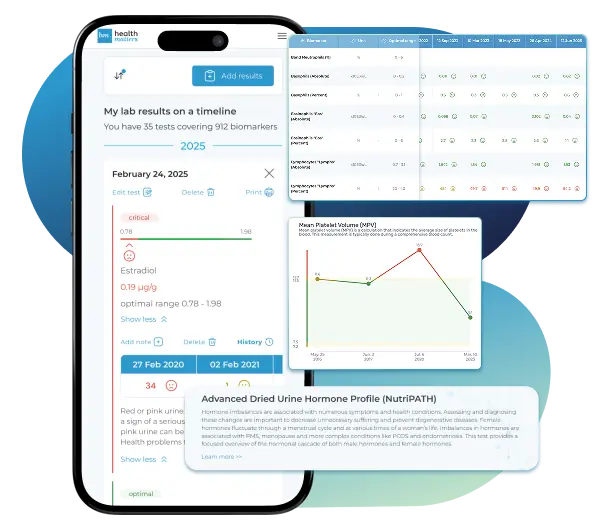
Import lab results from multiple providers, track changes over time, customize your reference ranges, and get clear explanations for each result. Everything is stored securely, exportable in one organized file, and shareable with your doctor—or anyone you choose.
Cancel or upgrade anytime
What does it mean if your Absolute CD45 Count result is too low?
Low absolute CD45 count (below 0.99 thou/mcL) indicates lymphopenia — fewer white blood cells than normal in the analysed population. Common causes include viral infections (HIV, COVID-19, influenza), immunosuppressive medications (corticosteroids, chemotherapy, rituximab), autoimmune conditions, bone marrow disorders, and nutritional deficiencies.
A persistently low absolute CD45 count reduces immune defence capacity. Individual subset counts (CD4, CD8, CD19, NK cells) should be reviewed alongside the total count to identify which populations are specifically depleted. Transient decreases during acute illness are common and often self-resolving — persistent abnormalities across repeat testing are generally more clinically meaningful than a single isolated low result.
Related Biomarkers
Article Review & Sources
All our content is backed by peer-reviewed studies, academic research, and trusted medical sources. We're committed to accuracy and transparency — see our editorial policy for details.
Laboratories
Bring All Your Lab Results Together — In One Place
We accept reports from any lab, so you can easily collect and organize all your health information in one secure spot.











Pricing Table
Gather Your Lab History — and Finally Make Sense of It
Finally, Your Lab Results Organized and Clear

Personal plans

$79/ year
Advanced Plan
Access your lab reports, explanations, and tracking tools.
- Import lab results from any provider
- Track all results with visual tools
- Customize your reference ranges
- Export your full lab history anytime
- Share results securely with anyone
- Receive 5 reports entered for you
- Cancel or upgrade anytime
$250/ once
Unlimited Account
Pay once, access everything—no monthly fees, no limits.
- Import lab results from any provider
- Track all results with visual tools
- Customize your reference ranges
- Export your full lab history anytime
- Share results securely with anyone
- Receive 10 reports entered for you
- No subscriptions. No extra fees.
$45/ month
Pro Monthly
Designed for professionals managing their clients' lab reports
- Import lab results from any provider
- Track lab results for multiple clients
- Customize reference ranges per client
- Export lab histories and reports
- Begin with first report entered by us
- Cancel or upgrade anytime
About membership
What's included in a Healthmatters membership
 Import Lab Results from Any Source
 See Your Health Timeline
 Understand What Your Results Mean

 Visualize Your Results

 Data Entry Service for Your Reports
 Securely Share With Anyone You Trust
Let Your Lab Results Tell the Full Story
Once your results are in one place, see the bigger picture — track trends over time, compare data side by side, export your full history, and share securely with anyone you trust.




Bring all your results together to compare, track progress, export your history, and share securely.
What Healthmatters Members Are Saying

I have been using Healthmatters.io since 2021. I travel all over the world and use different doctors and health facilities. This site has allowed me to consolidate all my various test results over 14 years in one place. And every doctor that I show this to has been impressed. Because with any health professional I talk to, I can pull up historical results in seconds. It is invaluable. Even going back to the same doctor, they usually do not have the historical results from their facility in a graph format. That has been very helpful.
Anthony
Unlimited Plan Member since 2021
What fantastic service and great, easy-to-follow layouts! I love your website; it makes it so helpful to see patterns in my health data. It's truly a pleasure to use. I only wish the NHS was as organized and quick as Healthmatters.io. You've set a new standard for health tracking!
Karin
Advanced Plan Member since 2020
As a PRO member and medical practitioner, Healthmatters.io has been an invaluable tool for tracking my clients' data. The layout is intuitive, making it easy to monitor trends and spot patterns over time. The ability to customize reports and charts helps me present information clearly to my clients, improving communication and outcomes. It's streamlined my workflow, saving me time and providing insights at a glance. Highly recommended for any practitioner looking for a comprehensive and user-friendly solution to track patient labs!
Paul
Healthmatters Pro Member since 2024

We implement proven measures to keep your data safe.
At HealthMatters, we're committed to maintaining the security and confidentiality of your personal information. We've put industry-leading security standards in place to help protect against the loss, misuse, or alteration of the information under our control. We use procedural, physical, and electronic security methods designed to prevent unauthorized people from getting access to this information. Our internal code of conduct adds additional privacy protection. All data is backed up multiple times a day and encrypted using SSL certificates. See our Privacy Policy for more details.