
Vit B7 Biotin
 Optimal Result:
10.51 - 29.69 Healthy Relative Abundance IQR (%).
Optimal Result:
10.51 - 29.69 Healthy Relative Abundance IQR (%).

Biotin is a water soluble vitamin necessary for growth, development, and energy production and may support healthy hair, skin, and nails. Biotin also acts as a cofactor for 5 carboxylases and plays an important role in balancing immune responses. Biotin is synthesized from tryptophan by intestinal bacteria and can also be found in foods such as meat, beans, milk, and cereal grains. Interestingly, when the human body is deficient in biotin, intestinal cells can actually increase the biotin uptake process, allowing the human host to feed off of biotin produced by the gut microbiome. Bacteroides fragilis, Prevotella copri, and several members of the Proteobacteria phylum possess a vitamin B7 biosynthesis pathway. In contrast, species belonging to Prevotella, Bifidobacterium, Clostridium, Ruminococcus, Faecalibacterium, and Lactobacillus are unable to produce biotin yet need it for survival, suggesting that these bacteria may compete with the host for biotin utilization.
Free biotin in the gut can change the composition of the gut microbiome and is linked to the overgrowth of Lactobacillus murinus and unfavorable outcomes. Furthermore, Bifidobacterium longum produces a B7 precursor that enhances vitamin B7 production by other intestinal bacteria. Gut bacteria only contribute about 5% of the daily recommended intake of B7 for adults, so it is important to ensure adequate biotin intake from the diet and/or supplementation.
Lab Results Explained and Tracked
What does it mean if your Vit B7 Biotin result is too high?
Elevated levels of Vitamin B7 (Biotin) on a BiomeFx test generally do not signify a health concern. Here are the key points:
- Potential causes of elevation:
- Consumption of biotin-rich foods
- Taking supplements with high amounts of biotin
- Recent dietary intake or supplementation
- Safety profile:
- High biotin levels have not been associated with adverse effects in humans or animals, even with daily doses up to 200 mg orally and up to 20 mg intravenously.
- No observable toxicities have been reported with high intakes from food sources or supplements.
- Excretion of excess:
- Biotin is water-soluble, and excess amounts are typically excreted in the urine.
- Gut microbiome effects:
- Free biotin in the gut can change the composition of the gut microbiome.
- It has been linked to the overgrowth of certain bacteria like Lactobacillus murinus.
- Interpretation considerations:
- Elevated levels may simply reflect recent intake rather than a health issue.
While elevated biotin levels are generally not a cause for concern, it's important to note that extremely high levels could potentially affect the gut microbiome composition. As with any test result, it's advisable to consult with a healthcare professional for personalized interpretation and advice, especially if there are concerns about excessive supplementation or potential impacts on gut health.

All Your Lab Results.
One Simple Dashboard.
Import, Track, and Share Your Lab Results Easily
Import, Track, and Share Your Lab Results
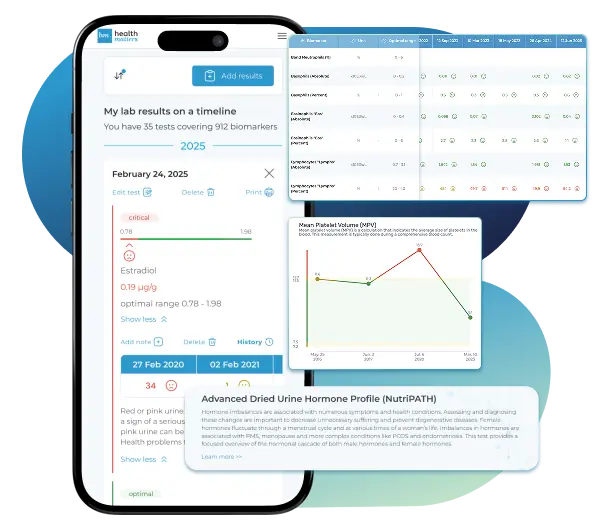
Import lab results from multiple providers, track changes over time, customize your reference ranges, and get clear explanations for each result. Everything is stored securely, exportable in one organized file, and shareable with your doctor—or anyone you choose.
Cancel or upgrade anytime
What does it mean if your Vit B7 Biotin result is too low?
When biotin levels appear low on a BiomeFX panel, it indicates a potential deficiency. This could impact various bodily functions and the balance of the gut microbiome. If you notice low biotin levels, consider discussing dietary changes or supplementation with a healthcare professional.
Biotin, also known as vitamin B7, is a water-soluble vitamin essential for growth, development, and energy production. It supports healthy hair, skin, and nails, and plays a vital role in balancing immune responses. Importantly, biotin acts as a cofactor for five carboxylases - enzymes crucial for various metabolic processes in the body.
Biotin is found in foods such as meat, beans, milk, and cereal grains. Interestingly, it can also be synthesized from tryptophan by certain intestinal bacteria. When the human body is deficient in biotin, intestinal cells can increase their biotin uptake, allowing the host to utilize biotin produced by the gut microbiome.
The relationship between biotin and gut bacteria is complex:
- Biotin Producers: Some bacteria, including Bacteroides fragilis, Prevotella copri, and several members of the Proteobacteria group, can produce biotin.
- Biotin Consumers: Other bacteria, such as certain species of Prevotella, Bifidobacterium, Clostridium, Ruminococcus, Faecalibacterium, and Lactobacillus, require biotin but cannot produce it. This creates competition between these bacteria and the host for biotin utilization.
- Microbiome Influence: Free biotin in the gut can alter the microbiome composition. For example, it's linked to the overgrowth of Lactobacillus murinus, which may have unfavorable outcomes.
- Cooperative Production: Bifidobacterium longum produces a biotin precursor that enhances vitamin B7 production by other intestinal bacteria.
While gut bacteria contribute to biotin production, they only provide about 5% of the daily recommended intake for adults. Therefore, ensuring adequate biotin intake from diet and/or supplementation is crucial for maintaining overall health and a balanced gut microbiome.
Biotin plays a significant role in both overall health and gut microbiome balance. While some gut bacteria can produce biotin, dietary sources remain crucial. Understanding the interplay between biotin, gut bacteria, and host health can help in maintaining optimal wellness and a balanced microbiome.
Article Review & Sources
All our content is backed by peer-reviewed studies, academic research, and trusted medical sources. We're committed to accuracy and transparency — see our editorial policy for details.
Laboratories
Bring All Your Lab Results Together — In One Place
We accept reports from any lab, so you can easily collect and organize all your health information in one secure spot.











Pricing Table
Gather Your Lab History — and Finally Make Sense of It
Finally, Your Lab Results Organized and Clear

Personal plans

$79/ year
Advanced Plan
Access your lab reports, explanations, and tracking tools.
- Import lab results from any provider
- Track all results with visual tools
- Customize your reference ranges
- Export your full lab history anytime
- Share results securely with anyone
- Receive 5 reports entered for you
- Cancel or upgrade anytime
$250/ once
Unlimited Account
Pay once, access everything—no monthly fees, no limits.
- Import lab results from any provider
- Track all results with visual tools
- Customize your reference ranges
- Export your full lab history anytime
- Share results securely with anyone
- Receive 10 reports entered for you
- No subscriptions. No extra fees.
$45/ month
Pro Monthly
Designed for professionals managing their clients' lab reports
- Import lab results from any provider
- Track lab results for multiple clients
- Customize reference ranges per client
- Export lab histories and reports
- Begin with first report entered by us
- Cancel or upgrade anytime
About membership
What's included in a Healthmatters membership
 Import Lab Results from Any Source
 See Your Health Timeline
 Understand What Your Results Mean

 Visualize Your Results

 Data Entry Service for Your Reports
 Securely Share With Anyone You Trust
Let Your Lab Results Tell the Full Story
Once your results are in one place, see the bigger picture — track trends over time, compare data side by side, export your full history, and share securely with anyone you trust.




Bring all your results together to compare, track progress, export your history, and share securely.
What Healthmatters Members Are Saying

I have been using Healthmatters.io since 2021. I travel all over the world and use different doctors and health facilities. This site has allowed me to consolidate all my various test results over 14 years in one place. And every doctor that I show this to has been impressed. Because with any health professional I talk to, I can pull up historical results in seconds. It is invaluable. Even going back to the same doctor, they usually do not have the historical results from their facility in a graph format. That has been very helpful.
Anthony
Unlimited Plan Member since 2021
What fantastic service and great, easy-to-follow layouts! I love your website; it makes it so helpful to see patterns in my health data. It's truly a pleasure to use. I only wish the NHS was as organized and quick as Healthmatters.io. You've set a new standard for health tracking!
Karin
Advanced Plan Member since 2020
As a PRO member and medical practitioner, Healthmatters.io has been an invaluable tool for tracking my clients' data. The layout is intuitive, making it easy to monitor trends and spot patterns over time. The ability to customize reports and charts helps me present information clearly to my clients, improving communication and outcomes. It's streamlined my workflow, saving me time and providing insights at a glance. Highly recommended for any practitioner looking for a comprehensive and user-friendly solution to track patient labs!
Paul
Healthmatters Pro Member since 2024

We implement proven measures to keep your data safe.
At HealthMatters, we're committed to maintaining the security and confidentiality of your personal information. We've put industry-leading security standards in place to help protect against the loss, misuse, or alteration of the information under our control. We use procedural, physical, and electronic security methods designed to prevent unauthorized people from getting access to this information. Our internal code of conduct adds additional privacy protection. All data is backed up multiple times a day and encrypted using SSL certificates. See our Privacy Policy for more details.