Acetate production
 Optimal Result:
15.85 - 34.16 Healthy Relative Abundance IQR (%).
Optimal Result:
15.85 - 34.16 Healthy Relative Abundance IQR (%).

Acetate is another SCFA produced by gut bacteria through the fermentation of prebiotic fibers like inulin and GOS or unabsorbed peptides and fats. Gut-derived acetate production is tightly regulated within the microbiome and determined by the presence of prebiotic fiber and the balance between saccharolytic and proteolytic fermentation. Acetate is used for cholesterol synthesis and lipogenesis but can also be utilized by muscle tissue. Additionally, some gut bacteria like Roseburia spp and Faecalibacterium prausnitzii can convert acetate into butyrate. Excessive acetate production combined with insufficient butyrate production can lead to fat gain, particularly around the liver.
Lab Results Explained and Tracked
What does it mean if your Acetate production result is too high?
Acetate comprises 60% of SCFA production in the gut. Acetate can be converted to acetyl-CoA and subsequently used in the tricarboxylic acid (TCA) cycle, and it also acts as a substrate for fatty acid and cholesterol synthesis. In addition, acetate can be converted to butyrate by gut bacteria. While acetate can be supplied through dietary sources, such as vinegar, the gut supplies the largest amount of acetate to the human body through fermentation of fibers, particularly galactooligosaccharides and inulin.
In fact, gut-derived acetate may improve insulin resistance in obese individuals. Akkermansia muciniphila, Bifidobacterium spp, Bacteroides thetaiotaomicron, Ruminococcus bromii, and B. hydrogenotrophica are primary producers of acetate. Acetate can be utilized and converted to butyrate by F. prausnitzii, Roseburia spp, Eubacterium spp, and others. Acetate producers and acetate utilizers must be balanced. An an overproduction of this SCFA may contribute to weight gain and inflammation by feeding Methanogens, while insufficient acetate can negatively impact metabolism.
------------------
High acetate production on a gastrointestinal (GI) test indicates an increased level of this short-chain fatty acid (SCFA) in the gut, which is primarily produced by the fermentation of dietary fibers by gut bacteria. Acetate is the most abundant SCFA in the colon and plays a significant role in gut health and metabolic processes.
Implications of High Acetate Levels
- Microbial Imbalance: Elevated acetate levels may suggest an imbalance in the gut microbiota. This could be due to an overgrowth of acetate-producing bacteria such as Ruminococcus, Prevotella, Bifidobacterium, and Akkermansia muciniphila.
- Metabolic Effects: High acetate production has been linked to metabolic processes, including increased energy harvest and potential weight gain. It might promote hepatic de novo lipogenesis, which is the conversion of acetate to fat in the liver.
- Health Implications: While acetate has beneficial roles, such as supporting gut barrier integrity and having anti-inflammatory properties, excessive levels could be associated with metabolic syndrome and other cardio-metabolic diseases.
Managing High Acetate Levels
- Dietary Adjustments:
- Reduce High-Fiber Foods: Since acetate is produced from the fermentation of dietary fibers, moderating the intake of high-fiber foods might help reduce acetate production.
- Monitor Fermentable Carbohydrates: Limiting foods rich in fermentable carbohydrates can decrease acetate production.
- Probiotics and Prebiotics:
- Consider using probiotics that do not enhance acetate production or prebiotics that support a balanced gut microbiota.
- Consultation with Healthcare Professionals:
- Seek advice from healthcare providers or nutritionists to develop a personalized plan to address high acetate levels based on specific health conditions and GI test results.
By implementing these strategies, it is possible to manage and potentially decrease acetate production if it is excessively high, thereby maintaining overall gut health.

All Your Lab Results.
One Simple Dashboard.
Import, Track, and Share Your Lab Results Easily
Import, Track, and Share Your Lab Results
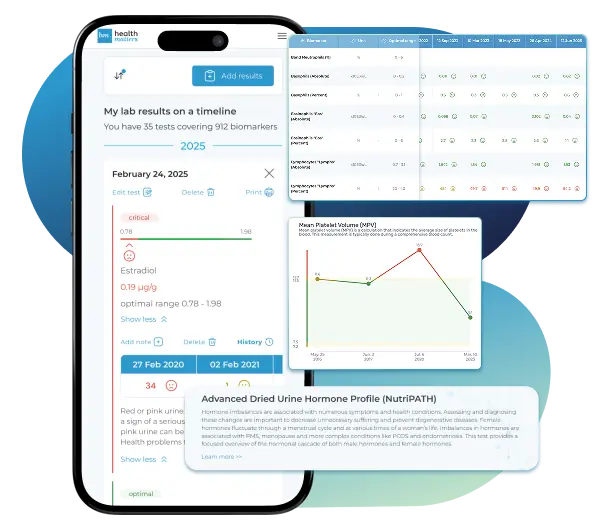
Import lab results from multiple providers, track changes over time, customize your reference ranges, and get clear explanations for each result. Everything is stored securely, exportable in one organized file, and shareable with your doctor—or anyone you choose.
Cancel or upgrade anytime
What does it mean if your Acetate production result is too low?
If sample acetate production is below the healthy relative abundance IQR, it suggests that the gut microbiome is producing less acetate than what is typically observed in a healthy population.
What This Means:
-
Low Acetate Production – Acetate is a short-chain fatty acid (SCFA) produced by beneficial gut bacteria, primarily from the fermentation of dietary fibers. It plays a role in:
- Supporting gut barrier integrity
- Providing energy for colon cells
- Modulating immune function
- Helping regulate metabolism and appetite
-
Potential Causes:
- Low Fiber Intake: Acetate-producing bacteria rely on fermentable fibers (e.g., inulin, resistant starch, pectin) to generate acetate.
- Reduced Acetate-Producing Bacteria: Some key microbes responsible for acetate production include Bifidobacterium, Lactobacillus, and certain Firmicutes species. A decline in these bacteria could reduce acetate levels.
- Dysbiosis (Microbial Imbalance): If the gut microbiome is imbalanced, it may favor bacteria that do not produce acetate or produce other SCFAs instead.
- Inflammation or Gut Health Issues: Chronic inflammation, infections, or conditions like IBS/IBD could affect microbial composition and SCFA production.
-
Possible Effects of Low Acetate:
- Impaired gut barrier function (increasing risk of "leaky gut")
- Reduced energy supply for colon cells
- Potential disruptions in gut motility and digestion
- Weakened immune function
- Altered appetite regulation and metabolism
What Can Help Increase Acetate Production?
- Increase Dietary Fiber: Consume more prebiotic fibers from sources like oats, flaxseeds, bananas, garlic, onions, leeks, and legumes.
- Probiotics: Supplementing with Bifidobacterium and Lactobacillus strains can boost acetate production.
- Resistant Starches: Include foods like cooked and cooled potatoes, green bananas, and legumes to promote SCFA production.
- Fermented Foods: Yogurt, kefir, kimchi, sauerkraut, and miso can help support acetate-producing bacteria.
- Reduce Inflammatory Triggers: Limit processed foods, refined sugars, and artificial additives that can negatively impact the microbiome.
Article Review & Sources
All our content is backed by peer-reviewed studies, academic research, and trusted medical sources. We're committed to accuracy and transparency — see our editorial policy for details.
Laboratories
Bring All Your Lab Results Together — In One Place
We accept reports from any lab, so you can easily collect and organize all your health information in one secure spot.










Pricing Table
Gather Your Lab History — and Finally Make Sense of It
Finally, Your Lab Results Organized and Clear

Personal plans

$79/ year
Advanced Plan
Access your lab reports, explanations, and tracking tools.
- Import lab results from any provider
- Track all results with visual tools
- Customize your reference ranges
- Export your full lab history anytime
- Share results securely with anyone
- Receive 5 reports entered for you
- Cancel or upgrade anytime
$250/ once
Unlimited Account
Pay once, access everything—no monthly fees, no limits.
- Import lab results from any provider
- Track all results with visual tools
- Customize your reference ranges
- Export your full lab history anytime
- Share results securely with anyone
- Receive 10 reports entered for you
- No subscriptions. No extra fees.
$45/ month
Pro Monthly
Designed for professionals managing their clients' lab reports
- Import lab results from any provider
- Track lab results for multiple clients
- Customize reference ranges per client
- Export lab histories and reports
- Begin with first report entered by us
- Cancel or upgrade anytime
About membership
What's included in a Healthmatters membership
 Import Lab Results from Any Source
 See Your Health Timeline
 Understand What Your Results Mean

 Visualize Your Results

 Data Entry Service for Your Reports
 Securely Share With Anyone You Trust
Let Your Lab Results Tell the Full Story
Once your results are in one place, see the bigger picture — track trends over time, compare data side by side, export your full history, and share securely with anyone you trust.




Bring all your results together to compare, track progress, export your history, and share securely.
What Healthmatters Members Are Saying

I have been using Healthmatters.io since 2021. I travel all over the world and use different doctors and health facilities. This site has allowed me to consolidate all my various test results over 14 years in one place. And every doctor that I show this to has been impressed. Because with any health professional I talk to, I can pull up historical results in seconds. It is invaluable. Even going back to the same doctor, they usually do not have the historical results from their facility in a graph format. That has been very helpful.
Anthony
Unlimited Plan Member since 2021
What fantastic service and great, easy-to-follow layouts! I love your website; it makes it so helpful to see patterns in my health data. It's truly a pleasure to use. I only wish the NHS was as organized and quick as Healthmatters.io. You've set a new standard for health tracking!
Karin
Advanced Plan Member since 2020
As a PRO member and medical practitioner, Healthmatters.io has been an invaluable tool for tracking my clients' data. The layout is intuitive, making it easy to monitor trends and spot patterns over time. The ability to customize reports and charts helps me present information clearly to my clients, improving communication and outcomes. It's streamlined my workflow, saving me time and providing insights at a glance. Highly recommended for any practitioner looking for a comprehensive and user-friendly solution to track patient labs!
Paul
Healthmatters Pro Member since 2024

We implement proven measures to keep your data safe.
At HealthMatters, we're committed to maintaining the security and confidentiality of your personal information. We've put industry-leading security standards in place to help protect against the loss, misuse, or alteration of the information under our control. We use procedural, physical, and electronic security methods designed to prevent unauthorized people from getting access to this information. Our internal code of conduct adds additional privacy protection. All data is backed up multiple times a day and encrypted using SSL certificates. See our Privacy Policy for more details.