
Oxalate
 Optimal Result:
0 - 78 mmol/mol creatinine.
Optimal Result:
0 - 78 mmol/mol creatinine.

Oxalic acid is the metabolic end-product of the glyoxylase pathway and is derived from the oxidation of glyoxylate.
In the cell, the majority of glyoxylate is converted into glycine or glycolic acid. However, in some instances there may be greater oxidation of glyoxylate to oxalic acid. This leads to increased urinary excretion of oxalic acid.
As 80% of kidney stones are calcium-oxalate stones, an increase in oxalic acid is strongly correlated to frequency of urolithiasis.
There are inborn errors of metabolism that cause elevated oxalic acid such as primary hyperoxaluria. The dramatically elevated levels of oxalic acid in these conditions lead to renal calculi formation and systemic oxalosis. However, there are other clinical circumstances that can predispose an individual to have higher urinary oxalic acid levels, including recent dietary intake of oxalate-rich roods. The relationship between diet and urinary oxalic acid levels is complex and dependent on many variables. While the majority of oxalic acid originates from endogenous production, it is estimated that 40% of urinary oxalic acid is derived from the diet, however these levels are largely dependent on the microbiome and intake of dietary calcium.329 Specifically, the gut bacteria Oxalobacter formigenes degrades dietary oxalates and there is a direct correlation between concentrations of this bacteria and lower oxalate levels.
The absence of Oxalobacter formigenes is also correlated to increased oxalate stone formation. Food sources that lead to higher oxalic acid excretion include spinach, rhubarb, beets, nuts, chocolate, tea, wheat bran, and strawberries. However, it is well documented cooking oxalate-rich foods dramatically reduces the oxalate concentration. Furthermore, often these foods are also high in calcium which inhibits oxalate absorption at the intestinal lining.
Aside from dietary intake, oxalic acid concentrations will vary based on a number of factors. As previously mentioned, oxidative stress may play a large role in the formation of oxalic acid. This is because glutathione is responsible for the neutralization of glyoxal created by free radical damage. With lower glutathione levels, glyoxal is more likely to shunt toward glyoxylate and ultimately could become oxalic acid.
References:
- Massey LK, Roman-Smith H, Sutton RA. Effect of dietary oxalate and calcium on urinary oxalate and risk of formation of calcium oxalate kidney stones. J Am Dietetic Assoc. 1993;93(8):901-906.
- Dietzen DJ, Wilhite TR, Kenagy DN, Milliner DS, Smith CH, Landt M. Extraction of glyceric and glycolic acids from urine with tetrahydrofuran: utility in detection of primary hyperoxaluria. Clin Chem. 1997;43(8 Pt 1):1315-1320.
- Knight J, Jiang J, Assimos DG, Holmes RP. Hydroxyproline ingestion and urinary oxalate and glycolate excretion. Kidney Int. 2006;70(11):1929-1934.
- Knight J, Wood KD, Lange JN, Assimos DG, Holmes RP. Oxalate Formation From Glyoxal in Erythrocytes. Urology. 2016;88:226. e211-225.
- Taylor EN, Curhan GC. Determinants of 24-hour urinary oxalate excretion. Clin J Am Soc Nephrol. 2008;3(5):1453-1460.
- Traxer O, Huet B, Poindexter J, Pak CY, Pearle MS. Effect of ascorbic acid consumption on urinary stone risk factors. J Urol. 2003;170(2 Pt 1):397-401.
- Curhan GC, Willett WC, Speizer FE, Stampfer MJ. Intake of vitamins B6 and C and the risk of kidney stones in women. JASN. 1999;10(4):840-845.
- Tsao CS, Salimi SL. Effect of large intake of ascorbic acid on urinary and plasma oxalic acid levels. Int Vitamin Nutr Res. 1984;54(2- 3):245-249.
- Selvam R. Calcium oxalate stone disease: role of lipid peroxidation and antioxidants. Urol Res. 2002;30(1):35-47.
- Khan SR. Hyperoxaluria-induced oxidative stress and antioxidants for renal protection. Urol Res. 2005;33(5):349-357.
Lab Results Explained and Tracked
What does it mean if your Oxalate result is too high?
Elevated urinary oxalic acid can be a result of several factors:
First, dietary intake of oxalate-rich foods must be considered, especially in the context of dysbiosis and microbiome deficiency. A GI Effects stool test may be warranted to evaluate the concentration of Oxalobacter formigenes alongside other microbiota capable of degrading dietary oxalates. Calcium intake should be assessed as moderate calcium intake has been shown to decrease oxalate absorption and stone formation. Hydroxyproline, a component of collagen, is a potential precursor to glyoxylate. Higher consumption of collagen-rich foods and supplements may contribute to elevations in urinary oxalic acid.
It is also estimated that 5-20% of urinary oxalic acid excretion stems from collagen turnover in the body. Ascorbic acid intake has been evaluated as a contributor toward oxalate levels because ascorbic acid is metabolized into oxalic acid. While individuals who are predisposed toward stone formation appear to have increased urinary oxalic acid excretion after ascorbic acid loads, in general the research has shown that vitamin C intake is not associated with urinary oxalic acid or kidney stone risk.
Oxidative stress is another factor potentially driving the formation of oxalic acid. Clinically, evaluating glutathione and lipid peroxide levels may be helpful to determine the need to support with antioxidants. Not only may antioxidants, such as glutathione, assist in neutralizing the oxalate precursor glyoxal, but they may also assist in prevention of calcium oxalate deposition to urothelium and subsequent renal damage.
Also, metabolic syndrome may preclude risk toward increased formation and excretion of oxalic acid whereas weight, BMI, and insulin resistance have all demonstrated positive correlations with urinary oxalic acid. Whether these associations are due to oxidative stress disturbances is yet to be determined.
Lastly, micronutrient insufficiencies may also play a role in oxalic acid levels. Glyoxylate is mostly converted to glycine through the enzyme AGT, which utilizes vitamin B6 as a cofactor. Vitamin B6 therapy has been used in the setting of primary hyperoxaluria with varying degrees of success. Also, intake of vitamin B6 has been shown to decrease risk of kidney stones in some, but not all, investigations.
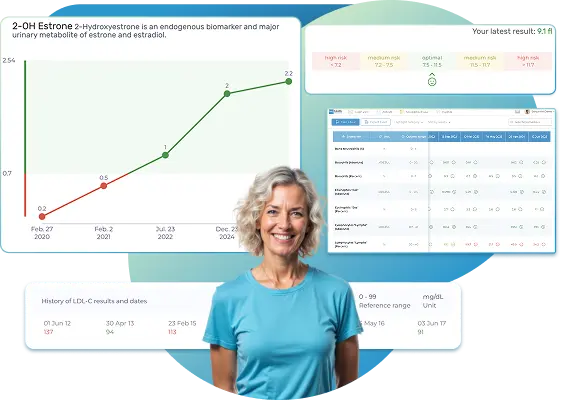
All Your Lab Results.
One Simple Dashboard.
Import, Track, and Share Your Lab Results Easily
Import, Track, and Share Your Lab Results
Import lab results from multiple providers, track changes over time, customize your reference ranges, and get clear explanations for each result. Everything is stored securely, exportable in one organized file, and shareable with your doctor—or anyone you choose.
Cancel or upgrade anytime
Article Review & Sources
All our content is backed by peer-reviewed studies, academic research, and trusted medical sources. We're committed to accuracy and transparency — see our editorial policy for details.
Laboratories
Bring All Your Lab Results Together — In One Place
We accept reports from any lab, so you can easily collect and organize all your health information in one secure spot.










Pricing Table
Gather Your Lab History — and Finally Make Sense of It
Finally, Your Lab Results Organized and Clear

Personal plans

$79/ year
Advanced Plan
Access your lab reports, explanations, and tracking tools.
- Import lab results from any provider
- Track all results with visual tools
- Customize your reference ranges
- Export your full lab history anytime
- Share results securely with anyone
- Receive 5 reports entered for you
- Cancel or upgrade anytime
$250/ once
Unlimited Account
Pay once, access everything—no monthly fees, no limits.
- Import lab results from any provider
- Track all results with visual tools
- Customize your reference ranges
- Export your full lab history anytime
- Share results securely with anyone
- Receive 10 reports entered for you
- No subscriptions. No extra fees.
$45/ month
Pro Monthly
Designed for professionals managing their clients' lab reports
- Import lab results from any provider
- Track lab results for multiple clients
- Customize reference ranges per client
- Export lab histories and reports
- Begin with first report entered by us
- Cancel or upgrade anytime
About membership
What's included in a Healthmatters membership
 Import Lab Results from Any Source
 See Your Health Timeline
 Understand What Your Results Mean

 Visualize Your Results

 Data Entry Service for Your Reports
 Securely Share With Anyone You Trust
Let Your Lab Results Tell the Full Story
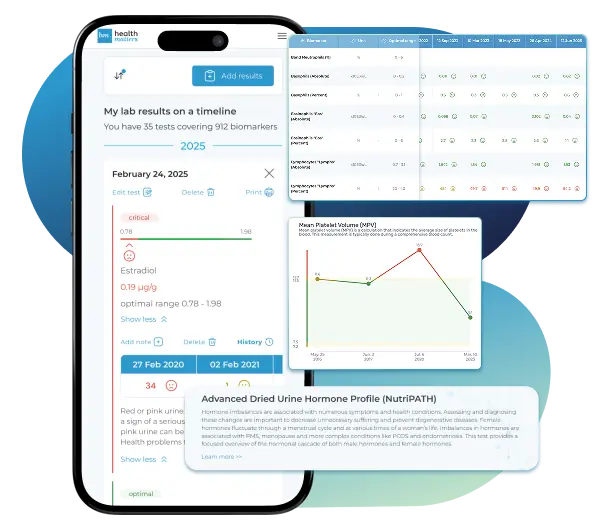
Once your results are in one place, see the bigger picture — track trends over time, compare data side by side, export your full history, and share securely with anyone you trust.




Bring all your results together to compare, track progress, export your history, and share securely.
What Healthmatters Members Are Saying

I have been using Healthmatters.io since 2021. I travel all over the world and use different doctors and health facilities. This site has allowed me to consolidate all my various test results over 14 years in one place. And every doctor that I show this to has been impressed. Because with any health professional I talk to, I can pull up historical results in seconds. It is invaluable. Even going back to the same doctor, they usually do not have the historical results from their facility in a graph format. That has been very helpful.
Anthony
Unlimited Plan Member since 2021
What fantastic service and great, easy-to-follow layouts! I love your website; it makes it so helpful to see patterns in my health data. It's truly a pleasure to use. I only wish the NHS was as organized and quick as Healthmatters.io. You've set a new standard for health tracking!
Karin
Advanced Plan Member since 2020
As a PRO member and medical practitioner, Healthmatters.io has been an invaluable tool for tracking my clients' data. The layout is intuitive, making it easy to monitor trends and spot patterns over time. The ability to customize reports and charts helps me present information clearly to my clients, improving communication and outcomes. It's streamlined my workflow, saving me time and providing insights at a glance. Highly recommended for any practitioner looking for a comprehensive and user-friendly solution to track patient labs!
Paul
Healthmatters Pro Member since 2024

We implement proven measures to keep your data safe.
At HealthMatters, we're committed to maintaining the security and confidentiality of your personal information. We've put industry-leading security standards in place to help protect against the loss, misuse, or alteration of the information under our control. We use procedural, physical, and electronic security methods designed to prevent unauthorized people from getting access to this information. Our internal code of conduct adds additional privacy protection. All data is backed up multiple times a day and encrypted using SSL certificates. See our Privacy Policy for more details.