Klebsiella pneumoniae in Urine: What the Result and CFU/mL Count Mean
Other names: Klebsiella pneumoniae ssp pneumoniae, Klebsiella pneumoniae subsp. pneumoniae
 Reference range:

In one sentence
Klebsiella pneumoniae in a urine culture means this gut bacterium grew from your sample — and whether it signals an infection depends on the colony count, your symptoms, and how the sample was collected, together.
At a Glance
- What it is: a urine culture result identifying Klebsiella pneumoniae, a gut bacterium that can infect the urinary tract
- The normal finding: no significant growth of a uropathogen — there is no numeric "normal range"
- The number to understand: the colony count in CFU/mL (colony-forming units per milliliter)
- The classic threshold: >100,000 CFU/mL (10⁵) supports a UTI with symptoms — but it is a guideline, not a rule
- Read with: your urinary symptoms, how the sample was collected, and (if treatment is needed and it was performed) antibiotic susceptibility testing
- What it cannot do: diagnose a UTI from the count alone, or tell you the strain's antibiotic resistance without antibiotic susceptibility testing
What this result means
A urine culture grows bacteria from a urine sample; when Klebsiella pneumoniae is named, this gut bacterium grew. Finding it is common and, by itself, not a diagnosis: the culture is read as the colony count, your symptoms, and the collection method together — what the rest of this page is about.
Understanding the CFU/mL count
CFU/mL means colony-forming units per milliliter — an estimate of how many live bacteria were in each milliliter of urine, from counting the colonies that grow on a culture plate. It is often reported as a threshold (>100,000 CFU/mL) rather than an exact figure. A few stray bacteria mean something very different from a heavy, pure growth — but the count is an estimate, and meaningful only in context, as the next section shows.
How the count is interpreted — always with context
There is no fixed scale on which a colony count means the same thing for everyone. What a given number means shifts with your symptoms, your sex, how the sample was collected, whether there are white cells (pyuria), recent antibiotics, a catheter, and how many organisms grew. The commonly cited >100,000 CFU/mL (10⁵) threshold is a guideline for significant bacteriuria in a clean-catch sample — not a universal cutoff. In a person with clear symptoms, counts as low as 1,000–10,000 CFU/mL can represent genuine infection; and a high count with no symptoms is not a "lower infection band" but asymptomatic bacteriuria.
So the useful way to read the result is by pattern, not by number alone:
| Culture pattern | Symptoms and context | What it may mean |
|---|---|---|
| Predominant Klebsiella growth with urinary symptoms | Dysuria, urgency, frequency, suprapubic pain; pyuria may support the picture | Consistent with a UTI; lower counts can still matter |
| High count without urinary symptoms | No attributable urinary symptoms | Possible asymptomatic bacteriuria; treatment is not automatic |
| Low count with convincing symptoms | Especially with pyuria, or a catheter specimen | May still represent infection |
| Mixed growth in a voided sample | Collection quality uncertain | Contamination becomes more likely; recollection may help |
| Klebsiella plus susceptibility results | Treatment is clinically indicated | Susceptibility — not the colony count — guides antibiotic selection |
The searched numbers are real and worth knowing, but they are inputs to this reading, not verdicts on their own.
Two people, same result
Person A has Klebsiella reported at a given colony count, and also has new burning, urgency, and white cells in the urine (pyuria). Together, those findings support a symptomatic urinary infection.
Person B has the same count but no urinary symptoms. That same number may represent asymptomatic bacteriuria rather than an infection needing antibiotics. Pregnancy, an upcoming invasive urologic procedure, or other clinical circumstances can change the next step.
Same result, different meaning — decided by symptoms and context, not by the count alone.
Why symptoms change everything
The pattern table above turns on one fact: the same count can mean different things depending on symptoms. The infection picture is acute dysuria, urgency, frequency, suprapubic pain, and where relevant fever or flank pain — not cloudy or strong-smelling urine, which may accompany infection but does not by itself establish one. A high count with no attributable symptoms may be asymptomatic bacteriuria, generally not treated except in specific situations (pregnancy, certain invasive urologic procedures) — and not treated routinely for diabetes, a catheter, or older age alone. This is why "what does my number mean?" almost always comes back to how you feel.
How the sample was collected
A sample can pick up skin bacteria during collection — contamination — raising the count without a true infection. A clean-catch midstream sample reduces this; catheter and infant-bag samples have their own rules. When a result doesn't fit — a positive culture with no symptoms, or mixed growth of several organisms suggesting contamination — a repeat clean-catch sample is a common next step.
How Klebsiella gets into the urinary tract
Most often it travels the short distance from the gut and surrounding skin into the urethra and up the urinary tract — the same route behind most UTIs, and one reason they are more common in women. It can also enter via a urinary catheter or in a healthcare setting. Finding it does not mean you did anything wrong, and it is not usually a sexually transmitted infection.
When it is more serious
Most Klebsiella UTIs are uncomplicated and treatable. Situations that warrant more attention:
- Spread upward or inward: to the kidneys (pyelonephritis — fever, flank or back pain, feeling very unwell) or the bloodstream (a more serious, systemic infection).
- Pregnancy and certain invasive urologic procedures: asymptomatic bacteriuria is screened for and treated in these specific situations even without symptoms — unlike in healthy nonpregnant adults, where it generally is not.
- Weakened immunity, diabetes, or urinary catheters: higher risk of complicated infection.
- Antibiotic resistance: some Klebsiella strains, including carbapenem-resistant ones, are harder to treat, which is why antibiotic susceptibility testing guides therapy.
Fever, back or flank pain, or feeling systemically unwell are reasons to seek care promptly rather than wait.
About Klebsiella pneumoniae
Klebsiella pneumoniae is a gram-negative gut bacterium that becomes a problem when it reaches places it doesn't belong, the urinary tract being among the most common. Its thick capsule helps it resist the immune system, and some strains resist multiple antibiotics — which is why the lab runs antibiotic susceptibility testing to report which antibiotics the organism responds to.
What this result cannot tell you
- Whether you have a UTI, from the count alone. That needs the count plus your symptoms.
- Which antibiotic to use, until antibiotic susceptibility testing on the isolate is done — and that reports in-vitro categories, not a guarantee.
- Whether the growth is a true infection or contamination, without considering symptoms and collection method.
- Severity, from the word "abnormal" alone — that flag marks a result for attention, not its seriousness.
Common interpretation mistakes
- Reading >100,000 CFU/mL as an automatic diagnosis. With no attributable symptoms it may represent asymptomatic bacteriuria, which is generally not treated outside specific exceptions.
- Dismissing a low count when you have clear symptoms. Lower counts can still mean infection.
- Expecting a numeric "normal range." The normal urine finding is no significant growth of a uropathogen.
- Assuming it's a sexually transmitted infection or something you did wrong. It usually isn't.
- Treating "abnormal" as a measure of severity. It flags attention, not danger level.
Questions your doctor may consider
- Do you have urinary symptoms — burning, urgency, frequency, pelvic pain?
- Any fever, flank or back pain, or feeling generally unwell (suggesting kidney involvement)?
- How was the sample collected — clean-catch, catheter?
- Are you pregnant, immunocompromised, diabetic, or catheterized?
- What does the antibiotic susceptibility testing show for this isolate?
Read together with
- Urinary symptoms — the single most important companion to the count
- Leukocyte esterase and nitrites (urinalysis) — supportive signs of urinary infection
- White blood cells in urine — pyuria, another supportive sign
- Antibiotic susceptibility panel — which antibiotics the isolate responds to in the lab
- A repeat clean-catch culture — when contamination or asymptomatic bacteriuria is in question
Things that can affect the result
How the sample was collected (clean-catch versus contaminated), whether you had started antibiotics before the sample was taken (which can lower the count), how long the sample sat before processing, and recent fluid intake, which can dilute the count. Mixed growth of several organisms often suggests skin contamination rather than a single-organism infection.
Clinical pearls
- The normal urine culture finding is no significant growth of a uropathogen — there is no numeric reference range.
- The count, the symptoms, and the collection method are one unit of interpretation; no single piece decides alone.
-
100,000 CFU/mL is a commonly cited guideline; symptomatic infection can occur at much lower counts, and a high count without symptoms may represent asymptomatic bacteriuria, not a lower infection tier.
- Asymptomatic bacteriuria is generally not treated, with important exceptions including pregnancy and certain invasive urologic procedures.
- Klebsiella can be antibiotic-resistant, which is why antibiotic susceptibility testing on the isolate — not the colony count — guides the antibiotic choice.
Clinical Takeaway
Klebsiella pneumoniae in urine is a common and usually treatable finding. A urine culture really raises two separate questions: whether the colony count, symptoms, and collection method fit an infection, and — if treatment is needed and susceptibility testing was performed — which antibiotics the isolate tests susceptible to. A count over 100,000 CFU/mL with urinary symptoms typically means a UTI to treat; the same count with no symptoms may represent asymptomatic bacteriuria, generally not treated except in situations such as pregnancy or certain invasive urologic procedures. Bring the result, and how you actually feel, to your clinician.
If you remember only one thing: the colony count only means something alongside your symptoms. A high number with no symptoms may represent asymptomatic bacteriuria, while a lower number with clear symptoms can still fit an infection.
Bottom line. This result identifies a treatable bacterium in your urine. The count is a starting point your clinician reads together with your symptoms and how the sample was taken — it is a prompt for evaluation, not a diagnosis on its own.
This page is not medical advice. Only your own clinician can interpret your urine culture in the context of your symptoms, history, and how the sample was collected.
FAQ about Klebsiella pneumoniae ssp pneumoniae
-
What does Klebsiella pneumoniae in my urine culture mean?
It means this bacterium grew from your urine sample. Klebsiella pneumoniae normally lives in the gut without causing harm, but it can enter the urinary tract and cause an infection. Whether the result reflects a true urinary tract infection, contamination of the sample, or asymptomatic colonization depends heavily on how much grew (the CFU/mL count) and whether you have urinary symptoms — which is why the culture is interpreted alongside those, not on its own. -
What does >100,000 CFU/mL of Klebsiella pneumoniae mean?
CFU/mL means colony-forming units per milliliter — an estimate of how many live bacteria are in the urine. Greater than 100,000 CFU/mL (10⁵) from a clean-catch sample is a commonly cited threshold for significant bacteriuria and, with urinary symptoms, supports a urinary tract infection. But the number is not read alone: in someone with clear symptoms a lower count can still matter, and in someone with no symptoms the same count may represent asymptomatic bacteriuria. Asymptomatic bacteriuria is generally not treated, with important exceptions including pregnancy and certain invasive urologic procedures. Your clinician interprets the count together with your symptoms. -
Is a lower count like 10,000–50,000 CFU/mL significant?
It can be. The 100,000 CFU/mL threshold is a guideline, not an absolute cutoff. In a person with clear urinary symptoms — or in men, or from certain collection methods — counts as low as 1,000 to 10,000 CFU/mL can represent a genuine infection. Lower counts can also reflect early infection, partial antibiotic treatment, or sample contamination. This is exactly why the count is interpreted with your symptoms and how the sample was collected, rather than by the number alone. -
Is Klebsiella pneumoniae in urine dangerous?
In most cases a Klebsiella urinary tract infection is treatable with antibiotics. It becomes more serious if it spreads to the kidneys (pyelonephritis) or the bloodstream, or in people who are pregnant, have weakened immunity, or have urinary catheters. Some Klebsiella strains are antibiotic-resistant, which can make treatment harder. A urine result showing Klebsiella is common and usually manageable — but symptoms like fever, flank or back pain, or feeling very unwell are reasons to seek care promptly. -
How did Klebsiella pneumoniae get into my urine?
Most often it travels the short distance from the gut and skin around the genital area into the urinary tract — the same route behind most urinary tract infections, and one reason they are more common in women. It can also enter through a urinary catheter, or be picked up in a healthcare setting. Finding it in urine does not mean you did anything wrong, and it is not usually a sexually transmitted infection. -
Can Klebsiella in urine be there without an infection?
Yes. Bacteria can be present without causing an infection — called asymptomatic bacteriuria — and a sample can also pick up bacteria from the skin during collection (contamination), especially if it was not a clean-catch sample. This is why a positive culture with no symptoms is interpreted differently from one with burning, urgency, or fever, and why repeat or clean-catch testing is sometimes done to sort out which is which. -
What is the treatment for Klebsiella pneumoniae in urine?
A symptomatic Klebsiella urinary tract infection is treated with antibiotics, chosen using the antibiotic susceptibility testing your lab performs on the isolate (sometimes labeled “sensitivity” on reports) — because Klebsiella can be resistant to some common options. This is a decision for your clinician, who weighs the count, your symptoms, and the susceptibility results. Asymptomatic bacteriuria is generally not treated, with important exceptions including pregnancy and certain invasive urologic procedures. This page explains what the result means; it is not a substitute for your clinician's guidance on treatment. -
Does "abnormal" next to Klebsiella pneumoniae mean something is seriously wrong?
Not necessarily. "Abnormal" simply flags that a value falls outside the reference range — here, that this bacterium was detected when the expected finding is none, or that the count exceeded a threshold. It marks the result for attention; it does not, by itself, gauge severity. What the finding means depends on the count, your symptoms, and how the sample was collected, all of which your clinician weighs together.
Lab Results Explained and Tracked

All Your Lab Results.
One Simple Dashboard.
Import, Track, and Share Your Lab Results Easily
Import, Track, and Share Your Lab Results
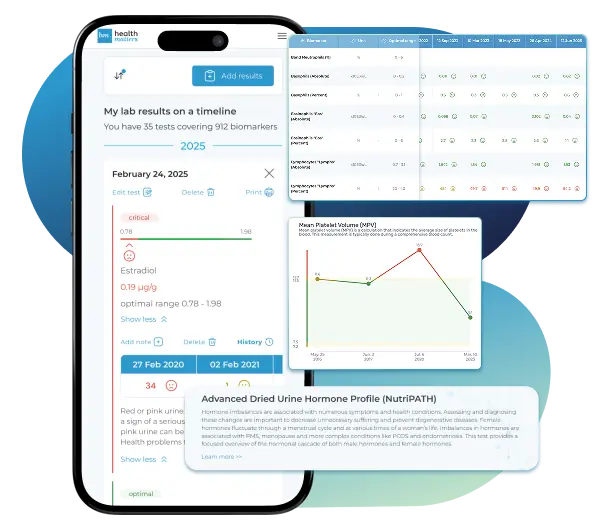
Import lab results from multiple providers, track changes over time, customize your reference ranges, and get clear explanations for each result. Everything is stored securely, exportable in one organized file, and shareable with your doctor—or anyone you choose.
Cancel or upgrade anytime
Related Biomarkers
Article Review & Sources
All our content is backed by peer-reviewed studies, academic research, and trusted medical sources. We're committed to accuracy and transparency — see our editorial policy for details.
Laboratories
Bring All Your Lab Results Together — In One Place
We accept reports from any lab, so you can easily collect and organize all your health information in one secure spot.











Pricing Table
Gather Your Lab History — and Finally Make Sense of It
Finally, Your Lab Results Organized and Clear

Personal plans

$79/ year
Advanced Plan
Access your lab reports, explanations, and tracking tools.
- Import lab results from any provider
- Track all results with visual tools
- Customize your reference ranges
- Export your full lab history anytime
- Share results securely with anyone
- Receive 5 reports entered for you
- Cancel or upgrade anytime
$250/ once
Unlimited Account
Pay once, access everything—no monthly fees, no limits.
- Import lab results from any provider
- Track all results with visual tools
- Customize your reference ranges
- Export your full lab history anytime
- Share results securely with anyone
- Receive 10 reports entered for you
- No subscriptions. No extra fees.
$45/ month
Pro Monthly
Designed for professionals managing their clients' lab reports
- Import lab results from any provider
- Track lab results for multiple clients
- Customize reference ranges per client
- Export lab histories and reports
- Begin with first report entered by us
- Cancel or upgrade anytime
About membership
What's included in a Healthmatters membership
 Import Lab Results from Any Source
 See Your Health Timeline
 Understand What Your Results Mean

 Visualize Your Results

 Data Entry Service for Your Reports
 Securely Share With Anyone You Trust
Let Your Lab Results Tell the Full Story
Once your results are in one place, see the bigger picture — track trends over time, compare data side by side, export your full history, and share securely with anyone you trust.




Bring all your results together to compare, track progress, export your history, and share securely.
What Healthmatters Members Are Saying

I have been using Healthmatters.io since 2021. I travel all over the world and use different doctors and health facilities. This site has allowed me to consolidate all my various test results over 14 years in one place. And every doctor that I show this to has been impressed. Because with any health professional I talk to, I can pull up historical results in seconds. It is invaluable. Even going back to the same doctor, they usually do not have the historical results from their facility in a graph format. That has been very helpful.
Anthony
Unlimited Plan Member since 2021
What fantastic service and great, easy-to-follow layouts! I love your website; it makes it so helpful to see patterns in my health data. It's truly a pleasure to use. I only wish the NHS was as organized and quick as Healthmatters.io. You've set a new standard for health tracking!
Karin
Advanced Plan Member since 2020
As a PRO member and medical practitioner, Healthmatters.io has been an invaluable tool for tracking my clients' data. The layout is intuitive, making it easy to monitor trends and spot patterns over time. The ability to customize reports and charts helps me present information clearly to my clients, improving communication and outcomes. It's streamlined my workflow, saving me time and providing insights at a glance. Highly recommended for any practitioner looking for a comprehensive and user-friendly solution to track patient labs!
Paul
Healthmatters Pro Member since 2024

We implement proven measures to keep your data safe.
At HealthMatters, we're committed to maintaining the security and confidentiality of your personal information. We've put industry-leading security standards in place to help protect against the loss, misuse, or alteration of the information under our control. We use procedural, physical, and electronic security methods designed to prevent unauthorized people from getting access to this information. Our internal code of conduct adds additional privacy protection. All data is backed up multiple times a day and encrypted using SSL certificates. See our Privacy Policy for more details.