
Free T3
 Optimal Result:
266 - 938 ng/g creatinine.
Optimal Result:
266 - 938 ng/g creatinine.

Other names for a T3 test include:
→ Thyroid function test.
→ Total triiodothyronine.
→ Free triiodothyronine.
→ FT3.
What is a thyroid?
The thyroid is a small, butterfly-shaped gland located at the base of the neck, just below Adam's apple. It’s a part of your endocrine system. The thyroid gland makes two main hormones: thyroxine (T-4) and triiodothyronine (T-3). These hormones affect every cell in the body. They support the rate at which the body uses fats and carbohydrates. They help control body temperature. They have an effect on heart rate. And they help control how much protein the body makes.
The thyroid’s job is to make thyroid hormones, which are secreted into the blood and then carried to every tissue in the body. Thyroid hormones help the body use energy, stay warm and keep the brain, heart, muscles, and other organs working as they should.
The major thyroid hormone secreted by the thyroid gland is thyroxine, also called T4 because it contains four iodine atoms. To exert its effects, T4 is converted to triiodothyronine (T3) by the removal of an iodine atom. This occurs mainly in the liver and in certain tissues where T3 acts, such as in the brain. The amount of T4 produced by the thyroid gland is controlled by another hormone, which is made in the pituitary gland located at the base of the brain, called thyroid stimulating hormone (abbreviated TSH). The amount of TSH that the pituitary sends into the bloodstream depends on the amount of T4 that the pituitary sees. If the pituitary sees very little T4, then it produces more TSH to tell the thyroid gland to produce more T4. Once the T4 in the bloodstream goes above a certain level, the pituitary’s production of TSH is shut off. In fact, the thyroid and pituitary act in many ways like a heater and a thermostat. When the heater is off and it becomes cold, the thermostat reads the temperature and turns on the heater. When the heat rises to an appropriate level, the thermostat senses this and turns off the heater. Thus, the thyroid and the pituitary, like a heater and thermostat, turn on and off.
T3, or triiodothyronine, is a thyroid hormone produced in small amounts by the thyroid gland. Free T3 is an active thyroid hormone. Reverse T3 may also be measured, however it is inactivated T3.
T4 and T3 circulate almost entirely bound to specific transport proteins. If the levels of these transport proteins changes, there can be changes in how much bound T4 and T3 is measured. This frequently happens during pregnancy and with the use of birth control pills. The “free” T4 or T3 is the hormone that is unbound and able to enter and affect the body tissues.
What is Triiodothyronine/T3?
Triiodothyronine, or T3, is an important thyroid hormone that helps maintain muscle control, brain function and development, heart and digestive functions. The thyroid gland makes T3 in response to thyroid stimulating hormone (TSH). TSH is made by the pituitary gland in your brain.
Triiodothyronine is referred to as T3 because this hormone has three iodine atoms attached to it. The other major thyroid hormone, thyroxine or T4, has four iodine atoms. Some of the T3 circulating in your body is made in the thyroid. Most of it, however, starts as T4 and then is converted in the blood into T3 by the removal of an iodine atom.
More than 99% of the T3 in the body is bound to proteins as it circulates in the bloodstream. A small proportion, free T3, is not attached to proteins. Only the free T3 can act on cells and stimulate many physical processes. The body regulates the relationship between bound and free T3 in a fine balance to ensure proper body functions.
The total T3 test measures both bound and free T3, while the free T3 test measures only the T3 that is not attached to protein.
T3 measurements are typically used along with other thyroid function tests, like TSH and free and total T4, to evaluate how your thyroid functions.
Triiodothyronine comes in two forms:
Free T3: This form enters your body’s tissues where it's needed.
Bound T3: This form attaches to proteins, which prevents it from entering your body’s tissues.
Most of the T3 (approximately 80%) in your blood is from your body’s conversion of T4 into T3 outside of your thyroid gland. The rest of the T3 in your bloodstream is produced by your thyroid gland.
Hormones are chemicals that coordinate different functions in your body by carrying messages through your blood to your organs, muscles and other tissues. These signals tell your body what to do and when to do it.
T3 is the active form of thyroid hormone, meaning it impacts cells in your body, whereas T4 is the inactive form of thyroid hormone. Your liver and kidneys convert most of the T4 your thyroid releases into T3.
T3 works with another thyroid hormone called T4 to help control how your body stores and uses energy to do its work (metabolism). The thyroid hormones help control many of your body's other processes, including:
→ Metabolic rate (the rate at which your body transforms the food you eat into energy).
→ Heart and digestive functions.
→ Muscle control.
→ Brain development.
→ Bone maintenance.
→ Breathing
→ Nervous system function
→ Body temperature
→ Cholesterol level
→ Moisture in the skin
→ Menstruation
What is T3, Free?
Triiodothyronine, also known as T3, is one of the two main hormones your thyroid gland releases into your bloodstream. Your thyroid also produces thyroxine, also known as T4 and tetraiodothyronine. T4 and T3 work together and are commonly referred to as “thyroid hormone.”
What is a T3 test?
A T3 (=triiodothyronine) test is a blood test that helps diagnose thyroid conditions, specifically hyperthyroidism (overactive thyroid). Healthcare providers typically order this test alongside other thyroid function tests.
High or low T3 levels may indicate an overactive or underactive thyroid.
According to the American Thyroid Association (ATA), T3 tests are most useful for diagnosing hyperthyroidism. They are less helpful in diagnosing hypothyroidism.
Healthcare providers test T3 levels using blood tests.
The tests for free T3 are generally less accurate than for total T3.
Free T3 or total T3 blood tests may be ordered to evaluate thyroid function if a thyroid disorder is suspected. They may also be used to evaluate pituitary gland problems, assess the severity and type of thyroid disease, and monitor treatment for a thyroid condition.
What are normal T3 levels?
Normal T3 level ranges vary based on age. In general, normal ranges for T3 for healthy people include:
→ Children 1 to 5 years old: 106 – 203 nanograms per deciliter (ng/dL).
→ Children 6 to 10 years old: 104 – 183 ng/dL.
→ Children 11 to 14 years old: 68 – 186 ng/dL.
→ Adolescents 15 to 17 years old: 71 – 175 ng/dL.
→ Adults 18 to 99 years old: 79 – 165 ng/dL.
Normal free T3 levels:
→ Infants up to 3 days old: 1.4 – 5.4 picograms per milliliter (pg/mL).
→ Infants 4 to 30 days old: 2.0 – 5.2 pg/mL.
→ Babies 1 month to 1 year old: 1.5 – 6.4 pg/mL.
→ Children 1 to 6 years old: 2.0 – 6.0 pg/mL.
→ Children 7 to 11 years old: 2.7 – 5.2 pg/mL.
→ Children 12 to 17 years old: 2.3 – 5.0 pg/mL.
→ Adults 18 to 99 years old: 2.3 – 4.1 pg/mL
The standard lab reference range for free T3 is 2.0−4.4 pg/mL.
What are other thyroids tests?
Thyroid stimulating hormone (TSH):
Changes in TSH levels can be an early warning sign of a thyroid condition, even if other thyroid hormone levels are still normal.
Thyroxine (T4):
T4 is the other major hormone that the thyroid produces alongside T3. High or low T4, especially in conjunction with unusual TSH levels, can indicate a thyroid condition.
Thyroid antibody tests:
Antibodies are part of the body’s immune defences. However, some people develop thyroid conditions when the body mistakenly attacks the thyroid. Antibody tests can help a doctor diagnose this issue.
Radioactive iodine uptake:
This test involves the person swallowing a small amount of iodine. The thyroid uses iodine to make T4, so by scanning the thyroid, doctors can see how well the thyroid is taking up iodine.
What do my test results mean?
Test results may vary depending on your age, gender, health history, and other things. Your test results may be different depending on the lab used. They may not mean you have a problem.
What might affect my test results?
Taking thyroid hormone medicines or certain other medicines, such as estrogen or methadone, can affect your test results. Eating a diet high in iodine-rich foods, such as seaweed, may also affect your test results.
T3 Test Results:
|
TSH |
FREE T4 |
FREE OR TOTAL T3 |
THYROID FUNCTION |
|
Normal |
Normal |
Normal |
Normal thyroid function |
|
High |
Normal |
Normal |
Subclinical hypothyroidism |
|
High |
Low |
Normal |
The finding of an elevated TSH and low FT4 or FTI indicates primary hypothyroidism due to disease in the thyroid gland. |
|
Low (or undetectable) |
Normal |
Normal |
Secondary hypothyroidism related to the pituitary gland |
|
Low |
High |
High |
A low TSH with an elevated FT4 or FTI is found in individuals who have hyperthyroidism. |
|
Low |
Low |
Low or Normal |
A low TSH and low FT4 or FTI indicates hypothyroidism due to a problem involving the pituitary gland. |
|
Normal or High |
High |
High |
Secondary hyperthyroidism related to pituitary gland |
Subclinical hypothyroidism and hyperthyroidism are conditions defined by abnormal TSH test results with normal T3 and T4 levels. These subclinical conditions often cause no symptoms or only very mild ones. Some subclinical thyroid conditions may progress to outright hypothyroidism or hyperthyroidism over time.
Why is a TSH test important as well?
The best way to initially test thyroid function is to measure the TSH level in a blood sample. Changes in TSH can serve as an “early warning system” – often occurring before the actual level of thyroid hormones in the body becomes too high or too low.
A high TSH level indicates that the thyroid gland is not making enough thyroid hormone (primary hypothyroidism).
The opposite situation, in which the TSH level is low, usually indicates that the thyroid is producing too much thyroid hormone (hyperthyroidism).
Occasionally, a low TSH may result from an abnormality in the pituitary gland, which prevents it from making enough TSH to stimulate the thyroid (secondary hypothyroidism).
In most healthy individuals, a normal TSH value means that the thyroid is functioning properly.
Why is the T4 test important as well (free & bound)?
T4 is the main form of thyroid hormone circulating in the blood. A Total T4 measures the bound and free hormone and can change when binding proteins differ. A Free T4 measures what is not bound and able to enter and affect the body tissues. Tests measuring free T4 – either a free T4 (FT4) or free T4 index (FTI) – more accurately reflect how the thyroid gland is functioning when checked with a TSH.
→ The finding of an elevated TSH and low FT4 or FTI indicates primary hypothyroidism due to disease in the thyroid gland.
→ A low TSH and low FT4 or FTI indicates hypothyroidism due to a problem involving the pituitary gland.
→ A low TSH with an elevated FT4 or FTI is found in individuals who have hyperthyroidism.
What is the Reverse T3 test?
Reverse T3 is a biologically inactive protein that is structurally very similar to T3, but the iodine atoms are placed in different locations, which makes it inactive. Some reverse T3 is produced normally in the body, but is then rapidly degraded. In healthy, non-hospitalized people, measurement of reverse T3 does not help determine whether hypothyroidism exists or not, and is not clinically useful.
What is the Thyroid Antibody test?
The immune system of the body normally protects us from foreign invaders such as bacteria and viruses by destroying these invaders with substances called antibodies produced by blood cells known as lymphocytes. In many patients with hypothyroidism or hyperthyroidism, lymphocytes react against the thyroid (thyroid autoimmunity) and make antibodies against thyroid cell proteins. Two common antibodies are thyroid peroxidase antibody and thyroglobulin antibody. Measuring levels of thyroid antibodies may help diagnose the cause of the thyroid problem. For example, positive anti-thyroid peroxidase and/or anti-thyroglobulin antibodies in a patient with hypothyroidism result in a diagnosis of Hashimoto’s thyroiditis. While detecting antibodies is helpful in the initial diagnosis of hypothyroidism due to autoimmune thyroiditis, following their levels over time is not helpful in detecting the development of hypothyroidism or response to therapy. TSH and FT4 are what tell us about the actual thyroid function or levels.
A different antibody that may be positive in a patient with hyperthyroidism is the stimulatory TSH receptor antibody (TSI). This antibody causes the thyroid to be overactive in Graves’ Disease. If you have Graves’ disease, your doctor might also order a thyrotropin receptor antibody test (TSHR or TRAb), which detects both stimulating and blocking antibodies. Following antibody levels in Graves’ patients may help to assess response to treatment of hyperthyroidism, to determine when it is appropriate to discontinue antithyroid medication, and to assess the risk of passing antibodies to the fetus during pregnancy.
What is the Thyroglobulin test?
Thyroglobulin is a protein produced by normal thyroid cells and thyroid cancer cells. It is not a measure of thyroid function and it does not diagnose thyroid cancer when the thyroid gland is still present. It is used most often in patients who have had surgery for thyroid cancer in order to monitor them after treatment. Thyroglobulin is not a primary measure of thyroid hormone function.
Medications that might interfere with Thyroid function testing:
There are many medications that can affect thyroid function testing. Some common examples include:
→ Estrogens, such as in birth control pills, or in pregnancy, cause high levels of total T4 and T3. This is because estrogens increase the level of the binding proteins. In these situations, it is better to ask both for TSH and free T4 for thyroid evaluation, which will typically be in the normal range.
→ Biotin, a commonly taken over-the-counter supplement, can cause the measurement of several thyroid function tests to appear abnormal, when they are in fact normal in the blood. Biotin should not be taken for 2 days before blood is drawn for thyroid function testing to avoid this effect.
Primary Hyperthyroidism:
A low TSH and a high thyroid hormone level (e.g. high FT4) can indicate primary hyperthyroidism. Primary hyperthyroidism occurs when the thyroid gland makes or releases too much thyroid hormone. Symptoms of hyperthyroidism can include tremors, palpitations, restlessness, feeling too warm, frequent bowel movements, disrupted sleep, and unintentional weight loss.
Causes of primary hyperthyroidism include:
→ Graves' disease
→ Toxic or autonomously functioning thyroid nodule
→ Multinodular goiter
→ Thyroid inflammation (called thyroiditis) early in the course of disease
→ Thyroid gland dysfunction due to a medication (e.g. amiodarone or cancer immunotherapy)
→ Excess thyroid hormone therapy
Early or mild hyperthyroidism may present as a persistently low TSH and a normal FT4 hormone level. This pattern is called subclinical hyperthyroidism and your doctor may recommend treatment. Over time, untreated subclinical hyperthyroidism can worsen osteoporosis and contribute to abnormal heart rhythms.
Thyroiditis (Thyroid inflammation):
Thyroid inflammation, also called thyroiditis, causes injury to the thyroid gland and release of thyroid hormone. Individuals with thyroiditis usually have a brief period of hyperthyroidism (low TSH and high FT4 or Total T4) followed by development of hypothyroidism (high TSH and low FT4 or Total T4) or resolution.
Some forms of thyroiditis are transient, like postpartum thyroiditis or thyroiditis following an infection, and often resolve on their own without need for medication.
Other forms of thyroiditis, like thyroiditis resulting from cancer immunotherapy, interferon alpha, or tyrosine kinase inhibitors, usually result in permanent hypothyroidism and require long term treatment with thyroid hormone replacement.
Your endocrinologist will monitor your thyroid tests during thyroiditis and can help determine if you need short- and long-term medications to balance your thyroid function and control any symptoms.
Central Hypothyroidism:
A low TSH and a low FT4 may indicate pituitary disease. Detection of central hypothyroidism should prompt your doctor to check for problems in other pituitary hormones, an underlying cause, and you may need imaging tests to look at the pituitary gland.
Central hypothyroidism is treated with thyroid hormone replacement. Importantly, adequacy of thyroid replacement in central hyperthyroidism is assessed with FT4 and Total T4 tests not TSH as in primary hyperthyroidism, and deficiency in stress hormone cortisol should be assessed before starting thyroid treatment to prevent an adrenal crisis.
Causes of central hypothyroidism include pituitary gland disease, such as a pituitary mass or tumor, history of pituitary surgery or radiation, pituitary inflammation (called hypophysitis) resulting from autoimmune disease or cancer immunotherapy, and infiltrative diseases.
Rare causes of abnormal thyroid function:
→ Thyroid hormone resistance
→ Iodine induced hyperthyroidism
→ TSH-secreting tumor (TSH-oma)
→ Germ cell tumors
→ Trophoblastic disease
→ Infiltrative diseases, such as systemic scleroderma, hemochromatosis, or amyloidosis.
When abnormal thyroid function tests are not due to thyroid disease:
While blood tests to measure thyroid hormones and thyroid stimulating hormone (TSH) are widely available, it is important to remember that not all tests are useful in all circumstances and many factors including medications, supplements, and non-thyroid medical conditions can affect thyroid test results. An endocrinologist can help you make sense of thyroid test results when there is a discrepancy between your results and how you feel. A good first step is often to repeat the test and ensure there are no medications that might interfere with the test results. Below are some common reasons for mismatch between thyroid tests and thyroid disease.
How is hypothyroidism treated?
Levothyroxine is the standard of care in thyroid hormone replacement therapy and treatment of hypothyroidism. Levothyroxine (also called LT4) is equivalent to the T4 form of naturally occurring thyroid hormone and is available in generic and brand name forms. For patients with celiac disease (autoimmune disease against gluten) or gluten sensitivity, a gluten free formulation of levothyroxine is available. Some individuals may have genetic variants that affect how the body converts T4 to T3 and these individuals may benefit from the addition of a small dose of triiodothyronine.
Liothyronine is a replacement T3 (triiodothyronine) thyroid hormone. This medication has a short half-life and is taken twice per day or in combination with levothyroxine. Liothyronine alone is not used for treatment of hypothyroidism long term.
Other formulations of thyroid hormone replacement include natural or desiccated thyroid hormone extracts from animal sources. Natural or desiccated thyroid extract preparations have greater variability in the dose of thyroid hormone between batches and imbalanced ratios if T4 vs T3. Natural or animal sources of thyroid hormone typically contain 75% T4 and 25% T3, compared to the normal human balance of 95% T4 and 5% T3. Treatment with a correct balance of T4 and T3 is important to replicate normal thyroid function and prevent adverse effects of excess T3, including osteoporosis, heart problems, and mood and sleep disturbance. An endocrinologist can evaluate symptoms and thyroid tests to help balance thyroid hormone medications.
Lab Results Explained and Tracked
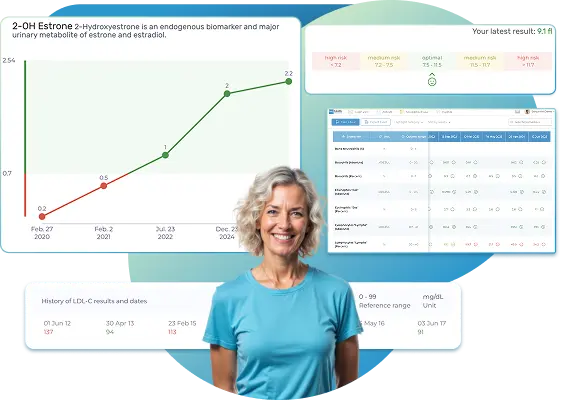
All Your Lab Results.
One Simple Dashboard.
Import, Track, and Share Your Lab Results Easily
Import, Track, and Share Your Lab Results
Import lab results from multiple providers, track changes over time, customize your reference ranges, and get clear explanations for each result. Everything is stored securely, exportable in one organized file, and shareable with your doctor—or anyone you choose.
Cancel or upgrade anytime
What does it mean if your Free T3 result is too low?
Free T3 levels can appear low in a dried urine test in women due to several factors that influence thyroid hormone metabolism. This can be indicative of an underlying thyroid dysfunction. One possible reason is that dried urine tests primarily measure hormones and their metabolites excreted through urine, but they may not provide a comprehensive picture of thyroid function. Serum or blood tests are typically more accurate for assessing thyroid hormones, including Free T3. Additionally, urinary excretion of Free T3 can vary throughout the day, making it less reliable for diagnosis.
Low Free T3 levels in a dried urine test may also result from factors such as stress, certain medications, or dietary deficiencies. Stress can lead to alterations in thyroid hormone metabolism, potentially reducing Free T3 levels. Medications like glucocorticoids can affect thyroid function, leading to low Free T3. Furthermore, inadequate iodine intake or specific dietary patterns may contribute to thyroid dysfunction, impacting Free T3 levels.
In summary, while dried urine tests offer valuable insights into hormonal balance, they may not provide the most accurate assessment of thyroid function, especially for Free T3. To evaluate thyroid health comprehensively, healthcare providers often rely on a combination of serum thyroid hormone tests and clinical evaluation to make an accurate diagnosis in women.
Article Review & Sources
All our content is backed by peer-reviewed studies, academic research, and trusted medical sources. We're committed to accuracy and transparency — see our editorial policy for details.
Laboratories
Bring All Your Lab Results Together — In One Place
We accept reports from any lab, so you can easily collect and organize all your health information in one secure spot.











Pricing Table
Gather Your Lab History — and Finally Make Sense of It
Finally, Your Lab Results Organized and Clear

Personal plans

$79/ year
Advanced Plan
Access your lab reports, explanations, and tracking tools.
- Import lab results from any provider
- Track all results with visual tools
- Customize your reference ranges
- Export your full lab history anytime
- Share results securely with anyone
- Receive 5 reports entered for you
- Cancel or upgrade anytime
$250/ once
Unlimited Account
Pay once, access everything—no monthly fees, no limits.
- Import lab results from any provider
- Track all results with visual tools
- Customize your reference ranges
- Export your full lab history anytime
- Share results securely with anyone
- Receive 10 reports entered for you
- No subscriptions. No extra fees.
$45/ month
Pro Monthly
Designed for professionals managing their clients' lab reports
- Import lab results from any provider
- Track lab results for multiple clients
- Customize reference ranges per client
- Export lab histories and reports
- Begin with first report entered by us
- Cancel or upgrade anytime
About membership
What's included in a Healthmatters membership
 Import Lab Results from Any Source
 See Your Health Timeline
 Understand What Your Results Mean

 Visualize Your Results

 Data Entry Service for Your Reports
 Securely Share With Anyone You Trust
Let Your Lab Results Tell the Full Story
Once your results are in one place, see the bigger picture — track trends over time, compare data side by side, export your full history, and share securely with anyone you trust.




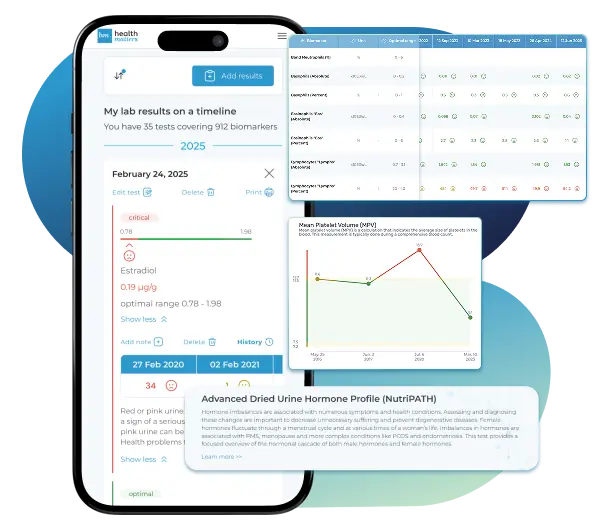
Bring all your results together to compare, track progress, export your history, and share securely.
What Healthmatters Members Are Saying

I have been using Healthmatters.io since 2021. I travel all over the world and use different doctors and health facilities. This site has allowed me to consolidate all my various test results over 14 years in one place. And every doctor that I show this to has been impressed. Because with any health professional I talk to, I can pull up historical results in seconds. It is invaluable. Even going back to the same doctor, they usually do not have the historical results from their facility in a graph format. That has been very helpful.
Anthony
Unlimited Plan Member since 2021
What fantastic service and great, easy-to-follow layouts! I love your website; it makes it so helpful to see patterns in my health data. It's truly a pleasure to use. I only wish the NHS was as organized and quick as Healthmatters.io. You've set a new standard for health tracking!
Karin
Advanced Plan Member since 2020
As a PRO member and medical practitioner, Healthmatters.io has been an invaluable tool for tracking my clients' data. The layout is intuitive, making it easy to monitor trends and spot patterns over time. The ability to customize reports and charts helps me present information clearly to my clients, improving communication and outcomes. It's streamlined my workflow, saving me time and providing insights at a glance. Highly recommended for any practitioner looking for a comprehensive and user-friendly solution to track patient labs!
Paul
Healthmatters Pro Member since 2024

We implement proven measures to keep your data safe.
At HealthMatters, we're committed to maintaining the security and confidentiality of your personal information. We've put industry-leading security standards in place to help protect against the loss, misuse, or alteration of the information under our control. We use procedural, physical, and electronic security methods designed to prevent unauthorized people from getting access to this information. Our internal code of conduct adds additional privacy protection. All data is backed up multiple times a day and encrypted using SSL certificates. See our Privacy Policy for more details.