
Hippurate
 Optimal Result:
17.13 - 768.53 ug/mg creatinine.
Optimal Result:
17.13 - 768.53 ug/mg creatinine.

Microbes resident in the large intestine of the human body help to break down complex aromatic compounds in dietary plant matter (polyphenols), freeing up benzoic acid, which enters the bloodstream. The liver can add the amino acid glycine to benzoic acid to form hippuric acid, which re-enters the blood and is absorbed by the kidneys. As a result, the kidneys excrete hundreds of milligrams of hippuric acid into the urine every day.
Dietary polyphenols include fruits, vegetables, whole grains, coffee, tea, and nuts. Abnormalities of urinary benzoate and hippurate may reveal detoxification or dysbiosis (=microbial imbalance) issues.
More on intestinal bacteria:
-
By acting on various dietary or endogenous substrates, intestinal bacteria or parasites can generate metabolic products that are absorbed and excreted in urine with or without further modification in the liver and kidney.
-
In health, the intestinal tract contains large amounts of beneficial bacteria that produce some B vitamins and provide stimulus for proper immune function. However, if your stomach acid is not adequate, if you fail to digest protein, or if your diet does not supply sufficient fiber, the resulting overgrowth of unfavorable bacteria can release toxic products that your body must remove. These products include hippurate.
Where is hippurate formed?
-
Hippurate is a glycine conjugate of benzoic acid formed in the mitochondria of the liver and kidneys
-
Bacteria also convert certain food components (polyphenols) into hippurate.
-
Hippurate is also derived from the metabolism of quinic acid and/or shikimic acid.
-
Hippurate is a bacterial product of phenylalanine metabolism.
What are polyphenols?
Polyphenols are micronutrients that we get through certain plant-based foods. They're packed with antioxidants and potential health benefits. It's thought that polyphenols can improve or help treat digestion issues, weight management difficulties, diabetes, neurodegenerative disease, and cardiovascular diseases.
What is benzoate?
Bacterial deamination of the amino acid phenylalanine forms benzoate, which is conjugated with another amino acid, glycine, to form hippurate. Elevated levels of benzoate compared to hippurate can indicate low levels of glycine and pantothenic acid (Vitamin B5). Benzoate can be increased due to dietary intake of certain foods.
| Benzoate | Hippurate | Other bacterial markers | Interpretation |
|
Low |
Low |
No elevations | Low intake of benzoate and precursors, plus normal or low dietary polyphenol conversion by intestinal mircrobes |
| Multiple elevations | Low intake of benzoate and precursors with intestinal microbial overgrowth of species that do not metabolize dietary polyhenols (very rare) | ||
|
High |
Low |
No elevations | Glycine conjugation deficit (possibly genetic polymorphic phenotype if hippurate is very low); dietary benzoate or precursor intake. |
| Multiple elevations | Glycine conjugation deficit; presume benzoate is at least partially from intestinal microbial action on dietary polyphenols. | ||
|
Low |
High |
No elevations | Normal hippurate production via active glycine conjugation; No indication of microbial overgrowth. |
| Multiple elevations | Normal hippurate production via active glycine conjugation; Presume hippurate is at least partially derived from intestinal microbial action on dietary polyphenols. | ||
|
High |
High |
No elevations | Very high dietary benzoate or precursor intake with partial conversion to hippurate. |
| Multiple elevations | Very high benzoate load, some, or all, of which is contributed by intestinal microbial action on dietary polyphenols. |
Possible treatment options:
Take appropriate steps to ensure favorable gut microflora population to normalize gut permeability. Treatment can include diet changes, pre- and probiotics, mucosal support, and possibly further testing such as a stool test or immune reactions from food.
References:
Lab Results Explained and Tracked
What does it mean if your Hippurate result is too high?
High levels of hippurate may occur if there is high consumption of whole grains or other plant foods (flavonoids, tea, coffee) or if there are higher levels of its precursor benzoate. Liver conversion of benzoate into hippurate usually occurs within 3-4 hours. Hippurate levels may also reflect liver protein metabolism, and hippurate levels may increase on a high protein diet or with amino acid supplementation. Toxic exposures (toluene, benzenes, gasoline) may increase hippurate levels. Hippurate may also increase if type II diabetes is present, or if the patient is highly stressed or anxious.

All Your Lab Results.
One Simple Dashboard.
Import, Track, and Share Your Lab Results Easily
Import, Track, and Share Your Lab Results
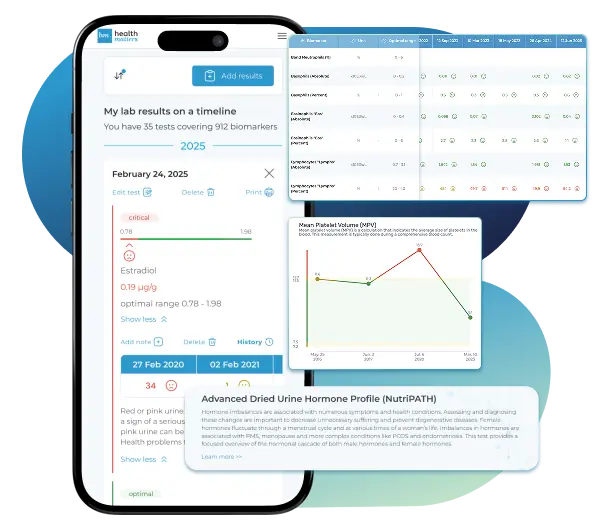
Import lab results from multiple providers, track changes over time, customize your reference ranges, and get clear explanations for each result. Everything is stored securely, exportable in one organized file, and shareable with your doctor—or anyone you choose.
Cancel or upgrade anytime
What does it mean if your Hippurate result is too low?
Low levels of hippurate may occur if there are nutritional enzyme inhibitions or inherited low-activity enzyme variants present in the synthesis pathway, or if there are low levels of its precursor (plant materials). Hippurate is synthesized in the liver and kidney mitochondria from benzoate on a pathway that requires minerals and glycine. A low hippurate level with a higher benzoate level may indicate a glycine insufficiency or a defect in the glycine deportation system. Low levels of hippurate may also occur if the diet is poor in plant compounds or if there are too few beneficial bacteria in the gut. Comorbid conditions that may be associated with lower hippurate levels include inflammatory bowel disease (IBD) parasites, and obesity. Some toxic chemical exposures (hydrazine, methylene dianiline, galactosamine, chlorophenoxyacetic acid herbicides) may also decrease hippurate levels.
- Low hippurate with increased benzoate may indicate a glycine deficiency or a defect in the glycine deportation system. If indicated, consider supporting the glycine deportation system with magnesium, manganese (if deficient), potassium, rubidium and glycine. Poor methylation may inhibit serine/glycine interconversion. If indicated, consider checking methylation status.
Article Review & Sources
All our content is backed by peer-reviewed studies, academic research, and trusted medical sources. We're committed to accuracy and transparency — see our editorial policy for details.
Laboratories
Bring All Your Lab Results Together — In One Place
We accept reports from any lab, so you can easily collect and organize all your health information in one secure spot.











Pricing Table
Gather Your Lab History — and Finally Make Sense of It
Finally, Your Lab Results Organized and Clear

Personal plans

$79/ year
Advanced Plan
Access your lab reports, explanations, and tracking tools.
- Import lab results from any provider
- Track all results with visual tools
- Customize your reference ranges
- Export your full lab history anytime
- Share results securely with anyone
- Receive 5 reports entered for you
- Cancel or upgrade anytime
$250/ once
Unlimited Account
Pay once, access everything—no monthly fees, no limits.
- Import lab results from any provider
- Track all results with visual tools
- Customize your reference ranges
- Export your full lab history anytime
- Share results securely with anyone
- Receive 10 reports entered for you
- No subscriptions. No extra fees.
$45/ month
Pro Monthly
Designed for professionals managing their clients' lab reports
- Import lab results from any provider
- Track lab results for multiple clients
- Customize reference ranges per client
- Export lab histories and reports
- Begin with first report entered by us
- Cancel or upgrade anytime
About membership
What's included in a Healthmatters membership
 Import Lab Results from Any Source
 See Your Health Timeline
 Understand What Your Results Mean

 Visualize Your Results

 Data Entry Service for Your Reports
 Securely Share With Anyone You Trust
Let Your Lab Results Tell the Full Story
Once your results are in one place, see the bigger picture — track trends over time, compare data side by side, export your full history, and share securely with anyone you trust.




Bring all your results together to compare, track progress, export your history, and share securely.
What Healthmatters Members Are Saying

I have been using Healthmatters.io since 2021. I travel all over the world and use different doctors and health facilities. This site has allowed me to consolidate all my various test results over 14 years in one place. And every doctor that I show this to has been impressed. Because with any health professional I talk to, I can pull up historical results in seconds. It is invaluable. Even going back to the same doctor, they usually do not have the historical results from their facility in a graph format. That has been very helpful.
Anthony
Unlimited Plan Member since 2021
What fantastic service and great, easy-to-follow layouts! I love your website; it makes it so helpful to see patterns in my health data. It's truly a pleasure to use. I only wish the NHS was as organized and quick as Healthmatters.io. You've set a new standard for health tracking!
Karin
Advanced Plan Member since 2020
As a PRO member and medical practitioner, Healthmatters.io has been an invaluable tool for tracking my clients' data. The layout is intuitive, making it easy to monitor trends and spot patterns over time. The ability to customize reports and charts helps me present information clearly to my clients, improving communication and outcomes. It's streamlined my workflow, saving me time and providing insights at a glance. Highly recommended for any practitioner looking for a comprehensive and user-friendly solution to track patient labs!
Paul
Healthmatters Pro Member since 2024

We implement proven measures to keep your data safe.
At HealthMatters, we're committed to maintaining the security and confidentiality of your personal information. We've put industry-leading security standards in place to help protect against the loss, misuse, or alteration of the information under our control. We use procedural, physical, and electronic security methods designed to prevent unauthorized people from getting access to this information. Our internal code of conduct adds additional privacy protection. All data is backed up multiple times a day and encrypted using SSL certificates. See our Privacy Policy for more details.