Alpha-2 Globulin High or Low: What Your SPEP Result Means
Other names: Alpha-2 Globulin, Serum, Alpha-2 Globulin, Alpha 2 Globulin, Alpha-2-Globulin, A2 Globulin, Alpha2 Globulin, Alpha-2 Globulin High, Alpha-2 Globulin Low, Alpha 2 Globulin High, Alpha 2 Globulin Low, High Alpha 2 Globulin, Low Alpha 2 Globulin, Alpha-2 Globulin High Meaning, Alpha-2 Globulin Low Meaning, Alpha-2 Globulin Normal Range, Alpha 2 Globulin Normal Range, Alpha 2 Globulin Blood Test, Alpha-2 Globulin Blood Test, SPE Alpha 2, SPE Alpha 2 High, Alpha 2 Globulin Electrophoresis, Alpha 2 Globulin Electrophoresis High, Alpha 2 Globulin Electrophoresis Low, Serum Protein Electrophoresis Alpha 2 High, Alpha-2 Globulin Serum, Alpha 2 Serum, Alpha 2 Serum High, Alpha 2 Fraction, Alpha 2 Fraction High, Alpha-2 Fraction High, Alpha 2 Blood Test, Alpha 2 Blood Test High, Alpha 2 Blood Test Low, What is Alpha 2 Globulin in Blood Test, Alpha 2 Globulin High Causes, Alpha 2 Globulin High Cancer, Alpha 2 Macroglobulin, Alpha 2 Macroglobulin High, Alpha-2-Macroglobulin, Alpha-2-Macroglobulin High, Alpha-2 Macroglobulins QN, Elevated Alpha 2 Globulin, Increased Alpha 2 Globulin, Decreased Alpha 2 Globulin, Alpha 2 Globulin Erhöht (German), Alpha-2-Globulin Zu Hoch (German), Alpha 2 Globuline Élevé (French), Augmentation des Alpha 2 Globulines (French), Alpha 2 Globuline Élevé Cause (French), Alpha 2 Globuline Quand s'Inquiéter (French), Alfa 2 Globulina Alta (Spanish/Italian), Alfa 2 Globulina Alta Causas (Spanish), Alfa 2 Globuline Te Hoog (Dutch), Alfa-2 Globuliny Podwyższone (Polish), Альфа 2 Глобулин Повышен (Russian), تحليل Alpha 2 مرتفع (Arabic)
 Optimal Result:
0.4 - 1 g/dL,
or
4 - 10 g/L.
Optimal Result:
0.4 - 1 g/dL,
or
4 - 10 g/L.

QUICK ANSWER
Alpha-2 globulin is a group of proteins measured as the second fraction on a serum protein electrophoresis (SPEP) report. High alpha-2 most commonly indicates inflammation or the body's response to tissue stress. Low alpha-2 most commonly indicates hemolytic anemia or liver disease.
| Result | What it means |
|---|---|
| Low alpha-2 globulin (below ~0.6 g/dL) | Reduced protein production, hemolytic anemia (haptoglobin consumed), or severe liver disease |
| Normal alpha-2 globulin (~0.6–1.0 g/dL) | No acute inflammatory reaction; protein synthesis normal |
| High alpha-2 globulin (above ~1.0 g/dL) | Acute phase reaction — most commonly inflammation, infection, nephrotic syndrome, or tissue damage |
Common questions at a glance:
| Question | Short answer |
|---|---|
| What is alpha-2 globulin? | A group of proteins (mainly haptoglobin and alpha-2 macroglobulin) measured as the second fraction on SPEP |
| What does high alpha-2 globulin mean? | The liver is producing more acute phase proteins — usually due to inflammation, infection, or nephrotic syndrome |
| What does low alpha-2 globulin mean? | Most commonly hemolytic anemia (haptoglobin consumed) or reduced liver protein synthesis |
| Is alpha-2 globulin the same as alpha-2 macroglobulin? | No — alpha-2 macroglobulin is one of several proteins that make up the alpha-2 fraction |
| What is SPE alpha-2? | "SPE" stands for serum protein electrophoresis — SPE alpha-2 is the alpha-2 fraction on this test |
| Can high alpha-2 indicate cancer? | Elevated alpha-2 is a non-specific inflammation marker — cancer is one possible cause, along with many others |
COMMON SPEP PATTERNS AT A GLANCE:
| Albumin | Alpha-2 | Other notable finding | Most likely pattern |
|---|---|---|---|
| Low | High | Edema, foamy urine | Nephrotic syndrome |
| Normal | High | High alpha-1 also elevated | Acute inflammation / infection |
| Normal | High | Gamma diffusely high | Chronic inflammation or autoimmune disease |
| Normal | Normal | Tall narrow gamma spike | Monoclonal gammopathy — evaluate regardless of alpha-2 |
| Normal | Low | Anemia, jaundice | Hemolysis — check haptoglobin separately |
| Low | Low | Multiple fractions low | Advanced liver disease |
WHAT IS ALPHA-2 GLOBULIN? — THE SPEP CONTEXT
Alpha-2 globulin appears on a serum protein electrophoresis (SPEP) report — it is not a standalone blood test. SPEP separates blood proteins by their electrical charge into five zones (fractions), each containing different proteins:
| SPEP Fraction | Normal range (g/dL) | Main proteins | What high or low indicates |
|---|---|---|---|
| Albumin | ~3.5–5.0 | Albumin | Nutritional status, liver function, kidney loss |
| Alpha-1 Globulin | ~0.1–0.4 | Alpha-1 antitrypsin, alpha-1 acid glycoprotein | Acute phase response; low in alpha-1 antitrypsin deficiency |
| Alpha-2 Globulin | ~0.6–1.0 | Haptoglobin, alpha-2 macroglobulin, ceruloplasmin | Acute inflammation, nephrotic syndrome, hemolysis |
| Beta Globulin | ~0.7–1.2 | Transferrin, complement, beta-lipoprotein | Iron deficiency (high transferrin), IgA myeloma |
| Gamma Globulin | ~0.7–1.7 | Immunoglobulins (IgG, IgA, IgM) | Infections, autoimmune disease, multiple myeloma |
When your lab report shows "Alpha-2 Globulin" flagged as high or low, it means the total protein content of the alpha-2 zone — not any single protein — is outside the reference range.
WHAT IS IN THE ALPHA-2 FRACTION?
The alpha-2 zone on SPEP contains several distinct proteins that migrate together. Understanding which proteins contribute to this fraction explains why different diseases cause alpha-2 to rise or fall:
| Protein | Function | What causes it to rise | What causes it to fall |
|---|---|---|---|
| Haptoglobin | Binds free hemoglobin released by red blood cell breakdown; prevents kidney damage | Acute inflammation, infection, corticosteroids | Hemolytic anemia (consumed binding hemoglobin), severe liver disease |
| Alpha-2 Macroglobulin | Large protease inhibitor; traps and neutralizes proteases | Nephrotic syndrome (large size prevents renal loss), chronic liver disease (some types) | Pancreatitis, DIC, fibrinolysis |
| Ceruloplasmin | Copper transport; ferroxidase activity | Acute inflammation, pregnancy, oral contraceptive use, copper excess | Wilson disease (copper retention), malnutrition |
| Alpha-2 Antiplasmin | Inhibits plasmin (clot-dissolving enzyme) | Acute phase reaction | DIC, fibrinolysis |
In most clinical contexts, haptoglobin is the dominant driver of alpha-2 changes. When haptoglobin rises (due to inflammation), alpha-2 rises. When haptoglobin falls (due to hemolysis), alpha-2 falls. In nephrotic syndrome, alpha-2 macroglobulin is the most important driver because its large molecular weight prevents it from being lost in the urine while smaller proteins (albumin) are excreted.
YOUR ALPHA-2 GLOBULIN VALUE — WHAT DOES YOUR NUMBER MEAN?
| Alpha-2 value | Interpretation |
|---|---|
| Below 0.5 g/dL | Significantly low — likely hemolytic anemia or severe liver disease; evaluate |
| 0.5–0.6 g/dL | Low to borderline — hemolysis or reduced synthesis; clinical correlation |
| 0.6–1.0 g/dL | Normal range for most labs |
| 0.9 g/dL | Upper normal range — within reference range for most labs |
| 1.0 g/dL | At or near upper limit of normal — borderline for some labs |
| 1.1 g/dL | Mildly elevated — mild acute phase reaction; interpret with clinical context |
| 1.2–1.4 g/dL | Moderately elevated — meaningful acute phase response; evaluate for cause |
| Above 1.4 g/dL | Significantly elevated — strong acute phase response or nephrotic syndrome; investigate |
Note on percentage vs absolute values: Some SPEP reports express alpha-2 globulin as a percentage of total protein (alpha-2%) rather than an absolute g/dL value. Normal alpha-2% is approximately 7–15% of total serum protein. If your report shows "Alpha-2 12%" — that is within normal range.
MOST COMMON ALPHA-2 GLOBULIN RESULTS
| Result | Typical interpretation |
|---|---|
| Alpha-2 below 0.5 g/dL | Significantly low — likely hemolytic anemia or severe liver disease; evaluate with haptoglobin, LDH |
| Alpha-2 0.5–0.6 g/dL | Low — borderline; hemolysis or reduced synthesis; clinical correlation needed |
| Alpha-2 0.7 g/dL | Low-normal — within reference range for most labs; no action in isolation |
| Alpha-2 0.8 g/dL | Normal — within reference range |
| Alpha-2 0.9 g/dL | Normal to upper-normal — within reference range for most labs |
| Alpha-2 1.0 g/dL | At upper limit of normal — borderline for some labs; check other inflammation markers |
| Alpha-2 1.1 g/dL | Mildly elevated — mild acute phase response likely; interpret with symptoms and CRP/ESR |
| Alpha-2 1.2–1.4 g/dL | Moderately elevated — active inflammation or disease process likely |
| Alpha-2 1.5 g/dL | Significantly elevated — meaningful acute phase response or nephrotic syndrome; evaluate cause |
| Alpha-2 1.8 g/dL and above | Markedly elevated — strongly suggests active disease; nephrotic syndrome or significant inflammatory condition; clinical investigation warranted |
Always check your lab's reference range. Some labs report normal as 0.5–0.9 g/dL, others as 0.6–1.0 g/dL or higher for older adults. The flag on your report is the most reliable guide for your specific lab.
WHAT DOES HIGH ALPHA-2 GLOBULIN MEAN?
High alpha-2 globulin (above approximately 1.0 g/dL) means the liver has increased production of acute phase proteins — the group of proteins that rise in response to systemic inflammation, tissue damage, infection, or malignancy. This is the body's normal response to stress; the question is identifying what is driving it.
Common causes of high alpha-2 globulin:
| Cause | Notes |
|---|---|
| Acute infection | Bacterial infections drive a strong acute phase response — one of the most common causes of elevated alpha-2 |
| Chronic inflammation | Rheumatoid arthritis, inflammatory bowel disease, lupus, and other autoimmune conditions persistently elevate alpha-2 |
| Nephrotic syndrome | The most important specific cause — albumin and small proteins are lost in urine, while alpha-2 macroglobulin (too large to be filtered) rises; the pattern of low albumin + high alpha-2 on SPEP is highly characteristic |
| Tissue damage / trauma / surgery | Any significant tissue injury triggers acute phase protein production |
| Malignancy | Cancer cells trigger systemic inflammation — elevated alpha-2 can be a non-specific finding in various cancers; it is not specific enough to diagnose cancer |
| Pregnancy | Estrogen increases ceruloplasmin production, raising alpha-2 mildly |
| Oral contraceptive use | Same mechanism as pregnancy — estrogen effect on ceruloplasmin |
| Burns | Major burns trigger an intense acute phase response |
| Diabetes mellitus | Chronic low-grade inflammation and metabolic dysregulation |
| Liver disease (early) | Paradoxically, early liver inflammation can raise alpha-2; later in advanced cirrhosis, levels may fall as synthesis capacity is lost |
HIGH ALPHA-2 AND NEPHROTIC SYNDROME — THE MOST IMPORTANT SPECIFIC CAUSE
Nephrotic syndrome deserves special attention because it produces a highly characteristic SPEP pattern that includes markedly elevated alpha-2 globulin:
| SPEP Finding | In Nephrotic Syndrome | Why |
|---|---|---|
| Albumin | Low (often severely) | Lost in urine — small protein leaks through damaged kidney filter |
| Alpha-1 | Low-Normal | Lost in urine |
| Alpha-2 | High (often markedly) | Alpha-2 macroglobulin is too large to pass through the kidney filter, so it concentrates in the blood while other proteins are lost |
| Beta | Variable | Transferrin may be low (lost in urine) |
| Gamma | Low-Normal | Immunoglobulins partially lost in urine |
Why this matters: A pattern of low albumin + high alpha-2 on SPEP, in a patient with edema and protein in the urine, should prompt evaluation for nephrotic syndrome. This is not a diagnosis made from SPEP alone, but the pattern is distinctive.
HIGH ALPHA-2 AND KIDNEY TESTS — INTERPRETING THEM TOGETHER:
| Alpha-2 | Albumin | Urine Protein | Creatinine / eGFR | Most likely interpretation |
|---|---|---|---|---|
| High | Low | High | Normal or elevated | Nephrotic syndrome pattern — kidney filtration barrier damaged |
| High | Normal | Normal | Normal | Inflammation more likely than kidney disease — nephrotic syndrome unlikely |
| High | Low | Normal | Normal | Liver disease or malnutrition more likely — protein loss not renal |
| High | Low | Borderline | Normal | Early kidney disease or mild proteinuria — monitor; nephrology evaluation |
| High | Normal | Borderline | Elevated | Chronic kidney disease with concurrent inflammation — common pattern |
| Normal | Low | High | Normal | Nephrotic syndrome without full alpha-2 response yet — early or mild presentation |
HIGH ALPHA-2 AND CANCER — ACCURATE FRAMING
Elevated alpha-2 globulin can occur in malignancy, but it is not a cancer-specific marker. Understanding what this means and what it doesn't is important:
What is true: Cancer cells trigger systemic inflammation. This inflammatory response raises acute phase proteins including haptoglobin, which elevates alpha-2. Alpha-2 globulin elevation has been described in lymphomas, multiple myeloma, solid tumors, and leukemias.
What is also true: The overwhelming majority of patients with elevated alpha-2 globulin do not have cancer. Acute infection, chronic autoimmune disease, nephrotic syndrome, and other benign inflammatory conditions are far more common causes.
The clinical approach: An isolated elevated alpha-2 in an otherwise healthy person without symptoms is most commonly due to a recent infection or subclinical inflammation. Malignancy becomes a more important consideration when: alpha-2 is markedly elevated (above 1.4 g/dL), other SPEP fractions are also abnormal (particularly an M-spike in the beta or gamma zone), or the elevation persists across multiple tests without an obvious inflammatory cause.
WHAT DOES LOW ALPHA-2 GLOBULIN MEAN?
Low alpha-2 globulin (below approximately 0.6 g/dL) is less common than elevated alpha-2 but has specific clinical associations:
If alpha-2 globulin is low, haptoglobin is often the single most useful follow-up test. A low haptoglobin alongside low alpha-2 is strong evidence of hemolysis; a normal haptoglobin with low alpha-2 points more toward liver disease or reduced protein synthesis.
| Cause | Mechanism | Notes |
|---|---|---|
| Hemolytic anemia | Haptoglobin is rapidly consumed binding free hemoglobin released from lysed red blood cells; when all haptoglobin is consumed, alpha-2 falls | Most important cause — low alpha-2 + low serum haptoglobin (separately measured) strongly supports hemolysis |
| Severe liver disease / cirrhosis | The liver synthesizes all alpha-2 proteins; advanced liver damage reduces production | Usually accompanied by other SPEP abnormalities (low albumin, abnormal gamma) |
| Severe malnutrition | Reduced protein synthesis capacity from inadequate amino acid availability | |
| Disseminated intravascular coagulation (DIC) | Alpha-2 antiplasmin consumed; alpha-2 macroglobulin consumed in protease trapping | Usually in the context of serious acute illness |
| Protein loss enteropathy | Protein loss from the GI tract — unlike nephrotic syndrome, larger proteins are also lost |
The most clinically important scenario for low alpha-2: A patient presenting with anemia, jaundice, and dark urine, whose SPEP shows low alpha-2, should have hemolytic anemia investigated with a separate haptoglobin test, LDH, reticulocyte count, and peripheral blood smear.
LOW ALPHA-2 AND HEMOLYSIS — WHAT TO CHECK NEXT:
| Test | Expected finding in hemolysis | Why |
|---|---|---|
| Haptoglobin | Low or undetectable | Consumed binding free hemoglobin |
| LDH (Lactate Dehydrogenase) | High | Released from lysed red blood cells |
| Reticulocyte count | High | Bone marrow responding with increased red cell production |
| Indirect (unconjugated) bilirubin | High | Breakdown product of hemoglobin released during hemolysis |
| Peripheral blood smear | Abnormal red cell morphology (spherocytes, schistocytes, or sickled cells depending on cause) | Direct visualization of red cell damage |
| Urinalysis | Possible hemoglobinuria (dark urine) | Free hemoglobin spilling into urine when haptoglobin is saturated |
A low alpha-2 fraction on SPEP in combination with a low haptoglobin on a separate test is strong evidence for hemolysis.
ALPHA-2 GLOBULIN VS ALPHA-2 MACROGLOBULIN — KEY DIFFERENCES
These two terms cause frequent confusion:
| Feature | Alpha-2 Globulin (SPEP Fraction) | Alpha-2 Macroglobulin (Separate Test) |
|---|---|---|
| What it is | The entire alpha-2 zone on SPEP — a mixture of multiple proteins | A single specific protein (protease inhibitor) measured by immunoassay |
| What it measures | Total alpha-2 zone protein content | Only the alpha-2 macroglobulin protein |
| Test type | Always part of SPEP panel | Ordered as a standalone quantitative test (Alpha-2 Macroglobulins, Qn) |
| Normal range | ~0.6–1.0 g/dL total | ~130–300 mg/dL (varies by lab and age) |
| High means | Acute phase reaction, nephrotic syndrome, inflammation | Nephrotic syndrome (most specific), chronic liver disease |
| Low means | Hemolysis, liver disease, malnutrition | Pancreatitis, DIC, fibrinolysis |
A high alpha-2 globulin on SPEP does not automatically mean alpha-2 macroglobulin is specifically elevated. Haptoglobin, ceruloplasmin, or both could be the primary drivers. The separate alpha-2 macroglobulin test identifies when this specific protein is elevated.
HIGH ALPHA-2 WITH LOW ALBUMIN — WHAT IT USUALLY MEANS:
| Pattern | Most likely explanation | Key next step |
|---|---|---|
| High alpha-2 + low albumin | Nephrotic syndrome pattern — classic presentation | Urine protein, creatinine, renal function; nephrology evaluation |
| High alpha-2 + normal albumin | Acute inflammation or infection — no protein loss | Identify and treat underlying cause; repeat SPEP after resolution |
| High alpha-2 + high gamma globulins | Chronic inflammatory or autoimmune disease — both acute phase and immunoglobulin responses active | Evaluate for autoimmune condition (ANA, RF, complement); SPEP pattern review |
| High alpha-2 + abnormal gamma spike (M-spike) | Concurrent inflammation and possible plasma cell disorder | Immunofixation electrophoresis; hematology evaluation |
| High alpha-2 + high beta globulin | Iron deficiency (transferrin in beta fraction rises) alongside inflammation — or complement activation | Check iron studies; transferrin; complement levels |
ALPHA-2 GLOBULIN WITH OTHER SPEP FRACTIONS — PATTERN INTERPRETATION
Alpha-2 is most meaningful when interpreted alongside the other SPEP fractions. The table below covers the most common clinically significant patterns:
| Albumin | Alpha-1 | Alpha-2 | Beta | Gamma | Most likely interpretation |
|---|---|---|---|---|---|
| Low | Low-Normal | High | Variable | Low-Normal | Nephrotic syndrome — classic pattern; alpha-2 rises as albumin and smaller proteins are lost |
| Normal | High | High | Normal | Normal | Acute phase response — both alpha-1 and alpha-2 rise together in acute inflammation/infection |
| Normal | Normal | High | Normal | High (diffuse) | Chronic inflammation — alpha-2 elevated plus polyclonal immunoglobulin rise |
| Normal | Normal | Normal | Normal | High spike | Monoclonal gammopathy (MGUS or myeloma) — M-spike in gamma zone; investigate regardless of alpha-2 |
| Low | Low | Low | Low | High | Advanced liver disease — reduced synthesis of all proteins except immunoglobulins (beta-gamma bridging) |
| Normal | Normal | Low | Normal | Normal | Hemolysis — haptoglobin consumed, alpha-2 falls; check haptoglobin separately |
| Low | Normal | Normal | High | Normal | Iron deficiency — albumin low (malnutrition), transferrin (beta zone) high |
| Normal | Normal | High | High | Normal | Acute inflammation with high transferrin — iron deficiency concurrent with acute phase response |
The most important patterns to recognize immediately: low albumin + high alpha-2 (nephrotic syndrome) and a tall narrow spike in the gamma or beta zone (monoclonal gammopathy). Both require clinical follow-up regardless of the alpha-2 value.
HOW ALPHA-2 GLOBULIN COMPARES WITH CRP AND ESR
CRP and ESR are the other two major inflammation markers that HealthMatters users commonly track alongside SPEP results. Interpreting alpha-2 alongside these gives a more complete picture of the inflammatory state:
| Alpha-2 | CRP | ESR | Most likely interpretation |
|---|---|---|---|
| High | High | High | Active inflammation — infection, autoimmune flare, or malignancy; all three markers elevated together is the strongest inflammatory signal |
| High | Normal | Normal | Mild or early acute phase response; nephrotic syndrome (alpha-2 rises without CRP/ESR elevation); pregnancy or estrogen effect (ceruloplasmin driven) |
| High | High | Normal | Acute infection or tissue injury — CRP rises faster than SPEP changes; early acute response |
| High | Normal | High | Chronic low-grade inflammatory condition — ESR reflects longer-term inflammation; alpha-2 proteins have a longer half-life than CRP |
| Normal | High | High | Active inflammation not yet reflected in SPEP — CRP and ESR may change before alpha-2 fractions shift |
| Low | Normal | Normal | Hemolysis (haptoglobin consumed), liver disease, or reduced protein synthesis — not an inflammatory pattern |
Why this combination matters: CRP rises and falls within hours to days of acute inflammation. ESR reflects longer-term inflammatory activity over weeks. Alpha-2 globulin on SPEP reflects a more chronic or sustained protein shift — a patient with recent-onset infection may have elevated CRP and ESR but normal alpha-2, while a patient with months of chronic inflammation may have elevated alpha-2 with normalized CRP after an acute episode.
ACUTE VS CHRONIC INFLAMMATION — HOW ALPHA-2 FITS:
| Feature | Acute infection / injury | Chronic inflammation |
|---|---|---|
| CRP | Often very high (>50 mg/L) — rises within hours | Mildly to moderately elevated; may fluctuate |
| ESR | May lag behind CRP by days | Often persistently elevated |
| Alpha-2 globulin (SPEP) | Mild to moderate increase — may not yet be abnormal in early acute phase | Sustained increase — often the most reliable chronic inflammation marker on SPEP |
| Ferritin | Rises with CRP in acute phase | Often persistently elevated |
| Typical duration | Days to weeks; normalizes with resolution | Months to years; tracks disease activity |
| Clinical example | Pneumonia, appendicitis, surgery | Rheumatoid arthritis, lupus, IBD, chronic infection |
This framework explains why a patient recovering from an infection may have a normal CRP but still show elevated alpha-2 on SPEP drawn weeks later — the protein fractions normalize more slowly than CRP.
ALPHA-2 GLOBULIN, FERRITIN, AND CRP — THREE-MARKER INTERPRETATION
Ferritin is one of the most commonly tracked biomarkers on HealthMatters and, like alpha-2, is an acute phase reactant. Interpreting all three together adds significant diagnostic precision:
| Alpha-2 | Ferritin | CRP | Typical interpretation |
|---|---|---|---|
| High | High | High | Active inflammatory process — all three acute phase markers elevated; investigate for active infection, autoimmune flare, or malignancy |
| High | High | Normal | Chronic inflammatory state — sustained protein elevation without acute CRP spike; consistent with chronic autoimmune disease |
| High | Normal | High | Acute infection or recent tissue injury — CRP rises before SPEP fractions fully shift; acute presentation |
| High | Low | High | Iron deficiency with concurrent inflammation — ferritin is low despite inflammation suppressing its usual rise; severe iron deficiency |
| Normal | High | High | Active inflammation not yet reflected in SPEP — CRP and ferritin change before SPEP fractions shift in early or mild inflammation |
| Low | Normal | Normal | Hemolysis, liver disease, or reduced protein synthesis — not an inflammatory pattern; ferritin and CRP normal rules out active inflammation |
| High | High | Normal | Nephrotic syndrome pattern also possible — ferritin may be elevated from underlying disease; interpret with albumin |
Key clinical insight: When ferritin is very high (above 500–1000 ng/mL) alongside elevated alpha-2 but CRP is normal, this pattern is consistent with chronic liver disease or macrophage activation syndrome rather than simple acute inflammation. The three-marker combination can help differentiate these conditions.
WHEN SHOULD I FOLLOW UP?
| Finding | Concern level | Recommended action |
|---|---|---|
| Alpha-2 mildly elevated (1.0–1.2 g/dL), single reading, no symptoms | Low | Repeat SPEP in 3–6 months; check CRP/ESR for inflammatory context |
| Alpha-2 persistently elevated across two readings | Moderate | Investigate for underlying inflammatory or renal cause |
| Alpha-2 markedly elevated (>1.4 g/dL) with low albumin | Moderate-High | Evaluate for nephrotic syndrome — urine protein, creatinine, renal function |
| Alpha-2 high + other SPEP fractions abnormal | Moderate-High | Full SPEP interpretation by clinician; consider further workup |
| Alpha-2 low + anemia + possible hemolysis symptoms | Moderate | Check haptoglobin, LDH, reticulocyte count, peripheral smear |
| Alpha-2 high + persistent unexplained symptoms | Moderate | Physician evaluation to identify inflammatory cause |
TREND INTERPRETATION
For HealthMatters users tracking alpha-2 globulin over time across sequential SPEP reports:
| Trend pattern | Typical meaning |
|---|---|
| 1.3 → 1.1 → 0.9 g/dL across sequential tests | Resolving inflammation — acute phase response normalizing after treatment or recovery |
| 0.9 → 1.1 → 1.3 g/dL over months | Increasing inflammatory activity — evaluate for new or worsening inflammatory condition |
| Persistently 1.2–1.4 g/dL across years | Chronic inflammatory state — consistent with active autoimmune disease, chronic infection, or malignancy |
| High alpha-2 that normalizes on repeat without treatment | Temporary acute illness (infection, minor injury) — self-resolving; no further action if asymptomatic |
| Persistently low alpha-2 across multiple SPEP tests | Chronic hemolysis or impaired protein synthesis — evaluate for ongoing hemolytic condition or liver disease |
| Alpha-2 high + albumin falling over time | Progressive protein-losing nephropathy — kidney function trending toward nephrotic syndrome; nephrology follow-up |
| Stable alpha-2 1.0–1.1 g/dL without other abnormalities | Subclinical or low-grade chronic inflammation — correlate with CRP, ESR, symptoms |
FAQ about Alpha-2-Globulin, Serum
-
What is alpha-2 globulin in a blood test?
Alpha-2 globulin is the second of four globulin protein fractions measured on a serum protein electrophoresis (SPEP) test. It is not a standalone test — it is one fraction reported on the SPEP panel, which separates blood proteins by electrical charge into five zones: albumin, alpha-1, alpha-2, beta, and gamma. The alpha-2 zone contains several proteins that migrate together during electrophoresis, primarily haptoglobin (which binds free hemoglobin), alpha-2 macroglobulin (a large protease inhibitor), ceruloplasmin (a copper transport protein), and alpha-2 antiplasmin. The normal range for the alpha-2 fraction is approximately 0.6–1.0 g/dL, representing 7–15% of total serum protein. -
What does high alpha-2 globulin mean?
High alpha-2 globulin (above approximately 1.0 g/dL on most labs) means the liver has increased production of acute phase proteins — a response to systemic inflammation, infection, tissue damage, or disease. This is called the acute phase response and is the most common explanation for elevated alpha-2. The most important specific cause to consider is nephrotic syndrome, where the characteristic pattern is markedly elevated alpha-2 combined with low albumin — alpha-2 macroglobulin rises because it is too large to be filtered by the damaged kidneys, while albumin is lost in the urine. Other common causes include acute bacterial infection, chronic autoimmune diseases (rheumatoid arthritis, lupus, IBD), malignancy, major tissue injury, pregnancy, and oral contraceptive use. High alpha-2 itself does not cause symptoms — symptoms come from the underlying condition responsible for the elevation. -
What does low alpha-2 globulin mean?
Low alpha-2 globulin (below approximately 0.6 g/dL) most commonly indicates hemolytic anemia — a condition where red blood cells are breaking down faster than normal, releasing hemoglobin into the bloodstream. Haptoglobin, the dominant protein in the alpha-2 fraction, rapidly binds this free hemoglobin and is consumed in the process. When hemolysis is severe and sustained, haptoglobin falls to very low levels, pulling the alpha-2 fraction down. Other causes include advanced liver disease (where the liver can no longer produce normal quantities of alpha-2 proteins) and severe malnutrition. A low alpha-2 fraction with suspected hemolysis warrants follow-up with a separate haptoglobin test, LDH, reticulocyte count, and peripheral blood smear. -
Is alpha-2 globulin the same as alpha-2 macroglobulin?
No — these are related but different measurements. Alpha-2 globulin is the total protein content of the alpha-2 zone on a serum protein electrophoresis (SPEP) panel — it includes haptoglobin, alpha-2 macroglobulin, ceruloplasmin, and other proteins measured together. Alpha-2 macroglobulin is a single specific protein that can be measured separately by immunoassay (the "Alpha-2 Macroglobulins, Qn" test). A high alpha-2 globulin on SPEP does not automatically mean alpha-2 macroglobulin is specifically elevated — haptoglobin or ceruloplasmin could be driving the elevation. If a clinician suspects elevated alpha-2 macroglobulin specifically, the separate immunoassay test is ordered. -
What is SPE alpha-2 high?
"SPE" stands for serum protein electrophoresis, and "SPE alpha-2 high" means the alpha-2 fraction on your SPEP report is above the laboratory's upper reference limit. This indicates the proteins that migrate in the alpha-2 zone — primarily haptoglobin and alpha-2 macroglobulin — are elevated in total. The most common causes of SPE alpha-2 high are active inflammation, acute or chronic infection, nephrotic syndrome, and malignancy. A mildly elevated SPE alpha-2 in an otherwise healthy person with no symptoms is often due to a recent infection or subclinical inflammation and may normalize on its own. A markedly elevated value, or one combined with other abnormal SPEP fractions, warrants clinical investigation. -
Can high alpha-2 globulin mean cancer?
Elevated alpha-2 globulin can occur in cancer, but it is not a cancer-specific finding. Cancer causes systemic inflammation, which triggers the acute phase response and raises haptoglobin and other alpha-2 proteins. However, the overwhelming majority of patients with elevated alpha-2 have a benign inflammatory cause — infection, autoimmune disease, nephrotic syndrome, or recent tissue injury. Cancer becomes a more important consideration when alpha-2 is markedly elevated without a clear inflammatory explanation, when other SPEP fractions are also abnormal (particularly an M-spike in the beta or gamma region suggesting myeloma), or when the elevation persists across multiple tests in a patient with symptoms. An elevated alpha-2 on its own, in the absence of other clinical findings, should not be interpreted as a cancer marker. -
Is alpha-2 globulin different in children?
Yes — reference ranges for SPEP fractions including alpha-2 globulin vary with age, and pediatric values differ from adult reference ranges. Infants and young children tend to have different protein fraction distributions than adults: alpha-2 globulin may be proportionally higher in infancy and early childhood, and reference ranges shift progressively with age. Older children and teenagers generally approach adult reference ranges. For this reason, a pediatric SPEP result should always be interpreted against the age-specific reference intervals provided by the reporting laboratory, not against adult normal ranges. If a child's alpha-2 is flagged on a report, the interpretation follows the same clinical logic as adults — elevated alpha-2 most commonly reflects the acute phase response (infection, inflammation) and low alpha-2 most commonly reflects hemolysis or reduced protein synthesis — but the threshold for what constitutes "elevated" is age-dependent. -
Que signifie une alpha-2 globuline élevée? (What does elevated alpha-2 globulin mean in French?)
Une alpha-2 globuline élevée signifie que les protéines de la fraction alpha-2 dans une électrophorèse des protéines sériques (EPS) sont au-dessus de la normale. Cette fraction comprend principalement l'haptoglobine, l'alpha-2 macroglobuline et la céruloplasmine. Une élévation est le plus souvent due à une réponse inflammatoire aiguë — infection bactérienne, maladie inflammatoire chronique (polyarthrite rhumatoïde, lupus, MICI), syndrome néphrotique, ou traumatisme tissulaire. Dans le syndrome néphrotique, le schéma caractéristique est une alpha-2 très élevée associée à une albumine basse — l'alpha-2 macroglobuline, trop volumineuse pour être filtrée par le rein, s'accumule dans le sang tandis que l'albumine est perdue dans les urines. Une élévation modérée sans symptômes peut être transitoire après une infection récente. -
Quand faut-il s'inquiéter d'une alpha-2 globuline élevée ? (When should one worry about elevated alpha-2 globulin?)
Une légère élévation de l'alpha-2 globuline (1,0–1,2 g/dL) sans autres anomalies et sans symptômes est souvent transitoire, liée à une infection récente ou une inflammation bénigne, et peut se normaliser d'elle-même. Il faut consulter un médecin si : l'élévation est marquée (au-delà de 1,4 g/dL) ; l'alpha-2 reste élevée sur plusieurs bilans successifs sans cause évidente ; l'alpha-2 est élevée en même temps que l'albumine est basse (signe possible d'un syndrome néphrotique — œdèmes, urines mousseuses) ; d'autres fractions de l'électrophorèse sont également anormales ; ou si des symptômes accompagnent l'élévation (fatigue inexpliquée, douleurs articulaires, perte de poids). Une alpha-2 isolément élevée, stable, sans autres anomalies, est rarement une urgence. -
¿Qué significa una alfa-2 globulina alta? (What does high alpha-2 globulin mean in Spanish?)
Una alfa-2 globulina alta significa que las proteínas de la fracción alfa-2 en una electroforesis de proteínas séricas (EPG) están por encima del rango normal. Esta fracción incluye principalmente haptoglobina, alfa-2 macroglobulina y ceruloplasmina. La causa más común es una respuesta inflamatoria — infección bacteriana, enfermedad autoinmune crónica (artritis reumatoide, lupus, enfermedad inflamatoria intestinal), síndrome nefrótico, o daño tisular. En el síndrome nefrótico, el patrón característico es alfa-2 muy elevada con albúmina baja — la alfa-2 macroglobulina es demasiado grande para ser filtrada por el riñón dañado y se acumula en la sangre mientras la albúmina se pierde en la orina. Una elevación leve y aislada sin síntomas puede ser transitoria tras una infección reciente. La alfa-2 elevada no es un marcador específico de cáncer — aunque el cáncer puede causar inflamación sistémica que eleva la alfa-2, la mayoría de los pacientes con alfa-2 alta tienen causas inflamatorias benignas.
Lab Results Explained and Tracked
What does it mean if your Alpha-2-Globulin, Serum result is too high?
Elevated alpha-2 globulin on a serum protein electrophoresis (SPEP) report means the proteins of the alpha-2 zone — primarily haptoglobin, alpha-2 macroglobulin, and ceruloplasmin — are collectively above the reference range. This most commonly reflects the acute phase response: the liver's programmatic increase in production of certain proteins in response to infection, inflammation, tissue injury, or systemic disease. The acute phase response is a normal and non-specific reaction — it indicates the body is responding to a stressor but does not identify what the stressor is. The most important specific cause of markedly elevated alpha-2 globulin is nephrotic syndrome, where the kidney's damaged filtration barrier allows albumin and smaller proteins to be lost in the urine while alpha-2 macroglobulin — too large to pass the filter — accumulates in the blood. The characteristic SPEP pattern of nephrotic syndrome is low albumin with disproportionately elevated alpha-2 globulin. Other clinically important causes include acute bacterial infections, chronic autoimmune diseases, solid tumors and hematological malignancies, major trauma, burns, pregnancy, and oral contraceptive use.
Related Health Conditions

All Your Lab Results.
One Simple Dashboard.
Import, Track, and Share Your Lab Results Easily
Import, Track, and Share Your Lab Results
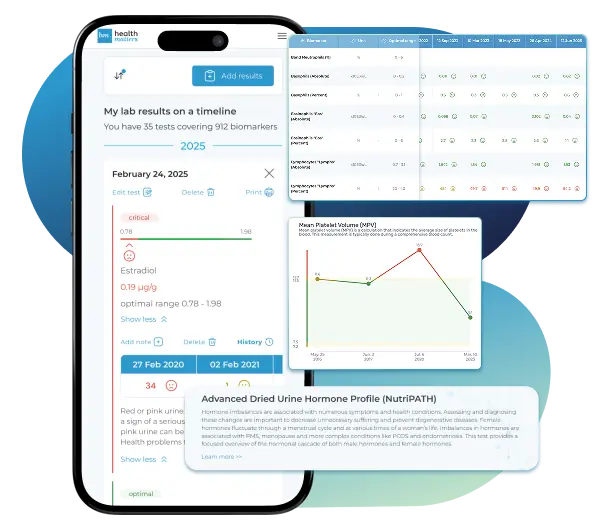
Import lab results from multiple providers, track changes over time, customize your reference ranges, and get clear explanations for each result. Everything is stored securely, exportable in one organized file, and shareable with your doctor—or anyone you choose.
Cancel or upgrade anytime
What does it mean if your Alpha-2-Globulin, Serum result is too low?
Low alpha-2 globulin on a serum protein electrophoresis (SPEP) report means the total protein content of the alpha-2 zone is below the reference range, most commonly because haptoglobin — the dominant alpha-2 protein — has been consumed. The most important cause of low alpha-2 globulin is hemolytic anemia: when red blood cells lyse abnormally (from autoimmune destruction, mechanical trauma, inherited disorders such as sickle cell disease or thalassemia, or drug effects), free hemoglobin is released into circulation. Haptoglobin immediately binds this free hemoglobin and the resulting complex is cleared by the liver. If hemolysis is sustained or severe, haptoglobin is rapidly depleted, causing the alpha-2 fraction to fall. Other causes include advanced liver disease — where reduced hepatic protein synthesis lowers alpha-2 along with albumin — severe malnutrition, disseminated intravascular coagulation (DIC), and protein-losing enteropathy. A low alpha-2 fraction with clinical features of anemia should prompt a separate haptoglobin measurement, LDH, reticulocyte count, and peripheral blood smear to confirm hemolysis.
Related Biomarkers
Article Review & Sources
All our content is backed by peer-reviewed studies, academic research, and trusted medical sources. We're committed to accuracy and transparency — see our editorial policy for details.
Laboratories
Bring All Your Lab Results Together — In One Place
We accept reports from any lab, so you can easily collect and organize all your health information in one secure spot.











Pricing Table
Gather Your Lab History — and Finally Make Sense of It
Finally, Your Lab Results Organized and Clear

Personal plans

$79/ year
Advanced Plan
Access your lab reports, explanations, and tracking tools.
- Import lab results from any provider
- Track all results with visual tools
- Customize your reference ranges
- Export your full lab history anytime
- Share results securely with anyone
- Receive 5 reports entered for you
- Cancel or upgrade anytime
$250/ once
Unlimited Account
Pay once, access everything—no monthly fees, no limits.
- Import lab results from any provider
- Track all results with visual tools
- Customize your reference ranges
- Export your full lab history anytime
- Share results securely with anyone
- Receive 10 reports entered for you
- No subscriptions. No extra fees.
$45/ month
Pro Monthly
Designed for professionals managing their clients' lab reports
- Import lab results from any provider
- Track lab results for multiple clients
- Customize reference ranges per client
- Export lab histories and reports
- Begin with first report entered by us
- Cancel or upgrade anytime
About membership
What's included in a Healthmatters membership
 Import Lab Results from Any Source
 See Your Health Timeline
 Understand What Your Results Mean

 Visualize Your Results

 Data Entry Service for Your Reports
 Securely Share With Anyone You Trust
Let Your Lab Results Tell the Full Story
Once your results are in one place, see the bigger picture — track trends over time, compare data side by side, export your full history, and share securely with anyone you trust.




Bring all your results together to compare, track progress, export your history, and share securely.
What Healthmatters Members Are Saying

I have been using Healthmatters.io since 2021. I travel all over the world and use different doctors and health facilities. This site has allowed me to consolidate all my various test results over 14 years in one place. And every doctor that I show this to has been impressed. Because with any health professional I talk to, I can pull up historical results in seconds. It is invaluable. Even going back to the same doctor, they usually do not have the historical results from their facility in a graph format. That has been very helpful.
Anthony
Unlimited Plan Member since 2021
What fantastic service and great, easy-to-follow layouts! I love your website; it makes it so helpful to see patterns in my health data. It's truly a pleasure to use. I only wish the NHS was as organized and quick as Healthmatters.io. You've set a new standard for health tracking!
Karin
Advanced Plan Member since 2020
As a PRO member and medical practitioner, Healthmatters.io has been an invaluable tool for tracking my clients' data. The layout is intuitive, making it easy to monitor trends and spot patterns over time. The ability to customize reports and charts helps me present information clearly to my clients, improving communication and outcomes. It's streamlined my workflow, saving me time and providing insights at a glance. Highly recommended for any practitioner looking for a comprehensive and user-friendly solution to track patient labs!
Paul
Healthmatters Pro Member since 2024

We implement proven measures to keep your data safe.
At HealthMatters, we're committed to maintaining the security and confidentiality of your personal information. We've put industry-leading security standards in place to help protect against the loss, misuse, or alteration of the information under our control. We use procedural, physical, and electronic security methods designed to prevent unauthorized people from getting access to this information. Our internal code of conduct adds additional privacy protection. All data is backed up multiple times a day and encrypted using SSL certificates. See our Privacy Policy for more details.