
Testosterone (DUTCH) (male)
 Optimal Result:
25 - 115 ng/mg.
Optimal Result:
25 - 115 ng/mg.

The DUTCH test measures the total of testosterone glucuronide and testosterone sulfate. These conjugates of testosterone are formed mostly from bioavailable testosterone that undergoes phase 2 metabolism to make it ready for urine excretion.
Testosterone glucuronide is mostly made by the UGT2B17 enzyme, which also makes the glucuronide forms of 5a-DHT and 5b-androstanediol. Genetic variants of this enzyme reduce the urinary levels of these hormones without affecting serum levels. The genetic variants of UGT2B17 vary in the population from 7-80% (variation dependent on genetic ancestry, with the highest rates in those of Asian descent). Heterozygous individuals show milder reductions in urinary testosterone than homozygous. For this reason, low and very low levels of urinary testosterone should be confirmed with serum testing before treatment is applied. Serum testing can include free and total testosterone and SHBG.
The testes make most of the male's testosterone. Levels tend to be their highest at around 20 years of age and start to decline when men get into their 30's. Levels continue to drop as men age. Testosterone is needed for building bones and muscle mass, regulating body fat distribution and in the production of sperm and red blood cells. Testosterone is also important for libido and downstream production of modest amounts of estrogen.
Testosterone levels in healthy men vary widely so it is suggested that these ranges be interpreted with caution and consideration of symptoms. In addition, because estrogen also supports libido, erections and healthy weight management, estrogen levels should be considered along with the testosterone levels when assessing symptoms.
----------------------------------------
Testosterone in Women
The main male sex hormone, testosterone is also important for women. Optimizing testosterone in women with low or low-normal levels may improve poor libido, vaginal dryness, muscle mass, and overall sense of optimism and well-being. Low levels may be due to low DHEA precursor or adrenal stress. High levels are common in PCOS or may be a sign of over-supplementation.
Testosterone in Men
Lower levels in men are increasingly common and can lead to fatigue, apathy, loss of muscle mass and strength. Low or low normal levels in young to middle aged men can be an indicator of environmental toxicity. High levels are rarely seen except in cases of over-supplementation. Testosterone metabolizes to more potent androgens via 5α-reductase and aromatizes to estradiol. Testosterone in men should be evaluated in relationship to estrogens in order to evaluate possible over-aromatization.
Lab Results Explained and Tracked
What does it mean if your Testosterone (DUTCH) (male) result is too high?
A high testosterone level in men may indicate:
- Testicular tumors
- Adrenal tumors producing testosterone
- Use of anabolic steroids
- Early puberty
- Congenital adrenal hyperplasia affecting the adrenal glands
Increased testosterone in women may be caused by:
- Ovarian or adrenal gland tumor
- Polycystic ovary syndrome
- Congenital adrenal hyperplasia affecting the adrenal glands
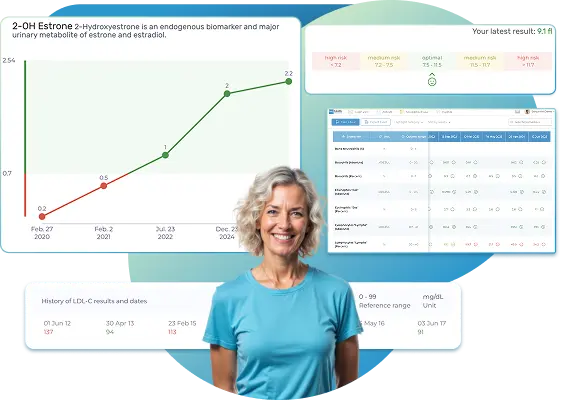
All Your Lab Results.
One Simple Dashboard.
Import, Track, and Share Your Lab Results Easily
Import, Track, and Share Your Lab Results
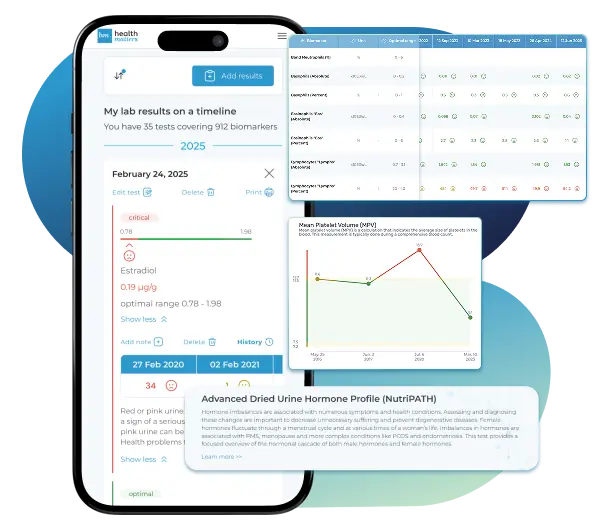
Import lab results from multiple providers, track changes over time, customize your reference ranges, and get clear explanations for each result. Everything is stored securely, exportable in one organized file, and shareable with your doctor—or anyone you choose.
Cancel or upgrade anytime
What does it mean if your Testosterone (DUTCH) (male) result is too low?
A low testosterone level in men may be due to:
- Hypothalamic or pituitary disease
- A genetic condition causing decreased testosterone production in young men
- Testicular failure / infertility, which can be genetic (myotonic dystrophy) or due to impairment (alcoholism, physical injury, or the mumps)
- A chronic disease like diabetes
Talk to your doctor about possible treatment options. Here are a few natural ways that have shown to increase testosterone in men:
- Getting enough sleep (7 to 8 hrs / night)
- Maintain a healthy diet
- Lose weight (Losing excess weight can bring testosterone back up.)
- Stay active (Sedentary men tend to have reduced levels of testosterone, as the body doesn’t need as much. Weightlifting can stimulate testosterone production.)
- Reduce stress
- Get to a optimal vitamin D level
- Talk to GP about DHEA, Vit D, Magnesium, Zinc supplementation
- Review existing medications (Medication can be one of the most common reasons for low testosterone levels)
- Avoid drugs and alcohol
- Avoid BPA (=endocrine disruptor)
Article Review & Sources
All our content is backed by peer-reviewed studies, academic research, and trusted medical sources. We're committed to accuracy and transparency — see our editorial policy for details.
Laboratories
Bring All Your Lab Results Together — In One Place
We accept reports from any lab, so you can easily collect and organize all your health information in one secure spot.











Pricing Table
Gather Your Lab History — and Finally Make Sense of It
Finally, Your Lab Results Organized and Clear

Personal plans

$79/ year
Advanced Plan
Access your lab reports, explanations, and tracking tools.
- Import lab results from any provider
- Track all results with visual tools
- Customize your reference ranges
- Export your full lab history anytime
- Share results securely with anyone
- Receive 5 reports entered for you
- Cancel or upgrade anytime
$250/ once
Unlimited Account
Pay once, access everything—no monthly fees, no limits.
- Import lab results from any provider
- Track all results with visual tools
- Customize your reference ranges
- Export your full lab history anytime
- Share results securely with anyone
- Receive 10 reports entered for you
- No subscriptions. No extra fees.
$45/ month
Pro Monthly
Designed for professionals managing their clients' lab reports
- Import lab results from any provider
- Track lab results for multiple clients
- Customize reference ranges per client
- Export lab histories and reports
- Begin with first report entered by us
- Cancel or upgrade anytime
About membership
What's included in a Healthmatters membership
 Import Lab Results from Any Source
 See Your Health Timeline
 Understand What Your Results Mean

 Visualize Your Results

 Data Entry Service for Your Reports
 Securely Share With Anyone You Trust
Let Your Lab Results Tell the Full Story
Once your results are in one place, see the bigger picture — track trends over time, compare data side by side, export your full history, and share securely with anyone you trust.




Bring all your results together to compare, track progress, export your history, and share securely.
What Healthmatters Members Are Saying

I have been using Healthmatters.io since 2021. I travel all over the world and use different doctors and health facilities. This site has allowed me to consolidate all my various test results over 14 years in one place. And every doctor that I show this to has been impressed. Because with any health professional I talk to, I can pull up historical results in seconds. It is invaluable. Even going back to the same doctor, they usually do not have the historical results from their facility in a graph format. That has been very helpful.
Anthony
Unlimited Plan Member since 2021
What fantastic service and great, easy-to-follow layouts! I love your website; it makes it so helpful to see patterns in my health data. It's truly a pleasure to use. I only wish the NHS was as organized and quick as Healthmatters.io. You've set a new standard for health tracking!
Karin
Advanced Plan Member since 2020
As a PRO member and medical practitioner, Healthmatters.io has been an invaluable tool for tracking my clients' data. The layout is intuitive, making it easy to monitor trends and spot patterns over time. The ability to customize reports and charts helps me present information clearly to my clients, improving communication and outcomes. It's streamlined my workflow, saving me time and providing insights at a glance. Highly recommended for any practitioner looking for a comprehensive and user-friendly solution to track patient labs!
Paul
Healthmatters Pro Member since 2024

We implement proven measures to keep your data safe.
At HealthMatters, we're committed to maintaining the security and confidentiality of your personal information. We've put industry-leading security standards in place to help protect against the loss, misuse, or alteration of the information under our control. We use procedural, physical, and electronic security methods designed to prevent unauthorized people from getting access to this information. Our internal code of conduct adds additional privacy protection. All data is backed up multiple times a day and encrypted using SSL certificates. See our Privacy Policy for more details.