Testosterone (DUTCH)
 Optimal Result:
2.3 - 14 ng/mg.
Optimal Result:
2.3 - 14 ng/mg.

Testosterone in Women
The main male sex hormone, testosterone is also important for women. Optimizing testosterone in women with low or low-normal levels may improve poor libido, vaginal dryness, muscle mass, and overall sense of optimism and well-being. Low levels may be due to low DHEA precursor or adrenal stress. High levels are common in PCOS or may be a sign of over-supplementation.
Testosterone in Men
Lower levels in men are increasingly common and can lead to fatigue, apathy, loss of muscle mass and strength. Low or low normal levels in young to middle aged men can be an indicator of environmental toxicity. High levels are rarely seen except in cases of over-supplementation. Testosterone metabolizes to more potent androgens via 5a-reductase and aromatizes to estradiol. Testosterone in men should be evaluated in relationship to estrogens in order to evaluate possible over-aromatization.
Lab Results Explained and Tracked
What does it mean if your Testosterone (DUTCH) result is too high?
High Testosterone in Women: Causes, Symptoms, and Treatments
While low testosterone can contribute to health concerns, exceptionally high levels of testosterone are more often a health concern for women, particularly during their reproductive years. A high level of testosterone can occur for several reasons, with polycystic ovary syndrome (PCOS) being one of the most common causes.
PCOS is a prevalent endocrine disorder affecting approximately 6% to 10% of women of childbearing age. It is one of the leading causes of infertility in women. While PCOS tends to run in families, suggesting a genetic component, the exact inheritance pattern is still being researched. PCOS is closely related to insulin resistance and metabolic syndrome. Although many women with PCOS focus on irregular periods and fertility, it's important to note that PCOS is a lifelong condition that requires ongoing management.
Symptoms of High Testosterone in Women:
-
Irregular menstrual cycles
-
Hair loss on the scalp
-
Excess body hair (especially upper lip, chin, chest, and abdomen)
-
Infertility
-
Acne and oily skin
-
Increased body odor
-
Sleep disturbances
-
Mood changes, including irritability and aggression
-
Deepening of the voice
-
Enlarged clitoris
-
Decreased breast size
-
Increased muscle mass
Causes of High Testosterone in Women:
-
Polycystic Ovarian Syndrome (PCOS): This is one of the most common causes of elevated testosterone levels in women.
-
Insulin and blood sugar dysregulation: Chronic insulin overstimulation can trigger ovaries to produce testosterone.
-
Congenital adrenal hyperplasia (CAH): A group of inherited disorders affecting the adrenal glands.
-
Tumors: In rare cases, tumors on the ovaries or adrenal glands can cause high testosterone levels.
-
High inflammation: Chronic inflammation can disrupt hormonal balance.
How to Treat High Testosterone Levels:
Treatment for high testosterone in women typically focuses on addressing the underlying cause. Here are some evidence-based approaches:
-
For PCOS:
-
Lifestyle changes: Regular exercise and a balanced diet to manage weight and insulin levels.
-
Medications: Metformin or other insulin-sensitizing drugs to treat insulin resistance.
-
Hormonal contraceptives: To regulate menstrual cycles and lower testosterone levels.
-
-
For other causes:
-
Treatment depends on the specific underlying condition and may involve medication or, in rare cases of tumors, surgery.
-
-
General approaches:
-
Decrease overall inflammation and stress through regular sleep, balanced meals, exercise, and stress-reduction techniques like yoga or meditation.
-
Consult with a healthcare provider about the potential benefits of supplements like zinc or saw palmetto, keeping in mind that their effectiveness for this purpose is not well-established.
-
While some natural remedies like green tea, flaxseed, and cruciferous vegetables have shown promise in preliminary studies for their potential to influence hormone levels, more research is needed to confirm their effectiveness in treating high testosterone. Always consult with a healthcare provider before starting any new treatment regimen.
It's important to note that while PCOS is a lifelong condition, its management and impact can change over time, especially after menopause. Regular check-ups and adjustments to treatment plans are crucial for optimal health outcomes.
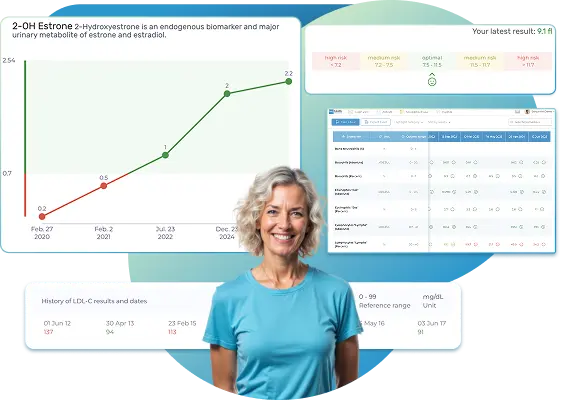
All Your Lab Results.
One Simple Dashboard.
Import, Track, and Share Your Lab Results Easily
Import, Track, and Share Your Lab Results
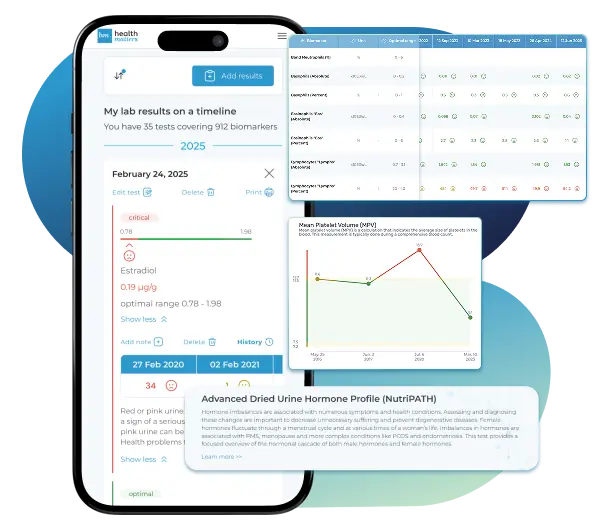
Import lab results from multiple providers, track changes over time, customize your reference ranges, and get clear explanations for each result. Everything is stored securely, exportable in one organized file, and shareable with your doctor—or anyone you choose.
Cancel or upgrade anytime
What does it mean if your Testosterone (DUTCH) result is too low?
Like estrogen and progesterone, testosterone normally declines with age. However, because women make testosterone in the ovaries and the adrenal glands, a low level of testosterone could indicate a problem with the function of either organ. Estrogen replacement therapy can also lower the level of testosterone.
If your testosterone level is low for your age and menstrual status, then you could be experiencing symptoms of low testosterone including:
- Decreased libido
- Muscle weakness
- Fatigue
- Depressed mood
- Weight gain
Testosterone also has some health-protective roles after menopause and low levels can increase some areas of health risk including:
- Bone loss/osteoporosis
- Muscle wasting/sarcopenia
- Obesity
- Depression
- Heart disease
Potential ways to increase testosterone:
There may also be some ways to boost testosterone naturally, including:
- eating a more balanced diet focused on fresh foods
- avoiding overeating
- avoiding obesity
- doing regular exercise
- getting plenty of sleep each night
Some foods can boost testosterone because they are high in certain vitamins or minerals, such as vitamin D or zinc, which are associated with increasing testosterone. The following foods can boost testosterone levels:
- Asparagus
- Beans (white/kidney/black)
- Pomegranate juice
Depending on your age, consider testosterone HRT or supplements that support low testosterone symptoms include Zinc, Maca, Tribulus, and Shatavari. If there are no symptoms of low testosterone, also carefully look at the 5a-metabolism and testosterone's downstream metabolites, 5a-androstanediol and 5b-androstanediol to confirm a low androgenic state.
If you are of Asian descent:
There is a very common genetic variant in this population that, if present, disallows much of testosterone from being converted into the water-soluble form found in urine. Actual testosterone levels, if this genetic variant is present, would be better assessed in a blood serum test (ideally total and free testosterone). This variant metabolism has no known clinical impact and impacts testosterone, 5a-DHT and 5b-androstanediol. It is not known to impact epi-testosterone, 5a-androstanediol or ther androgens as they are metabolized by a different enzyme.
If your testosterone level is very low (less than 1 ng per mg):
Androgens (DHEA and testosterone) in women help with muscle and weight maintenance, memory and brain function, mood, libido and a sense of wellbeing. If testosterone is very low, or low but without symptoms of androgen deficiency, it is best to test serum levels to confirm before starting a treatment program due to the potential of falsely low urinary testosterone. Lifestyle and diet modifications alone could be helpful to increase androgens such as:
- weightlifting
- high intensity interval training
- DHEA or TRT (testosterone replacement therapy) if appropriate and indicated.
- Tribulus, shatavari, maca
- Mitochondrial support and/or zinc
Article Review & Sources
All our content is backed by peer-reviewed studies, academic research, and trusted medical sources. We're committed to accuracy and transparency — see our editorial policy for details.
Laboratories
Bring All Your Lab Results Together — In One Place
We accept reports from any lab, so you can easily collect and organize all your health information in one secure spot.











Pricing Table
Gather Your Lab History — and Finally Make Sense of It
Finally, Your Lab Results Organized and Clear

Personal plans

$79/ year
Advanced Plan
Access your lab reports, explanations, and tracking tools.
- Import lab results from any provider
- Track all results with visual tools
- Customize your reference ranges
- Export your full lab history anytime
- Share results securely with anyone
- Receive 5 reports entered for you
- Cancel or upgrade anytime
$250/ once
Unlimited Account
Pay once, access everything—no monthly fees, no limits.
- Import lab results from any provider
- Track all results with visual tools
- Customize your reference ranges
- Export your full lab history anytime
- Share results securely with anyone
- Receive 10 reports entered for you
- No subscriptions. No extra fees.
$45/ month
Pro Monthly
Designed for professionals managing their clients' lab reports
- Import lab results from any provider
- Track lab results for multiple clients
- Customize reference ranges per client
- Export lab histories and reports
- Begin with first report entered by us
- Cancel or upgrade anytime
About membership
What's included in a Healthmatters membership
 Import Lab Results from Any Source
 See Your Health Timeline
 Understand What Your Results Mean

 Visualize Your Results

 Data Entry Service for Your Reports
 Securely Share With Anyone You Trust
Let Your Lab Results Tell the Full Story
Once your results are in one place, see the bigger picture — track trends over time, compare data side by side, export your full history, and share securely with anyone you trust.




Bring all your results together to compare, track progress, export your history, and share securely.
What Healthmatters Members Are Saying

I have been using Healthmatters.io since 2021. I travel all over the world and use different doctors and health facilities. This site has allowed me to consolidate all my various test results over 14 years in one place. And every doctor that I show this to has been impressed. Because with any health professional I talk to, I can pull up historical results in seconds. It is invaluable. Even going back to the same doctor, they usually do not have the historical results from their facility in a graph format. That has been very helpful.
Anthony
Unlimited Plan Member since 2021
What fantastic service and great, easy-to-follow layouts! I love your website; it makes it so helpful to see patterns in my health data. It's truly a pleasure to use. I only wish the NHS was as organized and quick as Healthmatters.io. You've set a new standard for health tracking!
Karin
Advanced Plan Member since 2020
As a PRO member and medical practitioner, Healthmatters.io has been an invaluable tool for tracking my clients' data. The layout is intuitive, making it easy to monitor trends and spot patterns over time. The ability to customize reports and charts helps me present information clearly to my clients, improving communication and outcomes. It's streamlined my workflow, saving me time and providing insights at a glance. Highly recommended for any practitioner looking for a comprehensive and user-friendly solution to track patient labs!
Paul
Healthmatters Pro Member since 2024

We implement proven measures to keep your data safe.
At HealthMatters, we're committed to maintaining the security and confidentiality of your personal information. We've put industry-leading security standards in place to help protect against the loss, misuse, or alteration of the information under our control. We use procedural, physical, and electronic security methods designed to prevent unauthorized people from getting access to this information. Our internal code of conduct adds additional privacy protection. All data is backed up multiple times a day and encrypted using SSL certificates. See our Privacy Policy for more details.