
Polymorphs Blood Test: Normal Range, High & Low Meaning
Other names: POLYS, Polymorphonuclear Leukocytes, PMN, PMNs, Neutrophils (%), Poly, Neutrophils-Polys, Segs, Segmented Neutrophils, DC Polymorphs, DLC Polymorphs, WBC Polymorphs, Polys Blood Test, Polymorphs Blood Test, Polymorphs WBC, Poly Blood Test, Neutrophil Polymorphs, Differential Count Polymorphs, Polymorphs Percentage, Polymorphonuclear Cells, Polymorphonuclear Neutrophils, PMN Cells, PMNL Cells, Polys ABS Count, Polys Absolute, Polymorphonuclear White Blood Cells
 Optimal Result:
40 - 75 %.
Optimal Result:
40 - 75 %.

AT A GLANCE
- Polymorphs (%) measures the percentage of neutrophils in your total white blood cell (WBC) count — also reported as POLYS, neutrophils (%), PMNs, or segmented neutrophils
- Normal range: 40–75% — this is the proportion of neutrophils out of all WBCs
- High polymorphs (above ~75%) most commonly indicates bacterial infection, inflammation, or physiological stress — called neutrophilia
- Low polymorphs (below ~40%) most commonly reflects viral infection, bone marrow suppression, or a relative increase in lymphocytes — called neutropenia or relative lymphocytosis
- Polymorphs and neutrophils are the same thing — the terms are interchangeable in lab reports
- The percentage reflects relative proportion, not absolute cell count — a high percentage with a low total WBC may not mean more neutrophils
- Always evaluate alongside the Absolute Neutrophil Count (ANC) for a complete picture
- Normal ranges may vary slightly between laboratories. Interpret results alongside symptoms, clinical history, and other CBC components.
QUICK REFERENCE
| Polymorphs (%) | Interpretation | Most Common Causes | Recommended Context |
|---|---|---|---|
| < 40% | Low (Neutropenia / Relative Lymphocytosis) | Viral infection, bone marrow suppression, immune suppression | Review alongside ANC and lymphocyte percentage |
| 40–75% | Normal range | Typical immune balance | Usually no action needed in isolation |
| > 75% | High (Neutrophilia) | Bacterial infection, inflammation, physiological stress | Review symptoms, CRP, ANC, and total WBC |
Also Reported As
| Alternate Terms |
|---|
| POLYS |
| Neutrophils (%) |
| PMN / PMNs |
| Segs / Segmented Neutrophils |
| DC Polymorphs |
| DLC Polymorphs |
Important Note
| Laboratory Variation |
|---|
| Reference ranges vary slightly by laboratory. Some labs use 45–74% or 50–70% instead of 40–75%. Always interpret your result using the reference range printed on your own lab report. |
WHAT TO DO NEXT
Based on your result:
- 40–75%, no symptoms — Normal result. No action required.
- Above 75%, with symptoms (fever, chills, sore throat, localised pain, cough) — Consistent with bacterial infection. See your doctor; additional tests including blood culture, CRP, or procalcitonin may be appropriate.
- Above 75%, no symptoms — Mild neutrophilia without symptoms is often physiological — caused by stress, vigorous exercise, smoking, or recent steroid use. Repeat testing is appropriate before clinical action.
- Above 90% — Marked neutrophilia. Warrants clinical evaluation for serious infection, severe inflammation, or haematological conditions. Seek medical review.
- Below 40%, with symptoms of viral illness (fatigue, body aches, sore throat) — Consistent with viral infection causing a lymphocyte-dominant shift. Usually self-resolving; discuss with your doctor if symptoms are prolonged.
- Below 40%, no symptoms, low total WBC — May reflect immune suppression, bone marrow dysfunction, or medication effect. Discuss with your doctor, particularly if recurring.
- Below 20% — Significant neutropenia. Warrants clinical evaluation — increased infection risk. Seek prompt medical review.
- Any result with fever above 38.5°C (101.3°F) and you are on chemotherapy or immunosuppressive therapy — Seek emergency evaluation immediately (febrile neutropenia).
WHAT IS POLYMORPHS IN A BLOOD TEST?
Polymorphs — short for polymorphonuclear leukocytes — are neutrophils, the most abundant type of white blood cell. "Polymorphonuclear" refers to their characteristic multi-lobed nucleus, which appears in different shapes (polymorphic) under the microscope. On your lab report, the same measurement may appear as any of the following names — they all refer to neutrophil percentage:
- Polymorphs (%) / Polymorphs
- POLYS / Polys Blood Test
- Neutrophils (%) / Neutrophils-Polys
- PMN / PMNs / PMNL
- Segs / Segmented Neutrophils
- DC Polymorphs (differential count format, common in Indian lab reports)
- DLC Polymorphs (differential leucocyte count format)
- WBC Polymorphs / Poly
This measurement is part of the WBC differential count — a breakdown of the percentage of each white blood cell type. It is reported as a percentage of the total WBC count. Neutrophils are the immune system's first responders to bacterial infections, releasing enzymes and chemicals that destroy pathogens.
Polymorphs (%) vs Polymorphs Absolute Count
The percentage reflects proportion; the absolute count reflects actual cell numbers. Both are needed for complete interpretation:
| Measurement | What it shows | Example |
|---|---|---|
| Polymorphs (%) | Proportion of neutrophils out of total WBCs | 78% |
| Absolute Neutrophil Count (ANC) | Actual number of neutrophils per µL | 5,200 /µL |
A high percentage with a low total WBC count may result in a normal or low absolute count. A low percentage with a high total WBC count may result in a normal absolute count. This is why the percentage alone can be misleading — the absolute count (reported as POLYS, ABS. COUNT or Neutrophils Absolute) is essential context.
ARE POLYMORPHS AND NEUTROPHILS THE SAME THING?
Yes — completely. Polymorphs, neutrophils, PMNs, and segs are all names for the same cell type. The terminology depends on the laboratory, country, and reporting format:
- Neutrophils — the standard medical and US laboratory term
- Polymorphs — the preferred term in Indian, South Asian, and some UK laboratory reports
- PMN / PMNs — shorthand for polymorphonuclear (neutrophils), common in microbiology reports and gram stain results
- POLYS — automated haematology analyser abbreviation
- Segs — short for segmented neutrophils (the mature form)
- Bands — immature neutrophils (band cells or stab cells); reported separately when present
All of these measurements, when expressed as a percentage of total WBCs, represent the same underlying quantity. The specific term on your report depends on the laboratory system used, not on any clinical difference.
COMMON PHRASES SEEN ON LAB REPORTS
POLYMORPHS
POLYMORPHS (%)
POLYMORPHS (PERCENTAGE)
POLYS
POLYS BLOOD TEST
POLY
POLY BLOOD TEST
NEUTROPHILS (%)
NEUTROPHILS-POLYS
NEUTROPHILS RELATIVE
SEGS
SEGMENTED NEUTROPHILS
PMN
PMNs
PMNL
POLYMORPHONUCLEAR LEUKOCYTES
POLYMORPHONUCLEAR CELLS
DC POLYMORPHS
DLC POLYMORPHS
DIFFERENTIAL COUNT POLYMORPHS
WBC POLYMORPHS
POLYS ABS. COUNT
POLYS, ABSOLUTE
POLYS, ABS. COUNT 10^3/µL
ABSOLUTE NEUTROPHIL COUNT (ANC)
NEUTROPHILS ABSOLUTE
POLYMORPHS HIGH
POLYMORPHS LOW
POLYMORPHS IN BLOOD
HIGH POLYMORPHS MEANS
LOW POLYMORPHS MEANS
POLYMORPHS BLOOD TEST HIGH
POLYMORPHS BLOOD TEST LOW
RARE POLYMORPHONUCLEAR LEUKOCYTES
FEW POLYMORPHONUCLEAR CELLS
MANY POLYMORPHONUCLEAR LEUKOCYTES
ABUNDANT POLYMORPHONUCLEAR LEUKOCYTES
3+ POLYMORPHONUCLEAR LEUKOCYTES
1+ POLYMORPHONUCLEAR LEUKOCYTES
FLORE POLYMORPHE (French culture report)
POLIMORFONUCLEARES (Spanish)
LEUCOCITOS POLIMORFONUCLEARES (Spanish)
ПОЛИМОРФНОЯДЕРНЫЕ ЛЕЙКОЦИТЫ (Russian)
WHAT DOES A HIGH POLYMORPHS RESULT MEAN?
A polymorphs percentage above 75% is called neutrophilia. The degree of elevation and clinical context determine its significance.
Most common causes of high polymorphs:
- Bacterial infection — the most frequent cause. Bacteria trigger rapid neutrophil release from bone marrow stores. Common infections include pneumonia, UTI, appendicitis, cellulitis, and sepsis.
- Acute inflammation — conditions like rheumatoid arthritis, inflammatory bowel disease, and vasculitis activate the same neutrophil response as infection.
- Physical stress — surgery, trauma, myocardial infarction, and intense exercise temporarily raise neutrophil percentage.
- Corticosteroid use — glucocorticoids (prednisone, dexamethasone) release neutrophils from bone marrow and impair their exit from blood vessels, raising the count.
- Cigarette smoking — chronic smokers typically have persistently higher neutrophil percentages.
- Physiological stress — anxiety, pain, and adrenaline release temporarily raise neutrophil count.
- Pregnancy — neutrophilia is a normal finding in the third trimester.
- Haematological conditions — chronic myelogenous leukaemia (CML) and other myeloproliferative disorders can produce markedly elevated neutrophil counts alongside other abnormal findings on the CBC.
Numeric interpretation framework for polymorphs
NORMAL RANGE (40–75%)
40–75%   =  Normal. No action needed in isolation.

HIGH — Degree matters:
75–80%   =  Mild neutrophilia. Often physiological — stress, exercise,
             smoking, steroid use, or early/minor infection.
             Without symptoms: repeat in 4–6 weeks.
80–85%   =  Mild-moderate neutrophilia. More likely to represent
             active infection or inflammation with symptoms.
             With fever or pain: clinical evaluation appropriate.
85–90%   =  Moderate neutrophilia. Active bacterial infection or
             significant inflammation. Evaluation warranted.
> 90%    =  Marked neutrophilia. Warrants prompt clinical evaluation.
             Consider serious infection, CML, or leukaemoid reaction.
Specific values frequently searched — 70, 74, 75, 77, 78, 79, 80, 81, 82, 83, 84, 85:
- 70% — normal range; not clinically concerning in isolation
- 74–75% — upper edge of normal; significance depends on your lab's specific cutoff
- 76–80% — mildly elevated; often physiological without symptoms
- 81–85% — mild-moderate; more meaningful with fever or other infection signs
- 85%+ — moderate-marked; warrants evaluation if persistent or symptomatic
A result in the 75–85% range without symptoms and with a normal total WBC count is often not clinically significant and may reflect sampling timing, mild physiological stress, or normal variation near the upper reference limit.
WHAT DOES A LOW POLYMORPHS RESULT MEAN?
A polymorphs percentage below 40% is called neutropenia (if absolute count is also low) or relative neutropenia / relative lymphocytosis (if absolute count is normal but proportion is reduced).
Most common causes of low polymorphs:
- Viral infections — the most frequent cause. Viruses including influenza, EBV (infectious mono), hepatitis, COVID-19, and HIV characteristically cause a lymphocyte-dominant white cell response, which reduces the neutrophil percentage even if absolute neutrophil numbers remain normal.
- Bone marrow suppression — chemotherapy, radiation, aplastic anaemia, and certain medications (immunosuppressants, antibiotics like trimethoprim, antithyroid drugs) impair neutrophil production.
- Autoimmune neutropenia — conditions like lupus (SLE) and rheumatoid arthritis can cause immune-mediated destruction of neutrophils.
- Severe or overwhelming infection — in late-stage sepsis, neutrophils may be consumed faster than the marrow can produce them.
- Nutritional deficiencies — severe deficiency of vitamin B12, folate, or copper impairs neutrophil maturation.
- Hypersplenism — an enlarged spleen sequesters and removes white blood cells from circulation.
- Congenital neutropenia — rare genetic conditions including Kostmann syndrome and cyclic neutropenia.
Is low polymorphs serious?
A low percentage alone is not necessarily serious. The absolute neutrophil count (ANC) is the more clinically meaningful measurement. An ANC above 1,500/µL with a low polymorphs percentage is commonly caused by a viral infection and is usually self-resolving. An ANC below 500/µL represents severe neutropenia and carries a significant risk of serious infection — this always warrants prompt clinical evaluation.
POLYMORPHS IN URINE
When "polymorphonuclear leukocytes" or "polymorphs" appear on a urine report, the clinical context is entirely different from a blood test.
In urine microscopy and gram stain reports, polymorphonuclear cells (PMNs) reflect white blood cells in the urinary tract, most commonly indicating:
- Urinary tract infection (UTI) — the most common cause; bacteria in the bladder trigger PMN infiltration
- Urinary tract inflammation — kidney stones, catheterisation, or interstitial cystitis without infection
- Contamination — skin or vaginal flora can introduce PMNs into a urine sample
Reports typically use semi-quantitative language: "rare," "few," "moderate," "many," or "abundant" PMNs — or a + system (1+, 2+, 3+, 4+). In the context of urine, any language indicating PMNs or polymorphs being "present," "seen," or "positive" should be interpreted alongside the clinical picture and urine culture results.
The presence of polymorphs in urine is closely related to the leukocyte esterase test on a standard urinalysis dipstick — both detect WBCs in the urinary tract.
POLYMORPHS IN URINE REPORTS: COMMON PHRASES
POLYMORPHONUCLEAR LEUKOCYTES SEEN
RARE POLYMORPHONUCLEAR LEUKOCYTES
FEW POLYMORPHONUCLEAR CELLS
MANY POLYMORPHONUCLEAR LEUKOCYTES
ABUNDANT POLYMORPHONUCLEAR LEUKOCYTES
HEAVY POLYMORPHONUCLEAR LEUKOCYTES
3+ POLYMORPHONUCLEAR LEUKOCYTES
1+ POLYMORPHONUCLEAR LEUKOCYTES
POLYMORPHS IN URINE
NUMEROUS POLYMORPHONUCLEAR LEUKOCYTES
NO POLYMORPHONUCLEAR LEUKOCYTES SEEN
OCCASIONAL POLYMORPHS SEEN
SMALL NUMBERS OF POLYMORPHS SEEN
If your report uses any of these phrases in the context of urine or a swab, the result is a finding in the urinary or genital tract — not a blood cell count.
POLYMORPHS IN SWAB REPORTS
When polymorphonuclear cells or PMNs appear on a swab report (vaginal, cervical, wound, or throat swab), they indicate inflammatory cells in the sampled tissue. This is interpreted by the clinician in context — some degree of PMN presence is normal on certain swab sites. The clinical significance depends on the type of swab, the quantity of PMNs, and any organisms identified on culture.
A common phrase is "abundant polymorphonuclear white blood cells" or "heavy PMNs" on a vaginal or cervical swab — this typically indicates local inflammation or infection requiring clinical evaluation.
MULTILINGUAL REFERENCE: POLYMORPHS ON YOUR LAB REPORT
The term "polymorphs" appears on lab reports internationally. All of these refer to the same measurement — neutrophil percentage in the WBC differential. Normal range (40–75%) and interpretation are identical regardless of language or country.
| Language | Term on lab report | Normal range |
|---|---|---|
| Hindi | पॉलिमॉर्फ्स (Polymorphs) | 40–75% |
| Tamil | பாலிமார்ஃப்ஸ் (Polymorphs) | 40–75% |
| Telugu | పాలిమార్ఫ్స్ (Polymorphs) | 40–75% |
| Malayalam | പോളിമോർഫ്സ് (Polymorphs) | 40–75% |
| Marathi | पॉलिमॉर्फ्स | 40–75% |
| Kannada | ಪಾಲಿಮಾರ್ಫ್ಸ್ | 40–75% |
| Bengali | পলিমর্ফস | 40–75% |
| Gujarati | પૉલિમૉર્ફ્સ | 40–75% |
| Spanish | Polimorfonucleares | 40–75% |
| French | Polynucléaires | 40–75% |
| Portuguese | Polimorfonucleares | 40–75% |
| Russian | Полиморфноядерные лейкоциты | 40–75% |
| Arabic | عدلات / متعددة الأشكال النوى | 40–75% |
South Asian lab reports (India, Pakistan, Bangladesh, Sri Lanka): the WBC differential is called a DLC (Differential Leucocyte Count). The polymorphs column (P%) is equivalent to neutrophils (%) on US or UK reports. Normal range is the same.
RELATED TESTS AND NEXT STEPS
Polymorphs (%) is one component of the WBC differential. Read it alongside:
- WBC Count (Total) — the total number of all white blood cells; context for interpreting whether the percentage represents a real increase or decrease in neutrophil numbers
- Absolute Neutrophil Count (ANC) — the absolute number of neutrophils; the most clinically relevant single measure of infection-fighting capacity
- Lymphocytes (%) — when polymorphs are low, lymphocytes are often high, and vice versa; this inverse relationship helps identify whether a shift is neutrophil-driven or lymphocyte-driven
- Bands (Immature Neutrophils) — presence of immature neutrophils ("left shift") alongside elevated polymorphs suggests active, acute bacterial infection
- CRP (C-Reactive Protein) — a non-specific inflammation marker that helps contextualise a high polymorphs result
- Procalcitonin — a more specific marker for bacterial infection; useful when polymorphs are elevated and bacterial vs viral distinction matters
- Blood Culture — if bacterial infection is suspected from the CBC differential, culture identifies the organism and guides antibiotic treatment
- ESR (Erythrocyte Sedimentation Rate) — another inflammation marker that complements the WBC differential
FAQ about Polymorphs (Percentage)
-
What does polymorphs mean in a blood test?
Polymorphs in a blood test refers to the percentage of neutrophils — the most common white blood cell — in your total white blood cell count. It is part of the WBC differential count and is also reported as POLYS, neutrophils (%), PMNs, or segmented neutrophils depending on the laboratory format. -
What is the normal range for polymorphs in blood?
The normal range for polymorphs (%) is typically 40–75%, though some laboratories use 45–74% or 50–70%. Always use the reference range printed on your specific lab report. Values below 40% may suggest viral infection or immune suppression; values above 75% are commonly associated with bacterial infection, inflammation, physiological stress, or corticosteroid use. -
What does high polymorphs mean?
High polymorphs (above 75%) means neutrophilia — more neutrophils than expected as a proportion of your white blood cells. The most common causes are bacterial infection, acute inflammation, physiological stress, and corticosteroid use. The significance depends on the degree of elevation and clinical context. -
What causes high polymorphs in blood?
The most common causes are: bacterial infection (most frequent), acute inflammation, physiological stress or trauma, corticosteroids, cigarette smoking, post-surgical response, and chronic inflammatory conditions. Markedly elevated polymorphs (above 90%) may indicate leukaemia or myeloproliferative disorders. -
What does low polymorphs mean?
Low polymorphs (below 40%) means a reduced neutrophil proportion, called neutropenia or relative neutropenia. The most common cause is a viral infection that raises lymphocyte counts proportionally, reducing the neutrophil percentage without actually lowering the total number of neutrophils. Other causes include bone marrow suppression, autoimmune disease, and severe infection. -
What causes low polymorphs in blood?
The most common cause is a viral infection (influenza, EBV, COVID-19, hepatitis) causing a relative rise in lymphocytes. Other causes: bone marrow suppression from chemotherapy or medications, autoimmune diseases (lupus, rheumatoid arthritis), nutritional deficiencies (B12, folate), and severe infection. -
Are polymorphs and neutrophils the same thing?
Yes — completely. Polymorphs, neutrophils, PMNs, POLYS, and segs all refer to the same white blood cell type. The term used depends on the laboratory and country. Indian and South Asian lab reports typically use "polymorphs"; US labs typically use "neutrophils (%)" or "POLYS." -
What does polymorphs 80 mean?
A result of 80% falls in the mildly elevated range (75–80%). Without symptoms and with a normal total WBC count, this is often physiological stress, minor infection, or normal variation. With fever or infection symptoms, it supports a bacterial infection pattern and clinical evaluation is appropriate. -
What does polymorphs 75 mean?
A result of 75% is at the top of the standard normal range. Whether it is flagged as high depends on your laboratory's specific cutoff (some use 74%, some 75%). Without symptoms and a normal total WBC, this is typically within normal variation. -
What does polymorphs 70 mean?
A result of 70% falls solidly within the normal range (40–75%) and is not clinically concerning in isolation. -
What does polymorphs 74 mean?
A result of 74% is at the upper end of the normal range. Without symptoms it is not clinically significant. Whether it is flagged depends on your lab's cutoff. -
What does polymorphs 85 mean?
A result of 85% is in the mild-to-moderate neutrophilia range. With symptoms of infection — fever, localised pain, cough — this warrants clinical evaluation. Without symptoms and a normal total WBC, repeat testing in 4–6 weeks is appropriate. -
When are high polymorphs serious?
High polymorphs are most concerning when: above 90% (marked neutrophilia); accompanied by fever, severe pain, or signs of infection; persistently elevated across multiple tests; or elevated alongside other CBC abnormalities (very high total WBC, immature cells, anaemia) suggesting leukaemia or myeloproliferative disease. A mild isolated elevation (75–82%) without symptoms is usually not serious and often self-resolving. -
What does it mean when polymorphs is low and lymphocytes are high?
This pattern — low polymorphs with high lymphocytes — is the hallmark of viral infection. Viruses stimulate lymphocyte proliferation, which increases the lymphocyte percentage while simultaneously reducing the relative proportion of neutrophils. This is the characteristic CBC pattern in influenza, EBV, COVID-19, and many other viral illnesses. It does not mean neutrophils are absent — it means lymphocytes are proportionally elevated. -
What does polymorphs high and lymphocytes low mean?
High polymorphs with low lymphocytes is the hallmark pattern of bacterial infection or acute inflammation. Bacteria trigger rapid neutrophil release from bone marrow while lymphocyte proportions fall relatively. This pattern alongside fever and elevated CRP strongly supports a bacterial cause. -
What does DC polymorphs mean?
DC polymorphs refers to "differential count polymorphs" — the neutrophil percentage as reported in a differential leucocyte count (DLC). This is the standard format for blood test reports in India and South Asia. The measurement and normal range are the same as "polymorphs (%)" or "neutrophils (%)" on other lab formats. -
What does DLC polymorphs mean?
DLC stands for Differential Leucocyte Count — the Indian laboratory term for the WBC differential. The polymorphs column in a DLC report is equivalent to "neutrophils (%)" on US or UK reports. Normal range is typically 40–75%. -
What does polymorphs in urine mean?
Polymorphs in urine refers to white blood cells (specifically neutrophils) detected in a urine sample, most commonly during urinalysis or urine microscopy. This is a different context from the blood test. Polymorphs in urine most commonly indicate a urinary tract infection (UTI), urinary inflammation, or sample contamination. -
What are polymorphonuclear leukocytes?
Polymorphonuclear leukocytes are white blood cells with a multi-lobed nucleus — the "polymorpho" refers to the varied shape of the nucleus. In clinical practice, the term almost always refers to neutrophils. They are the body's primary first-responders to bacterial infection. -
What does polymorphs kitna hona chahiye? (Hindi)
Polymorphs ka normal range blood test mein 40% se 75% hona chahiye. Isse zyada hone ka matlab aksar bacterial infection ya inflammation hota hai; kam hone ka matlab viral infection ya immune suppression hota hai. Apne lab report mein diya reference range zaroor dekhein. -
What does polymorphs meaning in Tamil?
Tamil mein polymorphs (பாலிமார்ஃப்ஸ்) blood test mein neutrophil percentage ko represent karta hai. Normal range 40–75% hai. Zyada hone par bacterial infection ki possibility hai, kam hone par viral infection.
Lab Results Explained and Tracked
What does it mean if your Polymorphs (Percentage) result is too high?
An elevated polymorphs percentage — above 75% — indicates neutrophilia, meaning neutrophils make up a higher proportion of your white blood cells than expected.
Mild neutrophilia (75–85%) is often physiological or caused by minor stressors — exercise, stress, smoking, steroid use, or early infection. Without symptoms, a mild elevation often requires no action beyond repeat testing in 4–6 weeks.
Moderate to marked neutrophilia (85–90%+) is more likely to represent active bacterial infection, significant acute inflammation, or — if markedly elevated alongside other CBC abnormalities — a haematological condition. Evaluation is warranted when polymorphs persistently exceed 85–90%, particularly with fever, elevated CRP, or other signs of infection.
The percentage alone does not tell you whether total neutrophil cell numbers are elevated. A polymorphs percentage of 80% in someone with a low total WBC count may reflect a normal absolute neutrophil count. Always check the Absolute Neutrophil Count (ANC) alongside the percentage.
Common causes to consider: bacterial infection, corticosteroids, physiological stress, post-surgical response, inflammation, cigarette smoking, and — if markedly elevated — leukaemia or myeloproliferative disorders.
WHEN ARE HIGH POLYMORPHS SERIOUS?
Most elevated polymorphs results are not emergencies. Context determines urgency.
Usually not serious (monitor or repeat):
- Mild elevation (75–82%) with no symptoms — likely physiological stress, exercise, recent steroid dose, or minor viral/bacterial trigger
- Single result without symptoms, normal total WBC and absolute count
- Mildly elevated after surgery, trauma, or intense physical activity
- Chronic mild elevation in a smoker
Warrants a doctor visit (within days):
- Above 75–80% with fever, localised pain, cough, or other infection symptoms
- Persistently elevated across multiple tests without a clear cause
- Above 75% alongside elevated CRP or ESR
- Mild-moderate elevation in a person with a known autoimmune condition
Warrants same-day evaluation:
- Above 90% — marked neutrophilia, especially with fever or signs of severe infection
- Any elevated polymorphs with signs of sepsis: high fever, rapid heart rate, confusion, low blood pressure
- Elevated polymorphs alongside blast cells, immature granulocytes, or other CBC abnormalities suggesting haematological disease
Warrants emergency evaluation immediately:
- Febrile neutropenia: if you are on chemotherapy or immunosuppressive therapy and develop fever (above 38°C / 100.4°F) with low polymorphs or low ANC — this is a medical emergency
- Signs of septic shock: very high fever or hypothermia, altered consciousness, difficulty breathing
Red flags for haematological disease (leukaemia / myeloproliferative disorder): The following combination should trigger urgent haematology referral:
- Markedly elevated polymorphs (above 90–95%) with no obvious infection
- Very high absolute WBC count (above 30–50 × 10³/µL)
- Presence of immature cells (blasts, metamyelocytes) on differential
- Unexplained weight loss, night sweats, enlarged spleen, anaemia
- Basophilia (elevated basophil percentage) alongside markedly elevated neutrophils — a classic CML pattern
Related Health Conditions

All Your Lab Results.
One Simple Dashboard.
Import, Track, and Share Your Lab Results Easily
Import, Track, and Share Your Lab Results
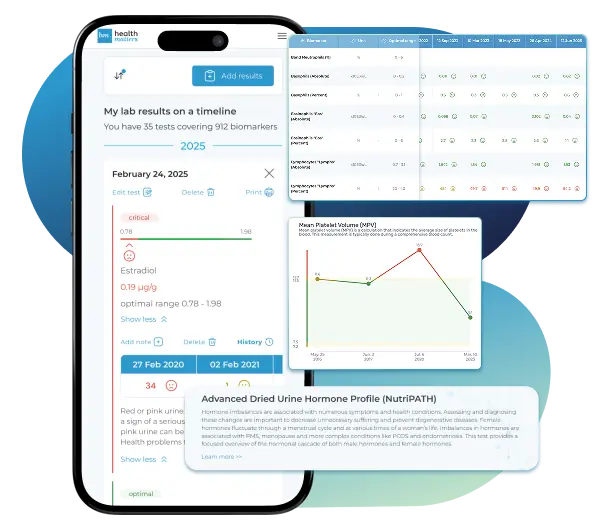
Import lab results from multiple providers, track changes over time, customize your reference ranges, and get clear explanations for each result. Everything is stored securely, exportable in one organized file, and shareable with your doctor—or anyone you choose.
Cancel or upgrade anytime
What does it mean if your Polymorphs (Percentage) result is too low?
A low polymorphs percentage — below 40% — indicates that neutrophils make up a smaller proportion of white blood cells than expected.
Relative neutropenia (low percentage, normal absolute count): the most common scenario. Often caused by a viral infection that raises lymphocyte counts without reducing actual neutrophil numbers. The percentage drops not because neutrophils are truly reduced but because lymphocytes are proportionally elevated. This is the characteristic pattern of influenza, EBV (mono), COVID-19, and most other viral illnesses. It is usually self-resolving.
True neutropenia (low percentage and low absolute count): clinically more significant. Causes include chemotherapy, immunosuppressive medications, aplastic anaemia, bone marrow failure, autoimmune destruction of neutrophils, and congenital neutropenia syndromes. The Absolute Neutrophil Count (ANC) is the key metric:
- ANC above 1,500/µL — mild or no clinical concern in most contexts
- ANC 500–1,500/µL — moderate neutropenia; increased infection risk; clinical monitoring indicated
- ANC below 500/µL — severe neutropenia; significant infection risk; requires urgent clinical evaluation
If you are on chemotherapy or immunosuppressive therapy and your polymorphs are low alongside fever, seek emergency evaluation immediately — this is the definition of febrile neutropenia.
Related Biomarkers
Article Review & Sources
All our content is backed by peer-reviewed studies, academic research, and trusted medical sources. We're committed to accuracy and transparency — see our editorial policy for details.
Laboratories
Bring All Your Lab Results Together — In One Place
We accept reports from any lab, so you can easily collect and organize all your health information in one secure spot.











Pricing Table
Gather Your Lab History — and Finally Make Sense of It
Finally, Your Lab Results Organized and Clear

Personal plans

$79/ year
Advanced Plan
Access your lab reports, explanations, and tracking tools.
- Import lab results from any provider
- Track all results with visual tools
- Customize your reference ranges
- Export your full lab history anytime
- Share results securely with anyone
- Receive 5 reports entered for you
- Cancel or upgrade anytime
$250/ once
Unlimited Account
Pay once, access everything—no monthly fees, no limits.
- Import lab results from any provider
- Track all results with visual tools
- Customize your reference ranges
- Export your full lab history anytime
- Share results securely with anyone
- Receive 10 reports entered for you
- No subscriptions. No extra fees.
$45/ month
Pro Monthly
Designed for professionals managing their clients' lab reports
- Import lab results from any provider
- Track lab results for multiple clients
- Customize reference ranges per client
- Export lab histories and reports
- Begin with first report entered by us
- Cancel or upgrade anytime
About membership
What's included in a Healthmatters membership
 Import Lab Results from Any Source
 See Your Health Timeline
 Understand What Your Results Mean

 Visualize Your Results

 Data Entry Service for Your Reports
 Securely Share With Anyone You Trust
Let Your Lab Results Tell the Full Story
Once your results are in one place, see the bigger picture — track trends over time, compare data side by side, export your full history, and share securely with anyone you trust.




Bring all your results together to compare, track progress, export your history, and share securely.
What Healthmatters Members Are Saying

I have been using Healthmatters.io since 2021. I travel all over the world and use different doctors and health facilities. This site has allowed me to consolidate all my various test results over 14 years in one place. And every doctor that I show this to has been impressed. Because with any health professional I talk to, I can pull up historical results in seconds. It is invaluable. Even going back to the same doctor, they usually do not have the historical results from their facility in a graph format. That has been very helpful.
Anthony
Unlimited Plan Member since 2021
What fantastic service and great, easy-to-follow layouts! I love your website; it makes it so helpful to see patterns in my health data. It's truly a pleasure to use. I only wish the NHS was as organized and quick as Healthmatters.io. You've set a new standard for health tracking!
Karin
Advanced Plan Member since 2020
As a PRO member and medical practitioner, Healthmatters.io has been an invaluable tool for tracking my clients' data. The layout is intuitive, making it easy to monitor trends and spot patterns over time. The ability to customize reports and charts helps me present information clearly to my clients, improving communication and outcomes. It's streamlined my workflow, saving me time and providing insights at a glance. Highly recommended for any practitioner looking for a comprehensive and user-friendly solution to track patient labs!
Paul
Healthmatters Pro Member since 2024

We implement proven measures to keep your data safe.
At HealthMatters, we're committed to maintaining the security and confidentiality of your personal information. We've put industry-leading security standards in place to help protect against the loss, misuse, or alteration of the information under our control. We use procedural, physical, and electronic security methods designed to prevent unauthorized people from getting access to this information. Our internal code of conduct adds additional privacy protection. All data is backed up multiple times a day and encrypted using SSL certificates. See our Privacy Policy for more details.