
Small LDL-P: Normal Range, High Results & What It Means
Other names: Small LDL-P, Small LDL P, Small LDL-P High, Small LDL-P Normal Range, Small LDL-P Reference Range, Small LDL Particle Number, Small LDL Particles, Small LDL-P nmol/L, sLDL-P, Small LDL-P Meaning, LDL Small, LDL Small Particle Number, LDL Small nmol/L, Small Dense LDL Particle Number, Small LDL-P NMR, NMR Small LDL-P, Small LDL-P LipoProfile, LDL-P Small, Number of Small LDL Particles
 Optimal Result:
0 - 527 nmol/L.
Optimal Result:
0 - 527 nmol/L.

A high Small LDL-P means you have more of the small, dense LDL particles that are most strongly linked with plaque formation. It usually reflects insulin resistance and high triglycerides rather than high cholesterol alone — which is why it can be elevated even when your LDL cholesterol looks normal. The result is most useful read together with your total LDL-P (or ApoB), triglycerides, HDL, and your overall cardiovascular risk. Lower is better.
At a glance
- What it is: the count (particle number) of small, dense LDL particles, in nmol/L, usually from an NMR lipoprotein panel.
- Higher means: more of the most atherogenic LDL particles — greater heart-disease risk.
- It's a marker of: "Pattern B" / atherogenic dyslipidemia, closely tied to insulin resistance.
- Read it with: total LDL-P or ApoB, triglycerides, and HDL.
- Not the same as: total LDL-P (all sizes) or LDL-C (cholesterol amount).
Small LDL-P vs LDL-P vs LDL-C — what's the difference?
These get mixed up constantly, and they mean different things:
| Test | What it measures |
|---|---|
| LDL-C | The amount of cholesterol inside your LDL particles (mg/dL) — the standard lipid-panel number |
| LDL-P (total) | The total number of LDL particles of all sizes (nmol/L) |
| Small LDL-P | The number of just the small, dense LDL particles (nmol/L) — a subset of total LDL-P |
If you were looking for the total particle count, see LDL-P.
Why is my Small LDL-P high if my LDL cholesterol is normal?
This is the question the test exists to answer. LDL cholesterol measures the amount of cholesterol your LDL is carrying; Small LDL-P measures the number of small, dense particles. The two can disagree — you can have normal or even low LDL cholesterol while carrying a lot of small dense particles, usually because of high triglycerides and insulin resistance. That mismatch matters, because risk tracks the particles more closely than the cholesterol. It's exactly why someone with a "normal" standard lipid panel can still be at higher cardiovascular risk, and why advanced particle testing was developed.
My Small LDL-P is…
Ranges and units vary by method and lab (NMR LipoProfile, Quest Cardio IQ, and ion-mobility panels don't share one scale), so match your result to the range printed on your own report. In general terms:
| My Small LDL-P is… | Usually means | What to do |
|---|---|---|
| Within your lab's range | A favorable, lower-risk pattern | Keep up the healthy lifestyle |
| Slightly above range | An insulin-resistance pattern may be emerging | Look at your triglycerides, HDL, and diet |
| Moderately elevated | Pattern B (small, dense) becoming established | Review your metabolic health with a clinician |
| Very high | A strong atherogenic phenotype | Discuss your full risk profile and treatment options |
About specific numbers. A value like 680 nmol/L only means something against your lab's own reference range — a number that reads "high" on one method may sit differently on another. Always compare to the range on your report.
Read it against your total LDL-P or ApoB
The most useful way to interpret Small LDL-P is next to your total atherogenic particle burden — total LDL-P, or ApoB, which has become the modern reference marker for particle number:
| Small LDL-P | Total LDL-P or ApoB | What the pattern means |
|---|---|---|
| High | High | Highest atherosclerotic burden — many particles, many of them small (Pattern B) |
| High | Normal | Metabolic dysfunction despite an acceptable overall particle burden |
| Low | High | Many particles, but predominantly larger, buoyant LDL (Pattern A) |
| Low | Low | The most favorable profile |
See LDL-P, LDL Pattern (A/B), and LDL Size.
Two people, the same Small LDL-P
The number never stands alone — the same value can mean very different things depending on the company it keeps:
| Person | Result | Interpretation |
|---|---|---|
| Person A | Small LDL-P 650 · triglycerides 280 · HDL 34 | Classic insulin resistance / Pattern B — the atherogenic-dyslipidemia picture |
| Person B | Small LDL-P 650 · triglycerides 85 · HDL 72 | An unusual pattern — worth looking at ApoB, family history, and the overall lipid profile |
Identical Small LDL-P, different stories. That's why it's always read alongside triglycerides, HDL, and total particle burden.
Why small, dense particles matter more
Not all LDL is equal. Small, dense particles are more atherogenic than large, buoyant ones because they slip through the artery lining and get trapped, oxidize more easily once there, and stay in circulation longer. That's why someone with "normal" LDL cholesterol can still be at higher risk if a lot of their LDL is small and dense.
An honest caveat: total LDL-P and ApoB capture much of the risk Small LDL-P reflects, and studies suggest Small LDL-P adds less independent prediction once total particle number is accounted for. Put plainly: if only one advanced lipid marker can be measured, current lipid guidelines generally favor ApoB (or total LDL-P) over Small LDL-P, because they better represent the total number of atherogenic particles. Small LDL-P's distinct value is what it says about metabolic phenotype — insulin resistance and atherogenic dyslipidemia.
How Small LDL-P becomes high — and how it falls
Small dense LDL is made downstream of triglycerides, which is why it's really a metabolic marker. The chain runs like this:
| What happens | Effect |
|---|---|
| High refined-carbohydrate intake + insulin resistance | Raises triglycerides |
| Liver makes more triglyceride-rich VLDL | More triglyceride to hand off to LDL |
| CETP remodeling loads LDL with triglyceride | LDL becomes triglyceride-enriched |
| Hepatic lipase strips the triglyceride back off | LDL is left small and dense |
| Result | Small LDL-P rises |
The same chain runs in reverse, which is what makes the number so responsive: lose excess weight and cut refined carbs, triglycerides fall, less remodeling happens, LDL stays larger and more buoyant, and Small LDL-P drops. It's why the marker usually travels with high triglycerides and low HDL — the trio of atherogenic dyslipidemia — and why improving insulin sensitivity is what shifts it.
The insulin-resistance fingerprint
A high Small LDL-P rarely appears alone. It's part of a recognizable pattern, and seeing the whole pattern is far more informative than any single marker:
| Marker | Typical finding in this pattern |
|---|---|
| Small LDL-P | High |
| Triglycerides | High |
| HDL | Low |
| LP-IR score | Often high |
| ApoB | Often elevated |
| HbA1c | May still be normal early on |
If your Small LDL-P is high, these are the markers worth looking at together — the HbA1c point matters because blood sugar can still read normal while this lipid pattern is already showing insulin resistance.
Most common causes of a high Small LDL-P
Ranked, roughly most common first:
- Insulin resistance — the underlying driver behind most cases
- Metabolic syndrome
- Type 2 diabetes
- A high refined-carbohydrate / high-sugar diet
- Familial combined hyperlipidemia and other genetic lipid disorders
It's worth noting that "lean" insulin resistance counts too — Small LDL-P can be elevated even at a normal weight.
How to lower Small LDL-P
Because it's driven by metabolism, it responds well to lifestyle — often more than cholesterol itself does:
- Cut refined carbohydrates and sugar. Lowering triglycerides is the single biggest lever.
- Lose excess weight, especially visceral fat.
- Exercise regularly, which improves insulin sensitivity and triglycerides.
- Favor unsaturated fats and omega-3s, and moderate alcohol.
My Small LDL-P improved but my LDL cholesterol didn't
This is common, and it's a good sign — not a contradiction. Small LDL-P responds to metabolic improvement (falling triglycerides, better insulin sensitivity), and that often shows up before LDL cholesterol moves much, or even while LDL-C holds steady. It means the type of your LDL particles is improving — shifting from small-dense toward large-buoyant — which is a genuinely favorable change even if the cholesterol number on your standard panel looks unchanged. No cause for alarm; it's exactly the kind of early progress advanced testing is meant to reveal.
Medications that affect Small LDL-P
| Medication | Typical effect |
|---|---|
| Statins | Lower total LDL-P more than Small LDL-P specifically |
| Ezetimibe | Lowers LDL particle number modestly |
| PCSK9 inhibitors | Lower LDL-P / ApoB substantially |
| Fibrates | Lower small dense LDL, especially when triglycerides are high |
| High-dose omega-3s | Lower triglyceride-driven small LDL |
| GLP-1 receptor agonists | Often improve it indirectly via weight and metabolic health |
| Niacin | Historically lowered it; less commonly used today |
Your clinician decides what (if anything) fits your overall risk — this table is for understanding, not self-prescribing.
Small LDL-P vs the other "small LDL" tests
Labs describe small dense LDL in several ways, which causes a lot of confusion:
- Small LDL-P (this test) — the number of small particles, in nmol/L.
- LDL size / LDL Pattern A vs B — whether particles are predominantly large or small. See LDL Pattern (A/B) and LDL Size.
- Small dense LDL cholesterol (sdLDL-C) — the cholesterol amount in small particles (mg/dL).
- LDL-3 and higher subfractions — small dense subfractions on ion-mobility panels. See LDL-3.
They point the same way but are different numbers.
Reference ranges differ by lab
Small LDL-P is measured by different methods, and the scales aren't interchangeable — a big reason to read your result against your own report:
| Lab / panel | Method | Reference |
|---|---|---|
| Cleveland HeartLab | NMR | 0–527 nmol/L (this entry's source) |
| NMR LipoProfile (Labcorp) | NMR | see your report |
| Quest Cardio IQ | ion mobility | different scale — see your report |
| Function Health | NMR (partner lab) | see your report |
Always use the reference range printed on your own report rather than comparing a raw number across labs.
When Small LDL-P can be misleading
A few situations distort or complicate the number:
- Severe hypertriglyceridemia — very high triglycerides can interfere with how NMR measures particles.
- Lipid-lowering therapy — a result on treatment reflects treated, not baseline, biology.
- Acute illness or recent infection — lipids shift temporarily and may not reflect your usual state.
- Different lab methods — NMR and ion-mobility results aren't directly comparable.
Tracking it over time
Small LDL-P is a rewarding number to track, because it moves with the metabolic changes that lower it:
| Trend over time | Usually means |
|---|---|
| Falling Small LDL-P + falling triglycerides | Excellent metabolic improvement |
| Falling Small LDL-P but LDL-C unchanged | Still a positive change — the particle type is improving |
| Stable and high | Persistent insulin resistance |
| Rising despite a statin | Look at triglycerides, weight, and carbohydrate intake — the metabolic drivers a statin doesn't fully address |
The direction across repeat panels tells you more than any single value.
Common interpretation mistakes
- Confusing it with total LDL-P. Small LDL-P is a subset — the small particles only. Total LDL-P (or ApoB) is usually the number to act on.
- Reading it without triglycerides and HDL. The three together reveal the insulin-resistance pattern.
- Comparing the number across labs. Methods and cutoffs differ — use your own report's range.
- Treating "normal LDL cholesterol" as all-clear. LDL-C can look fine while Small LDL-P is high.
Clinical pearls
- Many people lower their Small LDL-P dramatically while their LDL cholesterol barely changes — because it reflects metabolic health more than cholesterol alone.
- A high Small LDL-P is one of the clearest lipid signs of insulin resistance — look at triglycerides, HDL, and blood sugar.
- Much of Small LDL-P's risk is already captured by total LDL-P or ApoB; its extra value is flagging the metabolic pattern.
The bottom line
Small LDL-P counts the most atherogenic kind of LDL particle, so a higher number means higher cardiovascular risk — usually signaling an insulin-resistant, high-triglyceride pattern rather than high cholesterol alone. Read it next to your total LDL-P or ApoB, triglycerides, and HDL, not on its own. And take heart that it's one of the most modifiable lipid numbers there is: diet, weight, and exercise move it in the right direction, often before your cholesterol budges.
FAQ about Small LDL-P
-
What is a normal Small LDL-P?
Lower is better, and the exact cutoff depends on the method and lab (NMR LipoProfile, Quest Cardio IQ, and ion-mobility panels differ). Using this page's reference of 0–527 nmol/L, a result within that range is favorable and a higher number means more small, dense particles. Always compare against the reference range on your own report. -
What does a high Small LDL-P mean?
It means you have a large number of small, dense LDL particles — the kind most likely to enter the artery wall and drive plaque. It raises cardiovascular risk and is a classic sign of "Pattern B" / atherogenic dyslipidemia, which usually travels with high triglycerides, low HDL, and insulin resistance. It's read alongside your total LDL-P or ApoB rather than on its own. -
Why is my Small LDL-P high when my LDL cholesterol is normal?
Because they measure different things. LDL cholesterol is the amount of cholesterol in your LDL; Small LDL-P is the number of small, dense particles. You can have normal cholesterol but many small particles — usually from insulin resistance and high triglycerides — which is exactly the situation particle testing is designed to catch. -
What's the difference between Small LDL-P and LDL-P?
LDL-P (total) is the number of LDL particles of all sizes; Small LDL-P is just the small, dense subset. Total LDL-P (or ApoB) is usually the primary number your clinician acts on, while Small LDL-P adds context about particle type and metabolic pattern. Both are reported in nmol/L and both are more informative than LDL cholesterol alone. -
Is a high Small LDL-P dangerous?
It signals increased cardiovascular risk, but it's one part of a bigger picture rather than a diagnosis. Risk is highest when Small LDL-P and total LDL-P (or ApoB) are both high, and when triglycerides are high and HDL is low. The reassuring part is that it's one of the most modifiable lipid numbers — diet, weight loss, and exercise move it meaningfully. -
How do I lower my Small LDL-P?
Because it's driven by metabolism, lifestyle works well: cut refined carbohydrates and sugar (which lowers triglycerides, the main driver), lose excess weight, exercise regularly, and favor unsaturated fats and omega-3s. Medications such as statins lower overall particle number, while fibrates, high-dose omega-3s, and treating insulin resistance help shift particles from small toward large. Your clinician tailors this to your overall risk. -
Is Small LDL-P the same as small dense LDL or Pattern B?
They're closely related but not identical. Small LDL-P is the number of small particles; "Pattern B" (or a small LDL size result) describes whether your particles are predominantly small; and small dense LDL cholesterol (sdLDL-C) measures the cholesterol in those particles. They point the same way but are different numbers from different panels. -
What causes small dense LDL particles?
They're mainly produced when triglycerides are high — which happens with insulin resistance, excess refined-carbohydrate and sugar intake, excess weight (especially around the middle), and inactivity. That's why Small LDL-P is considered a marker of metabolic health, and why improving insulin sensitivity shifts particles back toward large and buoyant. -
Can Small LDL-P improve before LDL cholesterol?
Yes. Small LDL-P often falls quickly after improvements in insulin sensitivity, weight loss, and triglycerides, even if LDL cholesterol changes little at first. This is one reason advanced lipid testing can add insight beyond a standard cholesterol panel — it can show metabolic progress that the basic panel misses.
Lab Results Explained and Tracked
What does it mean if your Small LDL-P result is too high?
A high Small LDL-P means you have a large number of small, dense LDL particles — the kind most likely to lodge in the artery wall and drive plaque. It raises cardiovascular risk and is a classic sign of "Pattern B" / atherogenic dyslipidemia, which travels with high triglycerides, low HDL, and insulin resistance. This is why it can be high even when your LDL cholesterol is normal.
Read it alongside your total LDL-P or ApoB: risk is highest when both are high (many particles, mostly small). A high Small LDL-P with elevated triglycerides and low HDL points to an insulin-resistance pattern worth addressing. Total LDL-P or ApoB usually carries the main number your clinician acts on; Small LDL-P adds the metabolic context.
The encouraging part is that this number responds strongly to lifestyle — cutting refined carbohydrates and sugar, losing excess weight, and exercising all shift particles from small-dense toward large-buoyant, often before your LDL cholesterol changes much. Discuss your full lipid and metabolic picture with your clinician, who may also consider medication based on your overall risk.
Related Health Conditions
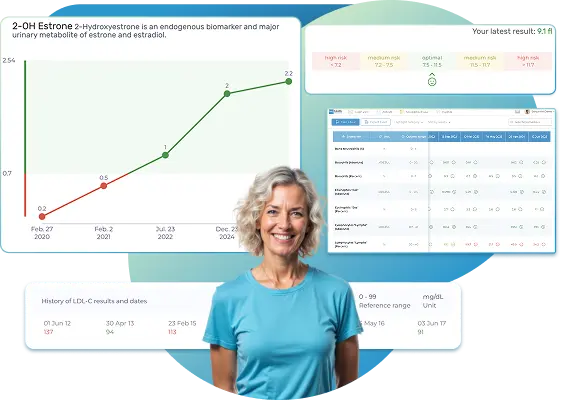
All Your Lab Results.
One Simple Dashboard.
Import, Track, and Share Your Lab Results Easily
Import, Track, and Share Your Lab Results
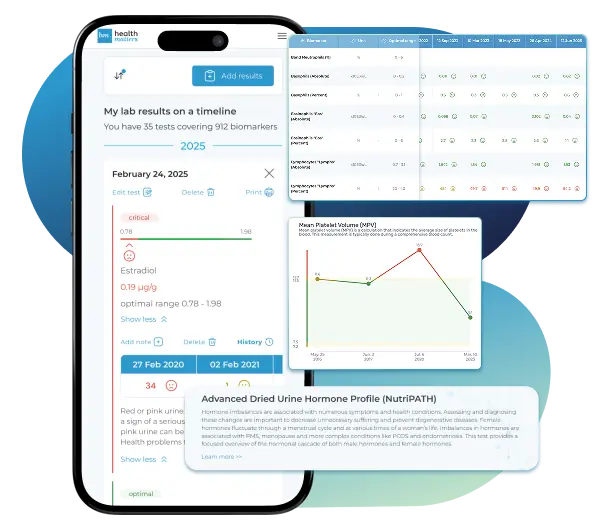
Import lab results from multiple providers, track changes over time, customize your reference ranges, and get clear explanations for each result. Everything is stored securely, exportable in one organized file, and shareable with your doctor—or anyone you choose.
Cancel or upgrade anytime
What does it mean if your Small LDL-P result is too low?
A low Small LDL-P is a favorable result — you have relatively few of the small, dense LDL particles most associated with plaque, which points toward the lower-risk "Pattern A" profile. It's most reassuring when your total LDL-P (or ApoB) is also low, since that means both the number and the type of your LDL particles are in a good place. A low Small LDL-P doesn't override the rest of your lipid and risk picture, so it's still read alongside total LDL-P/ApoB, triglycerides, HDL, and your overall cardiovascular risk.
Related Biomarkers
Article Review & Sources
All our content is backed by peer-reviewed studies, academic research, and trusted medical sources. We're committed to accuracy and transparency — see our editorial policy for details.
Laboratories
Bring All Your Lab Results Together — In One Place
We accept reports from any lab, so you can easily collect and organize all your health information in one secure spot.











Pricing Table
Gather Your Lab History — and Finally Make Sense of It
Finally, Your Lab Results Organized and Clear

Personal plans

$79/ year
Advanced Plan
Access your lab reports, explanations, and tracking tools.
- Import lab results from any provider
- Track all results with visual tools
- Customize your reference ranges
- Export your full lab history anytime
- Share results securely with anyone
- Receive 5 reports entered for you
- Cancel or upgrade anytime
$250/ once
Unlimited Account
Pay once, access everything—no monthly fees, no limits.
- Import lab results from any provider
- Track all results with visual tools
- Customize your reference ranges
- Export your full lab history anytime
- Share results securely with anyone
- Receive 10 reports entered for you
- No subscriptions. No extra fees.
$45/ month
Pro Monthly
Designed for professionals managing their clients' lab reports
- Import lab results from any provider
- Track lab results for multiple clients
- Customize reference ranges per client
- Export lab histories and reports
- Begin with first report entered by us
- Cancel or upgrade anytime
About membership
What's included in a Healthmatters membership
 Import Lab Results from Any Source
 See Your Health Timeline
 Understand What Your Results Mean

 Visualize Your Results

 Data Entry Service for Your Reports
 Securely Share With Anyone You Trust
Let Your Lab Results Tell the Full Story
Once your results are in one place, see the bigger picture — track trends over time, compare data side by side, export your full history, and share securely with anyone you trust.




Bring all your results together to compare, track progress, export your history, and share securely.
What Healthmatters Members Are Saying

I have been using Healthmatters.io since 2021. I travel all over the world and use different doctors and health facilities. This site has allowed me to consolidate all my various test results over 14 years in one place. And every doctor that I show this to has been impressed. Because with any health professional I talk to, I can pull up historical results in seconds. It is invaluable. Even going back to the same doctor, they usually do not have the historical results from their facility in a graph format. That has been very helpful.
Anthony
Unlimited Plan Member since 2021
What fantastic service and great, easy-to-follow layouts! I love your website; it makes it so helpful to see patterns in my health data. It's truly a pleasure to use. I only wish the NHS was as organized and quick as Healthmatters.io. You've set a new standard for health tracking!
Karin
Advanced Plan Member since 2020
As a PRO member and medical practitioner, Healthmatters.io has been an invaluable tool for tracking my clients' data. The layout is intuitive, making it easy to monitor trends and spot patterns over time. The ability to customize reports and charts helps me present information clearly to my clients, improving communication and outcomes. It's streamlined my workflow, saving me time and providing insights at a glance. Highly recommended for any practitioner looking for a comprehensive and user-friendly solution to track patient labs!
Paul
Healthmatters Pro Member since 2024

We implement proven measures to keep your data safe.
At HealthMatters, we're committed to maintaining the security and confidentiality of your personal information. We've put industry-leading security standards in place to help protect against the loss, misuse, or alteration of the information under our control. We use procedural, physical, and electronic security methods designed to prevent unauthorized people from getting access to this information. Our internal code of conduct adds additional privacy protection. All data is backed up multiple times a day and encrypted using SSL certificates. See our Privacy Policy for more details.