
 Optimal Result:
0 - 0.2 mmol/L.
Optimal Result:
0 - 0.2 mmol/L.

LDL-3 is one of the subfractions of Low-Density Lipoprotein (LDL) — often referred to as “bad cholesterol.” LDL particles transport cholesterol through your bloodstream, but not all LDL particles are the same.
LDL is made up of different particle sizes and densities, classified from LDL-1 (large, buoyant) to LDL-7 (small, dense).
-
Larger LDL particles (LDL-1, LDL-2) are considered less harmful.
-
Smaller, denser LDL particles (LDL-3 and beyond) are more atherogenic, meaning they are more likely to promote plaque buildup in arteries.
Elevated LDL-3 levels suggest a shift toward smaller, denser LDL particles, which are more easily oxidized and can penetrate the artery wall — a key early step in atherosclerosis.
Lab Results Explained and Tracked
What does it mean if your Low Density Lipoprotein (LDL-3) result is too high?
An elevated LDL-3 level means that a larger proportion of your LDL particles fall into the small, dense, and potentially more dangerous range.
This pattern is often linked to metabolic imbalances and is associated with a higher risk of cardiovascular disease, even when total LDL cholesterol appears normal.
High LDL-3 often reflects:
-
Increased oxidative stress and inflammation
-
Higher triglyceride levels
-
Lower HDL (“good”) cholesterol
-
Insulin resistance or prediabetes
Why Small, Dense LDL (LDL-3) Matters
LDL-3 particles:
-
Penetrate artery walls more easily
-
Are more prone to oxidation, triggering inflammation
-
Stay in circulation longer, increasing exposure time to vessel walls
-
Contribute to plaque formation and instability, raising the risk of heart attack and stroke
In short, elevated LDL-3 is a sign that your LDL cholesterol profile is more atherogenic (plaque-promoting).
Typical Reference Ranges
| LDL-3 (mg/dL) | Interpretation |
|---|---|
| < 15 mg/dL | Optimal / Low risk |
| 15–25 mg/dL | Borderline elevated |
| > 25 mg/dL | Elevated — increased cardiovascular risk |
(Reference values may vary slightly depending on the testing method and laboratory.)
Common Causes of Elevated LDL-3
Several factors can contribute to an unfavorable shift toward small, dense LDL-3 particles:
1. Metabolic and hormonal factors
-
Insulin resistance or prediabetes
-
Type 2 diabetes
-
Metabolic syndrome
-
Low thyroid function (hypothyroidism)
2. Dietary and lifestyle factors
-
Diets high in refined carbohydrates, sugars, or processed fats
-
Low physical activity or obesity
-
High stress or chronic inflammation
-
Smoking
3. Genetic factors
-
Family history of dyslipidemia or premature heart disease
-
Genetic variations affecting ApoE or LDL receptor function
Health Implications
Elevated LDL-3 is a warning sign for increased atherosclerotic risk, even if total LDL cholesterol or triglycerides are in the normal range.
This pattern is often part of an “atherogenic lipoprotein phenotype”, characterized by:
-
High LDL-3
-
High triglycerides
-
Low HDL cholesterol
This combination strongly correlates with metabolic syndrome and cardiovascular disease.
What You Can Do to Improve LDL-3
You can often shift LDL-3 particles back toward larger, less harmful LDL forms (LDL-1 and LDL-2) through targeted lifestyle and medical interventions:
-
Reduce refined carbs and sugars
-
Focus on whole, unprocessed foods; limit sweets, white bread, and sugary drinks.
-
-
Increase physical activity
-
Regular aerobic and resistance training improve insulin sensitivity and particle size.
-
-
Prioritize healthy fats
-
Include omega-3 fatty acids (fish, flax, chia), olive oil, avocados, and nuts.
-
-
Maintain a healthy weight and waist circumference
-
Weight loss reduces small, dense LDL particles.
-
-
Manage blood sugar and insulin levels
-
Control carbohydrate intake and monitor fasting glucose and HbA1c.
-
-
Consider medical therapy if needed
-
Statins, fibrates, or niacin can help improve LDL particle patterns when lifestyle alone isn’t enough.
-
-
Quit smoking and manage stress
-
Both can contribute to oxidative stress and smaller LDL particle formation.
-
Key Takeaway
An elevated LDL-3 level signals a shift toward smaller, denser LDL particles, which are more likely to cause plaque buildup and cardiovascular disease.
This pattern is strongly linked to insulin resistance, inflammation, and poor metabolic health, but it can often be improved through lifestyle changes that optimize fat metabolism, blood sugar, and inflammation.

All Your Lab Results.
One Simple Dashboard.
Import, Track, and Share Your Lab Results Easily
Import, Track, and Share Your Lab Results
Import lab results from multiple providers, track changes over time, customize your reference ranges, and get clear explanations for each result. Everything is stored securely, exportable in one organized file, and shareable with your doctor—or anyone you choose.
Cancel or upgrade anytime
Article Review & Sources
All our content is backed by peer-reviewed studies, academic research, and trusted medical sources. We're committed to accuracy and transparency — see our editorial policy for details.
Laboratories
Bring All Your Lab Results Together — In One Place
We accept reports from any lab, so you can easily collect and organize all your health information in one secure spot.











Pricing Table
Gather Your Lab History — and Finally Make Sense of It
Finally, Your Lab Results Organized and Clear

Personal plans

$79/ year
Advanced Plan
Access your lab reports, explanations, and tracking tools.
- Import lab results from any provider
- Track all results with visual tools
- Customize your reference ranges
- Export your full lab history anytime
- Share results securely with anyone
- Receive 5 reports entered for you
- Cancel or upgrade anytime
$250/ once
Unlimited Account
Pay once, access everything—no monthly fees, no limits.
- Import lab results from any provider
- Track all results with visual tools
- Customize your reference ranges
- Export your full lab history anytime
- Share results securely with anyone
- Receive 10 reports entered for you
- No subscriptions. No extra fees.
$45/ month
Pro Monthly
Designed for professionals managing their clients' lab reports
- Import lab results from any provider
- Track lab results for multiple clients
- Customize reference ranges per client
- Export lab histories and reports
- Begin with first report entered by us
- Cancel or upgrade anytime
About membership
What's included in a Healthmatters membership
 Import Lab Results from Any Source
 See Your Health Timeline
 Understand What Your Results Mean

 Visualize Your Results

 Data Entry Service for Your Reports
 Securely Share With Anyone You Trust
Let Your Lab Results Tell the Full Story
Once your results are in one place, see the bigger picture — track trends over time, compare data side by side, export your full history, and share securely with anyone you trust.




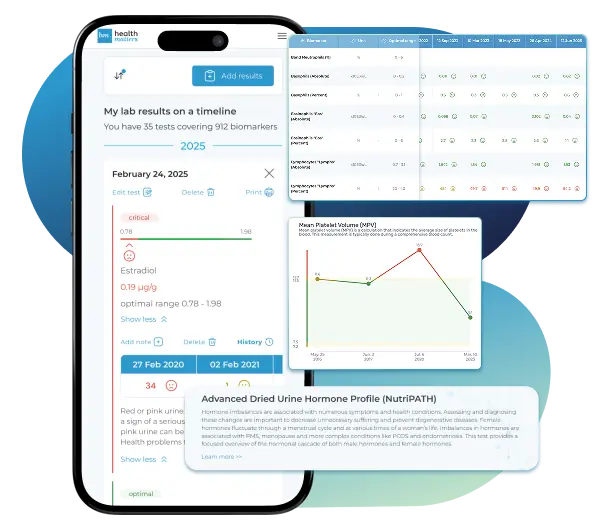
Bring all your results together to compare, track progress, export your history, and share securely.
What Healthmatters Members Are Saying

I have been using Healthmatters.io since 2021. I travel all over the world and use different doctors and health facilities. This site has allowed me to consolidate all my various test results over 14 years in one place. And every doctor that I show this to has been impressed. Because with any health professional I talk to, I can pull up historical results in seconds. It is invaluable. Even going back to the same doctor, they usually do not have the historical results from their facility in a graph format. That has been very helpful.
Anthony
Unlimited Plan Member since 2021
What fantastic service and great, easy-to-follow layouts! I love your website; it makes it so helpful to see patterns in my health data. It's truly a pleasure to use. I only wish the NHS was as organized and quick as Healthmatters.io. You've set a new standard for health tracking!
Karin
Advanced Plan Member since 2020
As a PRO member and medical practitioner, Healthmatters.io has been an invaluable tool for tracking my clients' data. The layout is intuitive, making it easy to monitor trends and spot patterns over time. The ability to customize reports and charts helps me present information clearly to my clients, improving communication and outcomes. It's streamlined my workflow, saving me time and providing insights at a glance. Highly recommended for any practitioner looking for a comprehensive and user-friendly solution to track patient labs!
Paul
Healthmatters Pro Member since 2024

We implement proven measures to keep your data safe.
At HealthMatters, we're committed to maintaining the security and confidentiality of your personal information. We've put industry-leading security standards in place to help protect against the loss, misuse, or alteration of the information under our control. We use procedural, physical, and electronic security methods designed to prevent unauthorized people from getting access to this information. Our internal code of conduct adds additional privacy protection. All data is backed up multiple times a day and encrypted using SSL certificates. See our Privacy Policy for more details.