
LDL Cholesterol (LDL-C): Normal Range, Levels Chart, and What Your Number Means
Other names: LDL Cholesterol, LDL-C, LDL, LDL-CHOLESTEROL, Low-Density Lipoprotein, LDL-C NIH Calc, LDL Chol Calc NIH, LDL Cholesterol Calc, LDL-Cholesterol Calculated, LDL Calculated, LDL Calculation, LDL DIRECT, LIPOPROT.(LDL) DIRECT, LDL Cholesterol Direct, Low Density Lipoprotein Cholesterol, Low Density Lipoproteins Venous, LDL Bad Cholesterol, LDL High, LDL Low, High LDL, LDL Normal Range, LDL Levels, LDL Chol, LDL-C High, LDL-C Low, LDL-C Normal, LDL Borderline High, LDL Near Optimal, LDL Very High, What Is LDL-C, LDL Blood Test, LDL Cholesterol Blood Test, LDL-C Blood Test, DIRECT LDL, LDL Chol Calc (NIH), LDL-C (NIH Calc)
 Optimal Result:
0 - 100 mg/dL,
or
0 - 2.59 mmol/L.
Optimal Result:
0 - 100 mg/dL,
or
0 - 2.59 mmol/L.

QUICK ANSWER
LDL-C (low-density lipoprotein cholesterol) is the primary measure of "bad" cholesterol — the particles responsible for depositing cholesterol into artery walls, leading to plaque buildup and cardiovascular disease.
LDL cholesterol levels — what your number means:
| LDL level (mg/dL) | LDL level (mmol/L) | Category |
|---|---|---|
| Under 70 | Under 1.81 | Optimal for very high-risk patients (prior heart attack, stroke, or diabetes with ASCVD) |
| Under 100 | Under 2.59 | Optimal for high-risk and general population |
| 100–129 | 2.59–3.34 | Near optimal / above optimal |
| 130–159 | 3.37–4.12 | Borderline high |
| 160–189 | 4.14–4.89 | High |
| 190 and above | 4.91+ | Very high — evaluate for familial hypercholesterolemia |
If you have a specific number — what it typically means:
| LDL result (mg/dL) | What it usually means |
|---|---|
| Under 70 | Excellent — target for patients with prior heart disease |
| 70–99 | Optimal for most people |
| 100–129 | Near optimal — acceptable for low-risk individuals |
| 130–159 | Borderline high — lifestyle changes typically recommended |
| 160–189 | High — medication may be recommended depending on overall cardiovascular risk |
| 190–239 | Very high — evaluate for familial hypercholesterolemia |
| 240+ | Strong suspicion of familial hypercholesterolemia or secondary cause |
Your LDL target depends on your overall cardiovascular risk — not just the number itself. A result of 130 mg/dL may be acceptable for a healthy 30-year-old but unacceptably high for someone who has had a heart attack.
Key takeaway: LDL-C is one piece of the cardiovascular risk picture. Interpreting it alongside HDL, triglycerides, total cholesterol, and personal risk factors gives the most complete assessment.
WHAT IS LDL-C AND HOW IS IT MEASURED?
LDL (low-density lipoprotein) particles transport cholesterol from the liver to cells throughout the body. When LDL levels are elevated, excess cholesterol can deposit in artery walls, triggering inflammation and plaque formation — the process known as atherosclerosis.
Calculated LDL vs direct LDL:
Most lab reports show a calculated LDL result, not a direct measurement. The standard method is the Friedewald equation:
LDL = Total Cholesterol − HDL − (Triglycerides ÷ 5)
This calculation is accurate when triglycerides are below 400 mg/dL. When triglycerides are very high (above 400 mg/dL), the Friedewald equation becomes unreliable and a direct LDL measurement is needed.
On your lab report, you may see:
- "LDL-C Calc" or "LDL Chol Calc (NIH)" = calculated using Friedewald
- "LDL-C NIH Calc" = same calculation, NIH-validated formula
- "LDL DIRECT" or "LIPOPROT.(LDL) DIRECT" = directly measured LDL
Both calculated and direct LDL use the same reference ranges.
Unit conversion: mg/dL × 0.0259 = mmol/L. For example, 100 mg/dL = 2.59 mmol/L.
WHAT DOES HIGH LDL MEAN?
High LDL-C means more LDL particles are circulating in the blood, increasing the risk of cholesterol depositing in artery walls. It does not cause symptoms — elevated LDL is detected only through a blood test.
Causes of high LDL:
Diet and lifestyle
- Saturated fat and trans fat intake — the most modifiable cause; saturated fats (red meat, full-fat dairy, tropical oils) stimulate the liver to produce more LDL; trans fats (partially hydrogenated oils) both raise LDL and lower HDL
- Low physical activity — exercise raises HDL and modestly lowers LDL
- Obesity — excess body fat, particularly visceral fat, increases LDL and triglycerides
- Smoking — lowers HDL and promotes LDL oxidation, accelerating atherosclerosis
Medical conditions
- Hypothyroidism — thyroid hormone regulates LDL receptor activity; low thyroid → reduced LDL clearance → elevated LDL
- Nephrotic syndrome — protein loss in urine triggers compensatory hepatic lipoprotein overproduction
- Obstructive liver disease — impairs normal lipoprotein metabolism
- Type 2 diabetes / insulin resistance — associated with small, dense LDL particles that are more atherogenic
- Polycystic ovary syndrome (PCOS)
Genetic causes
- Familial hypercholesterolemia (FH) — the most important genetic cause; LDL receptors are defective or absent, preventing LDL clearance. LDL typically > 190 mg/dL in heterozygous FH, > 400 mg/dL in homozygous FH. Affects 1 in 250 people — most go undiagnosed.
- Polygenic hypercholesterolemia — multiple common genetic variants each contribute modestly to elevated LDL
Medications
- Corticosteroids (prednisone), progestins, anabolic steroids, some retinoids, thiazide diuretics, and beta-blockers can raise LDL
WHAT DOES LOW LDL MEAN?
Very low LDL (under 40 mg/dL) is uncommon and generally not a primary health concern in most people. In patients on high-intensity statin therapy, LDL levels below 50 mg/dL are deliberately achieved to reduce cardiovascular events — this is safe and beneficial.
Causes of genuinely low LDL (not medication-induced):
- Hyperthyroidism — elevated thyroid hormone increases LDL receptor activity and LDL clearance
- Severe malnutrition or malabsorption syndromes
- Abetalipoproteinemia (rare genetic disorder — inability to produce LDL-containing lipoproteins)
- Severe liver disease — reduced lipoprotein synthesis
- Chronic infection or inflammatory states — acute-phase response temporarily lowers lipids
A very low LDL not explained by statin use warrants evaluation for the above conditions.
LDL CHOLESTEROL — RISK PROGRESSION BY LEVEL
LDL-C does not flip from "safe" to "dangerous" at a single threshold — risk increases progressively as LDL rises:
| LDL level (mg/dL) | Risk context | Typical interpretation |
|---|---|---|
| Under 70 | Secondary prevention | Target for patients with established heart disease, prior heart attack, or stroke |
| 70–99 | Optimal | General population target; low cardiovascular risk at this level |
| 100–129 | Near optimal | Acceptable for low-risk individuals; borderline for those with risk factors |
| 130–159 | Mild-moderate elevation | Increased lifetime atherosclerotic risk; lifestyle changes warranted |
| 160–189 | High | Significant cardiovascular risk; medication may be recommended based on overall risk |
| 190–239 | Very high | Possible familial hypercholesterolemia; statin therapy and FH evaluation warranted |
| 240+ | Markedly elevated | Strong familial hypercholesterolemia suspicion or significant secondary cause; urgent evaluation |
Each 38.6 mg/dL (1 mmol/L) reduction in LDL-C is associated with approximately a 22% reduction in major cardiovascular events over 5 years, based on statin trial data — making LDL reduction one of the most evidence-supported interventions in preventive medicine.
LDL RISK CATEGORIES AND TREATMENT TARGETS
LDL target levels are not one-size-fits-all — they depend on overall cardiovascular risk:
| Risk category | Typical patients | LDL target |
|---|---|---|
| Very high risk | Prior heart attack, stroke, ACS, or established ASCVD | < 70 mg/dL (< 1.8 mmol/L) |
| High risk | Diabetes with ≥ 1 risk factor; 10-year ASCVD risk ≥ 10% | < 100 mg/dL (< 2.6 mmol/L) |
| Borderline-high risk | 10-year ASCVD risk 7.5–10%; multiple risk factors | < 130 mg/dL (< 3.4 mmol/L) |
| Low-moderate risk | 10-year ASCVD risk < 7.5%; no major risk factors | < 160 mg/dL (< 4.1 mmol/L) |
Based on 2018 ACC/AHA Guideline on the Management of Blood Cholesterol.
Familial hypercholesterolemia: LDL ≥ 190 mg/dL without a clear secondary cause warrants evaluation for FH regardless of other risk factors. FH requires statin therapy regardless of calculated ASCVD risk.
HOW LDL RELATES TO HDL, TRIGLYCERIDES, AND TOTAL CHOLESTEROL
LDL-C should be interpreted as part of the full lipid panel:
| Marker | Favorable | Borderline | Unfavorable |
|---|---|---|---|
| LDL-C | < 100 mg/dL | 100–159 mg/dL | ≥ 160 mg/dL |
| HDL-C | > 60 mg/dL (protective) | 40–60 mg/dL | < 40 mg/dL (men) / < 50 mg/dL (women) |
| Triglycerides | < 150 mg/dL | 150–199 mg/dL | ≥ 200 mg/dL |
| Total Cholesterol | < 200 mg/dL | 200–239 mg/dL | ≥ 240 mg/dL |
| Non-HDL Cholesterol | < 130 mg/dL | 130–189 mg/dL | ≥ 190 mg/dL |
Non-HDL cholesterol (Total Cholesterol − HDL) is increasingly used alongside LDL-C because it captures all atherogenic particles, including VLDL and IDL. Non-HDL target is typically 30 mg/dL higher than the LDL target for the same risk category.
High LDL + high triglycerides + low HDL is the classic metabolic syndrome lipid pattern and carries higher cardiovascular risk than elevated LDL in isolation.
LDL-C VS APOB VS LDL PARTICLE NUMBER
Standard lipid panels measure LDL-C — the cholesterol content inside LDL particles. But two people with the same LDL-C can have very different cardiovascular risk depending on the number of LDL particles carrying that cholesterol.
| Measurement | What it measures | Clinical use |
|---|---|---|
| LDL-C | Cholesterol mass inside LDL particles (mg/dL or mmol/L) | Standard — on all routine lipid panels |
| ApoB (Apolipoprotein B) | Total number of atherogenic particles (each LDL, VLDL, IDL particle carries exactly one ApoB) | Superior predictor of risk when LDL-C and ApoB disagree |
| LDL-P (LDL particle number) | Number of LDL particles specifically | Measured by NMR lipoprofile; less commonly ordered |
When LDL-C and ApoB disagree (discordance):
- High ApoB with normal LDL-C = more particles carrying less cholesterol each — higher risk than LDL-C suggests. Common in metabolic syndrome, insulin resistance, and elevated triglycerides.
- Normal ApoB with elevated LDL-C = fewer, larger LDL particles carrying more cholesterol each — lower risk than LDL-C suggests. More common in people with high HDL.
ApoB is now recommended alongside LDL-C by some major guidelines (European Society of Cardiology 2019, Canadian Cardiovascular Society) for patients whose LDL-C may underestimate risk — particularly those with metabolic syndrome, diabetes, or low HDL. ApoB target for high-risk patients: under 70 mg/dL; very high risk: under 65 mg/dL.
WHY IS MY LDL HIGH BUT TRIGLYCERIDES ARE NORMAL?
This is one of the most common combinations on a lipid panel — and one of the most frequently misunderstood. High LDL with normal triglycerides (under 150 mg/dL) points strongly toward genetic or dietary causes rather than metabolic syndrome.
When triglycerides are high alongside LDL, that typically signals insulin resistance, obesity, or poor diet broadly. When LDL is elevated in isolation with normal triglycerides and normal HDL, the differential is narrower:
- Genetics — the most important cause to consider. Familial hypercholesterolemia (LDL ≥ 190 mg/dL), polygenic hypercholesterolemia, or familial combined hyperlipidemia all elevate LDL preferentially without necessarily raising triglycerides. If LDL has been persistently elevated since a young age, or a first-degree relative had early heart disease or very high cholesterol, genetic cause is likely.
- Diet high in saturated fat. Saturated fat raises LDL primarily by reducing hepatic LDL receptor activity — it does not necessarily raise triglycerides, especially if total caloric intake and carbohydrate intake are not excessive.
- Hypothyroidism. Low thyroid hormone reduces LDL receptor expression, causing LDL accumulation. Triglycerides may be mildly elevated or normal. A TSH test alongside the lipid panel can identify this.
- Medications. Corticosteroids, some beta-blockers, and progestins raise LDL without a proportional effect on triglycerides.
What to check next: If LDL is consistently above 160 mg/dL with normal triglycerides and no clear dietary explanation, TSH (thyroid function) and a family history review are the priority next steps. LDL ≥ 190 mg/dL warrants formal familial hypercholesterolemia evaluation.
WHEN TO FOLLOW UP
Discuss your LDL result with a clinician if:
- LDL is ≥ 190 mg/dL without a clear dietary or medication cause — familial hypercholesterolemia evaluation is warranted
- LDL is above your risk-based target (e.g., above 70 mg/dL with prior heart attack, above 100 mg/dL with diabetes)
- LDL has risen significantly from a previous result without obvious explanation
- You are on statin therapy and LDL has not reached target after 8–12 weeks
- LDL is very low (under 40 mg/dL) without statin use
INTERNAL LINKS
Related lipid panel markers: HDL Cholesterol · Total Cholesterol · Triglycerides · Non-HDL Cholesterol · VLDL Cholesterol
BOTTOM LINE
Bottom line: LDL-C is the primary cardiovascular risk marker in a lipid panel. The number alone is not sufficient — your LDL target depends on your overall risk profile. Under 100 mg/dL is the general optimal target; under 70 mg/dL is required for patients with established cardiovascular disease. LDL ≥ 190 mg/dL without explanation warrants evaluation for familial hypercholesterolemia. Always interpret LDL alongside HDL, triglycerides, and total cholesterol.
FAQ about LDL-C
-
What is a normal LDL cholesterol level?
For the general population, LDL below 100 mg/dL (2.59 mmol/L) is considered optimal. LDL 100–129 mg/dL is near optimal; 130–159 mg/dL is borderline high; 160–189 mg/dL is high; 190 mg/dL and above is very high. Your personal LDL target depends on cardiovascular risk — patients with prior heart attack or stroke aim for under 70 mg/dL. -
What does it mean if my LDL is high?
High LDL means more LDL particles are circulating in the blood, increasing the chance that cholesterol will deposit in artery walls. It doesn't cause symptoms but raises the long-term risk of heart attack and stroke. The most common causes are diet high in saturated fat, physical inactivity, obesity, hypothyroidism, and genetics. Treatment depends on your overall cardiovascular risk level. -
What is LDL-C NIH Calc on my lab report?
"LDL-C NIH Calc" or "LDL Chol Calc (NIH)" means your LDL was calculated using the Friedewald equation rather than directly measured: LDL = Total Cholesterol − HDL − (Triglycerides ÷ 5). This is the standard method used by most labs and is accurate when triglycerides are under 400 mg/dL. The result is clinically equivalent to a direct LDL measurement for most patients. -
What is the difference between calculated and direct LDL?
Calculated LDL uses the Friedewald equation (Total Cholesterol − HDL − Triglycerides ÷ 5) and is the default method for most routine lipid panels. Direct LDL measures LDL particles without calculation. Direct measurement is more accurate when triglycerides are above 400 mg/dL, when non-fasting samples are used, or in certain metabolic conditions. Both use the same reference ranges. -
At what LDL level are statins usually recommended?
There is no single LDL threshold that automatically triggers statin therapy — the decision is based on LDL level combined with overall cardiovascular risk. Statins are generally recommended in four groups: (1) patients with established cardiovascular disease (prior heart attack, stroke, stable angina) regardless of LDL; (2) LDL ≥ 190 mg/dL, which suggests familial hypercholesterolemia; (3) patients aged 40–75 with diabetes and LDL 70–189 mg/dL; (4) patients aged 40–75 without diabetes whose 10-year ASCVD risk is ≥ 7.5% based on the pooled cohort equations. A clinician calculates your personal risk score before recommending statin therapy. -
What LDL level requires medication?
There is no single LDL threshold that automatically requires medication — the decision is based on overall cardiovascular risk. Generally, lifestyle changes alone are tried first for LDL 130–189 mg/dL in low-to-moderate-risk individuals. Statins are typically recommended when LDL is ≥ 190 mg/dL (possible familial hypercholesterolemia), when LDL is above target despite lifestyle changes in high-risk patients, or when 10-year ASCVD risk is ≥ 7.5–10%. -
Is LDL of 130 high?
LDL of 130 mg/dL falls in the "borderline high" category (130–159 mg/dL) by ACC/AHA guidelines. Whether it requires treatment depends on your overall cardiovascular risk. For a healthy person with no other risk factors, 130 may be manageable with lifestyle changes. For someone with diabetes, high blood pressure, or a prior heart attack, 130 is above target and medication may be recommended. -
What is LDL-C vs LDL?
LDL-C specifically refers to the cholesterol carried inside LDL particles, measured in mg/dL or mmol/L. LDL can also refer to LDL particle number (LDL-P) or particle size, which are measured by more advanced testing (NMR lipoprofile). For standard clinical use, "LDL" and "LDL-C" are used interchangeably on most lab reports. -
Which cholesterol marker matters most — LDL, ApoB, or non-HDL?
LDL-C remains the primary treatment target in most major guidelines (ACC/AHA, ESC). However, ApoB and non-HDL cholesterol capture atherogenic risk that LDL-C can miss in specific situations. Non-HDL cholesterol (Total Cholesterol − HDL) is a better marker than LDL-C when triglycerides are elevated, because it includes VLDL particles that LDL-C calculation doesn't fully account for. ApoB reflects total atherogenic particle count and may better predict risk in people with metabolic syndrome, diabetes, insulin resistance, or discordance between LDL-C and particle number. For most people with a straightforward lipid panel, LDL-C is sufficient. For those with elevated triglycerides, low HDL, obesity, or diabetes, non-HDL and ApoB add meaningful information. -
Can LDL be too low?
LDL below 40 mg/dL without statin use is unusual and may warrant investigation for hyperthyroidism, malnutrition, liver disease, or rare conditions like abetalipoproteinemia. Intentionally lowering LDL to very low levels with statins or PCSK9 inhibitors is safe and reduces cardiovascular events — there is no established "too low" threshold for statin-treated LDL. -
How can I lower my LDL naturally?
Effective lifestyle interventions: reduce saturated fat (red meat, full-fat dairy, coconut oil) and eliminate trans fats; increase soluble fiber (oats, legumes, fruits) — each additional 5–10g soluble fiber/day lowers LDL by 3–5%; add plant sterols/stanols (2g/day lowers LDL 8–10%); regular aerobic exercise (150 minutes/week moderate intensity) lowers LDL 3–6% and raises HDL; lose excess weight — each 10-pound loss reduces LDL by 5–8 mg/dL on average.
Lab Results Explained and Tracked
What does it mean if your LDL-C result is too high?
High LDL-C means more LDL particles are in circulation, increasing the risk of cholesterol depositing into artery walls. Elevated LDL causes no symptoms — it is identified only through a lipid panel. The most common causes are diet high in saturated and trans fats, physical inactivity, obesity, hypothyroidism, type 2 diabetes, and genetic conditions like familial hypercholesterolemia (LDL ≥ 190 mg/dL without clear cause).
Treatment targets depend on overall cardiovascular risk: under 70 mg/dL for patients with prior heart disease, under 100 mg/dL for high-risk patients, and under 130 mg/dL for moderate-risk individuals. Lifestyle changes — reducing saturated fat, increasing fiber and plant sterols, regular aerobic exercise — can lower LDL by 10–30%. Statins are the most effective medication and are recommended when lifestyle changes are insufficient.
Related Health Conditions

All Your Lab Results.
One Simple Dashboard.
Import, Track, and Share Your Lab Results Easily
Import, Track, and Share Your Lab Results
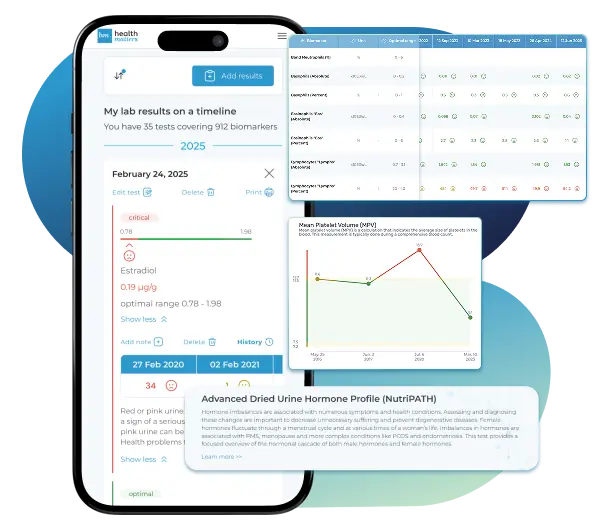
Import lab results from multiple providers, track changes over time, customize your reference ranges, and get clear explanations for each result. Everything is stored securely, exportable in one organized file, and shareable with your doctor—or anyone you choose.
Cancel or upgrade anytime
What does it mean if your LDL-C result is too low?
Very low LDL-C (under 40 mg/dL) without statin use is uncommon and may indicate hyperthyroidism, malnutrition, severe liver disease, or rare genetic conditions. In patients on high-intensity statin therapy, deliberately low LDL is safe and beneficial for cardiovascular protection. A very low LDL not explained by medication warrants evaluation for the underlying cause.
Related Biomarkers
Article Review & Sources
All our content is backed by peer-reviewed studies, academic research, and trusted medical sources. We're committed to accuracy and transparency — see our editorial policy for details.
Laboratories
Bring All Your Lab Results Together — In One Place
We accept reports from any lab, so you can easily collect and organize all your health information in one secure spot.










Pricing Table
Gather Your Lab History — and Finally Make Sense of It
Finally, Your Lab Results Organized and Clear

Personal plans

$79/ year
Advanced Plan
Access your lab reports, explanations, and tracking tools.
- Import lab results from any provider
- Track all results with visual tools
- Customize your reference ranges
- Export your full lab history anytime
- Share results securely with anyone
- Receive 5 reports entered for you
- Cancel or upgrade anytime
$250/ once
Unlimited Account
Pay once, access everything—no monthly fees, no limits.
- Import lab results from any provider
- Track all results with visual tools
- Customize your reference ranges
- Export your full lab history anytime
- Share results securely with anyone
- Receive 10 reports entered for you
- No subscriptions. No extra fees.
$45/ month
Pro Monthly
Designed for professionals managing their clients' lab reports
- Import lab results from any provider
- Track lab results for multiple clients
- Customize reference ranges per client
- Export lab histories and reports
- Begin with first report entered by us
- Cancel or upgrade anytime
About membership
What's included in a Healthmatters membership
 Import Lab Results from Any Source
 See Your Health Timeline
 Understand What Your Results Mean

 Visualize Your Results

 Data Entry Service for Your Reports
 Securely Share With Anyone You Trust
Let Your Lab Results Tell the Full Story
Once your results are in one place, see the bigger picture — track trends over time, compare data side by side, export your full history, and share securely with anyone you trust.




Bring all your results together to compare, track progress, export your history, and share securely.
What Healthmatters Members Are Saying

I have been using Healthmatters.io since 2021. I travel all over the world and use different doctors and health facilities. This site has allowed me to consolidate all my various test results over 14 years in one place. And every doctor that I show this to has been impressed. Because with any health professional I talk to, I can pull up historical results in seconds. It is invaluable. Even going back to the same doctor, they usually do not have the historical results from their facility in a graph format. That has been very helpful.
Anthony
Unlimited Plan Member since 2021
What fantastic service and great, easy-to-follow layouts! I love your website; it makes it so helpful to see patterns in my health data. It's truly a pleasure to use. I only wish the NHS was as organized and quick as Healthmatters.io. You've set a new standard for health tracking!
Karin
Advanced Plan Member since 2020
As a PRO member and medical practitioner, Healthmatters.io has been an invaluable tool for tracking my clients' data. The layout is intuitive, making it easy to monitor trends and spot patterns over time. The ability to customize reports and charts helps me present information clearly to my clients, improving communication and outcomes. It's streamlined my workflow, saving me time and providing insights at a glance. Highly recommended for any practitioner looking for a comprehensive and user-friendly solution to track patient labs!
Paul
Healthmatters Pro Member since 2024

We implement proven measures to keep your data safe.
At HealthMatters, we're committed to maintaining the security and confidentiality of your personal information. We've put industry-leading security standards in place to help protect against the loss, misuse, or alteration of the information under our control. We use procedural, physical, and electronic security methods designed to prevent unauthorized people from getting access to this information. Our internal code of conduct adds additional privacy protection. All data is backed up multiple times a day and encrypted using SSL certificates. See our Privacy Policy for more details.