
Prostate Specific Antigen (PSA)
Other names: PSA, TOTAL, PSA, Total w/rflx to Free PSA, Prostate Specific Ag, Total PSA, Prostate-Specific Ag, Prostate-Specific Ag, Serum, Prostate Specific Ag, Serum, Total PSA (Prostate Specific Antigen), Prostate Screening (PSA), PSA Total, PSA,TOTAL,2.5NG/ML CUTOFF
 Optimal Result:
0 - 4 ng/mL.
Optimal Result:
0 - 4 ng/mL.

Prostate-specific antigen (PSA) is a protein produced mainly by cells in the prostate gland—a small organ in men that helps produce seminal fluid. PSA normally circulates in the blood at low levels, but higher levels can indicate prostate stress, inflammation, enlargement, or potentially cancer.
Why the PSA Blood Test Matters
The PSA test measures how much prostate-specific antigen is present in your bloodstream. It is one of the most widely used lab tests for detecting prostate abnormalities, including prostate cancer, benign prostatic hyperplasia (BPH), and prostatitis.
A high PSA level does not always mean prostate cancer. Many non-cancerous factors can cause elevated results, such as:
-
Urinary tract infections (UTIs)
-
Prostatitis (inflammation or infection of the prostate)
-
Recent ejaculation
-
Recent prostate manipulation (biopsy, digital rectal exam, or surgery)
-
Vigorous exercise, especially cycling
-
Aging
Certain medications, such as finasteride or dutasteride—prescribed for BPH or hair loss—can lower PSA levels, even when prostate disease is present.
Interpreting PSA Test Results
There is no universal “normal” PSA value. Levels can vary from person to person and even fluctuate in the same individual over time. While PSA levels below 4.0 ng/mL were once considered normal, this single cutoff is no longer absolute:
-
Some men with PSA levels below 4.0 ng/mL may still have prostate cancer.
-
Many with levels above 4.0 ng/mL may not.
Modern interpretation focuses on PSA trends over time (known as PSA velocity), as well as factors like age, race, prostate size, and family history.
Factors That Affect PSA Levels
| Increases PSA | Decreases PSA |
|---|---|
| Prostatitis or UTI | Finasteride (Proscar) |
| Recent ejaculation | Dutasteride (Avodart) |
| Prostate manipulation (exam, biopsy, surgery) | Certain herbal supplements (e.g., saw palmetto) |
| Aging | Obesity (can dilute PSA levels) |
Typical PSA Levels by Age
There is no fixed cutoff, but PSA reference ranges are often interpreted as:
-
Men under 50: less than 2.5 ng/mL
-
Ages 50–59: less than 3.5 ng/mL
-
Ages 60–69: less than 4.5 ng/mL
-
Ages 70 and older: less than 6.5 ng/mL
These ranges can vary slightly between labs and clinical guidelines.
Key Insight from Research
According to the National Cancer Institute, there is no clear consensus on the best PSA threshold for recommending a prostate biopsy across different racial and ethnic groups. Most reference studies have been based on white populations, but newer research aims to refine PSA interpretation for greater accuracy in all men.
When to Consult Your Doctor
A steady rise in PSA levels over time may be more concerning than one elevated result. Your healthcare provider may recommend further evaluation through:
-
Repeating the PSA test to confirm accuracy
-
Assessing PSA velocity (rate of change over time)
-
Using additional diagnostics such as the free-to-total PSA ratio, prostate MRI, or biopsy
Bottom Line
The PSA blood test remains a valuable tool for understanding prostate health and detecting early changes, but it should always be interpreted within a broader clinical context. Medical history, physical exam findings, imaging, and PSA trends together provide the most accurate assessment.
References
-
Story EN, Kopec RE, Schwartz SJ, Harris GK. An update on the health effects of tomato lycopene. Annu Rev Food Sci Technol. 2010;1:189-210. doi: 10.1146/annurev.food.102308.124120. PMID: 22129335; PMCID: PMC3850026.
Lab Results Explained and Tracked
What does it mean if your Prostate Specific Antigen (PSA) result is too high?
Elevated Prostate-Specific Antigen (PSA) Levels
Understanding Causes, Symptoms, and Next Steps
Elevated prostate-specific antigen (PSA) levels can signal that the prostate gland is under stress or affected by disease. PSA is a protein produced by both normal and abnormal prostate cells, measured through a simple blood test. While high PSA results may indicate prostate cancer, they are not specific to cancer—many benign prostate conditions can also raise PSA levels.
Significance of Elevated PSA
Prostate Cancer: A higher PSA level may raise suspicion for prostate cancer, but it is not a definitive diagnosis. Factors such as age, race, family history, and prostate size all influence PSA levels. Clinicians often evaluate trends in PSA over time (PSA velocity) along with imaging or additional tests to assess cancer risk.
Benign Prostatic Hyperplasia (BPH): An enlarged prostate can increase PSA levels without cancer being present.
Prostatitis: Inflammation or infection of the prostate gland may temporarily raise PSA levels and is sometimes accompanied by pain or urinary symptoms.
Other Influences: Recent ejaculation, vigorous physical activity (especially cycling), or prostate manipulation (DRE, biopsy, or surgery) can cause temporary PSA elevations.
Symptoms and Follow-Up Testing
Symptoms that may prompt a PSA test include difficulty urinating, frequent or urgent urination (especially at night), painful urination or ejaculation, blood in urine or semen, and persistent pain in the lower back, hips, or thighs.
Because these symptoms overlap with non-cancerous conditions, further evaluation is essential. Follow-up testing may include:
-
Repeat PSA testing to confirm results
-
Digital rectal exam (DRE)
-
Prostate MRI
-
Biopsy, if indicated
Treatment Options
Prostate Cancer: Treatment strategies vary depending on cancer stage and overall health. Options include active surveillance, surgery, radiation therapy, hormone therapy, chemotherapy, or a combination of these.
Benign Prostatic Hyperplasia (BPH): Management often involves medications, lifestyle modifications, or minimally invasive procedures to relieve urinary difficulties.
Prostatitis: Typically treated with targeted antibiotics or anti-inflammatory medications once infection or inflammation is confirmed.
Consultation and Clinical Management
Anyone with an elevated PSA should consult a qualified healthcare provider—ideally a urologist or oncologist—for personalized assessment and care. Individual risk evaluation, including medical history, prostate exam findings, and PSA patterns, helps avoid unnecessary procedures while ensuring timely intervention when needed.
Diet and Lifestyle Support
Research suggests that certain lifestyle and nutritional habits may promote prostate health. Increasing intake of lycopene-rich foods (tomatoes, watermelon, pink grapefruit), maintaining a healthy weight, and reducing red meat and high-fat dairy consumption may help support balanced PSA levels. These measures should complement, not replace, professional medical management.

All Your Lab Results.
One Simple Dashboard.
Import, Track, and Share Your Lab Results Easily
Import, Track, and Share Your Lab Results
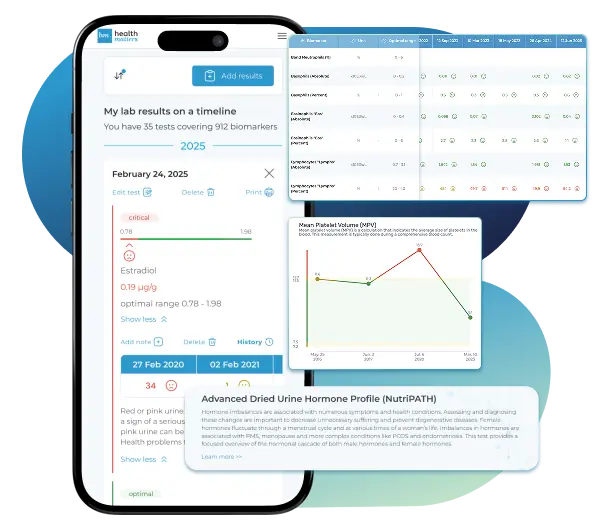
Import lab results from multiple providers, track changes over time, customize your reference ranges, and get clear explanations for each result. Everything is stored securely, exportable in one organized file, and shareable with your doctor—or anyone you choose.
Cancel or upgrade anytime
Related Biomarkers
Article Review & Sources
All our content is backed by peer-reviewed studies, academic research, and trusted medical sources. We're committed to accuracy and transparency — see our editorial policy for details.
Laboratories
Bring All Your Lab Results Together — In One Place
We accept reports from any lab, so you can easily collect and organize all your health information in one secure spot.











Pricing Table
Gather Your Lab History — and Finally Make Sense of It
Finally, Your Lab Results Organized and Clear

Personal plans

$79/ year
Advanced Plan
Access your lab reports, explanations, and tracking tools.
- Import lab results from any provider
- Track all results with visual tools
- Customize your reference ranges
- Export your full lab history anytime
- Share results securely with anyone
- Receive 5 reports entered for you
- Cancel or upgrade anytime
$250/ once
Unlimited Account
Pay once, access everything—no monthly fees, no limits.
- Import lab results from any provider
- Track all results with visual tools
- Customize your reference ranges
- Export your full lab history anytime
- Share results securely with anyone
- Receive 10 reports entered for you
- No subscriptions. No extra fees.
$45/ month
Pro Monthly
Designed for professionals managing their clients' lab reports
- Import lab results from any provider
- Track lab results for multiple clients
- Customize reference ranges per client
- Export lab histories and reports
- Begin with first report entered by us
- Cancel or upgrade anytime
About membership
What's included in a Healthmatters membership
 Import Lab Results from Any Source
 See Your Health Timeline
 Understand What Your Results Mean

 Visualize Your Results

 Data Entry Service for Your Reports
 Securely Share With Anyone You Trust
Let Your Lab Results Tell the Full Story
Once your results are in one place, see the bigger picture — track trends over time, compare data side by side, export your full history, and share securely with anyone you trust.




Bring all your results together to compare, track progress, export your history, and share securely.
What Healthmatters Members Are Saying

I have been using Healthmatters.io since 2021. I travel all over the world and use different doctors and health facilities. This site has allowed me to consolidate all my various test results over 14 years in one place. And every doctor that I show this to has been impressed. Because with any health professional I talk to, I can pull up historical results in seconds. It is invaluable. Even going back to the same doctor, they usually do not have the historical results from their facility in a graph format. That has been very helpful.
Anthony
Unlimited Plan Member since 2021
What fantastic service and great, easy-to-follow layouts! I love your website; it makes it so helpful to see patterns in my health data. It's truly a pleasure to use. I only wish the NHS was as organized and quick as Healthmatters.io. You've set a new standard for health tracking!
Karin
Advanced Plan Member since 2020
As a PRO member and medical practitioner, Healthmatters.io has been an invaluable tool for tracking my clients' data. The layout is intuitive, making it easy to monitor trends and spot patterns over time. The ability to customize reports and charts helps me present information clearly to my clients, improving communication and outcomes. It's streamlined my workflow, saving me time and providing insights at a glance. Highly recommended for any practitioner looking for a comprehensive and user-friendly solution to track patient labs!
Paul
Healthmatters Pro Member since 2024

We implement proven measures to keep your data safe.
At HealthMatters, we're committed to maintaining the security and confidentiality of your personal information. We've put industry-leading security standards in place to help protect against the loss, misuse, or alteration of the information under our control. We use procedural, physical, and electronic security methods designed to prevent unauthorized people from getting access to this information. Our internal code of conduct adds additional privacy protection. All data is backed up multiple times a day and encrypted using SSL certificates. See our Privacy Policy for more details.