Alpha Fetoprotein (AFP)
Other names: AFP, Serum, Tumor Marker, Alpha-Fetoprotein, Alphafetoprotein
 Optimal Result:
0 - 8.3 U/mL.
Optimal Result:
0 - 8.3 U/mL.

Alpha Fetoprotein (AFP) is a tumor marker that plays a significant role in medical diagnostics, particularly in the screening and monitoring of certain cancers. AFP is a protein normally produced by the liver and yolk sac of a developing fetus, with levels in the blood dropping significantly soon after birth. In adults, elevated levels of AFP can be indicative of liver disease, cancer, or other conditions, making it a valuable tool in the arsenal of diagnostic markers for specific health issues.
The primary use of AFP testing is in the context of liver cancer, or hepatocellular carcinoma (HCC), one of the most common types of cancer worldwide. Elevated AFP levels in adults can suggest the presence of HCC, especially in individuals at risk due to conditions like chronic hepatitis or cirrhosis. However, it's important to note that not all liver cancers will cause increased AFP levels, and not all increases in AFP are due to liver cancer. This necessitates the use of AFP testing in conjunction with other diagnostic tools and assessments to ensure accurate diagnosis and effective treatment planning.
AFP testing is also employed in the management of germ cell tumors, particularly testicular cancer. These tumors, while less common than liver cancer, can also produce AFP, making its measurement useful in both diagnosis and monitoring. In patients diagnosed with germ cell tumors, measuring AFP levels over time can help assess the effectiveness of treatment and detect any recurrence of the disease.
Beyond its role in cancer diagnostics, AFP testing plays a crucial part in prenatal screening programs. During pregnancy, AFP is among several markers measured from the mother's blood to assess the risk of developmental abnormalities in the fetus, such as neural tube defects and Down syndrome. Abnormal levels of AFP during pregnancy can prompt further testing to evaluate fetal health and guide care.
Despite its utility, AFP testing is not without its limitations. Elevated AFP levels can be seen in conditions other than cancer, including liver regeneration, chronic hepatitis, and even in some benign liver disorders. Therefore, interpreting AFP results requires careful consideration of the entire clinical picture, including patient history, risk factors, and other diagnostic findings.
Alpha Fetoprotein (AFP) serves as a critical biomarker in the detection and management of certain cancers, notably hepatocellular carcinoma and germ cell tumors. Its utility extends to prenatal screening, where it aids in assessing the risk of developmental abnormalities. However, the interpretation of AFP levels must be done with caution, integrating other diagnostic information to ensure accurate assessment and optimal patient care. As research continues, the understanding and application of AFP in medical practice will likely evolve, further enhancing its role in improving patient outcomes.
Lab Results Explained and Tracked
What does it mean if your Alpha Fetoprotein (AFP) result is too high?
If your results show high levels of AFP, it may confirm a diagnosis of liver cancer, or cancer of the ovaries or testicles. Sometimes, high levels of AFP can be a sign of other cancers, including Hodgkin disease and lymphoma, or noncancerous liver disorders.
If you are being treated for cancer, you may be tested several times throughout your treatment. After repeated tests, your results may show:
- Your AFP levels are increasing. This may mean your cancer is spreading, and/or your treatment is not working.
- Your AFP levels are decreasing. This may mean your treatment is working.
- Your AFP levels have not increased or decreased. This may mean your disease is stable.
- Your AFP levels decreased, but then later increased. This may mean your cancer has come back after you've been treated.
High levels of AFP can be a sign of:
- liver cancer
- cancer of the ovaries
- cancer of the testicles
- as well as noncancerous liver diseases such as cirrhosis and hepatitis.
High AFP levels don't always mean cancer, and normal levels don't always rule out cancer. So an AFP tumor marker test is not usually used by itself to screen for or diagnose cancer. But it can help diagnose cancer when used with other tests. The test may also be used to help monitor the effectiveness of cancer treatment and to see if cancer has returned after you've finished treatment.
--------------------
Elevated levels of Alpha Fetoprotein (AFP) can signify a variety of conditions, primarily indicating liver disease, certain types of cancer (such as liver cancer or hepatocellular carcinoma and testicular cancer), and noncancerous liver disorders. In adults, high AFP levels are closely associated with liver regeneration processes following liver damage, chronic liver diseases like hepatitis and cirrhosis, and also with pregnancy. The diagnosis of conditions related to elevated AFP levels involves a comprehensive approach that includes the AFP blood test alongside imaging studies (like ultrasound, CT scans, or MRIs), physical examinations, and sometimes biopsies to confirm the presence of tumors or liver damage. Elevated AFP can be a symptom of underlying health issues; however, AFP itself does not cause symptoms. Instead, the symptoms experienced by individuals with high AFP levels might include weight loss, abdominal pain, jaundice (yellowing of the skin and eyes), and other signs related to the specific underlying condition. Treatment options vary widely based on the cause of the elevated AFP. For liver cancer, options may include surgery, radiation therapy, and chemotherapy. In cases of noncancerous liver diseases, managing the underlying condition through medication, lifestyle changes, and sometimes surgical interventions to relieve symptoms or stop disease progression is the focus. Testicular cancer treatments often involve surgery, chemotherapy, and radiation therapy. It's crucial for patients with elevated AFP levels to have a personalized treatment plan, developed in consultation with a healthcare team, to address the specific cause and its associated health implications effectively.
The information provided here is for educational and informational purposes only and is not intended as a substitute for professional medical advice, diagnosis, or treatment. Always seek the advice of your physician or other qualified health providers with any questions you may have regarding a medical condition. Never disregard professional medical advice or delay in seeking it because of something you have read here. The content provided does not cover all possible uses, directions, precautions, drug interactions, or adverse effects, nor should it be construed to indicate that use of a particular drug is safe, appropriate, or effective for you or anyone else. A healthcare professional should be consulted before taking any drug, changing any diet, or commencing or discontinuing any course of treatment. Reliance on any information provided here is solely at your own risk.

All Your Lab Results.
One Simple Dashboard.
Import, Track, and Share Your Lab Results Easily
Import, Track, and Share Your Lab Results
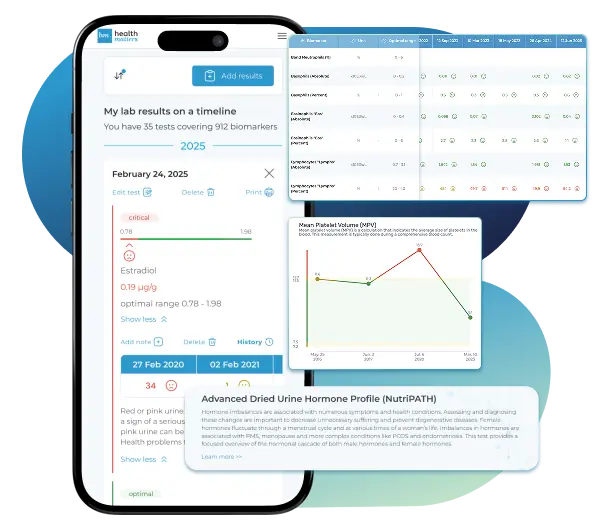
Import lab results from multiple providers, track changes over time, customize your reference ranges, and get clear explanations for each result. Everything is stored securely, exportable in one organized file, and shareable with your doctor—or anyone you choose.
Cancel or upgrade anytime
What does it mean if your Alpha Fetoprotein (AFP) result is too low?
Alpha-fetoprotein (AFP) is a protein produced primarily by the liver and yolk sac of a developing fetus. It is the most abundant plasma protein in the human fetus. In adults, AFP serves as a biomarker for various health conditions. Normal AFP levels in adults are generally less than 40 micrograms/liter. The significance of AFP levels varies depending on the context:
In Pregnancy:
Low AFP levels in maternal serum during pregnancy may indicate possible chromosomal abnormalities, such as:
- Down Syndrome (Trisomy 21)
- Edwards Syndrome (Trisomy 18)
AFP is typically interpreted alongside other markers in a quadruple screen to assess the risk of these conditions. However, low AFP alone is not diagnostic, and further testing is usually required for confirmation.
In Non-Pregnant Adults:
For non-pregnant adults, a low AFP level is typically not a cause for concern.
- AFP is primarily monitored when elevated, as high AFP levels are more strongly associated with certain cancers or liver conditions.
In Cancer Monitoring:
AFP is often used as a tumor marker, especially for:
- Hepatocellular carcinoma (HCC)
- Germ cell tumors
In this context:
- Decreased AFP levels could indicate a positive response to treatment or potential remission of the cancer.
- The AFP-L3 fraction is considered specific to HCC and can be used for early diagnosis.
AFP testing is often combined with other diagnostic methods, such as imaging, for more accurate cancer diagnosis and monitoring.
Key Considerations
While AFP is a valuable biomarker, its interpretation should always be done in conjunction with other clinical findings and diagnostic tests to ensure accurate diagnosis and effective treatment planning.
Related Biomarkers
Article Review & Sources
All our content is backed by peer-reviewed studies, academic research, and trusted medical sources. We're committed to accuracy and transparency — see our editorial policy for details.
Laboratories
Bring All Your Lab Results Together — In One Place
We accept reports from any lab, so you can easily collect and organize all your health information in one secure spot.











Pricing Table
Gather Your Lab History — and Finally Make Sense of It
Finally, Your Lab Results Organized and Clear

Personal plans

$79/ year
Advanced Plan
Access your lab reports, explanations, and tracking tools.
- Import lab results from any provider
- Track all results with visual tools
- Customize your reference ranges
- Export your full lab history anytime
- Share results securely with anyone
- Receive 5 reports entered for you
- Cancel or upgrade anytime
$250/ once
Unlimited Account
Pay once, access everything—no monthly fees, no limits.
- Import lab results from any provider
- Track all results with visual tools
- Customize your reference ranges
- Export your full lab history anytime
- Share results securely with anyone
- Receive 10 reports entered for you
- No subscriptions. No extra fees.
$45/ month
Pro Monthly
Designed for professionals managing their clients' lab reports
- Import lab results from any provider
- Track lab results for multiple clients
- Customize reference ranges per client
- Export lab histories and reports
- Begin with first report entered by us
- Cancel or upgrade anytime
About membership
What's included in a Healthmatters membership
 Import Lab Results from Any Source
 See Your Health Timeline
 Understand What Your Results Mean

 Visualize Your Results

 Data Entry Service for Your Reports
 Securely Share With Anyone You Trust
Let Your Lab Results Tell the Full Story
Once your results are in one place, see the bigger picture — track trends over time, compare data side by side, export your full history, and share securely with anyone you trust.




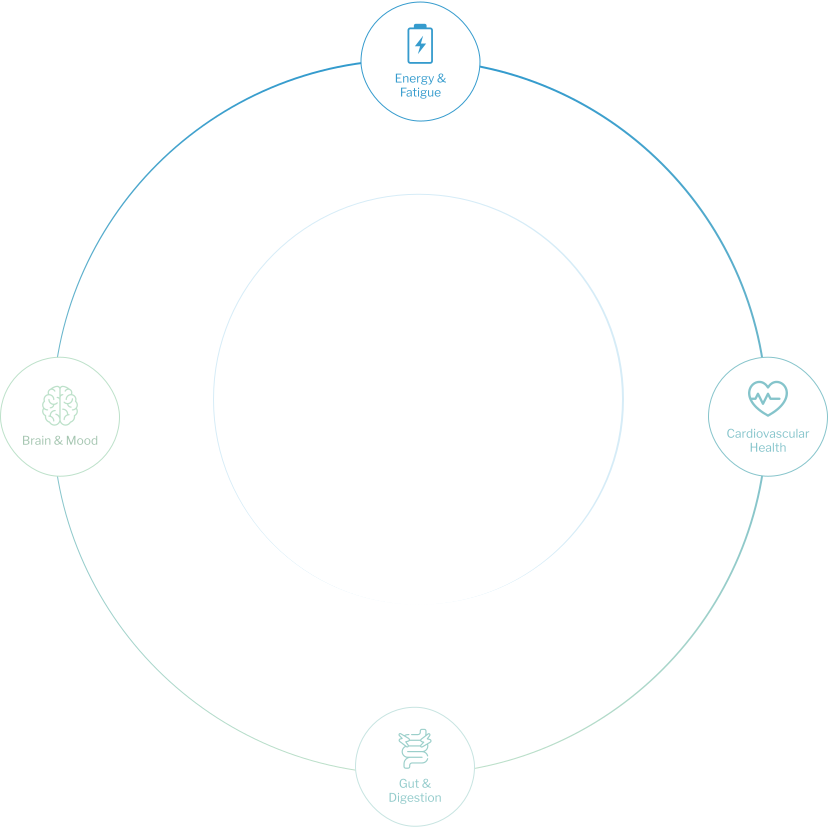
Bring all your results together to compare, track progress, export your history, and share securely.
What Healthmatters Members Are Saying

I have been using Healthmatters.io since 2021. I travel all over the world and use different doctors and health facilities. This site has allowed me to consolidate all my various test results over 14 years in one place. And every doctor that I show this to has been impressed. Because with any health professional I talk to, I can pull up historical results in seconds. It is invaluable. Even going back to the same doctor, they usually do not have the historical results from their facility in a graph format. That has been very helpful.
Anthony
Unlimited Plan Member since 2021
What fantastic service and great, easy-to-follow layouts! I love your website; it makes it so helpful to see patterns in my health data. It's truly a pleasure to use. I only wish the NHS was as organized and quick as Healthmatters.io. You've set a new standard for health tracking!
Karin
Advanced Plan Member since 2020
As a PRO member and medical practitioner, Healthmatters.io has been an invaluable tool for tracking my clients' data. The layout is intuitive, making it easy to monitor trends and spot patterns over time. The ability to customize reports and charts helps me present information clearly to my clients, improving communication and outcomes. It's streamlined my workflow, saving me time and providing insights at a glance. Highly recommended for any practitioner looking for a comprehensive and user-friendly solution to track patient labs!
Paul
Healthmatters Pro Member since 2024

We implement proven measures to keep your data safe.
At HealthMatters, we're committed to maintaining the security and confidentiality of your personal information. We've put industry-leading security standards in place to help protect against the loss, misuse, or alteration of the information under our control. We use procedural, physical, and electronic security methods designed to prevent unauthorized people from getting access to this information. Our internal code of conduct adds additional privacy protection. All data is backed up multiple times a day and encrypted using SSL certificates. See our Privacy Policy for more details.