
 Optimal Result:
0 - 0.3 µg/g creatinine.
Optimal Result:
0 - 0.3 µg/g creatinine.

Palladium (Pd): Understanding Its Uses, Risks, and Health Impacts
Palladium (Pd) is one of Earth's rarest and most valuable precious metals, belonging to the platinum group. Its unique chemical and physical properties make it indispensable across various industries, contributing to its increasing environmental presence. Here's everything you need to know about palladium, its industrial applications, environmental impacts, and potential health risks.
Industrial Applications of Palladium
Palladium's versatility makes it a critical material in industries such as:
- Automotive Industry: Used in catalytic converters to reduce harmful emissions.
- Electronics: Essential in multi-layer ceramic capacitors (MLCCs) for devices like televisions, computers, and mobile phones.
- Dentistry: Found in dental materials and alloys.
- Jewelry: Commonly used in fine jewelry, including white gold alloys.
Its growing demand has elevated palladium concentrations in the environment, particularly in road dust, airborne microparticles, soil, and groundwater.
Health Risks of Palladium Exposure
While dietary exposure to elemental palladium poses minimal risk due to poor absorption through ingestion, inhalation and skin contact can have significant health implications.
-
Respiratory Exposure
- Inhalation of palladium particles may cause acute toxicity or hypersensitivity.
- Symptoms include respiratory irritation, difficulty breathing, and urticaria (hives).
-
Skin Contact
- Palladium ions are potent sensitizers, capable of triggering allergic contact dermatitis even at very low doses.
- Common sources of contact exposure include palladium-containing jewelry and dental materials alloyed with metals like silver, gold, and copper.
Monitoring and Managing Palladium Exposure
To assess recent or ongoing palladium exposure:
- Urinary Palladium Testing: Reflects recent exposure and, to a lesser extent, the body’s detoxification efforts.
- Hair Toxic Element Exposure Profile: Provides insights into long-term exposure over 2-4 months.
For individuals with significant exposure, chelation therapy may be recommended to enhance palladium excretion and mitigate health risks.
Environmental Concerns and Growing Awareness
The increased use of palladium in industrial applications has led to heightened concentrations in the environment. Its accumulation in road dust, soil, and groundwater underscores the need for improved safety practices and environmental monitoring to reduce human exposure.
Key Takeaways
Palladium is a highly valuable metal with diverse applications, but its environmental and health impacts are becoming more evident. If you’re concerned about palladium exposure—whether from occupational, environmental, or consumer sources—regular monitoring and preventive measures can help protect your health. Consult a healthcare professional for personalized advice or testing if exposure is suspected.
Lab Results Explained and Tracked
What does it mean if your Palladium result is too high?
Elevated levels of palladium in urine indicate recent or ongoing exposure to this rare precious metal. Palladium is increasingly used in industries such as automotive manufacturing, electronics, dentistry, and jewelry, leading to environmental and occupational exposure risks. The presence of palladium in urine reflects its absorption by the body and its subsequent elimination through natural detoxification processes.
Possible Causes of Elevated Urinary Palladium
-
Occupational Exposure
- Jobs involving palladium refining, metal plating, electronics manufacturing, or handling catalytic converters may expose workers to airborne palladium particles or skin contact with palladium-containing materials.
-
Environmental Exposure
- Prolonged contact with polluted air, road dust, or contaminated soil and water due to increased industrial use of palladium.
-
Consumer Product Exposure
- Wearing palladium-containing jewelry or using dental restorations made from palladium alloys.
- Handling electronic devices where palladium is a component.
-
Dietary Sources
- Although rare, contamination of food or water with palladium could contribute to exposure, but absorption from ingestion is minimal compared to inhalation or dermal exposure.
-
Medical Sources
- Individuals with metal-on-metal dental restorations or implants may experience slow palladium release into the body.
Health Implications of Elevated Urinary Palladium
While trace amounts of palladium are generally not harmful, prolonged or high-level exposure can lead to:
- Allergic Reactions: Palladium ions are potent sensitizers and can cause allergic contact dermatitis.
- Respiratory Issues: Inhalation of palladium particles may lead to hypersensitivity or respiratory irritation.
- Neurological Effects: In cases of significant exposure, neurotoxic effects like fatigue, cognitive changes, or mood disturbances may occur.
- Kidney Strain: Elevated urinary palladium might indicate increased detoxification demands on the kidneys.
Next Steps if Levels Are Elevated
-
Identify and Limit Exposure
- Assess potential exposure sources, such as workplace environments, consumer products, or environmental contamination.
- Follow safety protocols, such as using protective gear in occupational settings or replacing palladium-containing dental work if necessary.
-
Medical Evaluation
- Consult a healthcare provider for further assessment. Additional tests, such as blood palladium levels or hair analysis, may help determine the extent and duration of exposure.
-
Chelation Therapy
- In cases of significant toxicity, chelation therapy may be recommended to enhance the removal of palladium from the body.
-
Monitor Levels
- Regular follow-up testing can help track palladium levels and evaluate the effectiveness of exposure reduction efforts.
Key Takeaway
Elevated urinary palladium levels typically reflect recent exposure and can be a warning sign of potential health risks. Identifying and mitigating the source of exposure is crucial to prevent long-term effects. If you have concerns about your test results, consult a healthcare professional for guidance and appropriate follow-up.

All Your Lab Results.
One Simple Dashboard.
Import, Track, and Share Your Lab Results Easily
Import, Track, and Share Your Lab Results
Import lab results from multiple providers, track changes over time, customize your reference ranges, and get clear explanations for each result. Everything is stored securely, exportable in one organized file, and shareable with your doctor—or anyone you choose.
Cancel or upgrade anytime
Article Review & Sources
All our content is backed by peer-reviewed studies, academic research, and trusted medical sources. We're committed to accuracy and transparency — see our editorial policy for details.
Laboratories
Bring All Your Lab Results Together — In One Place
We accept reports from any lab, so you can easily collect and organize all your health information in one secure spot.











Pricing Table
Gather Your Lab History — and Finally Make Sense of It
Finally, Your Lab Results Organized and Clear

Personal plans

$79/ year
Advanced Plan
Access your lab reports, explanations, and tracking tools.
- Import lab results from any provider
- Track all results with visual tools
- Customize your reference ranges
- Export your full lab history anytime
- Share results securely with anyone
- Receive 5 reports entered for you
- Cancel or upgrade anytime
$250/ once
Unlimited Account
Pay once, access everything—no monthly fees, no limits.
- Import lab results from any provider
- Track all results with visual tools
- Customize your reference ranges
- Export your full lab history anytime
- Share results securely with anyone
- Receive 10 reports entered for you
- No subscriptions. No extra fees.
$45/ month
Pro Monthly
Designed for professionals managing their clients' lab reports
- Import lab results from any provider
- Track lab results for multiple clients
- Customize reference ranges per client
- Export lab histories and reports
- Begin with first report entered by us
- Cancel or upgrade anytime
About membership
What's included in a Healthmatters membership
 Import Lab Results from Any Source
 See Your Health Timeline
 Understand What Your Results Mean

 Visualize Your Results

 Data Entry Service for Your Reports
 Securely Share With Anyone You Trust
Let Your Lab Results Tell the Full Story
Once your results are in one place, see the bigger picture — track trends over time, compare data side by side, export your full history, and share securely with anyone you trust.




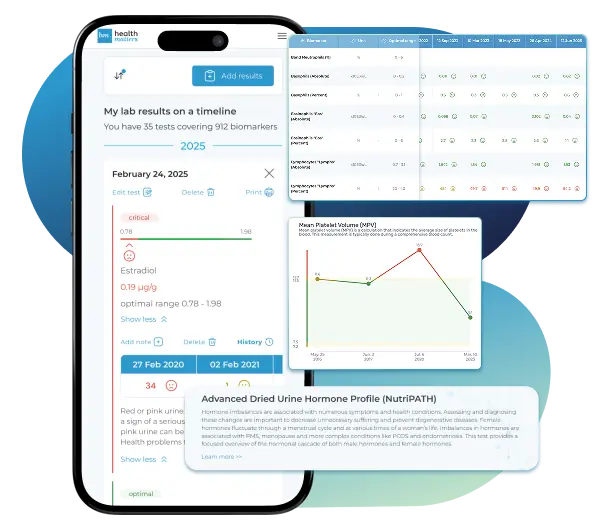
Bring all your results together to compare, track progress, export your history, and share securely.
What Healthmatters Members Are Saying

I have been using Healthmatters.io since 2021. I travel all over the world and use different doctors and health facilities. This site has allowed me to consolidate all my various test results over 14 years in one place. And every doctor that I show this to has been impressed. Because with any health professional I talk to, I can pull up historical results in seconds. It is invaluable. Even going back to the same doctor, they usually do not have the historical results from their facility in a graph format. That has been very helpful.
Anthony
Unlimited Plan Member since 2021
What fantastic service and great, easy-to-follow layouts! I love your website; it makes it so helpful to see patterns in my health data. It's truly a pleasure to use. I only wish the NHS was as organized and quick as Healthmatters.io. You've set a new standard for health tracking!
Karin
Advanced Plan Member since 2020
As a PRO member and medical practitioner, Healthmatters.io has been an invaluable tool for tracking my clients' data. The layout is intuitive, making it easy to monitor trends and spot patterns over time. The ability to customize reports and charts helps me present information clearly to my clients, improving communication and outcomes. It's streamlined my workflow, saving me time and providing insights at a glance. Highly recommended for any practitioner looking for a comprehensive and user-friendly solution to track patient labs!
Paul
Healthmatters Pro Member since 2024

We implement proven measures to keep your data safe.
At HealthMatters, we're committed to maintaining the security and confidentiality of your personal information. We've put industry-leading security standards in place to help protect against the loss, misuse, or alteration of the information under our control. We use procedural, physical, and electronic security methods designed to prevent unauthorized people from getting access to this information. Our internal code of conduct adds additional privacy protection. All data is backed up multiple times a day and encrypted using SSL certificates. See our Privacy Policy for more details.