
 Optimal Result:
0 - 1.2 µg/g creatinine.
Optimal Result:
0 - 1.2 µg/g creatinine.

Urinary lead (Pb) provides an indication of recent or ongoing exposure to the toxic metal, and endogenous detoxification to a lesser extent. Low level Pb exposure is particularly problematic for the developing nervous system.
Dust and paint chips from Pb-based paint in older buildings are the most common sources of Pb exposure for children. Some types of artificial turf and rubber playground surfaces can also contain Pb. Imported toys and costume jewelry tainted with Pb can be an issue. Imported non-glossy, vinyl mini-blinds are known to contain lead. Water is a common source of exposure for Pb. Old plumbing, especially from 1930 or earlier, is a significant source for chronic exposure to Pb. Plumbing in very new homes may also be problematic, due to the use of leaded solder to join copper pipes. Well water may also be contaminated with Pb in pump components or the well seal. Old pipes that supply water to buildings may contaminate water with Pb.
Foods are not commonly contaminated with Pb, but imported candies or foods containing chili or tamarind may be contaminated with Pb. Lead has been reported to be present in chocolate (the darker the higher), cocoa powders, and some chocolate flavored whey protein concentrates. Some Ayurvedic medications have been found to contain high levels of Pb and other toxic metals. Pb may get into foods or
liquids that have been stored in ceramics, pottery, china, or leaded-crystal.
Sources of air-borne Pb include: waste incinerators, utilities, and lead-acid battery manufacturer, and ore and metals processing. The highest air concentrations of Pb are usually found near lead smelters. Fishing tackle, ammunition, indoor firing ranges, and some art/hobby supplies may contribute to Pb exposure. Transdermal Pb absorption is slight, except for high absorption of lead acetate that may be present in hair darkening products and certain tattoo inks.
Pb has pathological, neurotoxic, nephrotoxic, cardiovascular and carcinogenic effects that may be manifested with chronic low-level exposure. Pb may also affect the body’s ability to utilize the essential elements calcium, magnesium, and zinc. Sustained Pb exposures may have adverse effects on memory, cognitive function, nerve conduction, and metabolism of vitamin D. Infants and children are especially vulnerable to Pb-induced developmental disorders, and behavior problems are associated with lower levels of blood Pb than previously acknowledged; lower of IQ, hearing loss, and poor growth. Pb is transferred across the placenta, and into breast milk.
Lead exposure and toxicity is commonly assessed by elevated blood lead. However blood lead may only reveal isolated exposures as the half-life of Pb in circulation is only about 1 month. Hair elemental analysis may provide information regarding Pb exposure over the past 2-4 months. Urine porphyrin analysis may reveal Pb-induced disruption of heme biosynthesis (physiological impact). Chelation may acutely increase the urinary Pb excretion.
Lab Results Explained and Tracked
What does it mean if your Lead result is too high?
Most Lead contamination occurs via oral ingestion of contaminated food or water or by children mouthing or eating Lead-containing substances. The degree of absorption of oral Lead depends upon stomach contents (empty stomach increases uptake) and upon the essential element intake and Lead status.
Deficiency of zinc, calcium or iron increases Lead uptake. Transdermal exposure is significant for Lead-acetate (hair blackening products). Inhalation has decreased significantly with almost universal use of non-leaded automobile fuel. Lead accumulates in extensively in bone and can inhibit formation of heme and hemoglobin in erythroid precursor cells. Bone Lead is released to soft tissues with bone remodeling that can be accelerated with growth, menopausal hormonal changes, osteoporosis, or skeletal injury.
Low levels of Lead may cause impaired vitamin D metabolism, decreased nerve conduction, and developmental problems for children including: decreased IQ, hearing impairment, delayed growth, behavior disorders, and decreased glomerular function.
Transplacental transfer of Lead to the fetus can occur at very low Lead concentrations in the body. At relatively low levels, Lead can participate in synergistic toxicity with other toxic elements (e.g. cadmium, mercury).
Excessive Lead exposure can be assessed by comparing urine Lead levels before and after provocation with Ca-EDTA (iv) or oral DMSA.
Urine Lead is higher post-provocation to some extent in almost everyone. Whole blood analysis reflects only recent ongoing exposure and does not correlate well with total body retention of Lead. However, elevated blood Lead is the standard of care for diagnosis of Pb poisoning (toxicity).

All Your Lab Results.
One Simple Dashboard.
Import, Track, and Share Your Lab Results Easily
Import, Track, and Share Your Lab Results
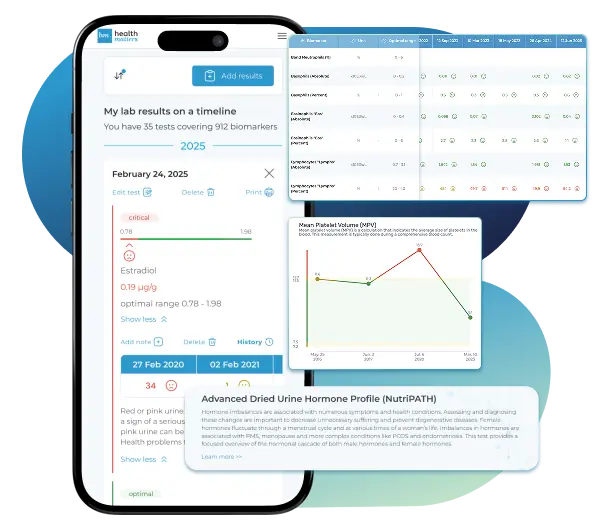
Import lab results from multiple providers, track changes over time, customize your reference ranges, and get clear explanations for each result. Everything is stored securely, exportable in one organized file, and shareable with your doctor—or anyone you choose.
Cancel or upgrade anytime
Article Review & Sources
All our content is backed by peer-reviewed studies, academic research, and trusted medical sources. We're committed to accuracy and transparency — see our editorial policy for details.
Laboratories
Bring All Your Lab Results Together — In One Place
We accept reports from any lab, so you can easily collect and organize all your health information in one secure spot.











Pricing Table
Gather Your Lab History — and Finally Make Sense of It
Finally, Your Lab Results Organized and Clear

Personal plans

$79/ year
Advanced Plan
Access your lab reports, explanations, and tracking tools.
- Import lab results from any provider
- Track all results with visual tools
- Customize your reference ranges
- Export your full lab history anytime
- Share results securely with anyone
- Receive 5 reports entered for you
- Cancel or upgrade anytime
$250/ once
Unlimited Account
Pay once, access everything—no monthly fees, no limits.
- Import lab results from any provider
- Track all results with visual tools
- Customize your reference ranges
- Export your full lab history anytime
- Share results securely with anyone
- Receive 10 reports entered for you
- No subscriptions. No extra fees.
$45/ month
Pro Monthly
Designed for professionals managing their clients' lab reports
- Import lab results from any provider
- Track lab results for multiple clients
- Customize reference ranges per client
- Export lab histories and reports
- Begin with first report entered by us
- Cancel or upgrade anytime
About membership
What's included in a Healthmatters membership
 Import Lab Results from Any Source
 See Your Health Timeline
 Understand What Your Results Mean

 Visualize Your Results

 Data Entry Service for Your Reports
 Securely Share With Anyone You Trust
Let Your Lab Results Tell the Full Story
Once your results are in one place, see the bigger picture — track trends over time, compare data side by side, export your full history, and share securely with anyone you trust.




Bring all your results together to compare, track progress, export your history, and share securely.
What Healthmatters Members Are Saying

I have been using Healthmatters.io since 2021. I travel all over the world and use different doctors and health facilities. This site has allowed me to consolidate all my various test results over 14 years in one place. And every doctor that I show this to has been impressed. Because with any health professional I talk to, I can pull up historical results in seconds. It is invaluable. Even going back to the same doctor, they usually do not have the historical results from their facility in a graph format. That has been very helpful.
Anthony
Unlimited Plan Member since 2021
What fantastic service and great, easy-to-follow layouts! I love your website; it makes it so helpful to see patterns in my health data. It's truly a pleasure to use. I only wish the NHS was as organized and quick as Healthmatters.io. You've set a new standard for health tracking!
Karin
Advanced Plan Member since 2020
As a PRO member and medical practitioner, Healthmatters.io has been an invaluable tool for tracking my clients' data. The layout is intuitive, making it easy to monitor trends and spot patterns over time. The ability to customize reports and charts helps me present information clearly to my clients, improving communication and outcomes. It's streamlined my workflow, saving me time and providing insights at a glance. Highly recommended for any practitioner looking for a comprehensive and user-friendly solution to track patient labs!
Paul
Healthmatters Pro Member since 2024

We implement proven measures to keep your data safe.
At HealthMatters, we're committed to maintaining the security and confidentiality of your personal information. We've put industry-leading security standards in place to help protect against the loss, misuse, or alteration of the information under our control. We use procedural, physical, and electronic security methods designed to prevent unauthorized people from getting access to this information. Our internal code of conduct adds additional privacy protection. All data is backed up multiple times a day and encrypted using SSL certificates. See our Privacy Policy for more details.