
Total Nucleated Cell Count (TNC): Normal Range, High Results & What They Mean
Other names: TNC, TNCC, Total Nucleated Cells, Total Nucleated Cell Count, BF TNC Count, FL Total Nucleated Cell Count, Synovial Fluid Nucleated Cell Count
 Optimal Result:
0 - 150 cells/uL.
Optimal Result:
0 - 150 cells/uL.

At a Glance
- Total Nucleated Cell Count (TNC or TNCC) measures the total number of nucleated cells — primarily white blood cells — in a body fluid sample.
- In healthy body fluids, very few nucleated cells are normally present.
- Elevated TNC levels suggest inflammation, infection, bleeding, injury, or immune system activation in that specific area of the body.
- In joint fluid, counts above 2,000 cells/µL usually indicate inflammation, while counts above 50,000 cells/µL raise immediate concern for septic arthritis.
- TNC is not interpreted alone. Doctors also evaluate the differential cell count, cultures, crystals, glucose, protein levels, and symptoms.
- “TNC,” “TNCC,” and “Total Nucleated Cells” generally refer to the same measurement.
- This test is different from “NRBC” (Nucleated Red Blood Cells) found on a standard blood test.
What Is Total Nucleated Cell Count (TNC)?
Total Nucleated Cell Count measures the total number of cells containing a nucleus within a fluid sample. In most clinical situations, these cells are white blood cells that have migrated into the fluid in response to inflammation, infection, tissue injury, autoimmune activity, or irritation.
The test is commonly performed on:
- Synovial fluid (joint fluid)
- Cerebrospinal fluid (CSF)
- Peritoneal fluid (abdominal fluid)
- Pleural fluid (fluid around the lungs)
Under healthy conditions, these fluids contain very few cells and are considered nearly acellular. When the immune system becomes activated, white blood cells move into the space, causing the TNC to rise.
TNC functions like a “smoke detector” for inflammation within a specific body cavity. While it does not identify the exact cause on its own, it helps doctors determine whether infection, autoimmune disease, crystal arthritis, or another inflammatory process may be occurring.
How TNC Appears on Your Lab Report
Total nucleated cell count can appear under several different names depending on the laboratory, analyzer, or fluid type tested. Common variations include:
- Total Nucleated Cell Count
- TNC
- TNCC
- BF TNC Count
- BF Total Nucleated Cells
- FL Total Nucleated Cell Count
- Synovial Fluid Nucleated Cells
- Syn Fld Nucleated Cell Count
- Body Fluid Cell Count
- Fluid WBC Count
“BF” usually stands for “body fluid,” while “FL” refers to “fluid.” Regardless of naming differences, these tests generally measure the same concept: the concentration of nucleated cells within a fluid sample.
It is also important not to confuse TNC with “NRBC” (Nucleated Red Blood Cells) on a CBC blood test, which represents a completely different finding.
Quick Reference: TNC by Fluid Type
| Fluid Type | Normal TNC | Elevated Threshold | Primary Concern |
|---|---|---|---|
| Synovial (Joint) | < 200 cells/µL | > 2,000 cells/µL | Arthritis or infection |
| CSF (Spinal Fluid) | 0–5 cells/µL | > 5 cells/µL | Meningitis |
| Peritoneal (Ascites) | < 250 PMNs/µL | ≥ 250 PMNs/µL | Spontaneous bacterial peritonitis |
| Pleural (Lung) | Very few cells | Variable | Inflammation, infection, malignancy |
Synovial Fluid (Joint Fluid) Interpretation
Joint fluid analysis is one of the most common uses of TNC testing.
Healthy synovial fluid usually contains fewer than 200 cells/µL. As inflammation increases, the cell count rises. Doctors use both the total count and the percentage of neutrophils to help determine the underlying cause.
| Classification | TNC (cells/µL) | Neutrophil % | Likely Cause |
|---|---|---|---|
| Normal | < 200 | < 25% | Healthy joint |
| Non-inflammatory | 200–2,000 | < 25% | Osteoarthritis, trauma |
| Inflammatory | 2,000–50,000 | > 50% | Rheumatoid arthritis, gout, pseudogout |
| Infectious | > 50,000 | > 75–90% | Septic arthritis |
What TNC Level Is Considered Dangerous in Joint Fluid?
Certain thresholds are considered especially important clinically:
- Above 2,000 cells/µL: Usually indicates active inflammation within the joint.
- Above 50,000 cells/µL: Raises major concern for septic arthritis, a medical emergency requiring urgent evaluation.
- Above 100,000 cells/µL: Strongly suggests bacterial infection and requires immediate treatment to help prevent permanent joint damage.
Although severe gout flares can occasionally produce very high TNC levels, infection must always be ruled out first with cultures and additional testing.
What Does High TNC Mean by Condition?
| Condition | Typical TNC (cells/µL) | Dominant Cell Type |
|---|---|---|
| Osteoarthritis | < 2,000 | Mononuclear cells |
| Rheumatoid Arthritis | 5,000–50,000 | Neutrophils |
| Acute Gout | 5,000–50,000 | Neutrophils |
| Lyme Arthritis | 3,000–100,000 | Neutrophils |
| Septic Arthritis | 50,000–200,000+ | Neutrophils |
Because these ranges overlap significantly, doctors also rely on crystal analysis, Gram stain, bacterial cultures, imaging, and symptoms when making a diagnosis.
CSF (Cerebrospinal Fluid) Interpretation
Cerebrospinal fluid normally contains very few white blood cells. In adults, the normal range is typically 0–5 cells/µL.
Even small elevations in CSF TNC can be clinically significant because the central nervous system is normally highly protected from immune cell infiltration.
Common patterns include:
- Bacterial meningitis: Often > 1,000 cells/µL, predominantly neutrophils
- Viral meningitis: Typically 10–500 cells/µL, predominantly lymphocytes
- Fungal or tuberculosis meningitis: Commonly 100–400 cells/µL
Doctors interpret CSF TNC together with glucose, protein, opening pressure, cultures, and symptoms such as fever, headache, or neck stiffness.
Peritoneal Fluid Interpretation and SBP Threshold
For patients with liver cirrhosis or ascites, TNC interpretation focuses particularly on PMNs (polymorphonuclear neutrophils).
A PMN count of 250 cells/µL or higher is considered diagnostic for Spontaneous Bacterial Peritonitis (SBP).
SBP is a potentially life-threatening infection that may sometimes occur with minimal symptoms. Because of the serious risk, doctors often begin antibiotic treatment immediately when the PMN threshold is reached.
Pleural Fluid Interpretation
Pleural fluid surrounds the lungs and normally contains very few cells.
An elevated pleural fluid TNC may occur with:
- Pneumonia
- Pleural infection (empyema)
- Autoimmune disease
- Pulmonary embolism
- Lung cancer or metastatic disease
Additional testing such as cytology, protein levels, LDH, cultures, and imaging are usually needed to determine the exact cause.
TNC vs. NRBC on a Blood Test
TNC is commonly confused with NRBC (Nucleated Red Blood Cells), but they are very different tests.
- TNC refers to white blood cell counts in body fluids such as joint, spinal, abdominal, or pleural fluid.
- NRBC refers to immature red blood cells appearing in the bloodstream on a CBC blood test.
Healthy adults generally should not have NRBCs circulating in peripheral blood. When present, NRBCs may indicate severe stress on the bone marrow, major infection, low oxygen states, blood disorders, or other serious medical conditions.
A blood test showing NRBCs is unrelated to the body fluid TNC measurements discussed above.
Tracking TNC results over time — alongside the differential count, culture results, and uric acid if gout is a factor — gives a clearer picture of whether joint inflammation is improving, stable, or worsening. HealthMatters.io lets you upload body fluid analyses and blood results together, organize them by date and sample type, and share the full history with your rheumatologist or specialist in one place.
FAQ about Total Nucleated Cell Ct
-
What is a normal total nucleated cell count in joint fluid?
Normal synovial fluid typically contains fewer than 200 cells/µL with a low percentage of neutrophils. -
What does a high total nucleated cell count mean?
A high TNC usually indicates inflammation, infection, immune activation, bleeding, or tissue injury within the sampled body cavity. -
What does TNC above 50,000 cells/µL mean in joint fluid?
A joint fluid TNC above 50,000 cells/µL raises strong concern for septic arthritis and is generally treated as a medical emergency until infection is ruled out. -
What does TNC mean in a blood test?
TNC is usually not a standard blood test measurement. In most cases, TNC refers to nucleated cells measured in body fluids rather than blood. -
What does high TNC in CSF mean?
High TNC in cerebrospinal fluid may indicate meningitis, central nervous system infection, autoimmune inflammation, or neurologic disease. -
Can gout cause a very high TNC in joint fluid?
Yes. Severe acute gout flares can occasionally produce very high TNC levels that overlap with septic arthritis, which is why crystal analysis and cultures are important. -
What does a high nucleated cell count in joint fluid mean for my joint?
A high joint fluid TNC suggests active inflammation or infection inside the joint and may indicate conditions such as gout, rheumatoid arthritis, or septic arthritis.
Lab Results Explained and Tracked
What does it mean if your Total Nucleated Cell Ct result is too high?
An elevated TNC in joint fluid means more white blood cells are present than normal — a sign the joint is responding to something. The count level is the first clue to what that something is.
Counts between 200–2,000 cells/µL typically reflect non-inflammatory or mildly inflammatory conditions such as osteoarthritis or a joint injury. The joint is reacting, but not intensely.
Counts between 2,000–50,000 cells/µL suggest active inflammation. This range is associated with rheumatoid arthritis, psoriatic arthritis, reactive arthritis, and crystal-induced arthritis from gout or pseudogout. Gout flares in particular can push counts toward the upper end of this range.
Counts above 50,000 cells/µL — especially with a high proportion of neutrophils — substantially increase concern for septic arthritis, a bacterial joint infection that requires urgent treatment. Crystal arthritis can occasionally reach this level too, and both conditions can coexist, which is why joint culture is standard practice when counts are this high regardless of what else is suspected.
The TNC count does not diagnose on its own. Your doctor will interpret it alongside the cell differential (what types of white blood cells are present), Gram stain, culture results, crystal analysis under polarized microscopy, and your symptoms. A count of 15,000 cells/µL, for example, is consistent with rheumatoid arthritis, gout, reactive arthritis, or early infection — the breakdown of cell types and other findings determine the diagnosis.
If your result is elevated, further evaluation by a healthcare provider is the appropriate next step.
Related Health Conditions

All Your Lab Results.
One Simple Dashboard.
Import, Track, and Share Your Lab Results Easily
Import, Track, and Share Your Lab Results
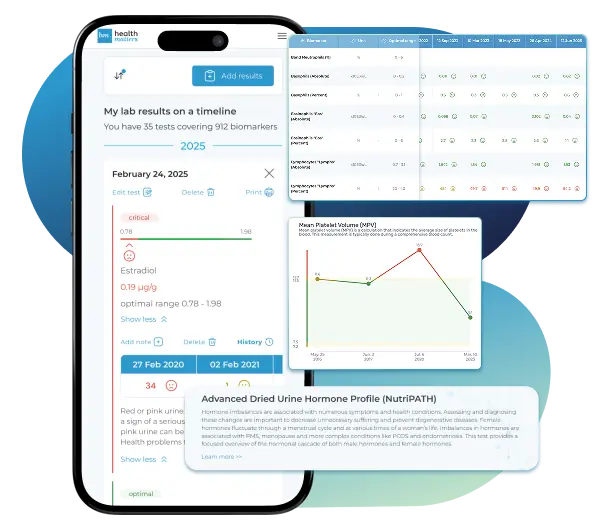
Import lab results from multiple providers, track changes over time, customize your reference ranges, and get clear explanations for each result. Everything is stored securely, exportable in one organized file, and shareable with your doctor—or anyone you choose.
Cancel or upgrade anytime
Related Biomarkers
Article Review & Sources
All our content is backed by peer-reviewed studies, academic research, and trusted medical sources. We're committed to accuracy and transparency — see our editorial policy for details.
Laboratories
Bring All Your Lab Results Together — In One Place
We accept reports from any lab, so you can easily collect and organize all your health information in one secure spot.











Pricing Table
Gather Your Lab History — and Finally Make Sense of It
Finally, Your Lab Results Organized and Clear

Personal plans

$79/ year
Advanced Plan
Access your lab reports, explanations, and tracking tools.
- Import lab results from any provider
- Track all results with visual tools
- Customize your reference ranges
- Export your full lab history anytime
- Share results securely with anyone
- Receive 5 reports entered for you
- Cancel or upgrade anytime
$250/ once
Unlimited Account
Pay once, access everything—no monthly fees, no limits.
- Import lab results from any provider
- Track all results with visual tools
- Customize your reference ranges
- Export your full lab history anytime
- Share results securely with anyone
- Receive 10 reports entered for you
- No subscriptions. No extra fees.
$45/ month
Pro Monthly
Designed for professionals managing their clients' lab reports
- Import lab results from any provider
- Track lab results for multiple clients
- Customize reference ranges per client
- Export lab histories and reports
- Begin with first report entered by us
- Cancel or upgrade anytime
About membership
What's included in a Healthmatters membership
 Import Lab Results from Any Source
 See Your Health Timeline
 Understand What Your Results Mean

 Visualize Your Results

 Data Entry Service for Your Reports
 Securely Share With Anyone You Trust
Let Your Lab Results Tell the Full Story
Once your results are in one place, see the bigger picture — track trends over time, compare data side by side, export your full history, and share securely with anyone you trust.




Bring all your results together to compare, track progress, export your history, and share securely.
What Healthmatters Members Are Saying

I have been using Healthmatters.io since 2021. I travel all over the world and use different doctors and health facilities. This site has allowed me to consolidate all my various test results over 14 years in one place. And every doctor that I show this to has been impressed. Because with any health professional I talk to, I can pull up historical results in seconds. It is invaluable. Even going back to the same doctor, they usually do not have the historical results from their facility in a graph format. That has been very helpful.
Anthony
Unlimited Plan Member since 2021
What fantastic service and great, easy-to-follow layouts! I love your website; it makes it so helpful to see patterns in my health data. It's truly a pleasure to use. I only wish the NHS was as organized and quick as Healthmatters.io. You've set a new standard for health tracking!
Karin
Advanced Plan Member since 2020
As a PRO member and medical practitioner, Healthmatters.io has been an invaluable tool for tracking my clients' data. The layout is intuitive, making it easy to monitor trends and spot patterns over time. The ability to customize reports and charts helps me present information clearly to my clients, improving communication and outcomes. It's streamlined my workflow, saving me time and providing insights at a glance. Highly recommended for any practitioner looking for a comprehensive and user-friendly solution to track patient labs!
Paul
Healthmatters Pro Member since 2024

We implement proven measures to keep your data safe.
At HealthMatters, we're committed to maintaining the security and confidentiality of your personal information. We've put industry-leading security standards in place to help protect against the loss, misuse, or alteration of the information under our control. We use procedural, physical, and electronic security methods designed to prevent unauthorized people from getting access to this information. Our internal code of conduct adds additional privacy protection. All data is backed up multiple times a day and encrypted using SSL certificates. See our Privacy Policy for more details.