Ochratoxin A
 Optimal Result:
0 - 1.8 ppb.
Optimal Result:
0 - 1.8 ppb.

Ochratoxins are metabolites of Aspergillus, Fusarium, and Penicillium species. The most commonly implicated species are A. ochraceus and ostianus, P. viridicatum, griseofulvum and possibly solitum and Eurotium amstelodami (Ochratoxin, 2002).
Recent evidence shows that these mycotoxins are present in a variety of foods (cereals, pork, poultry, coffee, beer, wine, grape juice and milk). Analyses of these food products demonstrated that Ochratoxins are also produced by P. vercucosum and A. niger and carbonarius. (Abarca et al, 2001); Pitt, 2000; Bukelskiene et al, 2006).
There are three generally recognized Ochratoxins, designated A, B and C.
Ochratoxin A (OTA) is chlorinated and is the most toxic, followed by OTB and OTC. Chemically, they are described as 3,4-dihydro-methylisocoumarin derivative linked with an amide bond to the amino group of L-b-phenylalanine (Hussein et al, 2001).
The role and risk assessment of OTA in animal and human disease has been reviewed. The estimated tolerable dosage in humans was estimated at 0.2 to 4.2 ng/kg body weight based upon NTP carcinogenicity study in rats. OTA is mutagenic, immunosuppressive and teratogenic in several species of animals. Its target organs are the kidneys (nephropathy) and the developing nervous system (Kuiper-Goodman & Scott, 1989; Krogh, 1992).
Following intravenous administration, OTA is eliminated with a half-life from body in vervet monkeys in 19-21 days (Stander et al, 2001). There is no reason to suspect that the elimination half-life would be significantly different in humans.
Ochratoxin A has a number of toxic effects in animals. It is immunosuppressive, teratogenic, carcinogenic, nephrotoxic and neurotoxic. It inhibits protein synthesis, followed by inhibition of RNA synthesis. OTA lowers the level of phosphoenolpyruvate carboxykinase, a key enzyme in gluconeogenesis. The toxin also enhances lipid peroxidation both in vivo and in vitro, which is probably responsible for its adverse affects on mitochondrial function. OTA also forms DNA adducts in the kidney, liver and spleen that results in single-strand breaks (OTA, 2002).
There is inadequate evidence that OTA is carcinogenic in humans. However, there is sufficient evidence in experimental animals. Overall, OTA is possibly carcinogenic to humans and is a Group 2B carcinogen.
Balkan endemic neuropathy (BEN) associated with OTA occurs in Europe (Bulgaria, Croatia, Turkey, Egypt, and Yugoslavia) where OTA is relatively high in the diet. Individuals with BEN were surveyed for the presence of urinary tract tumors. The incidence of tumors in the urinary system was elevated in both men and women. Furthermore, the observations suggested that individuals with urinary tract tumors had elevated levels of OTA in the blood and urine. Approximately one-third of patients dying from BEN have papillomas and/or carcinomas of the renal pelvis, ureter or bladder (Ochratoxin, 2002; Radovanovic et al, 1991;, Wafa et al, 1997; Radic et al, 1997; Ozcelik et al, 2001; Pfohl-Leszkowicz et al, 2002).
Recently, it has been suggested that OTA can cause testicular cancer in humans (Schwartz, 2002). The hypothesis that consumption of foods contaminated with OTA causes testicular cancer was tested. The incidence of rates of testicular cancer in 20 countries was significantly correlated with the per-capita consumption of coffee and pig meat.
Schwartz concluded: "Thus, OTA is a biologically plausible cause of testicular cancer. Future epidemiologic studies of testicular cancer should focus on the consumption of OTA-containing foods such as cereals, pork products, milk and coffee by mothers and their male children."
- Several lines of experimental observations demonstrate that OTA effects mitochondrial function and causes mitochondrial damage. The reader is referred to Wallace (1997) for background information on mitochondrial DNA in aging and disease in chicks and quail.
- OTA causes pathological changes in the ultra structure of mitochondria in proximal convoluted tubules and glomeruli of kidneys and liver. These changes include abnormal shapes, enlarged mitochondrial matrix and excessive lipid droplets (Brown et al, 1986; Dwivedi et al, 1984; Maxwell et al, 1981).
- OTA causes oxidative stress and production of free radicals in rat hepatocytes and proximal tubules of the kidneys. Lipid peroxidation preceded cell death in cells of the proximal tubules (Gautier et al, 2002; Hoehler et al, 1997).
- OTA is a nonoompetitive inhibitor of both succinate-cytochrome C reductase and succi nate dehydrogenase. It impairs mitochondrial respiration and oxidative phorphorylation through impairment of the mitochondrial membrane and by inhibition of suoci nature-supported electron transfer activities of the respiratory chain (Wei et al, 1985). It also inhibits glutamateimalate substrate respiration of Site I and causes lipid peroxidation leading to cell death (Alec et al, 1991.
- Another mechanism appears to be the activation of mitochondrial NHE interfering with Ca2+ homeostasis. This induces extracellular acidification leading to cell death in renal proximal tubules (Eder et al, 2000; Rodeheaver & Schnellman, 1993).
- OTA is mutagenic and carcinogenic (Ochratoxin A, 2002). It causes DNA single-stranded breaks and DNA adducts in the DNA of spleen, liver and kidney in OTA treated mice (Pfohl-Leszkowicz et al, 1991; Creppy et al, 1985).
- OTA inhibits bacterial, yeast and liver phenylalanyl-tRNA synthetases. The inhibition is competitive to phenylalanine and is reversed by an excess of this amino acid. It also inhibits phenylalanine hydroxylase and lowers the concentration of phosphoenolpyruvate carboxykinase. It appears that an inhibition of protein and RNA synthesis is the end result of these toxic effects (Dirheimer & Creppy, 1991). Inhibition of protein and RNA synthesis is considered one of the toxic effects of OTA (Ochratoxin A, 2002).
- OTA induces apoptosis (programmed cell death) in a variety of cell types in vivo and in vitro. The mechanisms include caspase 3 activation, mitogen-activated protein kinases (MAPK) family, and c-jun amino-terminal kinase (JNK). The apoptosis is also mediated through cellular processes involved in the degradation of DNA. Finally, the mechanisms leading to cell death may be inhibited by various antioxidants (Atroshi et al, 2000; Gekle et al, 2000; Schwerdt et al, 1999; Seegers et al, 1994).
- OTA is nephrotoxic in all animals studied and has been implicated in the etiology of Balkan endemic nephropathy (BEN) (Ochratoxin A, 2002). The clinical picture of BEN is that of a slowly progressing tubulo-interstitial chronic nephritis and urethral tumors are frequent, occurring in 2-47 % of cases (Radonic & Radosevic, 1992). The proximal tubule cells are the primary target for OTA toxicity. BEN is an end-stage renal disease.
- Epidemiological investigations have shown that BEN and dietary exposure are associated, leading to the conclusion that OTA is one of the causative agents in the identification of DNA-ochratoxin A adducts in urinary tract tumors in patients from areas with BEN add support to this conclusion (Puntaric et al, 2002; Stoev et al, 1998; Pfohl-Leszkowicz et al, 1993b; Mikolov et al, 1996).
Lab Results Explained and Tracked
What does it mean if your Ochratoxin A result is too high?
What Does an Elevated Ochratoxin A (OTA) Result Mean?
An elevated OTA level in your test suggests recent or ongoing exposure to this mycotoxin through:
-
Contaminated food (especially grains, coffee, dried fruit, or spices)
-
Mold-contaminated indoor environments
-
Exposure to moldy feed or hay (for individuals living on farms or with livestock)
This may or may not mean you have symptoms right now, but chronic exposure can increase your risk for:
-
Kidney stress or damage
-
Immune dysfunction
-
Hormonal imbalance
-
Fatigue, headaches, or increased infections
-
Long-term risk of urinary tract tumors and neurological issues
What Should You Do Next?
1. Identify and Eliminate the Source
-
Assess your diet: Reduce intake of stored grains, coffee, wine, and dried fruits unless they are certified mold-free.
-
Inspect your living or working environment: Water-damaged buildings, musty odors, or visible mold may indicate mold contamination.
-
Consider environmental testing for airborne or surface mold, especially if multiple family members or pets have symptoms.
2. Support Detoxification
-
Stay hydrated to help your kidneys flush out toxins.
-
Consider mycotoxin binders (such as activated charcoal, bentonite clay, or cholestyramine), but only under medical guidance.
-
Boost antioxidant intake: Vitamins A, C, and E, selenium, and glutathione may help reduce oxidative stress from OTA.
-
Liver and kidney support: Milk thistle, NAC, and dandelion root may aid in detox, but again should be used under guidance.
3. Retest Over Time
-
If your levels were only slightly elevated or equivocal, retesting in a few months can help confirm whether exposure is ongoing or resolving.
4. Consult a Healthcare Professional
-
Especially if you're immunocompromised, pregnant, or experiencing unexplained symptoms. An integrative or environmental medicine practitioner may be especially helpful.

All Your Lab Results.
One Simple Dashboard.
Import, Track, and Share Your Lab Results Easily
Import, Track, and Share Your Lab Results
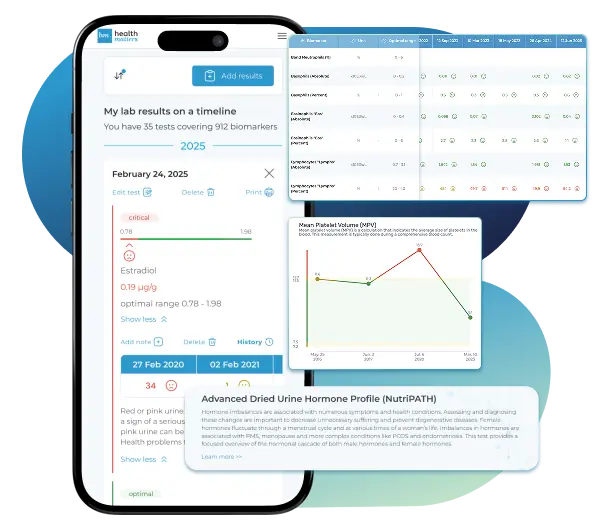
Import lab results from multiple providers, track changes over time, customize your reference ranges, and get clear explanations for each result. Everything is stored securely, exportable in one organized file, and shareable with your doctor—or anyone you choose.
Cancel or upgrade anytime
Related Biomarkers
Article Review & Sources
All our content is backed by peer-reviewed studies, academic research, and trusted medical sources. We're committed to accuracy and transparency — see our editorial policy for details.
Laboratories
Bring All Your Lab Results Together — In One Place
We accept reports from any lab, so you can easily collect and organize all your health information in one secure spot.











Pricing Table
Gather Your Lab History — and Finally Make Sense of It
Finally, Your Lab Results Organized and Clear

Personal plans

$79/ year
Advanced Plan
Access your lab reports, explanations, and tracking tools.
- Import lab results from any provider
- Track all results with visual tools
- Customize your reference ranges
- Export your full lab history anytime
- Share results securely with anyone
- Receive 5 reports entered for you
- Cancel or upgrade anytime
$250/ once
Unlimited Account
Pay once, access everything—no monthly fees, no limits.
- Import lab results from any provider
- Track all results with visual tools
- Customize your reference ranges
- Export your full lab history anytime
- Share results securely with anyone
- Receive 10 reports entered for you
- No subscriptions. No extra fees.
$45/ month
Pro Monthly
Designed for professionals managing their clients' lab reports
- Import lab results from any provider
- Track lab results for multiple clients
- Customize reference ranges per client
- Export lab histories and reports
- Begin with first report entered by us
- Cancel or upgrade anytime
About membership
What's included in a Healthmatters membership
 Import Lab Results from Any Source
 See Your Health Timeline
 Understand What Your Results Mean

 Visualize Your Results

 Data Entry Service for Your Reports
 Securely Share With Anyone You Trust
Let Your Lab Results Tell the Full Story
Once your results are in one place, see the bigger picture — track trends over time, compare data side by side, export your full history, and share securely with anyone you trust.




Bring all your results together to compare, track progress, export your history, and share securely.
What Healthmatters Members Are Saying

I have been using Healthmatters.io since 2021. I travel all over the world and use different doctors and health facilities. This site has allowed me to consolidate all my various test results over 14 years in one place. And every doctor that I show this to has been impressed. Because with any health professional I talk to, I can pull up historical results in seconds. It is invaluable. Even going back to the same doctor, they usually do not have the historical results from their facility in a graph format. That has been very helpful.
Anthony
Unlimited Plan Member since 2021
What fantastic service and great, easy-to-follow layouts! I love your website; it makes it so helpful to see patterns in my health data. It's truly a pleasure to use. I only wish the NHS was as organized and quick as Healthmatters.io. You've set a new standard for health tracking!
Karin
Advanced Plan Member since 2020
As a PRO member and medical practitioner, Healthmatters.io has been an invaluable tool for tracking my clients' data. The layout is intuitive, making it easy to monitor trends and spot patterns over time. The ability to customize reports and charts helps me present information clearly to my clients, improving communication and outcomes. It's streamlined my workflow, saving me time and providing insights at a glance. Highly recommended for any practitioner looking for a comprehensive and user-friendly solution to track patient labs!
Paul
Healthmatters Pro Member since 2024

We implement proven measures to keep your data safe.
At HealthMatters, we're committed to maintaining the security and confidentiality of your personal information. We've put industry-leading security standards in place to help protect against the loss, misuse, or alteration of the information under our control. We use procedural, physical, and electronic security methods designed to prevent unauthorized people from getting access to this information. Our internal code of conduct adds additional privacy protection. All data is backed up multiple times a day and encrypted using SSL certificates. See our Privacy Policy for more details.