
Neutrophil-to-Lymphocyte Ratio (NLR): Normal Range & What It Means
Other names: Neutrophil-to-Lymphocyte Ratio, Neutrophil to Lymphocyte Ratio, NLR, N/L Ratio, Neutrophil/Lymphocyte Ratio, Neut/Lymph Ratio, Neutrophil Lymphocyte Ratio, NLR Blood Test, NLR CBC, NLR Inflammation Marker, Systemic Immune-Inflammation Index (related), Neutrophil Lymphocyte Index, Ratio Neutrophiles Lymphocytes (French), Relación Neutrófilo Linfocito (Spanish)
 Optimal Result:
1 - 3 Ratio.
Optimal Result:
1 - 3 Ratio.

QUICK ANSWER
NLR (neutrophil-to-lymphocyte ratio) is a simple inflammation marker calculated from your CBC. It measures the balance between neutrophils and lymphocytes — two key immune cell types that often move in opposite directions during illness, stress, or inflammation.
A typical NLR in healthy adults is between 1 and 3. Values above 3–4 may indicate elevated inflammation or physiologic stress. No single NLR value is diagnostic — it is always interpreted with your full CBC, symptoms, and clinical history.
MOST COMMON RESULTS AT A GLANCE
| Your NLR | What it usually means |
|---|---|
| < 1 | Low — evaluate absolute neutrophil and lymphocyte counts |
| 1–3 | Normal range in most healthy adults |
| 3–4 | Mildly elevated — common with stress, mild inflammation, or infection |
| 4–6 | Moderately elevated — evaluate with CRP, ESR, and clinical context |
| > 6 | Significantly elevated — warrants clinical evaluation |
| > 10 | Markedly elevated — seen in severe sepsis, critical illness, or acute events |
There is no universal reference range for NLR. Values above 3 are considered elevated in many adult clinical studies, but context determines significance.
HOW NLR IS CALCULATED
NLR = Absolute Neutrophil Count ÷ Absolute Lymphocyte Count
Both values come from the CBC with differential — a standard blood test. You can calculate NLR yourself by dividing your absolute neutrophil count by your absolute lymphocyte count — both values appear on any standard CBC with differential.
Example: Neutrophils absolute 4.5 ×10³/µL ÷ Lymphocytes absolute 1.8 ×10³/µL = NLR of 2.5 (normal range)
Why the ratio matters: Neutrophils and lymphocytes often shift in opposite directions during inflammation or stress — neutrophils rise while lymphocytes fall. The ratio amplifies this signal, making it more sensitive than either value alone for detecting systemic immune imbalance.
WHAT NLR MEASURES: THE BIOLOGY
Neutrophils are the most abundant white blood cells in healthy adults. They are the first responders of the immune system — rapidly mobilising to sites of infection, injury, or tissue damage. They are part of the innate immune system.
Lymphocytes — including T cells, B cells, and NK cells — orchestrate the adaptive immune response, providing targeted defence against specific pathogens, regulating immune activity, and producing antibodies.
In a balanced immune state: Both are within normal range and the ratio is 1–3.
Under stress or inflammation: Neutrophils rise (driven by cortisol, adrenaline, and inflammatory cytokines), lymphocytes often fall (redistributed to tissues or suppressed by stress hormones), and NLR rises — sometimes substantially.
This physiological seesaw makes NLR a sensitive early signal of systemic immune activation, even when the absolute counts themselves may appear only mildly abnormal.
NLR AND ALZHEIMER'S DISEASE RISK
Recent large-scale research has identified elevated NLR as a significant predictor of Alzheimer's disease and related dementias — one of the most clinically compelling emerging findings for this marker.
The NYU Langone / VA study (2026): A study published in Alzheimer's & Dementia analysed electronic health records from NYU Langone (n=284,530) and the Veterans Health Administration (n=85,836). The researchers found that higher NLR was independently and positively associated with future risk of Alzheimer's disease and related dementias. Notably, elevated NLR appeared before any signs of cognitive impairment — suggesting it may reflect early neuroinflammatory processes in disease development.
The UNC / UK Biobank study (2025): A separate analysis of UK Biobank (n=207,100) and the All of Us program (n=45,202) found NLR was significantly associated with Alzheimer's disease (pooled HR: 1.03 per 1 SD, 95% CI: 1.02–1.05), with effects robust to adjustment for CRP, APOE ε4 status, and other AD risk factors.
Important nuance: Mendelian randomization analyses have not confirmed NLR as a causal factor in Alzheimer's — the evidence supports NLR as a biomarker of neuroinflammatory processes associated with AD risk, not as a proven cause. A high NLR does not diagnose Alzheimer's disease or predict it with certainty.
What this means practically: Tracking NLR over time alongside other inflammatory and cognitive health markers may provide a useful early signal worth discussing with a physician — particularly in older adults with other cardiovascular risk factors, which share overlapping neuroinflammatory pathways with dementia risk.
HIGH NLR: WHAT IT MEANS
An elevated NLR — generally above 3 in adults — reflects a shift toward increased neutrophil activity relative to lymphocytes. This pattern is associated with a wide range of conditions and physiological states.
Common causes of elevated NLR:
- Bacterial infection or sepsis (often >10 in severe sepsis)
- Acute illness or fever
- Physiological stress (surgery, trauma, intense exercise)
- Chronic inflammatory conditions (rheumatoid arthritis, IBD)
- Cardiovascular disease and metabolic syndrome
- Obesity and insulin resistance
- Smoking
- Corticosteroid therapy (steroids raise neutrophils and suppress lymphocytes)
- Cancer (elevated NLR is associated with poorer prognosis in several cancer types)
- Psychological stress and poor sleep (modest elevation)
What a single mildly elevated NLR means: A result of 3–5 in an otherwise normal CBC with no symptoms is common and nonspecific. It does not diagnose any particular condition. Repeat testing and clinical context are needed before any conclusions are drawn.
When elevated NLR is more clinically significant: A persistently elevated NLR (above 4–5) over multiple tests, especially alongside elevated CRP, ESR, or other CBC abnormalities, warrants evaluation for chronic inflammation, cardiovascular risk, or an underlying inflammatory condition.
LOW NLR: WHAT IT MEANS
A low NLR — typically below 1 — means lymphocytes are high relative to neutrophils, or neutrophils are low relative to lymphocytes.
Common causes of low NLR:
- Active or recent viral infection (lymphocytes rise during viral immune response)
- Relative lymphocytosis (elevated lymphocyte count from any cause)
- Neutropenia (low neutrophil count)
- Some autoimmune conditions
- Medication effects
- Normal individual variation
Is low NLR concerning? A mildly low NLR in an otherwise normal CBC is usually not clinically significant. The most important next step is to check the absolute neutrophil count — if it is below normal (neutropenia), that is the primary clinical concern, not the ratio itself.
NLR AND CARDIOVASCULAR DISEASE
NLR has been studied as a cardiovascular risk marker across a large body of research. Elevated NLR is associated with:
- Higher risk of myocardial infarction and adverse cardiac events
- Worse outcomes after acute coronary syndrome
- Increased risk of stroke
- Progression of atherosclerosis
The mechanistic link is systemic inflammation — elevated NLR reflects chronic immune activation that accelerates vascular damage. NLR is not a substitute for established cardiovascular risk markers (LDL, CRP, blood pressure), but may add independent prognostic information in high-risk patients.
WHAT LEVEL OF NLR IS CONCERNING?
No single NLR value is universally dangerous. Clinical significance depends on context, trends, and accompanying findings.
| NLR range | Typical clinical context |
|---|---|
| 1–3 | Normal in most healthy adults |
| 3–5 | Mild elevation — common with stress, infection, or inflammation |
| 5–10 | Moderate elevation — evaluate underlying cause; correlate with CRP and full CBC |
| > 10 | Marked elevation — associated with severe infection, sepsis, acute events, or critical illness |
Trends matter more than single values. A rising NLR over time — even within the 3–5 range — may be more meaningful than a single elevated reading. HealthMatters plots NLR over time so you can track changes alongside your other CBC markers.
COMMON PHRASES SEEN ON LAB REPORTS
NLR is a calculated marker and does not appear as a named field on most standard CBC reports. It must be calculated from:
NEUTROPHILS (ABSOLUTE) / ANC / NEUT # / AUTO NEUTROPHILS
÷
LYMPHOCYTES (ABSOLUTE) / LYMPHS # / AUTO LYMPHOCYTES / ABS LYMPHOCYTES
Some specialised panels, research reports, or functional medicine labs may report NLR directly as:
NLR NEUTROPHIL/LYMPHOCYTE RATIO N/L RATIO NEUT:LYMPH RATIO SYSTEMIC INFLAMMATION INDEX (related but different calculation)
You can enter NLR manually in HealthMatters by dividing your absolute neutrophil count by your absolute lymphocyte count from your CBC with differential.
FAQ about Neutrophil-to-Lymphocyte Ratio
-
What is the neutrophil-to-lymphocyte ratio (NLR)?
NLR is a simple inflammation marker calculated by dividing the absolute neutrophil count by the absolute lymphocyte count from a CBC with differential. It measures the balance between two key immune cell types that often shift in opposite directions during illness, stress, or inflammation. A higher NLR reflects more neutrophil activity relative to lymphocytes — associated with systemic inflammation, infection, cardiovascular disease, and other stress states. -
What is a normal NLR?
In most healthy adults, NLR falls between approximately 1 and 3. Values above 3–4 are considered elevated in many clinical studies, though there is no universal reference range. Some published research describes a broader healthy adult range of approximately 0.78–3.53. Because NLR is a calculated ratio with no standardised reference interval, always interpret it alongside your absolute neutrophil and lymphocyte counts, other inflammatory markers, and clinical context. -
What does a high NLR mean?
A high NLR means neutrophils are elevated relative to lymphocytes — a pattern associated with systemic inflammation, bacterial infection, physiological stress, cardiovascular disease, chronic inflammatory conditions, corticosteroid use, and obesity. A single mildly elevated NLR is nonspecific and common. Persistent elevation over multiple tests, especially alongside other abnormal inflammatory markers, warrants clinical evaluation. -
What does a low NLR mean?
A low NLR means lymphocytes are high relative to neutrophils. This is often seen during viral infection (when lymphocytes rise), as normal individual variation, or when neutrophils are low (neutropenia). A mildly low NLR with a normal CBC and no symptoms is usually not clinically significant. Check the absolute neutrophil count — if it is below the normal range, that is the more important finding. -
Is a high NLR a sign of cancer?
Not necessarily. NLR is a nonspecific inflammation marker elevated by many common conditions including infection, stress, cardiovascular disease, and corticosteroid use. However, elevated NLR has been studied as a prognostic marker in several cancer types — generally associated with worse outcomes when persistently and markedly elevated alongside other abnormal findings. A single elevated NLR does not diagnose or indicate cancer. It should be interpreted with the full CBC, symptoms, and other findings. -
What is the NLR and Alzheimer's disease connection?
Recent large-scale research has found that elevated NLR is independently associated with increased risk of Alzheimer's disease and related dementias. A 2026 study from NYU Langone and the VA (n=370,000+) found elevated NLR predicted future dementia risk before cognitive symptoms appeared. A 2025 UK Biobank study (n=250,000+) confirmed the association. Importantly, Mendelian randomization has not confirmed causality — NLR appears to be a biomarker reflecting neuroinflammatory processes associated with dementia risk, not a proven causal factor. A high NLR does not diagnose Alzheimer's disease. -
What causes NLR to go up temporarily?
Temporary NLR elevation is common and usually benign. Common causes include acute illness or infection, vigorous exercise, physical or psychological stress, poor sleep, corticosteroid medications, and dehydration. These typically resolve without treatment. A single elevated NLR after illness or a stressful period is not clinically significant. -
Can I calculate my own NLR?
Yes — NLR = absolute neutrophil count ÷ absolute lymphocyte count. Both values appear on a standard CBC with differential. For example: neutrophils 4.2 ×10³/µL ÷ lymphocytes 1.6 ×10³/µL = NLR of 2.6. You can calculate and enter it manually in HealthMatters to track it over time alongside your other CBC markers. -
How does NLR differ from CRP and ESR?
CRP (C-reactive protein) and ESR (erythrocyte sedimentation rate) are direct measures of acute phase proteins released during inflammation. NLR is a calculated immune cell ratio that reflects the balance of immune activation. All three can rise during inflammation, but they reflect different biological pathways. NLR is derived from a standard CBC — no additional test is needed. CRP and ESR require separate blood samples and tests. NLR may detect low-grade chronic inflammation that CRP and ESR miss at normal levels.
Lab Results Explained and Tracked
What does it mean if your Neutrophil-to-Lymphocyte Ratio result is too high?
An elevated NLR means neutrophils are high relative to lymphocytes — a pattern reflecting systemic inflammation, physiological stress, or immune activation.
Most common causes: Bacterial infection, acute illness, surgery or trauma, chronic inflammatory disease, cardiovascular disease, obesity, smoking, corticosteroid use, and psychological stress.
A mildly elevated NLR (3–5) in an otherwise normal CBC is common and nonspecific. It does not diagnose a specific condition. Repeat testing and clinical context determine whether follow-up is needed.
Persistently elevated NLR (above 5) alongside other abnormal inflammatory markers, CBC changes, or symptoms warrants evaluation for chronic inflammation, cardiovascular risk, or an underlying condition.
Emerging research: Recent large-scale studies have associated elevated NLR with increased risk of Alzheimer's disease and related dementias — appearing before cognitive symptoms develop. This does not mean a high NLR predicts Alzheimer's disease — it is one of many systemic inflammation signals that may reflect early neuroinflammatory processes.
Related Health Conditions

All Your Lab Results.
One Simple Dashboard.
Import, Track, and Share Your Lab Results Easily
Import, Track, and Share Your Lab Results
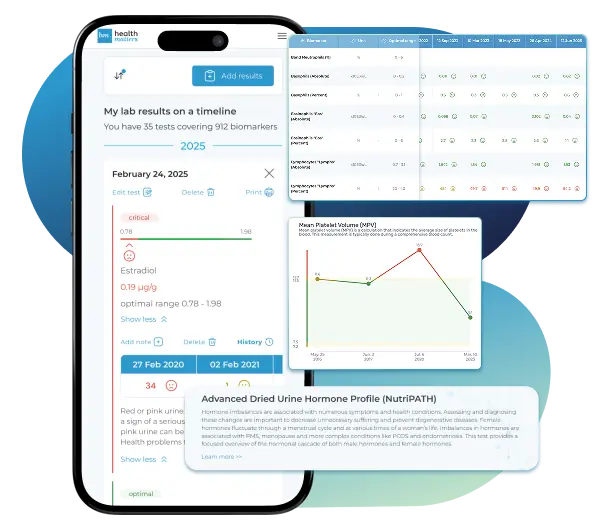
Import lab results from multiple providers, track changes over time, customize your reference ranges, and get clear explanations for each result. Everything is stored securely, exportable in one organized file, and shareable with your doctor—or anyone you choose.
Cancel or upgrade anytime
What does it mean if your Neutrophil-to-Lymphocyte Ratio result is too low?
A low NLR means lymphocytes are high relative to neutrophils, or neutrophils are low.
In most cases, a mildly low NLR in an otherwise normal CBC is not clinically significant. It is most commonly seen during or after viral illness (when lymphocytes are transiently elevated), or as normal individual variation.
The most important check with a low NLR is the absolute neutrophil count. If the ANC is below normal range (neutropenia), that is the primary clinical concern — not the ratio. Isolated low NLR with normal absolute counts and no symptoms typically does not require follow-up.
Related Biomarkers
Article Review & Sources
All our content is backed by peer-reviewed studies, academic research, and trusted medical sources. We're committed to accuracy and transparency — see our editorial policy for details.
Laboratories
Bring All Your Lab Results Together — In One Place
We accept reports from any lab, so you can easily collect and organize all your health information in one secure spot.











Pricing Table
Gather Your Lab History — and Finally Make Sense of It
Finally, Your Lab Results Organized and Clear

Personal plans

$79/ year
Advanced Plan
Access your lab reports, explanations, and tracking tools.
- Import lab results from any provider
- Track all results with visual tools
- Customize your reference ranges
- Export your full lab history anytime
- Share results securely with anyone
- Receive 5 reports entered for you
- Cancel or upgrade anytime
$250/ once
Unlimited Account
Pay once, access everything—no monthly fees, no limits.
- Import lab results from any provider
- Track all results with visual tools
- Customize your reference ranges
- Export your full lab history anytime
- Share results securely with anyone
- Receive 10 reports entered for you
- No subscriptions. No extra fees.
$45/ month
Pro Monthly
Designed for professionals managing their clients' lab reports
- Import lab results from any provider
- Track lab results for multiple clients
- Customize reference ranges per client
- Export lab histories and reports
- Begin with first report entered by us
- Cancel or upgrade anytime
About membership
What's included in a Healthmatters membership
 Import Lab Results from Any Source
 See Your Health Timeline
 Understand What Your Results Mean

 Visualize Your Results

 Data Entry Service for Your Reports
 Securely Share With Anyone You Trust
Let Your Lab Results Tell the Full Story
Once your results are in one place, see the bigger picture — track trends over time, compare data side by side, export your full history, and share securely with anyone you trust.




Bring all your results together to compare, track progress, export your history, and share securely.
What Healthmatters Members Are Saying

I have been using Healthmatters.io since 2021. I travel all over the world and use different doctors and health facilities. This site has allowed me to consolidate all my various test results over 14 years in one place. And every doctor that I show this to has been impressed. Because with any health professional I talk to, I can pull up historical results in seconds. It is invaluable. Even going back to the same doctor, they usually do not have the historical results from their facility in a graph format. That has been very helpful.
Anthony
Unlimited Plan Member since 2021
What fantastic service and great, easy-to-follow layouts! I love your website; it makes it so helpful to see patterns in my health data. It's truly a pleasure to use. I only wish the NHS was as organized and quick as Healthmatters.io. You've set a new standard for health tracking!
Karin
Advanced Plan Member since 2020
As a PRO member and medical practitioner, Healthmatters.io has been an invaluable tool for tracking my clients' data. The layout is intuitive, making it easy to monitor trends and spot patterns over time. The ability to customize reports and charts helps me present information clearly to my clients, improving communication and outcomes. It's streamlined my workflow, saving me time and providing insights at a glance. Highly recommended for any practitioner looking for a comprehensive and user-friendly solution to track patient labs!
Paul
Healthmatters Pro Member since 2024

We implement proven measures to keep your data safe.
At HealthMatters, we're committed to maintaining the security and confidentiality of your personal information. We've put industry-leading security standards in place to help protect against the loss, misuse, or alteration of the information under our control. We use procedural, physical, and electronic security methods designed to prevent unauthorized people from getting access to this information. Our internal code of conduct adds additional privacy protection. All data is backed up multiple times a day and encrypted using SSL certificates. See our Privacy Policy for more details.