
Hydrogen (H2)
 Optimal Result:
0 - 20 ppm.
Optimal Result:
0 - 20 ppm.

GENERAL CONSIDERATIONS FOR BREATH TESTING
Small intestinal bacterial overgrowth (SIBO) is a heterogeneous syndrome characterized by an increase in the number and/or the presence of atypical microbiota in the small intestine. Genova's SIBO breath test relies on measurement of gases produced by microbiota in the intestine - hydrogen (H2) and methane (CH4) - following ingestion of lactulose in a fasting state.
A normal transit time of lactulose (10 g) in healthy fasting patients from the mouth to the junction between the small and large intestine (oro-cecal transit time, or OCTT) is approximately 90 minutes. In general, transit times have been found to vary in humans. Given such findings, transit time should be taken into consideration when interpreting breath testing.
To preclude elevated breath levels of hydrogen and methane prior to the ingestion of lactulose (at baseline), impeccable patient preparation and sample collection are imperative. Falsely elevated findings may result from incomplete avoidance of high-fiber foods, residual fiber in the intestine due to delayed transit time, residual oropharyngeal (mouth and throat) bacteria, exposure to tobacco smoke, or napping during collection.
-----------------
EVALUATION FOR HYDROGEN (H2)
In healthy humans, hydrogen gas is exclusively produced by intestinal bacteria - primarily a result of carbohydrate fermentation by anaerobic bacteria in the colon. In SIBO, fermentation of the malabsorbed lactulose substrate by bacteria residing in the small intestine results in elevated concentration of exhaled hydrogen (H2).
- The hydrogen result is the difference between the baseline hydrogen (S1) and the highest hydrogen finding among S2, S3, S4 or S5. The result does not take into account actual collection times. It is expected that the patient followed recommended collection times.
- A rise of H2 of ≥20 ppm over baseline in those samples collected after 90 minutes maybe positive for SIBO in patients with slower transit time or constipation.
- ELEVATED BASELINE - The clinical significance of elevated baseline H2 levels in patients reporting adherence to fasting and dietary guidelines is not known. In a symptomatic patient, some clinical groups with expertise in SIBO management may consider an elevated hydrogen baseline a positive test.
- Approximately 8 to 27% of individuals do not produce H2 due to the presence of methanogenic microbiota which consume hydrogen molecules to produce methane gas. As a result, low H2 findings through all time points in a symptomatic patient may reflect a false negative result. In this instance, clinical attention should be shifted to evaluation of CH4.
------------------
References:
Rezaie A, Buresi M, Lembo A, et al. Hydrogen and Methane-Based Breath Testing in Gastrointestinal Disorders: The North American Consensus. The American journal of gastroenterology. May 2017;112(5):775-784. [L]
Lab Results Explained and Tracked
What does it mean if your Hydrogen (H2) result is too high?
A rise of H2 of > 20 ppm over baseline in the first 90 minutes of testing is positive for SIBO.
An increase in hydrogen (H2) of more than 20 parts per million (ppm) on a Small Intestinal Bacterial Overgrowth (SIBO) breath test typically indicates a positive result for SIBO. The test works by measuring the levels of hydrogen and methane in the breath after the ingestion of a sugar solution (usually lactulose or glucose). Bacteria in the small intestine ferment these sugars, producing hydrogen and/or methane as byproducts, which are then absorbed into the bloodstream and exhaled in the breath.
Here’s what an increase in hydrogen of more than 20 ppm generally signifies:
-
Presence of Excess Bacteria in the Small Intestine: Normally, the small intestine has relatively few bacteria. A significant increase in hydrogen suggests that bacteria are present in higher-than-normal numbers, fermenting the ingested sugar and producing hydrogen gas.
-
Positive Diagnosis for SIBO: A rise in hydrogen levels by more than 20 ppm from baseline values typically confirms a diagnosis of SIBO, according to most medical guidelines.
-
Symptom Correlation: Patients with SIBO often experience symptoms such as bloating, abdominal pain, diarrhea, and/or constipation. The increase in hydrogen is indicative of bacterial overgrowth that correlates with these gastrointestinal symptoms.
It is important to consider other factors such as the specific protocol followed during the test, the patient’s preparation, and baseline hydrogen levels to accurately interpret the results. Consulting a healthcare professional is crucial for a comprehensive assessment and appropriate treatment plan.
When both H2 and CH4 are present, treatment may require more than one antimicrobial agent. Patients who received a combination of rifaximin and neomycin showed a higher rate of methane eradication on breath testing compared to patients who received either rifaximin or neomycin alone. There was also a better clinical response with the combination therapy.
----------------
Potential treatment options:
Treatment options for Small Intestinal Bacterial Overgrowth (SIBO) typically include a combination of dietary modifications, antibiotics, probiotics, and sometimes other supportive measures. Here are the common treatment options:
1. Antibiotics
Rifaximin is the most commonly prescribed antibiotic for SIBO. It is poorly absorbed in the gut, making it effective at targeting bacteria in the small intestine with fewer systemic side effects. Other antibiotics that might be used include:
- Neomycin (often in combination with Rifaximin for methane-dominant SIBO)
- Metronidazole
- Ciprofloxacin
2. Dietary Changes
- Low FODMAP Diet: Reducing intake of fermentable oligosaccharides, disaccharides, monosaccharides, and polyols can help minimize symptoms by reducing the amount of fermentable substrate available to bacteria.
- Specific Carbohydrate Diet (SCD): This diet eliminates complex carbohydrates that can feed bacteria, focusing on easily digestible carbs.
- Elemental Diet: A liquid diet composed of easily absorbed nutrients, which can starve bacteria by providing nutrients in their simplest form, reducing fermentation.
3. Probiotics
Probiotics can help restore a healthy balance of gut bacteria. Commonly used strains include:
- Lactobacillus
- Bifidobacterium
- Saccharomyces boulardii (a beneficial yeast)
4. Herbal Antimicrobials
Herbal treatments can be effective for some patients, either alone or in combination with other treatments. Common herbal antimicrobials include:
- Berberine
- Oregano oil
- Allicin (from garlic)
- Neem
5. Prokinetics
Prokinetic agents can help improve motility in the gastrointestinal tract, reducing the risk of bacterial overgrowth. Examples include:
- Low-dose erythromycin
- Prucalopride
- Tegaserod
6. Supportive Treatments
- Digestive Enzymes: These can aid in digestion and reduce the load on the small intestine.
- Bile Acid Supplements: These can help if bile acid malabsorption is contributing to symptoms.
7. Addressing Underlying Conditions
Treating underlying conditions that may contribute to SIBO, such as:
- Irritable Bowel Syndrome (IBS)
- Diabetes (can cause slow motility)
- Scleroderma or other motility disorders
8. Lifestyle Modifications
- Stress Management: Stress can affect gut health and motility. Techniques like mindfulness, meditation, and yoga can be beneficial.
- Regular Exercise: Physical activity can improve gastrointestinal motility and overall gut health.
Follow-up and Monitoring
Regular follow-up with a healthcare provider is important to monitor symptoms, ensure treatment effectiveness, and adjust the treatment plan as necessary. In some cases, repeat breath tests may be conducted to assess the eradication of bacterial overgrowth.
Consulting with Healthcare Professionals
It's crucial to work closely with healthcare providers, including gastroenterologists and dietitians, to develop and follow an individualized treatment plan tailored to the specific needs and underlying conditions of the patient.

All Your Lab Results.
One Simple Dashboard.
Import, Track, and Share Your Lab Results Easily
Import, Track, and Share Your Lab Results
Import lab results from multiple providers, track changes over time, customize your reference ranges, and get clear explanations for each result. Everything is stored securely, exportable in one organized file, and shareable with your doctor—or anyone you choose.
Cancel or upgrade anytime
Article Review & Sources
All our content is backed by peer-reviewed studies, academic research, and trusted medical sources. We're committed to accuracy and transparency — see our editorial policy for details.
Laboratories
Bring All Your Lab Results Together — In One Place
We accept reports from any lab, so you can easily collect and organize all your health information in one secure spot.











Pricing Table
Gather Your Lab History — and Finally Make Sense of It
Finally, Your Lab Results Organized and Clear

Personal plans

$79/ year
Advanced Plan
Access your lab reports, explanations, and tracking tools.
- Import lab results from any provider
- Track all results with visual tools
- Customize your reference ranges
- Export your full lab history anytime
- Share results securely with anyone
- Receive 5 reports entered for you
- Cancel or upgrade anytime
$250/ once
Unlimited Account
Pay once, access everything—no monthly fees, no limits.
- Import lab results from any provider
- Track all results with visual tools
- Customize your reference ranges
- Export your full lab history anytime
- Share results securely with anyone
- Receive 10 reports entered for you
- No subscriptions. No extra fees.
$45/ month
Pro Monthly
Designed for professionals managing their clients' lab reports
- Import lab results from any provider
- Track lab results for multiple clients
- Customize reference ranges per client
- Export lab histories and reports
- Begin with first report entered by us
- Cancel or upgrade anytime
About membership
What's included in a Healthmatters membership
 Import Lab Results from Any Source
 See Your Health Timeline
 Understand What Your Results Mean

 Visualize Your Results

 Data Entry Service for Your Reports
 Securely Share With Anyone You Trust
Let Your Lab Results Tell the Full Story
Once your results are in one place, see the bigger picture — track trends over time, compare data side by side, export your full history, and share securely with anyone you trust.




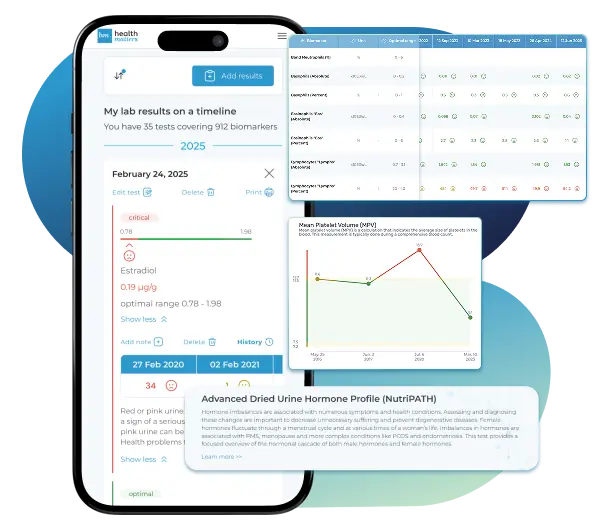
Bring all your results together to compare, track progress, export your history, and share securely.
What Healthmatters Members Are Saying

I have been using Healthmatters.io since 2021. I travel all over the world and use different doctors and health facilities. This site has allowed me to consolidate all my various test results over 14 years in one place. And every doctor that I show this to has been impressed. Because with any health professional I talk to, I can pull up historical results in seconds. It is invaluable. Even going back to the same doctor, they usually do not have the historical results from their facility in a graph format. That has been very helpful.
Anthony
Unlimited Plan Member since 2021
What fantastic service and great, easy-to-follow layouts! I love your website; it makes it so helpful to see patterns in my health data. It's truly a pleasure to use. I only wish the NHS was as organized and quick as Healthmatters.io. You've set a new standard for health tracking!
Karin
Advanced Plan Member since 2020
As a PRO member and medical practitioner, Healthmatters.io has been an invaluable tool for tracking my clients' data. The layout is intuitive, making it easy to monitor trends and spot patterns over time. The ability to customize reports and charts helps me present information clearly to my clients, improving communication and outcomes. It's streamlined my workflow, saving me time and providing insights at a glance. Highly recommended for any practitioner looking for a comprehensive and user-friendly solution to track patient labs!
Paul
Healthmatters Pro Member since 2024

We implement proven measures to keep your data safe.
At HealthMatters, we're committed to maintaining the security and confidentiality of your personal information. We've put industry-leading security standards in place to help protect against the loss, misuse, or alteration of the information under our control. We use procedural, physical, and electronic security methods designed to prevent unauthorized people from getting access to this information. Our internal code of conduct adds additional privacy protection. All data is backed up multiple times a day and encrypted using SSL certificates. See our Privacy Policy for more details.