
EBV Early Antigen (EA IgG) Positive or High: What It Means
Other names: EBV EA IgG, EBV Early Antigen IgG, EBV Early Antigen D Ab IgG, EBV EA-D Ab IgG, EBV Ab to Early D Ag IgG, Epstein-Barr Early Antigen Antibody IgG, EBV Early Ag Ab IgG, EA-D IgG, EBV Early Antigen Ab IgG Positive, EBV EA-D IgG
 Optimal Result:
0 - 9 U/mL.
Optimal Result:
0 - 9 U/mL.

EBV Early Antigen Ab IgG (EA IgG) is an antibody produced during active Epstein-Barr virus (EBV) replication. A positive result can mean an acute infection, reactivation of a past infection, or — in some healthy people — a persistent antibody from an old infection. The typical normal range is less than 9 U/mL, but this may vary by lab. EA IgG alone does not confirm active EBV — it should always be evaluated alongside your full EBV panel and symptoms.
At a Glance
- EA IgG measures the immune response to a protein produced during active EBV replication
- Typical negative range: < 9 U/mL; positive is ≥ 9 U/mL (check your lab's reference range)
- A positive result may reflect acute infection, reactivation, or lingering antibodies from a past infection — up to 20–30% of healthy people can remain EA IgG positive without active disease
- EA IgG is a supporting marker, not a standalone diagnostic — the full EBV panel pattern is always more informative
- Results are most useful when interpreted with VCA IgG, VCA IgM, and EBNA IgG together with your symptoms
Quick interpretation shortcut:
- EA IgG + VCA IgM positive → likely acute infection
- EA IgG + VCA IgG + EBNA IgG positive → possible reactivation or past infection
- EA IgG alone positive, no symptoms → often persistent antibody from old infection, not active disease
What is EBV Early Antigen Ab IgG?
Epstein-Barr virus (EBV) infects over 90% of adults worldwide. Most people are infected during childhood or early adulthood, often without symptoms. When infection occurs in adolescence or adulthood, it commonly causes infectious mononucleosis (mono) — characterised by fatigue, fever, sore throat, and swollen lymph nodes. EBV then establishes lifelong latency in B lymphocytes and can reactivate under conditions of immune stress.
The Early Antigen (EA) is a protein produced during the active replication phase of EBV. When the immune system detects it, it produces IgG antibodies in response. In most people, EA IgG declines to undetectable levels within about 3–6 months after acute infection — but 20–30% may retain detectable levels for years without active disease.
Important: A positive EA IgG is a supporting signal, not a definitive marker of active infection. It must be interpreted alongside VCA IgM, VCA IgG, EBNA IgG, and your clinical picture.
On your lab report, this test might appear as: EBV Early Antigen Ab IgG, EBV EA IgG, EBV EA-D Ab IgG, EBV Early Antigen D Ab (IgG), or EBV Ab to Early (D) Ag IgG.
Why EA IgG alone isn't enough
EBV diagnosis is pattern-based, not single-marker-based. Each EBV antibody tells a different part of the story:
- VCA IgM — appears early in acute infection; suggests recent exposure
- VCA IgG — appears early and persists for life; confirms past or current infection
- EBNA IgG — develops weeks to months after infection; the clearest marker of resolved past infection
- EA IgG — appears during active replication; a supporting signal for activity, but can persist in healthy individuals
No single result is definitive. A clinician looks at the full pattern — which markers are positive, which are negative, and how they align with your symptoms and history — before drawing conclusions.
Normal range
| Result | Interpretation |
|---|---|
| < 9 U/mL | Negative — no significant EA IgG detected (using this lab's cut-off) |
| ≥ 9 U/mL | Positive — EA IgG detected; interpret in context of full panel |
Cut-off values vary between laboratories — some use < 11 U/mL. Always use the reference range printed on your own report.
What does a high or positive EA IgG mean?
Acute primary infection (infectious mononucleosis) EA IgG appears in approximately 70–80% of people during acute mono. Alongside positive VCA IgM, positive VCA IgG, and negative EBNA IgG, an elevated EA IgG supports — but does not definitively prove — a current or very recent primary EBV infection.
Reactivation of a past EBV infection In people previously infected, EBV can reactivate under immune stress. Reactivated EBV typically shows EA IgG positive alongside VCA IgG positive, EBNA IgG positive, and VCA IgM negative or weakly positive. Reactivation in healthy, immunocompetent individuals is often mild and self-limiting.
Persistent antibody from an old infection Up to 20–30% of healthy individuals maintain a detectable EA IgG for years after their original infection without active viral replication. This is the most common explanation for an isolated positive EA IgG in an asymptomatic person.
EBV-associated conditions Elevated EA IgG has been associated with Hodgkin's lymphoma, nasopharyngeal carcinoma, Burkitt's lymphoma, lupus, and multiple sclerosis. These conditions are rare compared with how common EBV antibody positivity is — EA IgG alone cannot diagnose any of them and should always be evaluated in full clinical context.
Chronic active EBV (rare) In rare cases, some individuals develop chronic active EBV (CAEBV) with persistently elevated EA IgG, high VCA IgG, and symptoms lasting more than six months. CAEBV requires specialist evaluation.
What does a negative EA IgG mean?
A negative result (< 9 U/mL) may indicate:
- No current active EBV replication
- No prior EBV infection (if VCA IgG and EBNA IgG are also negative)
- Very early acute infection before EA IgG has developed — if symptoms are recent, repeat testing in 1–2 weeks may clarify
- Recovery from acute infection — EA IgG typically declines within months
A negative EA IgG does not rule out past infection — that is assessed by VCA IgG and EBNA IgG, which persist for life.
What does a result of >600 U/mL mean?
Many immunoassays have an upper detection limit — commonly 600 U/mL. A result reported as > 600 U/mL or ≥ 600 means antibody levels exceed the maximum the assay can quantify. For VCA IgG and EBNA IgG, this is common in adults with past infection — these antibodies persist for life and accumulate over time. In an asymptomatic person, >600 most commonly reflects longstanding past infection.
For EA IgG specifically, a result above the detection limit alongside mono-like symptoms warrants clinical evaluation. In asymptomatic people, it may still reflect persistent antibody from past infection rather than active disease.
How to interpret your full EBV panel
Below are the most common EBV antibody patterns and what they most often mean — individual results can vary:
| VCA IgM | VCA IgG | EBNA IgG | EA IgG | Most likely interpretation |
|---|---|---|---|---|
| Negative | Negative | Negative | Negative | No prior EBV infection — susceptible |
| Positive | Positive | Negative | Positive/Negative | Acute primary infection |
| Negative/Positive | Positive | Negative | Positive | Recent primary infection, recovering |
| Negative | Positive | Positive | Negative | Past infection, resolved |
| Negative | Positive | Positive | Positive | Past infection with possible reactivation, especially if symptoms present |
| Negative | Positive | Negative | Negative | Indeterminate — may need repeat testing |
Important: 5–10% of people never develop EBNA IgG despite past infection. Immunocompromised patients may show atypical patterns. All results should be interpreted alongside clinical symptoms and history.
Key insights for patients
- EA IgG suggests possible EBV activity — but is not definitive on its own
- Many healthy people have a persistently positive EA IgG from a past infection with no active disease
- Trends over time and the full EBV panel matter more than any single value
- Symptoms determine clinical relevance — an asymptomatic positive result is usually not cause for alarm
- A clinician uses the whole picture: which antibodies are positive, which are negative, and how they align with what you are experiencing
Symptoms associated with an elevated EA IgG
EA IgG itself does not cause symptoms — it reflects how your immune system is responding. Any symptoms present reflect the underlying condition.
Symptoms of acute or reactivated EBV infection may include:
- Fatigue — often the most prominent symptom; can be prolonged, lasting weeks to months
- Fever — low to high grade, often with chills
- Sore throat — can be severe, sometimes with white patches on the tonsils
- Swollen lymph nodes — particularly in the neck, sometimes armpits or groin
- Enlarged spleen or liver — contact sports should be avoided during acute infection due to spleen rupture risk
- Body aches and headaches
- Rash — particularly if amoxicillin or ampicillin is taken during active infection
In reactivation, symptoms are often milder but can include persistent fatigue, low-grade fever, and swollen glands.
What to do next based on your result
| Situation | Suggested next step |
|---|---|
| Elevated EA IgG with mono symptoms | Ask your doctor for the full EBV panel; consider monospot test |
| Elevated EA IgG, no symptoms, isolated finding | May reflect persistent antibody from old infection; discuss with your doctor |
| Elevated EA IgG + positive VCA IgG + negative EBNA IgG + symptoms | Consistent with acute or recent infection — clinical evaluation needed |
| Elevated EA IgG + positive VCA IgG + positive EBNA IgG + new symptoms | Possible reactivation — consider EBV DNA PCR to assess viral activity |
| Persistently elevated EA IgG, uncertain cause | Repeat testing or EBV DNA PCR can help clarify whether active replication is occurring |
| Result >600 U/mL, no symptoms | Likely past infection with high antibody titre — not necessarily active disease |
| Elevated EA IgG in immunocompromised patient | Warrants specialist review — patterns can be atypical |
Treatment and management
There is no specific antiviral treatment that eliminates EBV. Antibiotics are not effective against EBV — it is a virus, not a bacterial infection.
For acute infection (infectious mononucleosis):
- Rest — the cornerstone of recovery; most people recover within two to four weeks, though fatigue may persist longer
- Hydration — maintain fluid intake, particularly during fever
- Pain relief — paracetamol or ibuprofen for fever, throat pain, and muscle aches; avoid aspirin in children and adolescents
- Avoid contact sports — until the spleen has returned to normal size, typically at least four weeks
- Corticosteroids — may be prescribed for severe airway swelling; not routinely recommended
- Antiviral medications — limited evidence in routine EBV; occasionally used in immunocompromised patients under specialist guidance
For suspected reactivation: Focus on addressing underlying immune stressors — poor sleep, ongoing illness, psychological stress, or inflammatory conditions. If reactivation is suspected clinically, EBV DNA PCR can help confirm active viral replication before antiviral therapy is considered.
For persistent EA IgG elevation without clear cause: Repeat testing after 4–6 weeks alongside the full EBV panel can help determine whether levels are stable (consistent with persistent past antibody) or rising (suggesting active replication). EBV DNA PCR is the most direct way to assess whether the virus is actively replicating.
FAQ about EBV Early Antigen Ab, IgG
-
What does EBV Early Antigen Ab IgG mean?
EBV Early Antigen Ab IgG (EA IgG) is an antibody produced by the immune system in response to a protein made during active EBV replication. A positive result can indicate acute infection, reactivation of a past infection, or a persistent antibody response from an old infection in otherwise healthy individuals. -
What does a high EBV Early Antigen Ab IgG mean?
A high or positive EA IgG result indicates the immune system has responded to EBV replication. This can mean acute infection, reactivation of a dormant infection, or a persistent antibody that remains elevated for years after the original infection without active disease. The result is most useful when evaluated in context of the rest of your EBV panel and your symptoms. -
What does EBV Early Antigen D Ab IgG mean?
EBV Early Antigen D refers to the diffuse (D) component of the early antigen — the most clinically relevant subtype in routine EBV serology. EBV Early Antigen D Ab IgG and EBV Early Antigen Ab IgG refer to the same test in most laboratory contexts. -
Can EA IgG be positive without active infection?
Yes. Up to 20% of healthy individuals maintain a positive EA IgG for years after their original EBV infection without active viral replication. A positive result alone does not confirm active or reactivated EBV — it should be interpreted alongside VCA IgG, VCA IgM, EBNA IgG, and clinical symptoms. -
Is EBV reactivation serious?
In most healthy individuals, EBV reactivation is mild or asymptomatic and does not require treatment. However, in immunocompromised individuals — such as those on immunosuppressive therapy, with HIV, or following organ transplant — reactivation can be more serious and may require medical evaluation and treatment. -
What does a result of >600 U/mL mean?
A result reported as greater than 600 U/mL means the antibody level exceeds the upper detection limit of the assay. For VCA IgG and EBNA IgG, this commonly reflects longstanding past infection with high accumulated antibody levels. For EA IgG, a very high result alongside symptoms warrants clinical evaluation — in asymptomatic people it may still reflect persistent antibody from past infection. -
What is the difference between EA IgG and VCA IgG?
VCA IgG appears early in EBV infection and persists for life — a positive VCA IgG means you have been infected with EBV at some point. EA IgG appears specifically during active viral replication and typically declines after infection, making it a more specific marker of active or reactivated EBV when interpreted in context. -
What is the difference between EA IgG and EBNA IgG?
EBNA IgG appears weeks to months after the initial infection and persists for life — a positive EBNA IgG is the clearest marker of past resolved infection. A pattern of positive EA IgG with negative EBNA IgG suggests early or acute infection, as EBNA antibodies have not yet developed. -
What does it mean if EA IgG is positive but I have no symptoms?
A positive EA IgG with no symptoms is common and often reflects a persistent antibody from a past EBV infection. In healthy, asymptomatic individuals, no treatment is needed. If you have other abnormal results or are concerned, discuss with your doctor. -
Is high EBV associated with cancer?
Elevated EBV antibodies have been associated with EBV-linked cancers including Hodgkin's lymphoma, nasopharyngeal carcinoma, and Burkitt's lymphoma. However, most adults have high EBV antibodies simply because they were infected in the past, and the vast majority never develop EBV-related cancers. Elevated antibodies alone are not diagnostic of cancer and should always be evaluated in clinical context. -
How do I interpret my full EBV panel?
The standard panel includes VCA IgM, VCA IgG, EBNA IgG, and EA IgG. Together they indicate whether infection is acute, recent, past, or possibly reactivated. See the panel interpretation table above — in short, the combination of which markers are positive or negative is far more informative than any single result. -
Why do my EBV antibodies keep coming back high?
EBV antibodies — particularly VCA IgG and EBNA IgG — persist for life after infection and can remain at high levels permanently. This is normal and does not indicate ongoing active disease. EA IgG can also persist at detectable levels in a subset of healthy people for years. Consistently high results in an asymptomatic person most commonly reflect past infection rather than active replication.
Lab Results Explained and Tracked
What does it mean if your EBV Early Antigen Ab, IgG result is too high?
A high EBV Early Antigen Ab IgG result shows that your immune system has recently recognised EBV, but on its own it does not show how active the virus currently is.
This can indicate acute infection (infectious mononucleosis), reactivation of a dormant EBV infection, or — in up to 20% of otherwise healthy individuals — a persistent antibody that has remained elevated for years after an old infection without active disease. In rare, specific clinical situations it may also be associated with EBV-linked conditions such as certain lymphomas or nasopharyngeal carcinoma.
A single elevated result is not diagnostic on its own. Your doctor will interpret this result alongside VCA IgG, VCA IgM, and EBNA IgG to determine the most likely infection status. If you have symptoms such as severe fatigue, fever, sore throat, or swollen lymph nodes, seek clinical evaluation.
Related Health Conditions

All Your Lab Results.
One Simple Dashboard.
Import, Track, and Share Your Lab Results Easily
Import, Track, and Share Your Lab Results
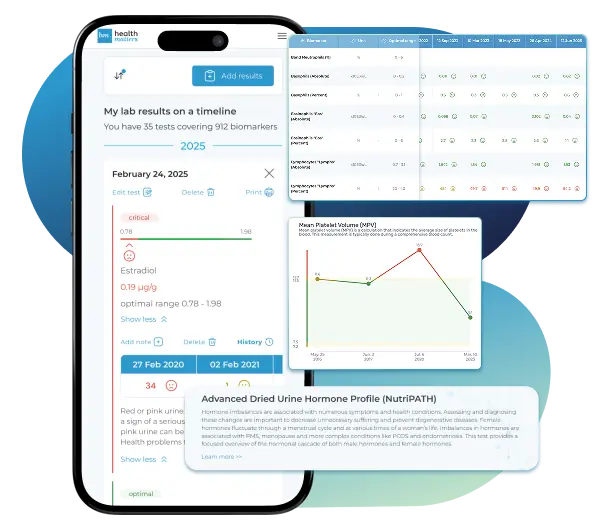
Import lab results from multiple providers, track changes over time, customize your reference ranges, and get clear explanations for each result. Everything is stored securely, exportable in one organized file, and shareable with your doctor—or anyone you choose.
Cancel or upgrade anytime
Related Biomarkers
Article Review & Sources
All our content is backed by peer-reviewed studies, academic research, and trusted medical sources. We're committed to accuracy and transparency — see our editorial policy for details.
Laboratories
Bring All Your Lab Results Together — In One Place
We accept reports from any lab, so you can easily collect and organize all your health information in one secure spot.











Pricing Table
Gather Your Lab History — and Finally Make Sense of It
Finally, Your Lab Results Organized and Clear

Personal plans

$79/ year
Advanced Plan
Access your lab reports, explanations, and tracking tools.
- Import lab results from any provider
- Track all results with visual tools
- Customize your reference ranges
- Export your full lab history anytime
- Share results securely with anyone
- Receive 5 reports entered for you
- Cancel or upgrade anytime
$250/ once
Unlimited Account
Pay once, access everything—no monthly fees, no limits.
- Import lab results from any provider
- Track all results with visual tools
- Customize your reference ranges
- Export your full lab history anytime
- Share results securely with anyone
- Receive 10 reports entered for you
- No subscriptions. No extra fees.
$45/ month
Pro Monthly
Designed for professionals managing their clients' lab reports
- Import lab results from any provider
- Track lab results for multiple clients
- Customize reference ranges per client
- Export lab histories and reports
- Begin with first report entered by us
- Cancel or upgrade anytime
About membership
What's included in a Healthmatters membership
 Import Lab Results from Any Source
 See Your Health Timeline
 Understand What Your Results Mean

 Visualize Your Results

 Data Entry Service for Your Reports
 Securely Share With Anyone You Trust
Let Your Lab Results Tell the Full Story
Once your results are in one place, see the bigger picture — track trends over time, compare data side by side, export your full history, and share securely with anyone you trust.




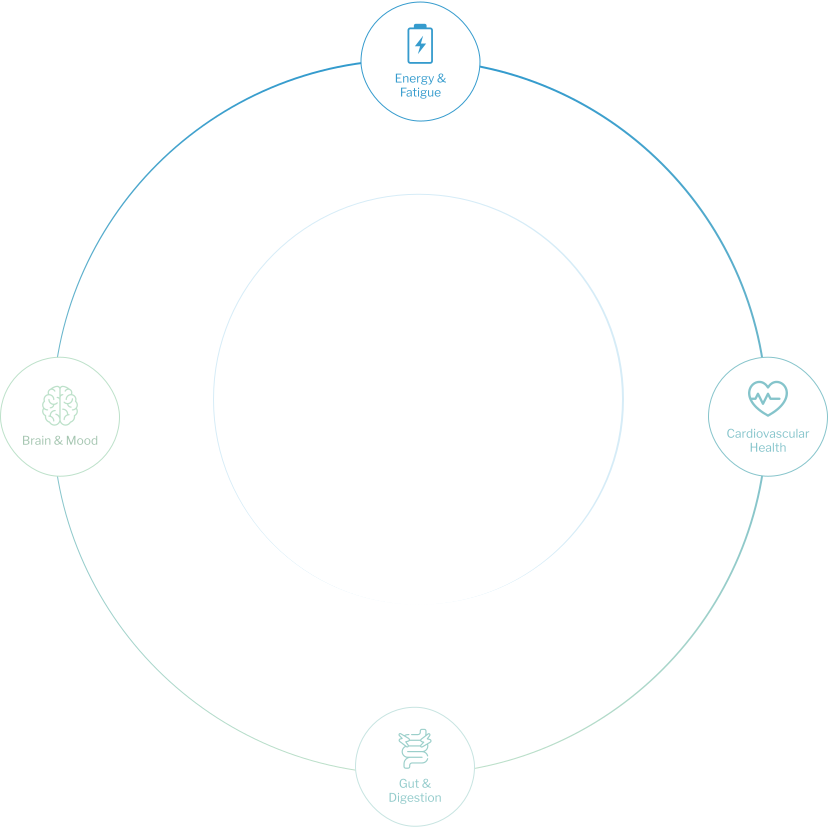
Bring all your results together to compare, track progress, export your history, and share securely.
What Healthmatters Members Are Saying

I have been using Healthmatters.io since 2021. I travel all over the world and use different doctors and health facilities. This site has allowed me to consolidate all my various test results over 14 years in one place. And every doctor that I show this to has been impressed. Because with any health professional I talk to, I can pull up historical results in seconds. It is invaluable. Even going back to the same doctor, they usually do not have the historical results from their facility in a graph format. That has been very helpful.
Anthony
Unlimited Plan Member since 2021
What fantastic service and great, easy-to-follow layouts! I love your website; it makes it so helpful to see patterns in my health data. It's truly a pleasure to use. I only wish the NHS was as organized and quick as Healthmatters.io. You've set a new standard for health tracking!
Karin
Advanced Plan Member since 2020
As a PRO member and medical practitioner, Healthmatters.io has been an invaluable tool for tracking my clients' data. The layout is intuitive, making it easy to monitor trends and spot patterns over time. The ability to customize reports and charts helps me present information clearly to my clients, improving communication and outcomes. It's streamlined my workflow, saving me time and providing insights at a glance. Highly recommended for any practitioner looking for a comprehensive and user-friendly solution to track patient labs!
Paul
Healthmatters Pro Member since 2024

We implement proven measures to keep your data safe.
At HealthMatters, we're committed to maintaining the security and confidentiality of your personal information. We've put industry-leading security standards in place to help protect against the loss, misuse, or alteration of the information under our control. We use procedural, physical, and electronic security methods designed to prevent unauthorized people from getting access to this information. Our internal code of conduct adds additional privacy protection. All data is backed up multiple times a day and encrypted using SSL certificates. See our Privacy Policy for more details.