
QUICK ANSWER
EBV Ab VCA IgM measures IgM antibodies to Epstein-Barr virus. IgM is the early antibody — it appears in the first 1–2 weeks of infection and resolves within 3–6 months. A positive VCA IgM typically indicates recent or active EBV infection.
| Result | What it means |
|---|---|
| Negative (<36.0 U/mL on LabCorp) | No active or recent IgM response detected |
| Equivocal (36.0–43.9 U/mL on LabCorp) | Borderline — repeat testing recommended in 2–4 weeks |
| Positive (≥44.0 U/mL on LabCorp) | IgM antibodies present — recent or active EBV infection likely |
Common questions at a glance:
| Question | Short answer |
|---|---|
| What does <36 mean on my EBV IgM result? | Negative — your level is below the detection threshold; no significant IgM detected |
| What does high EBV Ab VCA IgM mean? | Recent or active EBV infection — IgM is the early-phase antibody |
| What does EBV Ab VCA IgG >600 mean? | Past infection — IgG persists for life; >600 is the assay ceiling, not an alarming specific value |
| How long does EBV IgM stay positive? | Typically 3–6 months after primary infection; rarely longer |
| What is VCA? | Viral Capsid Antigen — the protein on the surface of EBV that the immune system responds to first |
| Is EBV IgM the same as EBV IgG? | No — IgM indicates recent infection; IgG indicates past or established infection (see table below) |
WHAT DOES <36 MEAN ON MY EBV IgM RESULT?
This is the most searched question about the EBV VCA IgM test.
"<36.0 U/mL" means NEGATIVE.
On LabCorp reports (and similar platforms), EBV VCA IgM is reported as a numerical value with the following thresholds:
| Result as shown on report | What it means | Zone |
|---|---|---|
| <36.0 U/mL | Below detection threshold — no significant IgM antibodies detected | Negative |
| 36.0–43.9 U/mL | Borderline — inconclusive; repeat testing recommended | Equivocal |
| ≥44.0 U/mL | Positive — IgM antibodies detected above the positive threshold | Positive |
Why does the report say "<36" instead of zero? Antibody assays have a detection threshold. Any signal below 36 U/mL is too weak to be clinically significant and is reported as "<36" to indicate it is below the limit of quantification, not that it is exactly zero. This is standard laboratory reporting and does not mean the test found something suspicious — it means the result is clearly negative.
Common specific values:
- <36.0 — Negative. Most common result in adults; past EBV infection (very common — over 90% of adults have been infected) does not produce detectable IgM
- 36–43 — Equivocal zone; repeat in 2–4 weeks
- ≥44 — Positive; indicates recent or active EBV infection
- 160, 320 and other specific positive values — positive and above threshold; the exact number reflects antibody concentration but does not change clinical interpretation significantly
WHAT DOES HIGH EBV AB VCA IgM MEAN?
A high or positive EBV VCA IgM (at or above 44.0 U/mL on LabCorp, or reported as "Positive" / "Reactive" on qualitative platforms) indicates that IgM antibodies against the viral capsid antigen of Epstein-Barr virus are present in the blood above the positive threshold.
What this means clinically:
- IgM is the first antibody class produced by the immune system during a new infection
- A positive EBV VCA IgM most commonly indicates primary EBV infection — a first-time infection, typically causing infectious mononucleosis (mono)
- Symptoms of primary EBV infection: fever, severe sore throat, swollen lymph nodes, fatigue, enlarged spleen
- IgM can occasionally be positive in EBV reactivation, though this is less common and the significance is debated
- IgM can rarely be a false positive — cross-reactivity with other viral infections (CMV, rheumatoid factor, other herpesviruses) or autoimmune conditions can cause low-positive IgM results without true EBV infection
Common causes of positive EBV VCA IgM:
| Cause | Notes |
|---|---|
| Primary EBV infection (infectious mononucleosis) | Most important cause — first-time EBV infection in adolescents and young adults; IgM rises within 1–2 weeks of infection onset |
| EBV reactivation | Less common; may occur in immunocompromised patients; clinical significance varies |
| False positive | Can occur with CMV infection, rheumatoid factor, other herpesviruses; more common with low-positive results near the threshold |
WHAT DOES EBV Ab VCA IgG HIGH OR >600 MEAN?
EBV VCA IgG is a different antibody from IgM and indicates past (not recent) infection.
Most adults have a positive EBV VCA IgG — EBV infects over 90% of the global population and IgG antibodies persist for life after any EBV infection, regardless of when it occurred.
Why does my report show EBV Ab VCA IgG >600 or >750?
On many laboratory platforms, the EBV VCA IgG assay has an upper reporting limit:
- LabCorp: reports values up to 600 U/mL; values above this appear as ">600.0 H" or ">600.0 U/mL H"
- Quest Diagnostics: reports values up to 750 U/mL; values above appear as ">750.00 H"
- Other platforms: may use 600, 750, or other ceilings
A result of >600 or >750 means the antibody level exceeds the assay's measurement ceiling — it does not mean a specific alarming value was found. It simply means the IgG is well elevated, which is normal and expected in anyone with past EBV infection (which includes the majority of adults).
Does >600 IgG mean the virus is active? No. IgG does not indicate active infection — it indicates past exposure. IgG remains elevated for life in most people who have had EBV. A very high IgG does not indicate reactivation, ongoing disease, or cancer risk on its own.
EBV VCA IgG value interpretation:
| IgG value | Interpretation |
|---|---|
| Negative / <10 U/mL | No past EBV exposure detected (less common in adults) |
| Positive / 10–599 U/mL | Past EBV infection — IgG present as expected |
| >600 (LabCorp) / >750 (Quest) | Past EBV infection — assay ceiling reached; antibody is well above threshold; this is common in long-established past infections |
HOW TO READ YOUR EPSTEIN-BARR VIRUS ANTIBODY PANEL — THE FULL INTERPRETATION TABLE
Most EBV antibody panels include three key markers: VCA IgM, VCA IgG, and EBNA IgG (Epstein-Barr Nuclear Antigen). Reading them together is required for accurate interpretation.
What each marker tells you:
| Marker | What it is | When it appears | How long it persists |
|---|---|---|---|
| VCA IgM (this test) | First antibody against the viral capsid | 1–2 weeks after infection | 3–6 months (resolves) |
| VCA IgG | Later antibody against the viral capsid | 2–4 weeks after infection | Lifelong |
| EBNA IgG | Antibody against the nuclear antigen (appears later) | 2–4 months after infection (not weeks) | Lifelong |
| EA-IgG (Early Antigen, sometimes included) | Antibody to early antigen | During active replication | Variable — may persist or resolve |
THE FULL EBV SEROLOGY INTERPRETATION TABLE:
This is the clinical framework adapted from CDC laboratory guidance for interpreting EBV antibody combinations:
| VCA IgM | VCA IgG | EBNA IgG | Interpretation |
|---|---|---|---|
| Negative | Negative | Negative | No previous EBV infection — susceptible; has never been infected |
| Positive | Positive | Negative | Primary infection (recent/active) — VCA IgM and IgG present, but EBNA has not yet developed; characteristic of acute mono (EBNA typically takes months to appear) |
| Negative | Positive | Positive | Past infection — VCA IgG and EBNA both present, VCA IgM resolved; most common pattern in adults who had EBV in the past |
| Positive | Positive | Positive | Recent past infection or atypical pattern — EBNA usually develops after primary infection resolves; VCA IgM still detectable suggests infection was recent (within past few months) OR IgM may be a false positive |
| Positive | Negative | Negative | Very early primary infection — IgM present but VCA IgG not yet developed; very early in infection course, or possible false positive IgM |
| Negative | Positive | Negative | Recent past infection or indeterminate — VCA IgG present, EBNA not yet developed; infection occurred within the past ~4 months, or rarely patient belongs to the 5–10% who never develop EBNA antibodies |
Important note: Approximately 5–10% of people with genuine past EBV infection never develop detectable EBNA IgG antibodies. In these individuals, a pattern of VCA IgG positive + EBNA IgG negative does not indicate recent infection — it is simply a variant of past infection. Clinical history and symptom context are essential.
EBV REACTIVATION — WHAT IT MEANS AND WHAT IT DOES NOT MEAN
After primary infection, EBV remains dormant in B lymphocytes for life. The virus can periodically reactivate — often without symptoms — particularly in people with significant immunosuppression. However, EBV antibody tests alone do not reliably diagnose clinically meaningful EBV reactivation in otherwise healthy people.
| Finding | What it may mean | Important limitation |
|---|---|---|
| VCA IgG positive | Past EBV infection | Expected in most adults; does not prove reactivation |
| EBNA IgG positive | Past infection | Persists for life; does not indicate currently active virus |
| EA-IgG positive (Early Antigen) | May occur during active infection or reactivation | Can remain positive for years in some healthy people without active disease |
| VCA IgM positive after prior infection | Possible reactivation, persistent IgM, or false-positive result | Must be interpreted with symptoms and the full panel; IgM may represent assay noise |
| EBV DNA PCR detectable | Viral DNA present in blood | Most useful in immunocompromised patients or specific clinical settings; low-level detection in healthy adults has uncertain significance |
For most otherwise healthy adults: fatigue alone plus elevated EBV IgG antibodies is not enough to diagnose EBV reactivation. Persistent or severe fatigue and other symptoms should be evaluated for other causes, including anemia, thyroid disease, sleep disorders, depression, autoimmune disease, medication effects, and other infections — all of which are common and treatable causes of the same symptom picture.
MY EBV VCA IgM IS POSITIVE BUT I FEEL FINE — WHAT DOES THAT MEAN?
A positive EBV VCA IgM result without typical mono symptoms does not automatically mean you have an active Epstein-Barr virus infection.
EBV VCA IgM is most useful when interpreted in the context of symptoms and the rest of the EBV antibody panel. In someone with fever, severe sore throat, swollen lymph nodes, and fatigue, a positive VCA IgM strongly supports recent primary EBV infection. In someone who feels well and was tested incidentally, an isolated or low-positive IgM result may require more caution.
| Pattern | Most likely interpretation | Typical next step |
|---|---|---|
| Positive VCA IgM + positive VCA IgG + negative EBNA IgG + mono symptoms | Recent primary EBV infection | Clinical evaluation and supportive care |
| Low-positive VCA IgM + no symptoms + EBNA IgG positive | Possible false-positive IgM or resolving older infection | Review full panel; repeat testing if clinically needed |
| Positive VCA IgM + negative VCA IgG + negative EBNA IgG + no symptoms | Very early infection or possible false positive | Repeat full EBV panel in 1–2 weeks |
| Positive VCA IgM + positive VCA IgG + positive EBNA IgG + no symptoms | Recent past infection, persistent IgM, or false-positive IgM | Clinical correlation; repeat testing if results are unexpected |
A positive IgM result should not be used alone to diagnose active EBV infection. The VCA IgG and EBNA IgG results, symptoms, timing, and sometimes repeat testing are needed to determine whether the pattern represents a new infection, recovery phase, past infection, or a non-specific test reaction.
HOW LONG DOES EBV VCA IgM STAY POSITIVE?
This is one of the most common follow-up questions after a positive IgM result.
| Timeline | IgM status | Clinical context |
|---|---|---|
| Week 1–2 | Rising — may first become detectable | Early primary infection; test may be negative if done too early |
| Week 2–4 | Peak — typically highest | Acute mononucleosis phase; most symptomatic period |
| Month 1–3 | Declining | Symptoms resolving; IgM starting to fall |
| Month 3–6 | Resolving — approaching negative | Recovery phase; VCA IgG and EBNA IgG rising |
| Beyond 6 months | Should be negative in most cases | Persistent IgM beyond 6 months is unusual — may indicate false positive, test artifact, or rarely true reactivation |
If IgM remains positive for longer than 6 months: This warrants clinical discussion. Persistent IgM is more likely to reflect test artifact or cross-reactivity than ongoing active infection. Clinical correlation — including symptoms, repeat testing, and possibly IgM avidity testing — is appropriate.
EBV IgM VS IgG — THE KEY DISTINCTION
| Feature | VCA IgM (this test) | VCA IgG |
|---|---|---|
| What it indicates | Recent or active infection — the immune system's first response | Past or established infection — develops later and persists for life |
| When it appears | 1–2 weeks after infection onset | 2–4 weeks after infection onset |
| How long it persists | 3–6 months, then resolves | Lifelong — does not disappear after recovery |
| What a positive result means | Active or recent EBV infection — within the past several months | Past EBV exposure — can be months to decades ago |
| What a negative result means | No active EBV infection (or very early infection before IgM rises) | No past EBV infection (relatively uncommon in adults) |
| Can it be a false positive? | Yes — more prone to false positives than IgG; cross-reactivity with CMV, other herpesviruses, rheumatoid factor | Less commonly false positive |
| Assay ceiling | Usually reported as quantitative value; ceiling varies by platform | LabCorp ceiling: >600 U/mL; Quest: >750 U/mL |
MOST COMMON EBV VCA IgM RESULTS
| Result | Interpretation |
|---|---|
| <36.0 U/mL (LabCorp) | Negative — no significant IgM detected; most common result in adults |
| 36–43.9 U/mL | Equivocal — borderline; repeat in 2–4 weeks |
| 44–100 U/mL | Positive — above threshold; interpret with VCA IgG, EBNA IgG, and symptoms |
| Higher positive values (e.g. 160, 320 U/mL and above) | Positive — confirmed above cutoff; the numerical value does not reliably measure illness severity or precisely date infection |
| "Positive" (qualitative) | Positive — platform reports qualitative result rather than titer |
| "Reactive" | Same as positive — lab terminology for antibody detected above threshold |
| "Negative" or "<36.0" | Negative |
WHEN SHOULD I FOLLOW UP ON AN EBV VCA IgM RESULT?
| Result pattern or situation | Recommended follow-up |
|---|---|
| VCA IgM negative, no recent exposure, no mono symptoms | Usually no follow-up needed |
| VCA IgM negative but symptoms began within the past 1–2 weeks | Repeat full EBV panel in 1–2 weeks if clinical suspicion for mono remains high |
| Equivocal VCA IgM (36.0–43.9 U/mL) | Repeat full EBV panel in 2–4 weeks |
| Positive VCA IgM with fever, sore throat, swollen lymph nodes, or marked fatigue | Contact a clinician promptly; avoid contact sports until spleen enlargement is assessed |
| Positive VCA IgM but no symptoms and result was unexpected | Review VCA IgG and EBNA IgG; consider repeat testing to evaluate for false positive or persistent IgM |
| Positive VCA IgM persisting beyond 6 months | Clinical review; consider repeat testing and evaluation for assay interference or alternative explanation |
| Severe abdominal pain, dizziness, fainting, difficulty breathing, jaundice, or inability to swallow | Seek urgent medical evaluation — these can be rare but serious complications of mono |
Important safety note: People with suspected or confirmed infectious mononucleosis should avoid contact sports, heavy lifting, and activities with a risk of abdominal trauma until a clinician confirms it is safe. EBV can cause spleen enlargement, and splenic rupture — though rare — is the most serious physical complication of acute mono.
 EBV Ab VCA, IgM
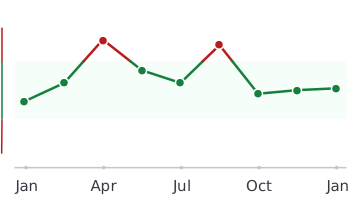
Every lab result you’ve ever had, charted and explained.
Healthmatters is a tracker for your lab results. Upload a report from any lab, any country — every marker charted and explained.
Start with my report →
Frequently Asked Questions
What does <36 mean on my EBV IgM test?
What does high EBV Ab VCA IgM mean?
What does EBV Ab VCA IgG >600 mean?
How long does EBV IgM stay positive after infection?
What does the EBV serology interpretation table mean — VCA IgM positive, VCA IgG positive, EBNA negative?
Can EBV IgM be a false positive?
Can EBV IgM be positive from stress or chronic fatigue?
Can EBV VCA IgM tell me exactly when I was infected?
¿Qué significa un resultado positivo de EBV VCA IgM? (What does a positive EBV VCA IgM mean in Spanish?)
Was bedeutet ein positives EBV VCA IgM Ergebnis? (What does a positive EBV VCA IgM mean in German?)
All our content is backed by peer-reviewed studies, academic research, and trusted medical sources. We’re committed to accuracy and transparency — see our editorial policy for details.
-
Infectious mononucleosis
-
Primary Epstein-Barr virus infection
-
Laboratory Testing for Epstein-Barr Virus (EBV)