
 Optimal Result:
0 - 11 SI.
Optimal Result:
0 - 11 SI.

U1-snRNP antibodies, also referred to as U1-RNP and Smith (Sm)/RNP, target 3 components of the U1 small nuclear ribonucleoprotein complex: U1-snRNP RNP A, U1-snRNP RNP C, and U1-snRNP RNP-70kd.
These antibodies, found in 2% to 14% of SSc patients, are more frequent in lcSSc than in dcSSc.
The 2 main types of SSc are defined according to the pattern of skin involvement: limited cutaneous SSc (lcSSc) and diffuse cutaneous SSc (dcSSc).
In lcSSc, skin thickening is present distal to the elbows and knees, and facial skin thickening may or may not be present. In contrast, dcSSc is characterized by thickening of the skin of the whole extremity, as well as that of the anterior chest, abdomen, and back, with or without facial skin involvement. Multiple organs, including the heart, lungs, gastrointestinal tract, and kidneys, can be affected in both forms, though organ involvement is generally less severe in lcSSc.
CREST syndrome (calcinosis, Raynaud phenomenon, esophageal dysmotility, sclerodactyly, and telangiectasia) occurs frequently in lcSSC but can also occur in longstanding dcSSc.
The antibodies are also found in patients with other autoimmune diseases, including approximately 90% of patients with mixed connective tissue disease.
Patients with U1-snRNP antibodies tend to have less prominent skin thickness and less renal involvement, but have increased risk of PAH, arthritis, and esophageal dysfunction.
Overall, the presence of U1-snRNP antibodies is associated with a good response to corticosteroids and a favorable prognosis.
Clinical Characteristics Associated With Autoantibodies Used in the Diagnosis and Classification of Systemic Sclerosisa:
|
Antibody |
Prevalence in SSc, % |
Presence in other autoimmune diseases |
SSc type most likely |
Clinical associations |
Relative SSc prognosis |
|
ANA |
85-95 |
Common |
Does not help differentiate type |
Most common in rheumatic diseases |
Varies |
|
Centromere A or B |
20-40 b |
Uncommon |
lcSSc |
PAH, calcinosis, digital ischemia, intestinal involvement |
Better |
|
Ku |
1.5-5 |
Common |
Overlap syndromes or lcSSc |
Muscle and joint involvement |
Unclear |
|
PM/Scl-75 or PM/Scl-100 |
2-11 |
Common |
SSc-myositis overlap syndrome or lcSSc |
Muscle and joint involvement, calcinosis; GI and lung involvement for those with PM/Scl-75 |
Better |
|
RNA Polymerase III |
7-41 |
Rare |
dcSSc |
Renal crisis, progressive skin thickening, GAVE, malignancy |
Poorer |
|
Scl-70 |
9.4-71 b |
Rare |
dcSSc |
Severe pulmonary fibrosis, cardiac involvement, renal crisis, digital ulcers |
Poorer |
|
Th/To |
2-5 |
Rare |
lcSSc |
Pulmonary involvement |
Poorer |
|
U1-snRNP |
2-14 |
Common (90% in patients with MCTD) |
lcSSc |
PAH, arthritis, esophageal dysfunction |
Better |
|
U3-RNP (Fibrillarin) |
4-10 b |
Rare |
dcSSc |
Multiorgan involvement, PAH |
Poorer |
| ANA, antinuclear antibodies; dcSSc, diffuse cutaneous systemic sclerosis; GAVE, gastric antral vascular ectasia; GI, gastrointestinal; lcSSc, limited cutaneous systemic sclerosis; MCTD, mixed connective tissue disease; PAH, pulmonary arterial hypertension; SSc, systemic sclerosis. | |
| a | Data presented in this table have been compiled from the cited references. It is important to note that autoantibody frequency in SSc as well as other autoimmune diseases varies with sex, ethnicity, and population studied. |
| b | In the United States, prevalence has been shown to vary across ethnicities. |
References:
Stochmal A, Czuwara J, Trojanowska M, et al. Antinuclear antibodies in systemic sclerosis: an update. Clin Rev Allergy Immunol. 2020;58(1):40-51. doi:10.1007/s12016-018-8718-8
Mehra S, Walker J, Patterson K, et al. Autoantibodies in systemic sclerosis. Autoimmun Rev. 2013;12(3):340-354. doi:10.1016/j.autrev.2012.05.011
Hamaguchi Y, Takehara K. Anti-nuclear autoantibodies in systemic sclerosis: news and perspectives. J Scleroderma Relat Disord. 2018;3(3):201-213. doi:10.1177/2397198318783930
Young A, Khanna D. Systemic sclerosis: commonly asked questions by rheumatologists. J Clin Rheumatol. 2015;21(3):149-155. doi:10.1097/RHU.0000000000000232
Denton CP, Khanna D. Systemic sclerosis. Lancet. 2017;390(10103):1685-1699. doi:10.1016/s0140-6736(17)30933-9
Lab Results Explained and Tracked
What does it mean if your U1-snRNP RNP-70kd result is too high?
These antibodies, found in 2% to 14% of SSc patients, are more frequent in lcSSc than in dcSSc.
The 2 main types of SSc are defined according to the pattern of skin involvement: limited cutaneous SSc (lcSSc) and diffuse cutaneous SSc (dcSSc).
In lcSSc, skin thickening is present distal to the elbows and knees, and facial skin thickening may or may not be present. In contrast, dcSSc is characterized by thickening of the skin of the whole extremity, as well as that of the anterior chest, abdomen, and back, with or without facial skin involvement. Multiple organs, including the heart, lungs, gastrointestinal tract, and kidneys, can be affected in both forms, though organ involvement is generally less severe in lcSSc.
CREST syndrome (calcinosis, Raynaud phenomenon, esophageal dysmotility, sclerodactyly, and telangiectasia) occurs frequently in lcSSC but can also occur in longstanding dcSSc.
The antibodies are also found in patients with other autoimmune diseases, including approximately 90% of patients with mixed connective tissue disease.
Patients with U1-snRNP antibodies tend to have less prominent skin thickness and less renal involvement, but have increased risk of PAH, arthritis, and esophageal dysfunction.
Overall, the presence of U1-snRNP antibodies is associated with a good response to corticosteroids and a favorable prognosis.
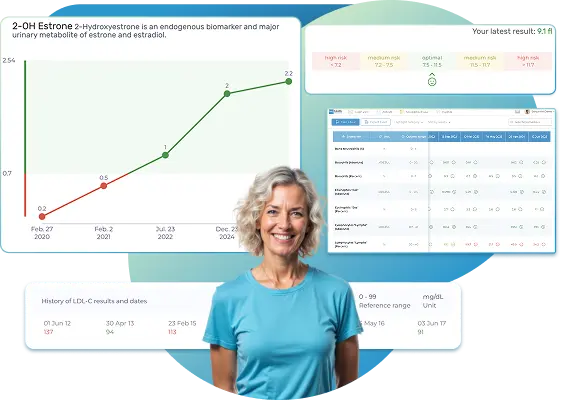
All Your Lab Results.
One Simple Dashboard.
Import, Track, and Share Your Lab Results Easily
Import, Track, and Share Your Lab Results
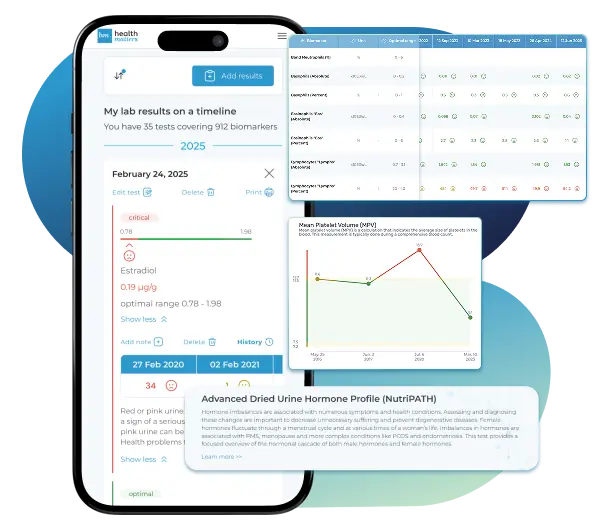
Import lab results from multiple providers, track changes over time, customize your reference ranges, and get clear explanations for each result. Everything is stored securely, exportable in one organized file, and shareable with your doctor—or anyone you choose.
Cancel or upgrade anytime
Article Review & Sources
All our content is backed by peer-reviewed studies, academic research, and trusted medical sources. We're committed to accuracy and transparency — see our editorial policy for details.
Laboratories
Bring All Your Lab Results Together — In One Place
We accept reports from any lab, so you can easily collect and organize all your health information in one secure spot.











Pricing Table
Gather Your Lab History — and Finally Make Sense of It
Finally, Your Lab Results Organized and Clear

Personal plans

$79/ year
Advanced Plan
Access your lab reports, explanations, and tracking tools.
- Import lab results from any provider
- Track all results with visual tools
- Customize your reference ranges
- Export your full lab history anytime
- Share results securely with anyone
- Receive 5 reports entered for you
- Cancel or upgrade anytime
$250/ once
Unlimited Account
Pay once, access everything—no monthly fees, no limits.
- Import lab results from any provider
- Track all results with visual tools
- Customize your reference ranges
- Export your full lab history anytime
- Share results securely with anyone
- Receive 10 reports entered for you
- No subscriptions. No extra fees.
$45/ month
Pro Monthly
Designed for professionals managing their clients' lab reports
- Import lab results from any provider
- Track lab results for multiple clients
- Customize reference ranges per client
- Export lab histories and reports
- Begin with first report entered by us
- Cancel or upgrade anytime
About membership
What's included in a Healthmatters membership
 Import Lab Results from Any Source
 See Your Health Timeline
 Understand What Your Results Mean

 Visualize Your Results

 Data Entry Service for Your Reports
 Securely Share With Anyone You Trust
Let Your Lab Results Tell the Full Story
Once your results are in one place, see the bigger picture — track trends over time, compare data side by side, export your full history, and share securely with anyone you trust.




Bring all your results together to compare, track progress, export your history, and share securely.
What Healthmatters Members Are Saying

I have been using Healthmatters.io since 2021. I travel all over the world and use different doctors and health facilities. This site has allowed me to consolidate all my various test results over 14 years in one place. And every doctor that I show this to has been impressed. Because with any health professional I talk to, I can pull up historical results in seconds. It is invaluable. Even going back to the same doctor, they usually do not have the historical results from their facility in a graph format. That has been very helpful.
Anthony
Unlimited Plan Member since 2021
What fantastic service and great, easy-to-follow layouts! I love your website; it makes it so helpful to see patterns in my health data. It's truly a pleasure to use. I only wish the NHS was as organized and quick as Healthmatters.io. You've set a new standard for health tracking!
Karin
Advanced Plan Member since 2020
As a PRO member and medical practitioner, Healthmatters.io has been an invaluable tool for tracking my clients' data. The layout is intuitive, making it easy to monitor trends and spot patterns over time. The ability to customize reports and charts helps me present information clearly to my clients, improving communication and outcomes. It's streamlined my workflow, saving me time and providing insights at a glance. Highly recommended for any practitioner looking for a comprehensive and user-friendly solution to track patient labs!
Paul
Healthmatters Pro Member since 2024

We implement proven measures to keep your data safe.
At HealthMatters, we're committed to maintaining the security and confidentiality of your personal information. We've put industry-leading security standards in place to help protect against the loss, misuse, or alteration of the information under our control. We use procedural, physical, and electronic security methods designed to prevent unauthorized people from getting access to this information. Our internal code of conduct adds additional privacy protection. All data is backed up multiple times a day and encrypted using SSL certificates. See our Privacy Policy for more details.