
 Optimal Result:
0 - 0.42 ug/g.
Optimal Result:
0 - 0.42 ug/g.

What this marker shows
This urine marker estimates your recent body burden of tellurium, a rare metalloid used in electronics, metallurgy, thermoelectric devices, and as a by-product of copper refining. Vibrant measures heavy metals in urine by mass spectrometry and normalizes results to urine creatinine for fair, dilution-corrected comparisons.
Most commercial tellurium comes from anode slimes during electrolytic copper refining, so exposures are typically occupational or environmental near industrial sources.
Why clinicians care
At higher exposures, tellurium compounds can cause nonspecific symptoms (metallic taste, nausea, fatigue), skin irritation, and the classic “garlic” odor to breath, sweat, and urine as the body converts tellurium to dimethyl telluride for excretion. Tellurium is methylated and eliminated with biphasic kinetics (a faster and a slower phase), which helps explain why low-level excretion and odor can persist for weeks to months after exposure in some cases.
How to read your result
-
Within range (≤ 0.89 µg/g): Consistent with typical background exposure in the reference population used by Vibrant.
-
Above range (> 0.89 µg/g): Indicates exposure higher than expected for the reference group. The higher the value (especially several-fold above the cutoff), the more likely a meaningful recent exposure occurred. Because urine reflects what you’re eliminating, a single value does not pinpoint timing or duration of exposure. help.vibrant-wellness.com
Important context: Vibrant’s reference ranges for heavy metals are based on NHANES data where available and otherwise on the lab’s internal healthy cohort; results are creatinine-corrected. Avoid comparing non-provoked results to any provoked (chelator-assisted) test you may find online, as reference ranges differ.
Common exposure sources
-
Workplaces handling copper/lead refining by-products, bismuth/telluride alloys, thermoelectrics, or CdTe solar materials.
-
Electronics and metallurgy manufacturing, soldering/brazing with telluride-containing alloys, or handling tellurium compounds without adequate controls. (Typical exposure routes: inhalation, ingestion, skin/eye contact.)
Symptoms to watch for (higher exposures)
Metallic taste, dry mouth, nausea, fatigue/drowsiness, reduced appetite, garlic-like breath/sweat/urine; dermatitis may occur with skin contact. Seek care if you notice neurologic changes, persistent GI upset, or strong odor after a known exposure.
What can raise or skew this result?
-
Recent occupational tasks (refining, smelting, machining, thermoelectric/semiconductor work) without adequate respiratory or dermal protection.
-
Urine dilution: very low creatinine (over-hydration) or very high creatinine (dehydration) can complicate interpretation, which is why values are creatinine-normalized.
-
Provoked testing (chelators): do not compare to non-provoked reference cutoffs.
Practical next steps (if elevated)
-
Identify and reduce exposure
-
Review recent work tasks, hobbies, or home renovations where you could inhale dust/fumes or ingest residues. Use engineering controls and PPE (respirator appropriate for metal fumes, gloves, eye protection).
-
-
Hygiene and housekeeping
-
Wet-wipe/vacuum work areas, change/wash work clothes separately, and wash hands before eating to limit secondary ingestion. (General occupational hygiene guidance aligns with NIOSH/OSHA practices for metal exposures.)
-
-
Support normal elimination
-
Maintain good hydration and a balanced diet. Avoid self-treating with chelators or supplements aimed at “detoxing” metals; management of metal exposures should be clinician-directed. (Some chelators can worsen tellurium toxicity or are inappropriate.)
-
-
Retesting
-
After meaningful exposure reduction or a clinician-directed intervention, many providers use a pre/post approach and retest ~7–14 days after stopping an intervention to gauge change, keeping exposure conditions as consistent as possible.
-
When to contact a clinician
-
Your value is well above the reference and/or you have compatible symptoms.
-
You have ongoing occupational exposure or a known accidental ingestion/inhalation. A clinician (often in occupational/environmental medicine or a toxicologist) can assess the need for further testing or treatment and advise on workplace controls.
Science corner (for the curious)
-
The body methylates tellurium to volatile dimethyl telluride, causing the distinctive odor during excretion.
-
Elimination is biphasic, with a slower phase that explains why low-level excretion and odor can linger after exposure ends. Case reports document odor persisting for weeks to months.
-
Different oxidation states behave differently; for example, some Te(IV) compounds show higher toxicity and different renal handling than Te(VI) in experimental models. Clinical decisions still hinge on exposure history and symptoms, not oxidation state alone.
Summary
-
At or below 0.89 µg/g: typical background range on this test.
-
Above 0.89 µg/g: suggests higher-than-expected exposure; address potential sources, ensure good hygiene/PPE, and consider guided retesting after changes. Timing/duration of exposure cannot be inferred from a single urine value.
Lab Results Explained and Tracked
What does it mean if your Tellurium result is too high?
A result above 0.89 µg/g creatinine suggests recent tellurium exposure higher than expected for the reference population on Vibrant’s Total Tox-Burden panel. Because urine reflects what your body is eliminating, a high value points to exposure but doesn’t precisely date it or quantify total body burden. Common sources include work with copper/lead refining by-products, thermoelectric or electronics materials (e.g., CdTe), and telluride-containing alloys; certain soldering, metalsmithing, or machining tasks can also contribute. Higher exposures may cause a metallic taste, nausea, fatigue, skin/eye irritation, and a garlic-like odor to breath or sweat.
What to do: (1) Identify and reduce exposure—improve ventilation, use appropriate PPE, avoid eating/drinking in work areas. (2) Tighten hygiene—wash hands, wet-wipe surfaces, and launder work clothes separately. (3) Stay well hydrated and avoid self-directed chelation or “detox” supplements; discuss any treatment with a clinician (occupational/environmental medicine or toxicology). (4) Seek medical care if symptoms are significant, if you’re pregnant, or if a child has an elevated result. (5) Retest after exposure reduction—ideally in 2–3 weeks under similar collection conditions—to confirm improvement.
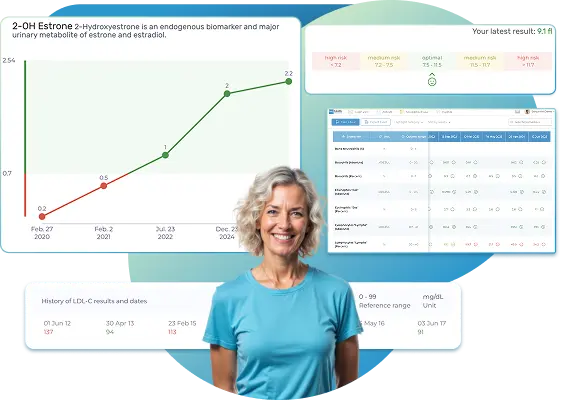
All Your Lab Results.
One Simple Dashboard.
Import, Track, and Share Your Lab Results Easily
Import, Track, and Share Your Lab Results
Import lab results from multiple providers, track changes over time, customize your reference ranges, and get clear explanations for each result. Everything is stored securely, exportable in one organized file, and shareable with your doctor—or anyone you choose.
Cancel or upgrade anytime
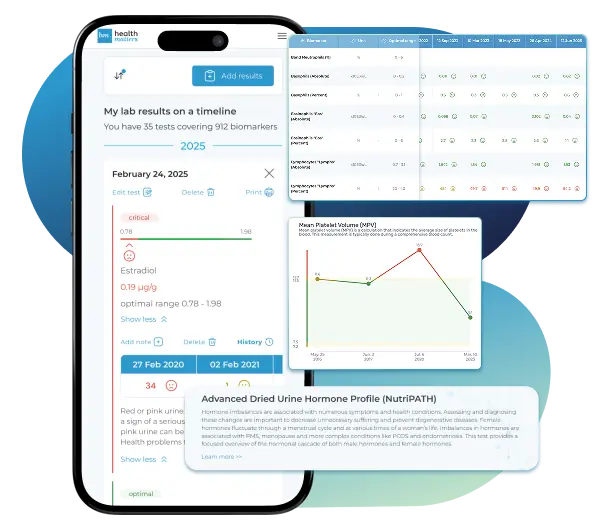
Article Review & Sources
All our content is backed by peer-reviewed studies, academic research, and trusted medical sources. We're committed to accuracy and transparency — see our editorial policy for details.
Laboratories
Bring All Your Lab Results Together — In One Place
We accept reports from any lab, so you can easily collect and organize all your health information in one secure spot.











Pricing Table
Gather Your Lab History — and Finally Make Sense of It
Finally, Your Lab Results Organized and Clear

Personal plans

$79/ year
Advanced Plan
Access your lab reports, explanations, and tracking tools.
- Import lab results from any provider
- Track all results with visual tools
- Customize your reference ranges
- Export your full lab history anytime
- Share results securely with anyone
- Receive 5 reports entered for you
- Cancel or upgrade anytime
$250/ once
Unlimited Account
Pay once, access everything—no monthly fees, no limits.
- Import lab results from any provider
- Track all results with visual tools
- Customize your reference ranges
- Export your full lab history anytime
- Share results securely with anyone
- Receive 10 reports entered for you
- No subscriptions. No extra fees.
$45/ month
Pro Monthly
Designed for professionals managing their clients' lab reports
- Import lab results from any provider
- Track lab results for multiple clients
- Customize reference ranges per client
- Export lab histories and reports
- Begin with first report entered by us
- Cancel or upgrade anytime
About membership
What's included in a Healthmatters membership
 Import Lab Results from Any Source
 See Your Health Timeline
 Understand What Your Results Mean

 Visualize Your Results

 Data Entry Service for Your Reports
 Securely Share With Anyone You Trust
Let Your Lab Results Tell the Full Story
Once your results are in one place, see the bigger picture — track trends over time, compare data side by side, export your full history, and share securely with anyone you trust.




Bring all your results together to compare, track progress, export your history, and share securely.
What Healthmatters Members Are Saying

I have been using Healthmatters.io since 2021. I travel all over the world and use different doctors and health facilities. This site has allowed me to consolidate all my various test results over 14 years in one place. And every doctor that I show this to has been impressed. Because with any health professional I talk to, I can pull up historical results in seconds. It is invaluable. Even going back to the same doctor, they usually do not have the historical results from their facility in a graph format. That has been very helpful.
Anthony
Unlimited Plan Member since 2021
What fantastic service and great, easy-to-follow layouts! I love your website; it makes it so helpful to see patterns in my health data. It's truly a pleasure to use. I only wish the NHS was as organized and quick as Healthmatters.io. You've set a new standard for health tracking!
Karin
Advanced Plan Member since 2020
As a PRO member and medical practitioner, Healthmatters.io has been an invaluable tool for tracking my clients' data. The layout is intuitive, making it easy to monitor trends and spot patterns over time. The ability to customize reports and charts helps me present information clearly to my clients, improving communication and outcomes. It's streamlined my workflow, saving me time and providing insights at a glance. Highly recommended for any practitioner looking for a comprehensive and user-friendly solution to track patient labs!
Paul
Healthmatters Pro Member since 2024

We implement proven measures to keep your data safe.
At HealthMatters, we're committed to maintaining the security and confidentiality of your personal information. We've put industry-leading security standards in place to help protect against the loss, misuse, or alteration of the information under our control. We use procedural, physical, and electronic security methods designed to prevent unauthorized people from getting access to this information. Our internal code of conduct adds additional privacy protection. All data is backed up multiple times a day and encrypted using SSL certificates. See our Privacy Policy for more details.