
QUICK ANSWER
TTG IgG is a celiac disease antibody test. A high result does not automatically mean celiac disease — it requires interpretation alongside TTG IgA, total serum IgA, symptoms, and clinical context.
| Result | What it typically means |
|---|---|
| Negative (<4.0–6.0 U/mL) | No significant IgG antibody response to tissue transglutaminase detected |
| Weak positive (4.0–10.0 U/mL) | Borderline — requires clinical correlation; does not confirm celiac disease |
| Positive (>10.0 U/mL) | Elevated IgG antibodies — may indicate celiac disease, IgA deficiency with celiac, or another condition causing a false positive |
The most important clinical question with a positive TTG IgG: what is the TTG IgA result and total serum IgA?
| TTG IgA | TTG IgG | Total IgA | DGP IgG | Typical interpretation |
|---|---|---|---|---|
| Positive | Positive | Normal | +/− | Strong evidence for celiac disease — gastroenterology referral and small bowel biopsy typically recommended |
| Negative | Positive | Low | +/− | IgA deficiency — TTG IgG becomes the clinically important result; further celiac evaluation warranted |
| Negative | Positive | Normal | Negative | Possible false positive — investigate liver disease, IBD, autoimmune conditions; celiac less likely |
| Negative | Positive | Normal | Positive | May support celiac despite negative IgA; clinical evaluation recommended |
| Negative | Negative | Normal | Negative | Active celiac disease unlikely |
| Negative | Negative | Low | Positive | Possible IgA deficiency with celiac — further evaluation warranted |
| Positive | Negative | Normal | +/− | Consistent celiac pattern — TTG IgA drives the evaluation |
This matrix is a clinical guide, not a diagnostic algorithm. Interpretation requires clinical context, symptoms, diet history, and clinician judgment.
DIAGNOSTIC WORKFLOW — HOW TO INTERPRET A POSITIVE TTG IgG
| Step | Question | If yes | If no |
|---|---|---|---|
| Step 1 | Is TTG IgA also positive? | Strong evidence for celiac → gastroenterology referral | Continue to Step 2 |
| Step 2 | Is total serum IgA low or undetectable? | IgA deficiency confirmed → TTG IgG is now the primary celiac result → further evaluation warranted | Continue to Step 3 |
| Step 3 | Is the result strongly positive (>10× upper limit)? | Higher probability of true positive despite negative IgA → consider gastroenterology referral | Continue to Step 4 |
| Step 4 | Are symptoms present (diarrhea, bloating, weight loss, iron deficiency, fatigue)? | Warrants gastroenterology evaluation regardless of antibody pattern | Low-probability scenario — investigate false positive causes (liver disease, IBD, autoimmune conditions); consider repeat testing |
The single most important step if you have a positive result: Continue eating gluten until evaluation is complete. Stopping gluten before biopsy suppresses antibody levels and may produce a normal biopsy result, making the diagnosis much harder.
WHAT IS TTG IgG AND WHAT DOES THE TEST MEASURE?
Tissue transglutaminase (tTG or TG2) is an enzyme found in multiple tissues throughout the body. In individuals with celiac disease, the immune system produces antibodies against tTG. The TTG antibody test can measure antibodies of different immunoglobulin classes — most commonly IgA and IgG.
TTG IgG vs TTG IgA — why there are two versions:
| TTG IgA | TTG IgG | |
|---|---|---|
| Immunoglobulin class | IgA | IgG |
| Role in celiac testing | Primary screening test | Secondary test |
| Sensitivity for celiac | ~95% (IgA-sufficient) | Lower than IgA in general population |
| When most useful | Initial celiac screening in any patient | IgA-deficient patients; comprehensive panels |
| False negatives | Common in IgA deficiency | Does not depend on IgA sufficiency |
| False positives | Liver disease, IBD, autoimmune conditions | Same conditions plus others |
Why is total serum IgA ordered with the TTG test?
Many patients don't understand why total IgA appears on the same panel. Here is the logic:
TTG IgA positive → result is reliable in most patients
TTG IgA negative → check total serum IgA
Total IgA low or undetectable → IgA deficiency confirmed → TTG IgA was falsely negative → now TTG IgG becomes the primary celiac antibody to interpret
Total IgA normal → IgA deficiency excluded → isolated negative TTG IgA is meaningful → celiac less likely
Without knowing total IgA, a negative TTG IgA result cannot be fully interpreted. Approximately 2–3% of celiac patients have IgA deficiency and would have falsely negative TTG IgA — TTG IgG is the test that catches these cases.
TTG IgA has higher sensitivity for celiac disease in the general population. TTG IgG becomes the essential test when IgA deficiency is present, because IgA-deficient patients cannot produce the IgA antibodies that TTG IgA measures.
Other celiac antibodies that may appear on the same panel:
Together these tests are commonly called the celiac antibody panel or celiac serology panel. Each measures a different antibody target or immunoglobulin class, and the combination provides a more complete picture than any single test.
| Antibody | What it measures | Notes |
|---|---|---|
| TTG IgA | IgA antibodies to tissue transglutaminase | Primary celiac screening test |
| TTG IgG | IgG antibodies to tissue transglutaminase (this test) | Secondary; most useful in IgA deficiency |
| DGP IgG (Deamidated Gliadin Peptide IgG) | IgG antibodies to deamidated gliadin | Useful in IgA deficiency; may complement TTG IgG |
| DGP IgA | IgA antibodies to deamidated gliadin | Less commonly used than TTG IgA |
| EMA IgA (Endomysial antibody) | IgA antibodies to endomysium | High specificity; often used to confirm positive TTG IgA |
| Total serum IgA | Total immunoglobulin A concentration | Not a celiac antibody — used to verify IgA sufficiency |
What is TTG IgG.LC? The ".LC" suffix seen on some lab reports (e.g., "TTG IgG.LC") is a LabCorp reporting notation indicating the specimen was processed at a LabCorp facility. It refers to the same test — tissue transglutaminase IgG antibody. The result should be interpreted using the standard TTG IgG reference ranges.
NORMAL RANGE AND RESULT INTERPRETATION
Reference ranges vary by laboratory and assay. Most US laboratories use:
| Result category | Typical range | Interpretation |
|---|---|---|
| Negative | <4.0 U/mL (some labs <6.0 U/mL) | No significant antibody response detected |
| Weak positive | 4.0–10.0 U/mL | Borderline — requires clinical correlation |
| Positive | >10.0 U/mL | Elevated — further evaluation recommended |
Always use your lab's specific reference range. The flag on your report is the authoritative guide. Some labs use different cutoffs (e.g., negative <6.0 U/mL).
What does a result of <2 mean? A result reported as "<2 U/mL" or "<1 U/mL" means the antibody was undetectable — a clearly negative result. The exact lower limit of detection varies by assay.
What does the "01" mean in "T-Transglutaminase (TTG) IgG 01"? This is a LabCorp test order identifier appended to the test name, not the result value. The result is the number reported separately in the result field. Interpret the numeric result against your lab's reference range.
WHAT DOES HIGH TTG IgG MEAN?
An elevated TTG IgG means IgG-class antibodies against tissue transglutaminase were detected above the reference range. The interpretation depends critically on the accompanying TTG IgA result and clinical context.
When elevated TTG IgG most likely indicates celiac disease:
- TTG IgA is also elevated → both antibody classes are positive → strongly supports celiac disease; endoscopy with small bowel biopsy is the standard next step
- TTG IgA is negative because of confirmed IgA deficiency → the elevated IgG is the relevant positive result in this context
When elevated TTG IgG may NOT indicate celiac disease (false positives):
| Condition | How common as false positive | Why TTG IgG may be elevated |
|---|---|---|
| Liver disease (cirrhosis, autoimmune hepatitis) | Common | Cross-reactive autoimmunity; well-documented cause of false positive tTG antibodies |
| Inflammatory bowel disease (Crohn's, UC) | Moderate | Intestinal inflammation activates immune responses that can include tTG antibodies |
| Type 1 diabetes | Moderate | Shared autoimmune genetic background — HLA-DQ2/DQ8 overlap with celiac |
| Autoimmune thyroid disease (Hashimoto's, Graves') | Occasional | Autoimmune overlap; shared immune dysregulation |
| Heart failure | Rare | Immune activation in chronic cardiac disease |
| IgA deficiency without celiac | Occurs | IgA-deficient individuals may have non-specific IgG elevations |
| Borderline / weak positive levels | More common at low levels | Non-specific elevation more likely at 4–10 U/mL than at >40 U/mL |
Key clinical rule: an isolated positive TTG IgG with a negative TTG IgA does not confirm celiac disease. This combination requires: (1) checking total serum IgA to rule out IgA deficiency; (2) clinical assessment of symptoms; (3) consideration of other causes listed above; (4) possible referral to gastroenterology.
What typically happens next — biopsy pathway:
| Situation | Typical next step |
|---|---|
| Positive TTG IgA + positive TTG IgG + symptoms | Gastroenterology referral; small bowel biopsy strongly recommended — continue eating gluten until biopsy |
| Positive TTG IgG + confirmed IgA deficiency | Usually biopsy or further celiac evaluation |
| Positive TTG IgG + negative TTG IgA + normal total IgA | Investigate false positive causes; possible gastroenterology referral depending on symptoms and magnitude |
| Borderline antibodies (4–10 U/mL) | Repeat testing in 3–6 months; biopsy depending on symptoms and clinical judgment |
| High TTG IgA in children (>10× ULN) | ESPGHAN biopsy-sparing pathway may apply — discuss with pediatric gastroenterologist |
If biopsy is being considered: do not stop eating gluten beforehand. Stopping gluten before small bowel biopsy suppresses antibody levels and allows intestinal healing — both of which can produce a false negative result and prevent diagnosis. Continue your normal diet until the biopsy is complete and your clinician advises otherwise.
ELEVATED TTG IgG WITH NORMAL TTG IgA — WHAT DOES IT MEAN?
This is the most searched and most confusing result combination. Here is what the clinical evidence says:
Isolated positive TTG IgG (TTG IgA normal):
The most important first step is to check total serum IgA:
| Total serum IgA | What it means |
|---|---|
| Low or undetectable | IgA deficiency confirmed — the TTG IgG result becomes the primary celiac antibody result; elevated TTG IgG in this setting supports celiac diagnosis and warrants further evaluation |
| Normal | IgA deficiency excluded — isolated positive TTG IgG without IgA positivity is much less specific for celiac disease; consider false positive causes (liver disease, IBD, autoimmune conditions) |
If total serum IgA is normal: An isolated positive TTG IgG with normal TTG IgA and normal total IgA does not meet standard criteria for a celiac disease diagnosis. Current guidelines (ACG, ESPGHAN) primarily use TTG IgA for celiac screening. Gastroenterology referral may be appropriate to evaluate symptoms and consider small bowel biopsy.
"My TTG IgG is high but TTG IgA is negative — do I have celiac disease?" Not necessarily. This combination requires full evaluation, not a self-diagnosis based on one test result.
WHAT DOES A WEAK POSITIVE TTG IgG MEAN?
A weak positive (borderline) result — typically 4.0–10.0 U/mL — means the antibody level is above the negative threshold but below the level that strongly suggests active celiac disease.
Weak positive TTG IgG:
- Does not confirm celiac disease
- Does not exclude celiac disease
- Requires clinical context: symptoms, TTG IgA result, total IgA, diet history, family history
- May warrant repeat testing after 3–6 months if dietary gluten intake is confirmed
- May warrant gastroenterology referral if symptoms are present
Important: Borderline results fluctuate. A single weak positive result without symptoms and with a negative TTG IgA is not a basis for starting a gluten-free diet. Starting a gluten-free diet before biopsy will lower antibody levels and make subsequent diagnosis more difficult.
WHAT DOES THE ANTIBODY LEVEL NUMBER ACTUALLY MEAN?
Patients often interpret their TTG IgG number as a severity score — a result of 40 feels worse than a result of 6, and 250 feels catastrophic. The clinical reality is more nuanced:
| Antibody level | Approximate range | What it typically reflects |
|---|---|---|
| Borderline / weak positive | 4–10 U/mL | Needs confirmation; often false positive or early/mild disease |
| Low positive | 10–30 U/mL | Possible celiac or false positive; interpret with full panel |
| Moderate positive | 30–100 U/mL | Higher probability; warrants clinical evaluation |
| High positive (>10× upper limit) | >40–50+ U/mL | Strong evidence for celiac when combined with positive TTG IgA and clinical symptoms |
Higher numbers are more specific, but not more dangerous. A very high TTG IgG does not mean more severe damage — it reflects a stronger antibody response. Antibody levels do not predict villous atrophy severity on biopsy with precision. The number's most useful role is distinguishing likely true positives (high levels) from possible false positives (borderline levels).
Likelihood that biopsy will confirm celiac disease (approximate, by antibody strength):
| Antibody level (IgG or IgA) | Typical biopsy finding |
|---|---|
| Weak positive (4–10 U/mL) | Lower likelihood — may be false positive; biopsy may be normal or show mild changes |
| Low positive (10–30 U/mL) | Intermediate — possible celiac or false positive; biopsy warranted if symptoms present |
| Moderate positive (30–100 U/mL) | Higher probability, especially when both IgG and IgA are positive |
| Very high (>100 U/mL or >10× ULN) | High probability of celiac disease when combined with positive TTG IgA and compatible symptoms |
Note: these are general patterns, not exact diagnostic thresholds. Biopsy findings depend on the total clinical picture.
SPECIFIC VALUE LOOKUP
| Result (U/mL) | Category | What it typically means |
|---|---|---|
| <2 | Negative | Clearly negative — antibody undetectable |
| 2–3.9 | Negative | Below most labs' lower cutoff — negative |
| 4–5 | Weak positive | At or just above threshold — borderline; clinical correlation required |
| 5 | Weak positive | Borderline — same as above |
| 6 | Weak positive | Low positive on labs using <6.0 cutoff; weak positive on others |
| 7 | Weak positive | Weak positive — low positive range; clinical context essential |
| 8–9 | Weak positive | Weak positive — approaching stronger positive range |
| 10 | Borderline positive | At the threshold between weak and strong positive on most platforms |
| 11–15 | Positive | Elevated — evaluate with full panel and clinical context |
| 15–25 | Positive | Moderate positive — higher probability of true celiac; evaluate with TTG IgA |
| 25–50 | Moderate-high positive | Moderately elevated — more specific for celiac when combined with positive TTG IgA |
| 50–100 | High positive | High positive — strongly suggests celiac disease when TTG IgA also positive |
| >100 | Markedly elevated | Strongly elevated — high specificity for celiac when combined with positive TTG IgA and compatible symptoms |
| >10× upper limit (>40–50+) | Very high positive | Very high levels substantially increase probability of true celiac disease rather than false positive |
CAN I TRUST MY TTG RESULT IF I AM ALREADY GLUTEN-FREE?
If you have already reduced or eliminated gluten before testing, your TTG IgG result may not accurately reflect whether you have celiac disease.
| Dietary situation at time of testing | Reliability of TTG result |
|---|---|
| Eating gluten normally | Reliable — antibodies reflect current immune response |
| Reduced gluten for a few weeks | May already be falling — result may underestimate true level |
| Gluten-free for 1–3 months | Antibodies may have fallen substantially — result may be falsely low |
| Gluten-free for 6+ months | May be negative even in confirmed celiac — diagnostic accuracy is significantly reduced |
| Gluten challenge completed | Testing reliable again — requires eating adequate gluten for 6–8 weeks before re-testing in most protocols |
Why this happens: Celiac antibodies are produced as a direct response to ongoing gluten exposure. When gluten is removed, the immune trigger is reduced and antibody levels fall — sometimes into the normal range within weeks to months, even in people with confirmed celiac disease. This is why starting a gluten-free diet before testing makes diagnosis harder, not easier.
If you are already gluten-free and want to be tested: Tell your clinician before testing. A "gluten challenge" — reintroducing adequate gluten for 6–8 weeks before repeat testing — is sometimes recommended to restore antibody detectability. This should be done under medical supervision, not self-directed. Small bowel biopsy may sometimes be appropriate even with negative antibodies if the person has been gluten-free for an extended period.
SHOULD I STOP EATING GLUTEN BEFORE MY EVALUATION?
This is one of the most important practical questions for patients with a positive TTG IgG result — and the answer is almost always no, do not stop eating gluten yet.
| Situation | Recommendation |
|---|---|
| Positive TTG result — biopsy not yet done | Continue eating your normal gluten-containing diet until evaluation is complete — reducing gluten substantially before testing may lower antibody levels and reduce diagnostic accuracy, even if you do not eliminate it entirely |
| Already gluten-free before testing | Tell your clinician before repeat testing — antibodies may already be falling, and results may underestimate the underlying condition |
| Symptoms only, no confirmed celiac | Do not self-start gluten elimination before evaluation — it interferes with accurate testing |
| Biopsy already completed and celiac confirmed | Follow clinician guidance — gluten-free diet is typically recommended at this stage |
| Negative results but symptoms persist | Discuss with clinician — other conditions cause similar symptoms and should be evaluated before dietary changes |
Why continuing gluten matters: Celiac disease diagnosis relies on both antibody testing and small bowel biopsy showing characteristic changes (villous atrophy, crypt hyperplasia). Both findings require active gluten consumption to be present. Starting a gluten-free diet before completing the diagnostic workup can suppress antibody levels within weeks to months and allow intestinal healing that hides the biopsy findings — resulting in a normal biopsy and an undiagnosed condition.
MOST COMMON TTG IgG RESULTS
| Result | Interpretation | Next step |
|---|---|---|
| Negative (<4 U/mL) | No antibody response detected | No immediate action if asymptomatic |
| Weak positive (4–10 U/mL) with negative TTG IgA | Borderline — uncertain significance | Check total serum IgA; clinical correlation; consider repeat testing |
| Weak positive with positive TTG IgA | Consistent celiac antibody pattern | Gastroenterology referral; consider small bowel biopsy |
| Positive (>10 U/mL) with negative TTG IgA | Requires evaluation | Check total serum IgA first |
| Positive with positive TTG IgA | Strongly supports celiac disease | Gastroenterology referral; small bowel biopsy |
| Positive with IgA deficiency confirmed | IgG is the primary result | Treat as positive celiac screen; further evaluation |
USING TTG IgG TO MONITOR RECOVERY ON A GLUTEN-FREE DIET
TTG antibodies are not just diagnostic — they are a primary monitoring tool after celiac disease is confirmed. Understanding the expected timeline helps patients interpret follow-up results.
| Time point | Expected TTG antibody pattern | Clinical significance |
|---|---|---|
| At diagnosis | Elevated | Confirms active immune response to gluten |
| 3–6 months gluten-free | Beginning to fall | Early response to dietary change |
| 6–12 months gluten-free | Often substantially lower; may approach normal | Indicates intestinal healing is progressing |
| >12 months strict gluten-free | Often normal | Suggests good dietary adherence and mucosal recovery |
| Persistent elevation despite gluten-free diet | Not falling as expected | Investigate for ongoing gluten exposure (cross-contamination, hidden gluten in processed foods, medications) |
| Rise after period of normalization | Increasing after having fallen | May indicate return to gluten exposure |
Can TTG IgG become normal? In confirmed celiac disease, TTG IgG typically falls after gluten is removed, but normalization often takes many months and sometimes more than a year. The rate of decline varies between individuals and depends on strictness of dietary adherence, degree of intestinal healing, and the individual's immune response. Persistently elevated antibodies after initiating a gluten-free diet may indicate ongoing gluten exposure — intentional or through accidental cross-contamination — incomplete intestinal healing, or rarely another underlying condition.
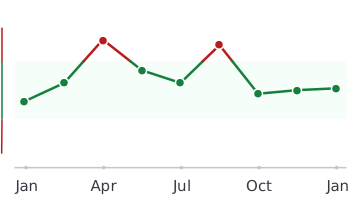
HealthMatters users: Tracking TTG IgG over time is one of the most useful applications of longitudinal lab tracking — a single result tells you where you are; a trend tells you whether the diet is working.
What if TTG IgG keeps rising or stops falling?
A persistently elevated or rising TTG IgG after starting a gluten-free diet warrants investigation for: continued intentional or accidental gluten exposure (the most common cause); cross-contamination in shared cooking environments, restaurants, or processed foods; hidden gluten in medications, supplements, or labeled "gluten-free" products with trace contamination; incomplete intestinal mucosal healing (some patients take longer regardless of strict diet); or, rarely, refractory celiac disease requiring specialist evaluation. Rising antibodies after a period of normalization should be discussed with the treating clinician promptly.
PEDIATRIC NOTE
Parents frequently search celiac antibody results for their children. Several important differences apply in pediatric evaluation:
- ESPGHAN biopsy-sparing pathway: In children with very high TTG IgA (>10× upper limit of normal), positive EMA IgA, and compatible symptoms and HLA-DQ2/DQ8, some guidelines allow celiac diagnosis without small bowel biopsy — this pathway does not apply to TTG IgG
- TTG IgG in children: Primarily relevant in IgA-deficient children, where TTG IgA would be falsely negative — the same principle as adults
- Children's reference ranges: May differ from adult reference ranges on some platforms — always use the pediatric reference range if provided
SHOULD FAMILY MEMBERS BE TESTED?
Celiac disease has a significant genetic component. First-degree relatives of someone diagnosed with celiac disease have a substantially higher risk.
| Relationship | Approximate lifetime risk of celiac |
|---|---|
| General population | ~1% |
| First-degree relative (parent, sibling, child) | ~10–15% |
| Identical twin | ~75% |
Who should consider testing:
- First-degree relatives (parents, siblings, children) of a confirmed celiac patient, even without symptoms
- Second-degree relatives with symptoms suggestive of celiac (diarrhea, iron deficiency, osteoporosis, unexplained fatigue)
- Anyone with a related autoimmune condition (type 1 diabetes, autoimmune thyroid disease) who has not been screened
HLA-DQ2/DQ8 testing: The celiac disease-associated HLA variants (DQ2 and DQ8) are present in almost all people with celiac. HLA testing cannot diagnose celiac disease, but the absence of both DQ2 and DQ8 makes celiac disease very unlikely — making it useful for ruling out celiac risk in family members before antibody testing.
 t-Transglutaminase (tTG) IgG
Every lab result you’ve ever had, charted and explained.
Healthmatters is a tracker for your lab results. Upload a report from any lab, any country — every marker charted and explained.
Start with my report →
Frequently Asked Questions
What does a high TTG IgG result mean?
What is the normal range for TTG IgG?
What does a weak positive TTG IgG mean?
My TTG IgG is elevated but TTG IgA is normal — do I have celiac disease?
What causes a false positive TTG IgG?
What is the difference between TTG IgG and TTG IgA?
What is TTG IgG.LC on a lab report?
Can TTG IgG become normal after going gluten-free?
Should I stop eating gluten before my celiac evaluation?
Why was total serum IgA ordered at the same time as my TTG test?
Can TTG IgG be positive without any symptoms?
Can I still have celiac disease if my TTG IgG is negative?
ما هو تحليل Anti-Tissue Transglutaminase IgG وماذا يعني ارتفاعه؟ (What is the TTG IgG test and what does a high result mean — Arabic?)
All our content is backed by peer-reviewed studies, academic research, and trusted medical sources. We’re committed to accuracy and transparency — see our editorial policy for details.
-
AGA Clinical Practice Update on Diagnosis and Monitoring of Celiac Disease: Changing Utility of Serology and Histologic Measures: Expert Review
-
Screening for Celiac Disease: Evidence Report and Systematic Review for the US Preventive Services Task Force