
Glutamine (Serum)
 Optimal Result:
393.5 - 699.3 nmol/ML.
Optimal Result:
393.5 - 699.3 nmol/ML.

- Glutamine is a conditionally essential amino acid (conditional mainly during times of disease or muscle wasting, such HIV/AIDS, cancer, or severe infections).
- In the intestinal lining, glutamine is the preferred source of fuel for intestinal epithelial cells and the main energy source for leukocytes (immune cells).
- Other important functions of glutamine include: transporting nitrogen between cells, acting as a precursor to glutathione production, acting as a precursor to nucleotides (for DNA and RNA synthesis), participating in gluconeogenesis in the absence of adequate carbohydrate intake, blunting the rise of blood glucose after consuming carbohydrate-rich meals, and regulating intestinal tight junctions.
Very good sources of glutamine include: whey, casein, milk, white rice, corn, and tofu.
Good sources of glutamine include: meat and eggs.
--------------------------------
Correlation between serum and WBC ("Cellular") levels:
WBC - normal and...
Serum levels deficient:
Long term nutrient status is optiomal, but short term needs improvement.
Possible interventions:
- increase dietary intake of nutrient
- increase supplementation dosage
- medications may have an effect on depletion
Lab Results Explained and Tracked

All Your Lab Results.
One Simple Dashboard.
Import, Track, and Share Your Lab Results Easily
Import, Track, and Share Your Lab Results
Import lab results from multiple providers, track changes over time, customize your reference ranges, and get clear explanations for each result. Everything is stored securely, exportable in one organized file, and shareable with your doctor—or anyone you choose.
Cancel or upgrade anytime
What does it mean if your Glutamine (Serum) result is too low?
Glutamine is known to be depleted in certain types of physiological stress such as burns, major trauma, and cancers that consume available intra-cellular glutamine stores more rapidly than skeletal muscle can generate it, leading to increased muscle wasting.
During physical activity, serum glutamine is consumed for longer endurance events (2+ hours); some evidence exists that chronic endurance exercise reduced glutamine levels to affect immune cell function and proliferation.
Glutamine depletion or deficiency is rare, as glutamine can be made endogenously and is ubiquitous in the food supply from both plant and animal sources.
Some studies suggest an increase in intestinal permeability when intestinal epithelial cells lack sufficient glutamine, as well as insufficient availability for leukocyte function.
There is currently no established RDA, AI, or UL for glutamine. Glutamine is typically sold as l-glutamine and doses have been studied in humans ranging from 500 mg/day – 50g/day. Higher doses (>10 g/day) are commonly used in the treatment of intestinal barrier permeability.
Supplementation of glutamine has not been shown to enhance muscle growth in healthy individuals.
Typically an increase in serum insulin results after consumption of glutamine due to increased conversion to glucose. This may impact individuals with insulin resistance. Glutamine supplementation is also potentially beneficial to improve mental focus and concentration, as well as curbing cravings for sugar and alcohol.
In some individuals, glutamine is converted more efficiently to glutamate, which can lead to a neuro-excitatory state, increased anxiety, tension headaches/migraines, and even tachycardia. If any of these symptoms occur after consuming glutamine, discontinue supplementation and discuss with your provider.
--------------------------------
Correlation between WBC ("Cellular") and serum levels:
WBC - deficient and...
Serum levels normal/excess:
Short term status of micronutrients is optiomal, but cellular absorption may be a problem.
Possible interventions:
- Increase dietary intake of nutrient
- increase supplementation dosage
- consider status of synergistic nutrients for cellular absorption
- consider levels of oxidative stress on nutrient depletion
- consider follow up testing to identify the source of malabsorption
Serum levels deficient:
Short term and long term status of micronutrients is not optimal, suggesting low dietary intake and both intestinal and cellular malabsorption as possible causes.
Possible interventions:
- Increase dietary intake of nutrient
- increase supplementation dosage
- medications may have an effect on depletion
- consider follow up testing to identify the source of malabsorption
Article Review & Sources
All our content is backed by peer-reviewed studies, academic research, and trusted medical sources. We're committed to accuracy and transparency — see our editorial policy for details.
Laboratories
Bring All Your Lab Results Together — In One Place
We accept reports from any lab, so you can easily collect and organize all your health information in one secure spot.











Pricing Table
Gather Your Lab History — and Finally Make Sense of It
Finally, Your Lab Results Organized and Clear

Personal plans

$79/ year
Advanced Plan
Access your lab reports, explanations, and tracking tools.
- Import lab results from any provider
- Track all results with visual tools
- Customize your reference ranges
- Export your full lab history anytime
- Share results securely with anyone
- Receive 5 reports entered for you
- Cancel or upgrade anytime
$250/ once
Unlimited Account
Pay once, access everything—no monthly fees, no limits.
- Import lab results from any provider
- Track all results with visual tools
- Customize your reference ranges
- Export your full lab history anytime
- Share results securely with anyone
- Receive 10 reports entered for you
- No subscriptions. No extra fees.
$45/ month
Pro Monthly
Designed for professionals managing their clients' lab reports
- Import lab results from any provider
- Track lab results for multiple clients
- Customize reference ranges per client
- Export lab histories and reports
- Begin with first report entered by us
- Cancel or upgrade anytime
About membership
What's included in a Healthmatters membership
 Import Lab Results from Any Source
 See Your Health Timeline
 Understand What Your Results Mean

 Visualize Your Results

 Data Entry Service for Your Reports
 Securely Share With Anyone You Trust
Let Your Lab Results Tell the Full Story
Once your results are in one place, see the bigger picture — track trends over time, compare data side by side, export your full history, and share securely with anyone you trust.




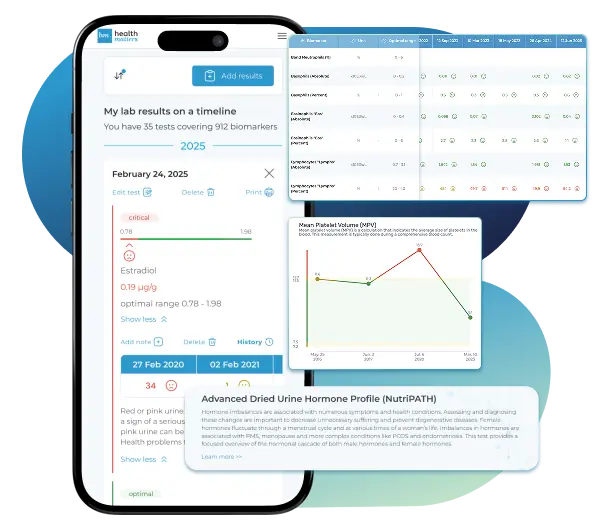
Bring all your results together to compare, track progress, export your history, and share securely.
What Healthmatters Members Are Saying

I have been using Healthmatters.io since 2021. I travel all over the world and use different doctors and health facilities. This site has allowed me to consolidate all my various test results over 14 years in one place. And every doctor that I show this to has been impressed. Because with any health professional I talk to, I can pull up historical results in seconds. It is invaluable. Even going back to the same doctor, they usually do not have the historical results from their facility in a graph format. That has been very helpful.
Anthony
Unlimited Plan Member since 2021
What fantastic service and great, easy-to-follow layouts! I love your website; it makes it so helpful to see patterns in my health data. It's truly a pleasure to use. I only wish the NHS was as organized and quick as Healthmatters.io. You've set a new standard for health tracking!
Karin
Advanced Plan Member since 2020
As a PRO member and medical practitioner, Healthmatters.io has been an invaluable tool for tracking my clients' data. The layout is intuitive, making it easy to monitor trends and spot patterns over time. The ability to customize reports and charts helps me present information clearly to my clients, improving communication and outcomes. It's streamlined my workflow, saving me time and providing insights at a glance. Highly recommended for any practitioner looking for a comprehensive and user-friendly solution to track patient labs!
Paul
Healthmatters Pro Member since 2024

We implement proven measures to keep your data safe.
At HealthMatters, we're committed to maintaining the security and confidentiality of your personal information. We've put industry-leading security standards in place to help protect against the loss, misuse, or alteration of the information under our control. We use procedural, physical, and electronic security methods designed to prevent unauthorized people from getting access to this information. Our internal code of conduct adds additional privacy protection. All data is backed up multiple times a day and encrypted using SSL certificates. See our Privacy Policy for more details.