
Cortisol/DHEAS Ratio CAR
 Optimal Result:
4 - 6 Ratio.
Optimal Result:
4 - 6 Ratio.

The Cortisol/DHEA-Sulfate (DHEAS) Ratio in the context of the Cortisol Awakening Response (CAR) represents a crucial biomarker in psychoneuroendocrinology, providing valuable insights into the dynamic interplay between the hypothalamic-pituitary-adrenal (HPA) axis and adrenal steroidogenesis under conditions of stress and physiological arousal.
Cortisol, a glucocorticoid hormone, plays a pivotal role in the body's response to stress, influencing various physiological processes, including metabolism, immune function, and circadian rhythm regulation.
DHEAS, an adrenal androgen, serves as a counter-regulatory hormone, often associated with anabolic functions and resilience against stress.
The CAR, characterized by a marked increase in cortisol levels within the first 30 to 45 minutes after awakening, reflects the responsiveness of the HPA axis to the transition from sleep to wakefulness, and is considered a sensitive marker for HPA axis function.
The Cortisol/DHEAS ratio, particularly when measured in the context of CAR, offers a nuanced view of the balance between catabolic and anabolic hormonal activities, indicative of the body's adaptive capacity to handle stress.
Elevated Cortisol/DHEAS ratios may signal an overactivation of the HPA axis, potentially leading to various health implications, including chronic stress, immune dysfunction, and metabolic disturbances.
Conversely, lower ratios may suggest inadequate stress response, which can also have detrimental effects on health and well-being.
Thus, the Cortisol/DHEAS ratio in the context of CAR not only elucidates the physiological mechanisms underpinning stress and adaptation but also serves as a potential diagnostic tool for identifying individuals at risk of stress-related disorders. Furthermore, this ratio has implications for understanding the pathophysiology of diseases characterized by dysregulation of the HPA axis, offering pathways for targeted interventions aimed at restoring hormonal balance and promoting health.
Lab Results Explained and Tracked
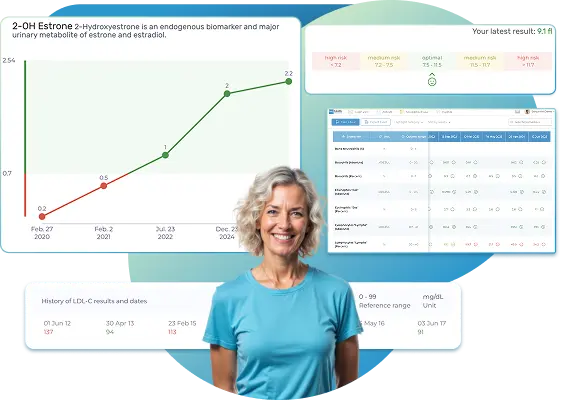
All Your Lab Results.
One Simple Dashboard.
Import, Track, and Share Your Lab Results Easily
Import, Track, and Share Your Lab Results
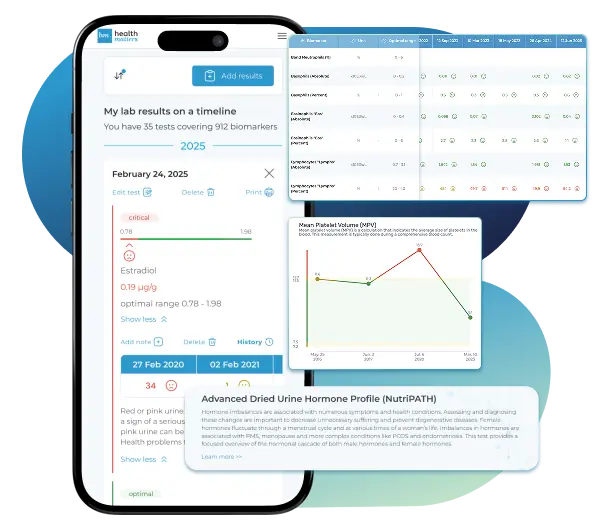
Import lab results from multiple providers, track changes over time, customize your reference ranges, and get clear explanations for each result. Everything is stored securely, exportable in one organized file, and shareable with your doctor—or anyone you choose.
Cancel or upgrade anytime
What does it mean if your Cortisol/DHEAS Ratio CAR result is too low?
The Cortisol/DHEAS ratio compares the levels of two key adrenal hormones — cortisol, the body’s primary stress hormone, and DHEAS (dehydroepiandrosterone sulfate), an adrenal androgen that supports tissue repair, immune balance, and overall vitality.
When measured as part of the Cortisol Awakening Response (CAR) — the natural rise in cortisol levels within the first 30–45 minutes after waking — this ratio provides insight into how well your adrenal glands respond to daily stress and maintain hormonal balance between catabolic (breakdown) and anabolic (restorative) processes.
What Does It Mean If the Cortisol/DHEAS Ratio Is Low?
A low Cortisol/DHEAS ratio indicates that DHEAS levels are high relative to cortisol, or that cortisol production is lower than expected, particularly upon waking.
This pattern can reflect:
-
Reduced stress reactivity or a more balanced, recovery-oriented physiology, especially if you feel well and show no symptoms of fatigue.
-
In some cases, however, it can also signal a blunted or underactive adrenal response, meaning the body may struggle to mount an adequate stress response when needed.
In simple terms:
-
Mildly low ratio → may indicate healthy resilience or efficient recovery.
-
Persistently low ratio → may suggest adrenal insufficiency, chronic fatigue, or HPA-axis dysregulation (impaired communication between the brain and adrenal glands).
Possible Causes of a Low Cortisol/DHEAS Ratio
A lower ratio can arise from various physiological or lifestyle factors, including:
1. Chronic stress or burnout
-
Prolonged stress can exhaust the adrenal glands, lowering cortisol output while DHEAS remains stable or compensatorily high.
2. Adrenal fatigue or HPA-axis dysfunction
-
Over time, constant stress can lead to a blunted cortisol response and impaired circadian rhythm.
3. Sleep disruption or circadian imbalance
-
Poor-quality or irregular sleep can dampen the cortisol awakening response, leading to a lower ratio.
4. Nutritional or metabolic deficiencies
-
Low levels of vitamin C, B5 (pantothenic acid), B6, and magnesium can weaken adrenal hormone production.
5. Chronic illness or inflammation
-
Long-term inflammation or immune activation can suppress cortisol synthesis and alter DHEAS balance.
6. Excessive DHEA supplementation
-
Taking DHEA supplements without supervision can elevate DHEAS disproportionately, lowering the cortisol/DHEAS ratio.
Symptoms Associated with a Low Cortisol/DHEAS Ratio
When this ratio remains low for an extended period, individuals may experience:
-
Fatigue and morning sluggishness
-
Low stress tolerance or difficulty recovering from stress
-
Brain fog and mood swings
-
Low blood pressure or dizziness
-
Decreased motivation and resilience
However, in metabolically healthy and stress-adapted individuals, a slightly lower ratio may represent a well-regulated, recovery-oriented state rather than dysfunction.
How to Support a Healthy Cortisol/DHEAS Ratio
Restoring balance involves supporting both stress regulation and adrenal recovery through lifestyle and nutritional strategies.
1. Prioritize restorative sleep
-
Aim for 7–9 hours of consistent, high-quality sleep.
-
Maintain a regular sleep–wake cycle to support the natural cortisol rhythm.
2. Manage daily stress
-
Incorporate relaxation techniques like mindfulness, yoga, deep breathing, or nature walks.
-
Take breaks from chronic stressors when possible.
3. Nourish adrenal function
-
Ensure adequate intake of B vitamins, vitamin C, magnesium, and protein.
-
Limit caffeine, alcohol, and processed sugar, which can deplete adrenal reserves.
4. Exercise intelligently
-
Engage in moderate, regular activity — not excessive high-intensity training, which can further suppress cortisol output.
5. Consider adaptogenic herbs (with professional guidance)
-
Ashwagandha, rhodiola, holy basil, and licorice root may help normalize cortisol production and improve energy balance.
6. Work with a healthcare provider
-
If the ratio is persistently low, further evaluation of adrenal, thyroid, and metabolic function may be recommended.
-
In some cases, medically supervised DHEA or adrenal support protocols may be considered to restore hormonal balance.
Key Takeaway
A low Cortisol/DHEAS ratio (CAR) can reflect either a state of balanced stress resilience or, if chronic and symptomatic, adrenal underactivity and reduced stress responsiveness.
Supporting sleep, nutrition, stress management, and adrenal health can help restore this ratio — promoting better energy, hormonal balance, and overall resilience to life’s daily demands.
Article Review & Sources
All our content is backed by peer-reviewed studies, academic research, and trusted medical sources. We're committed to accuracy and transparency — see our editorial policy for details.
Laboratories
Bring All Your Lab Results Together — In One Place
We accept reports from any lab, so you can easily collect and organize all your health information in one secure spot.











Pricing Table
Gather Your Lab History — and Finally Make Sense of It
Finally, Your Lab Results Organized and Clear

Personal plans

$79/ year
Advanced Plan
Access your lab reports, explanations, and tracking tools.
- Import lab results from any provider
- Track all results with visual tools
- Customize your reference ranges
- Export your full lab history anytime
- Share results securely with anyone
- Receive 5 reports entered for you
- Cancel or upgrade anytime
$250/ once
Unlimited Account
Pay once, access everything—no monthly fees, no limits.
- Import lab results from any provider
- Track all results with visual tools
- Customize your reference ranges
- Export your full lab history anytime
- Share results securely with anyone
- Receive 10 reports entered for you
- No subscriptions. No extra fees.
$45/ month
Pro Monthly
Designed for professionals managing their clients' lab reports
- Import lab results from any provider
- Track lab results for multiple clients
- Customize reference ranges per client
- Export lab histories and reports
- Begin with first report entered by us
- Cancel or upgrade anytime
About membership
What's included in a Healthmatters membership
 Import Lab Results from Any Source
 See Your Health Timeline
 Understand What Your Results Mean

 Visualize Your Results

 Data Entry Service for Your Reports
 Securely Share With Anyone You Trust
Let Your Lab Results Tell the Full Story
Once your results are in one place, see the bigger picture — track trends over time, compare data side by side, export your full history, and share securely with anyone you trust.




Bring all your results together to compare, track progress, export your history, and share securely.
What Healthmatters Members Are Saying

I have been using Healthmatters.io since 2021. I travel all over the world and use different doctors and health facilities. This site has allowed me to consolidate all my various test results over 14 years in one place. And every doctor that I show this to has been impressed. Because with any health professional I talk to, I can pull up historical results in seconds. It is invaluable. Even going back to the same doctor, they usually do not have the historical results from their facility in a graph format. That has been very helpful.
Anthony
Unlimited Plan Member since 2021
What fantastic service and great, easy-to-follow layouts! I love your website; it makes it so helpful to see patterns in my health data. It's truly a pleasure to use. I only wish the NHS was as organized and quick as Healthmatters.io. You've set a new standard for health tracking!
Karin
Advanced Plan Member since 2020
As a PRO member and medical practitioner, Healthmatters.io has been an invaluable tool for tracking my clients' data. The layout is intuitive, making it easy to monitor trends and spot patterns over time. The ability to customize reports and charts helps me present information clearly to my clients, improving communication and outcomes. It's streamlined my workflow, saving me time and providing insights at a glance. Highly recommended for any practitioner looking for a comprehensive and user-friendly solution to track patient labs!
Paul
Healthmatters Pro Member since 2024

We implement proven measures to keep your data safe.
At HealthMatters, we're committed to maintaining the security and confidentiality of your personal information. We've put industry-leading security standards in place to help protect against the loss, misuse, or alteration of the information under our control. We use procedural, physical, and electronic security methods designed to prevent unauthorized people from getting access to this information. Our internal code of conduct adds additional privacy protection. All data is backed up multiple times a day and encrypted using SSL certificates. See our Privacy Policy for more details.