Optimal Result:
320 - 1240 mg/24 hr.
Optimal Result:
320 - 1240 mg/24 hr.

In a StoneRisk Diagnostic Profile, citric acid is one of the parameters measured to assess an individual's risk of developing kidney stones. Citric acid is a naturally occurring organic acid found in various fruits, particularly citrus fruits like oranges, lemons, and limes. It plays a vital role in kidney stone formation and prevention.
Here's how citric acid is relevant in a stone risk profile:
→ Inhibiting Stone Formation: Citric acid acts as an inhibitor of kidney stone formation. It works by binding to calcium ions in the urine, preventing them from crystallizing and forming solid deposits. This inhibitory effect helps reduce the risk of calcium-based kidney stones, such as calcium oxalate and calcium phosphate stones.
→ Maintaining Urine pH: Citric acid contributes to maintaining the urine's pH at a level that discourages the formation of stones. A more acidic urine pH is generally less conducive to stone formation, particularly for certain types of stones.
→ Promoting Solubility: Citric acid increases the solubility of various minerals in urine, making it less likely for minerals to precipitate and form crystals or stones.
A low citric acid level in the urine can indicate a reduced ability to inhibit stone formation, potentially increasing the risk of kidney stone development, especially calcium-based stones. Conversely, higher citric acid levels are generally associated with a lower risk of stone formation.
A stone risk profile typically measures various other parameters as well, including calcium, oxalate, phosphate, uric acid, and more, to provide a comprehensive assessment of an individual's risk for kidney stones. The results of these tests help healthcare providers understand the underlying factors contributing to stone formation and guide preventive strategies and treatments accordingly.
References:
Zuckerman JM, Assimos DG. Hypocitraturia: pathophysiology and medical management. Rev Urol. 2009 Summer;11(3):134-44. PMID: 19918339; PMCID: PMC2777061.
Curhan GC, Taylor EN. 24-h uric acid excretion and the risk of kidney stones. Kidney Int. 2008 Feb;73(4):489-96. doi: 10.1038/sj.ki.5002708. Epub 2007 Dec 5. PMID: 18059457.
Chow K, Dixon J, Gilpin S, Kavanagh JP, Rao PN. Citrate inhibits growth of residual fragments in an in vitro model of calcium oxalate renal stones. Kidney Int. 2004 May;65(5):1724-30. doi: 10.1111/j.1523-1755.2004.00566.x. PMID: 15086911.
Nicar MJ, Skurla C, Sakhaee K, Pak CY. Low urinary citrate excretion in nephrolithiasis. Urology. 1983 Jan;21(1):8-14. doi: 10.1016/0090-4295(83)90113-9. PMID: 6823713.
Lab Results Explained and Tracked

All Your Lab Results.
One Simple Dashboard.
Import, Track, and Share Your Lab Results Easily
Import, Track, and Share Your Lab Results
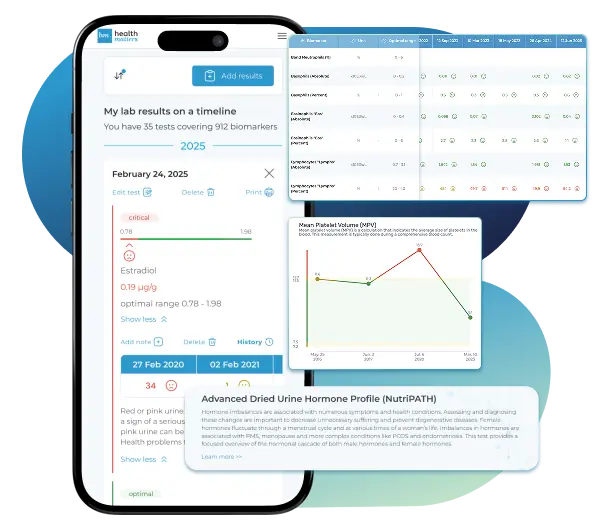
Import lab results from multiple providers, track changes over time, customize your reference ranges, and get clear explanations for each result. Everything is stored securely, exportable in one organized file, and shareable with your doctor—or anyone you choose.
Cancel or upgrade anytime
What does it mean if your Citric Acid (Citrate) result is too low?
Low urinary citrate excretion is a known risk factor for the development of kidney stones. Hypocitraturia, generally defined as urinary citrate excretion less than 320 mg (1.67 mmol) per day for adults, is a common metabolic abnormality in stone formers, occurring in 20% to 60%.
A low citric acid (citrate) level in a Stone Risk profile urine test can have several implications, especially in the context of kidney stone formation. Citric acid plays a crucial role in preventing the formation of certain types of kidney stones. Here's what a low citric acid level might indicate:
→ Increased Risk of Kidney Stones: Citric acid is a natural inhibitor of kidney stone formation. It helps prevent the crystallization of calcium salts (such as calcium oxalate and calcium phosphate), which are the primary components of most kidney stones. When citric acid levels are low, the risk of these types of stones forming increases.
→ Altered pH Levels: Citric acid also contributes to maintaining the urine's pH at a level that discourages the formation of stones. Low citric acid levels may lead to a more alkaline urine pH, which can facilitate the precipitation of certain minerals and promote stone formation.
→ Underlying Medical Conditions: Low citric acid levels can be associated with certain medical conditions, such as metabolic disorders, renal tubular acidosis, or malabsorption syndromes. Identifying the underlying cause of low citric acid levels may be important for addressing kidney stone risk.
→ Diet and Hydration: Dietary factors can influence citric acid levels in the urine. Low citric acid levels may be related to inadequate consumption of citric acid-containing foods (e.g., citrus fruits) or insufficient fluid intake. Dietary modifications and increased hydration may be recommended.
→ Medications: Some medications can affect citric acid levels in the urine. Certain medications, such as potassium citrate, are sometimes prescribed to increase citric acid levels in individuals at risk of kidney stones.
Note: It's essential to interpret the results of a stone risk profile urine test in consultation with a healthcare provider, as they can consider your medical history, symptoms, and other factors to provide a more accurate assessment of your kidney stone risk and guide appropriate management. If you have concerns about your citric acid levels or kidney stone risk, please consult with a healthcare professional for personalized advice and treatment options.
Article Review & Sources
All our content is backed by peer-reviewed studies, academic research, and trusted medical sources. We're committed to accuracy and transparency — see our editorial policy for details.
Laboratories
Bring All Your Lab Results Together — In One Place
We accept reports from any lab, so you can easily collect and organize all your health information in one secure spot.











Pricing Table
Gather Your Lab History — and Finally Make Sense of It
Finally, Your Lab Results Organized and Clear

Personal plans

$79/ year
Advanced Plan
Access your lab reports, explanations, and tracking tools.
- Import lab results from any provider
- Track all results with visual tools
- Customize your reference ranges
- Export your full lab history anytime
- Share results securely with anyone
- Receive 5 reports entered for you
- Cancel or upgrade anytime
$250/ once
Unlimited Account
Pay once, access everything—no monthly fees, no limits.
- Import lab results from any provider
- Track all results with visual tools
- Customize your reference ranges
- Export your full lab history anytime
- Share results securely with anyone
- Receive 10 reports entered for you
- No subscriptions. No extra fees.
$45/ month
Pro Monthly
Designed for professionals managing their clients' lab reports
- Import lab results from any provider
- Track lab results for multiple clients
- Customize reference ranges per client
- Export lab histories and reports
- Begin with first report entered by us
- Cancel or upgrade anytime
About membership
What's included in a Healthmatters membership
 Import Lab Results from Any Source
 See Your Health Timeline
 Understand What Your Results Mean

 Visualize Your Results

 Data Entry Service for Your Reports
 Securely Share With Anyone You Trust
Let Your Lab Results Tell the Full Story
Once your results are in one place, see the bigger picture — track trends over time, compare data side by side, export your full history, and share securely with anyone you trust.




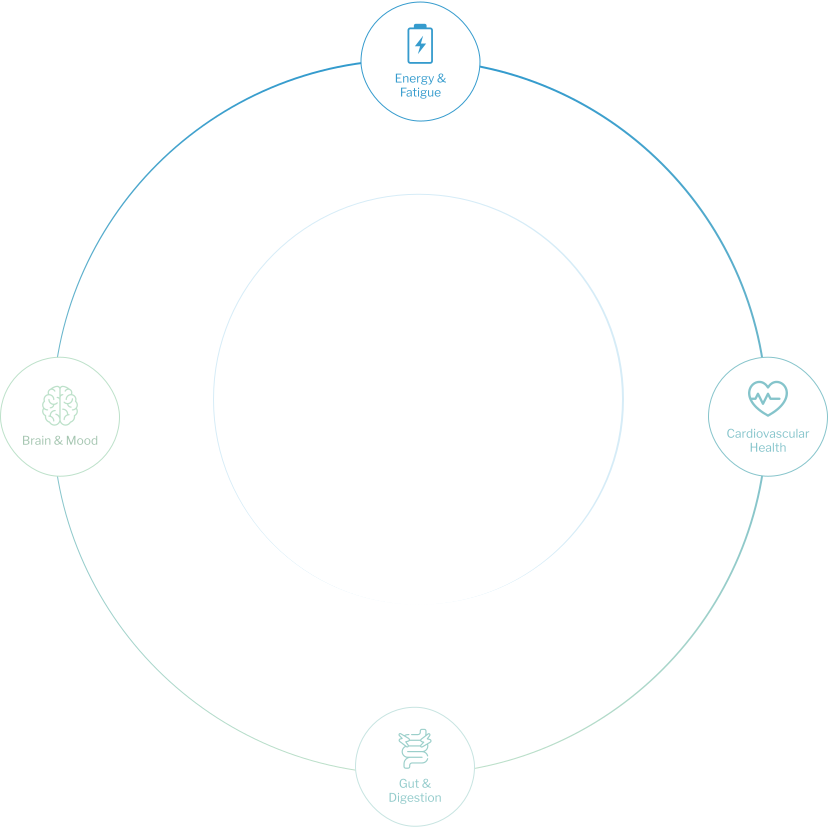
Bring all your results together to compare, track progress, export your history, and share securely.
What Healthmatters Members Are Saying

I have been using Healthmatters.io since 2021. I travel all over the world and use different doctors and health facilities. This site has allowed me to consolidate all my various test results over 14 years in one place. And every doctor that I show this to has been impressed. Because with any health professional I talk to, I can pull up historical results in seconds. It is invaluable. Even going back to the same doctor, they usually do not have the historical results from their facility in a graph format. That has been very helpful.
Anthony
Unlimited Plan Member since 2021
What fantastic service and great, easy-to-follow layouts! I love your website; it makes it so helpful to see patterns in my health data. It's truly a pleasure to use. I only wish the NHS was as organized and quick as Healthmatters.io. You've set a new standard for health tracking!
Karin
Advanced Plan Member since 2020
As a PRO member and medical practitioner, Healthmatters.io has been an invaluable tool for tracking my clients' data. The layout is intuitive, making it easy to monitor trends and spot patterns over time. The ability to customize reports and charts helps me present information clearly to my clients, improving communication and outcomes. It's streamlined my workflow, saving me time and providing insights at a glance. Highly recommended for any practitioner looking for a comprehensive and user-friendly solution to track patient labs!
Paul
Healthmatters Pro Member since 2024

We implement proven measures to keep your data safe.
At HealthMatters, we're committed to maintaining the security and confidentiality of your personal information. We've put industry-leading security standards in place to help protect against the loss, misuse, or alteration of the information under our control. We use procedural, physical, and electronic security methods designed to prevent unauthorized people from getting access to this information. Our internal code of conduct adds additional privacy protection. All data is backed up multiple times a day and encrypted using SSL certificates. See our Privacy Policy for more details.