
Calcium (Ca)
 Optimal Result:
32 - 64 Units.
Optimal Result:
32 - 64 Units.

Calcium is found in every cell throughout the body. Over ninety percent is found stored in the bones and teeth.
- Calcium is regulated by the thyroid, parathyroid, adrenal and pituitary gland. It’s use in the body is involved in maintaining the acid alkaline balance.
- It is necessary for normal blood clotting, nerve conduction, muscle contraction and relaxation, cell division, heart rate, and maintenance of the bones and teeth.
- It is a primary extra-cellular element.
- Excellent quality bioavailable calcium is lacking in the diets of most people. The main food sources are raw and organic dairy products, carrots and carrot juice and a few other vegetable sources such as nuts and seeds. However, when cows milk is pasteurized and homogenized, calcium availability declines greatly. As a result, most people are not benefitting enough from the calcium in the milk, cheese and yogurt they are consuming.
--------------------------------
Sources Of Calcium
| Seafood - | sardines, caviar, smelt |
| Animal products - | egg yolks |
| Nuts/seeds - | almonds, sesame seeds, filberts |
| Vegetables - | kale, collards, mustard greens, turnip greens |
| Dairy - | cheeses, milk |
| Miscellaneous - | molasses, kelp, brewer's yeast, torula yeast |
Roles In The Body
About 99% of our calcium is found in bone structures. However, calcium is essential for four other critical roles:
| Cell Membrane Regulation - | affecting cell permeability, muscle contraction and nerve impulse conduction. |
| Body Fluid Regulation - | affecting blood clotting, acidity and alkalinity. |
| Regulation of cell division | |
| Regulation of hormone secretion - | insulin |
Functions Of Calcium
| Circulatory - | excites the heart, constricts small blood vessels |
| Excretory - | inhibits water loss |
| Digestive - | in excess, is constipating |
| Nervous - | slows nerve impulse transmission |
| Reproductive - | required for normal cell division |
| Endocrine - | inhibits release of thyroid-releasing and other pituitary hormones |
| Blood - | stimulates blood formation and is required for blood clotting |
| Muscular - | reduces muscular irritability and contractibility |
| Skeletal - | main component of bone |
| Metabolic - | required for phosphorus metabolism and energy production in the Krebs cycle |
| Detoxification - | inhibits uptake of lead, antagonizes cadmium |
| Cellular - | decreases permeability of cells to sodium and potassium ions |
Nutrients That Are Synergistic With Calcium
| Absorption - vitamin A and D, stomach acidity, protein in diet |
| Utilization - magnesium, copper, vitamin C |
Antagonistic Nutrients
| Absorption - fluoride, low stomach acidity, low protein in diet, phosphorus in excess |
| Utilization - lead, cadmium, sodium, potassium, high protein diet increases calcium loss in urine |
Reasons For Calcium Supplementation
- to slow the oxidation rate
- to help detoxify lead and cadmium
- to balance key mineral ratios
References:
Wilson, L., Nutritional Balancing and Hair Mineral Analysis, L.D. Wilson Consultants, Inc., 1998, 2005, 2010, 2014.
Lab Results Explained and Tracked
What does it mean if your Calcium (Ca) result is too high?
High Hair Calcium:
- usually indicates that calcium is leaving the bones and accumulating in the soft tissues of the body
- high calcium is associated with a slow oxidation rate
- good indicator of hidden copper toxicity
- high calcium on a retest often means the body is eliminating excess calcium
Elevated calcium levels on a hair tissue mineral analysis do not necessarily indicate the presence of too much calcium in your diet, or in the body. Most often, it reflects abnormal calcium deposition in the hair and other soft tissues of the body. For this reason, calcium supplementation may be recommended. An elevated calcium level may also serve as a stress-buffering mechanism. As calcium levels rise in the tissues, it often has a calming, or numbing effect on one's emotions and can serve to reduce, or protect one from stress. In many cases, a high calcium level is indicative of a ‘calcium bio-unavailability’ which means it is present in the body but cannot be used properly.
All Your Lab Results.
One Simple Dashboard.
Import, Track, and Share Your Lab Results Easily
Import, Track, and Share Your Lab Results
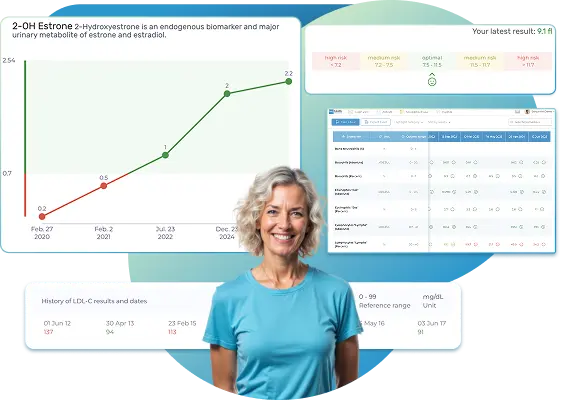
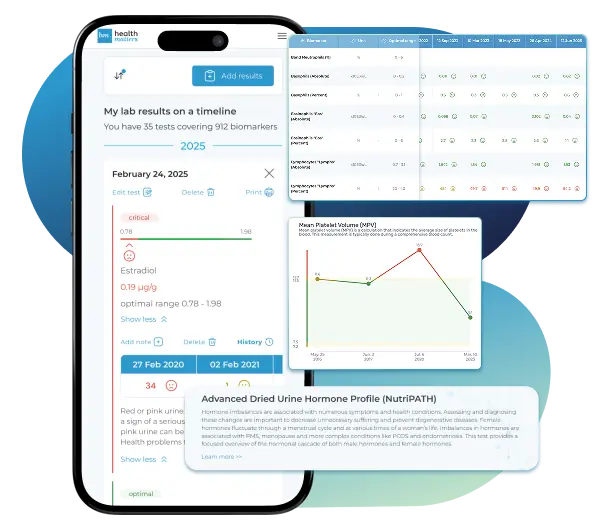
Import lab results from multiple providers, track changes over time, customize your reference ranges, and get clear explanations for each result. Everything is stored securely, exportable in one organized file, and shareable with your doctor—or anyone you choose.
Cancel or upgrade anytime
What does it mean if your Calcium (Ca) result is too low?
Low Hair Calcium:
- a low calcium level usually means calcium is being lost in the urine
- associated with fast oxidation rate - alarm stage of stress
- often associated with copper deficiency
Article Review & Sources
All our content is backed by peer-reviewed studies, academic research, and trusted medical sources. We're committed to accuracy and transparency — see our editorial policy for details.
Laboratories
Bring All Your Lab Results Together — In One Place
We accept reports from any lab, so you can easily collect and organize all your health information in one secure spot.










Pricing Table
Gather Your Lab History — and Finally Make Sense of It
Finally, Your Lab Results Organized and Clear

Personal plans

$79/ year
Advanced Plan
Access your lab reports, explanations, and tracking tools.
- Import lab results from any provider
- Track all results with visual tools
- Customize your reference ranges
- Export your full lab history anytime
- Share results securely with anyone
- Receive 5 reports entered for you
- Cancel or upgrade anytime
$250/ once
Unlimited Account
Pay once, access everything—no monthly fees, no limits.
- Import lab results from any provider
- Track all results with visual tools
- Customize your reference ranges
- Export your full lab history anytime
- Share results securely with anyone
- Receive 10 reports entered for you
- No subscriptions. No extra fees.
$45/ month
Pro Monthly
Designed for professionals managing their clients' lab reports
- Import lab results from any provider
- Track lab results for multiple clients
- Customize reference ranges per client
- Export lab histories and reports
- Begin with first report entered by us
- Cancel or upgrade anytime
About membership
What's included in a Healthmatters membership
 Import Lab Results from Any Source
 See Your Health Timeline
 Understand What Your Results Mean

 Visualize Your Results

 Data Entry Service for Your Reports
 Securely Share With Anyone You Trust
Let Your Lab Results Tell the Full Story
Once your results are in one place, see the bigger picture — track trends over time, compare data side by side, export your full history, and share securely with anyone you trust.




Bring all your results together to compare, track progress, export your history, and share securely.
What Healthmatters Members Are Saying

I have been using Healthmatters.io since 2021. I travel all over the world and use different doctors and health facilities. This site has allowed me to consolidate all my various test results over 14 years in one place. And every doctor that I show this to has been impressed. Because with any health professional I talk to, I can pull up historical results in seconds. It is invaluable. Even going back to the same doctor, they usually do not have the historical results from their facility in a graph format. That has been very helpful.
Anthony
Unlimited Plan Member since 2021
What fantastic service and great, easy-to-follow layouts! I love your website; it makes it so helpful to see patterns in my health data. It's truly a pleasure to use. I only wish the NHS was as organized and quick as Healthmatters.io. You've set a new standard for health tracking!
Karin
Advanced Plan Member since 2020
As a PRO member and medical practitioner, Healthmatters.io has been an invaluable tool for tracking my clients' data. The layout is intuitive, making it easy to monitor trends and spot patterns over time. The ability to customize reports and charts helps me present information clearly to my clients, improving communication and outcomes. It's streamlined my workflow, saving me time and providing insights at a glance. Highly recommended for any practitioner looking for a comprehensive and user-friendly solution to track patient labs!
Paul
Healthmatters Pro Member since 2024

We implement proven measures to keep your data safe.
At HealthMatters, we're committed to maintaining the security and confidentiality of your personal information. We've put industry-leading security standards in place to help protect against the loss, misuse, or alteration of the information under our control. We use procedural, physical, and electronic security methods designed to prevent unauthorized people from getting access to this information. Our internal code of conduct adds additional privacy protection. All data is backed up multiple times a day and encrypted using SSL certificates. See our Privacy Policy for more details.