
Overview
The IgM Immunodominant C6 (IR6) test detects early antibodies against the conserved C6 peptide, a 26–amino acid sequence from the invariable region (IR6) of VlsE, the variable surface antigen in Borrelia burgdorferi sensu lato. While VlsE undergoes domain variation to evade the immune system, the IR6 region remains highly conserved across Lyme-causing subspecies (B. burgdorferi sensu stricto, B. afzelii, B. garinii). This conservation makes C6-based assays valuable broad-spectrum markers in Lyme serology.
Why IgM to C6 Matters
-
Early signal of infection: IgM antibodies are the first to rise after exposure, and anti-C6 IgM can appear within 1–3 weeks of a tick bite, indicating early or recent infection.
-
Cross-subspp coverage: Because the C6 epitope is conserved, the assay can detect immune responses across diverse Borrelia subspecies in North America, Europe, and parts of Asia.
-
Diagnostic utility: Evaluations of C6 ELISA show high sensitivity in acute infection (increasing into convalescence) and strong specificity, supporting its rule-in value when combined with compatible symptoms and exposure risk.
Clinical Significance
A positive IgM C6 suggests an early immune response to Lyme borreliosis, particularly valuable for patients with:
-
Early localized or disseminated disease: erythema migrans, fever, headache, myalgia, fatigue
-
Neurological presentations: meningitis, cranial neuritis, radiculoneuritis
-
Musculoskeletal involvement: migratory arthralgias or evolving arthritis
Because C6 can be measured quantitatively, serial testing may support follow-up, though antibody kinetics vary and serology should not be used alone to monitor treatment response.
Limitations and Interpretation Caveats
-
Timing: IgM is most informative within the first month; isolated IgM beyond 6–8 weeks without IgG warrants caution (may reflect non-specific reactivity or past exposure).
-
Cross-reactivity: Though designed for specificity, occasional reactivity occurs (e.g., autoimmune triggers or other Borrelia species). Notably, C6 reactivity has been described in Borrelia miyamotoi (a relapsing fever–group spirochete).
-
No subspecies resolution: C6 reflects pan-Borrelia exposure but does not identify the infecting strain or stage of disease.
-
Clinical context required: A positive C6 IgM alone does not confirm active Lyme. Integration with exposure history, symptoms, exam findings, confirmatory markers (VlsE/whole-cell EIAs, immunoblots, Osp proteins, subspecies-specific antigens), and co-infection assessment (Babesia, Anaplasma/Ehrlichia, Bartonella) is essential.
Role in Modern Lyme Testing
C6 assays are increasingly used in modified two-tier Lyme testing algorithms, valued for their broad coverage and strong analytic performance. In multi-antigen ELISA panels, IgM C6 complements other markers such as OspC, VlsE/DbpA, and subspecies-specific assays, enhancing early detection while maintaining high specificity across the clinical spectrum.
Summary
The IgM Immunodominant C6 marker is a conserved, early-phase Lyme serology tool that captures recent immune responses across major Borrelia subspecies. It offers strong diagnostic value in acute disease but requires careful interpretation, particularly when IgM is isolated or when cross-reactivity is considered. Most powerful when paired with compatible symptoms, exposure history, and complementary serology, IgM C6 serves as a core element of modern multi-antigen Lyme testing strategies.
 IgM Immunodominant P. C6
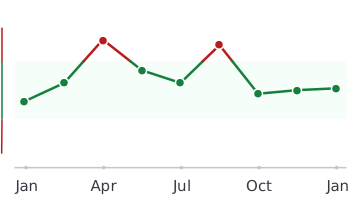
Every lab result you’ve ever had, charted and explained.
Healthmatters is a tracker for your lab results. Upload a report from any lab, any country — every marker charted and explained.
Start with my report →
All our content is backed by peer-reviewed studies, academic research, and trusted medical sources. We’re committed to accuracy and transparency — see our editorial policy for details.