
 Optimal Result:
54.8 - 175.3 mg/g.
Optimal Result:
54.8 - 175.3 mg/g.

Glycine is the simplest amino acid and is classified as non-essential because the body can synthesize it from other compounds. Beyond its structural roles (e.g., collagen and glutathione synthesis), glycine functions as an inhibitory neurotransmitter in the spinal cord, brainstem, and retina. Loss of glycinergic inhibition—such as with tetanus toxin, which blocks the release of inhibitory transmitters—can cause spastic paralysis due to unopposed muscle contraction. Glycine also serves as a co-agonist at NMDA receptors, where it is required alongside glutamate for receptor activation.
Lab Results Explained and Tracked
What does it mean if your Glycine result is too high?
Urinary glycine rises when there’s more glycine in circulation, reduced renal reabsorption in the kidney’s proximal tubule, or simply higher dietary/supplement intake with renal “spill.” Results are easiest to compare when normalized to urine creatinine (e.g., µmol/mmol creatinine); very dilute urine can exaggerate patterns.
Common, non-worrisome reasons
-
Diet & supplements: Collagen/gelatin, bone broth, glycine powder, or high-protein meals in the prior 24–72 hours.
-
Specimen factors: Very dilute urine (high fluid intake) or non–first-morning samples.
-
Convalescence/illness or stress: Transient amino-aciduria can occur during recovery.
Medical causes to consider
-
Renal proximal tubule dysfunction (global or partial amino-aciduria)
-
Fanconi-type patterns: glycosuria with normal blood glucose, phosphaturia, uricosuria, proteinuria/low-molecular-weight proteins.
-
-
Reduced kidney function or tubular injury (medications, toxins, ischemia).
-
Inborn errors of metabolism (rare):
-
Nonketotic hyperglycinemia (NKH): classically very high glycine in plasma and CSF; urine can be elevated but diagnosis hinges on plasma/CSF and clinical features (infancy onset—lethargy, seizures, apnea).
-
Organic acidemias (e.g., propionic or methylmalonic): secondary elevations of glycine may appear with other metabolic markers.
-
-
One-carbon metabolism shifts (serine↔glycine): usually subtle and accompanied by other lab changes (folate/B12).
How to sanity-check the result
-
Was it creatinine-normalized? Prefer values reported as a ratio (e.g., µmol glycine per mmol creatinine). If it’s a raw concentration and the urine was very dilute (low creatinine/specific gravity), repeat with a first-morning sample.
-
Look for pattern: Are other amino acids also elevated (generalized amino-aciduria) or is glycine isolated?
-
Cross-check kidney indices: Urinalysis, urine specific gravity, urine creatinine, and serum creatinine/eGFR.
Practical next steps
-
If you used glycine/collagen/gelatin recently: Stop for 3–5 days, hydrate normally, and repeat a first-morning urine amino acids test (creatinine-normalized).
-
If still elevated:
-
Order/confirm serum creatinine, eGFR, urinalysis; consider urine protein and β2-microglobulin or other low-molecular-weight proteins if Fanconi-type loss is suspected.
-
Consider a plasma amino acid panel (and serine) to see systemic balance.
-
If there are red flags (infancy/childhood onset, neurologic symptoms, failure to thrive, metabolic acidosis): add urine organic acids, acylcarnitine profile, and discuss metabolic genetics.
-
-
Medication review: Look for agents associated with tubular injury or amino-aciduria; adjust only with clinician guidance.
When to escalate
-
Infants/children with neurologic signs or failure to thrive.
-
Adults with persistent elevation plus kidney abnormalities (proteinuria, rising creatinine), systemic symptoms, or multi-analyte amino-aciduria.
Bottom line
Most adult elevations in urinary glycine are due to recent intake/supplements or dilution. Persistent, creatinine-normalized elevations—especially with abnormalities in other amino acids or kidney markers—warrant a renal/tubular evaluation and, when appropriate, metabolic workup.
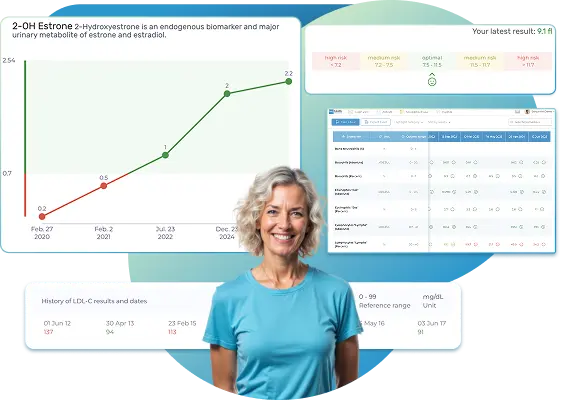
All Your Lab Results.
One Simple Dashboard.
Import, Track, and Share Your Lab Results Easily
Import, Track, and Share Your Lab Results
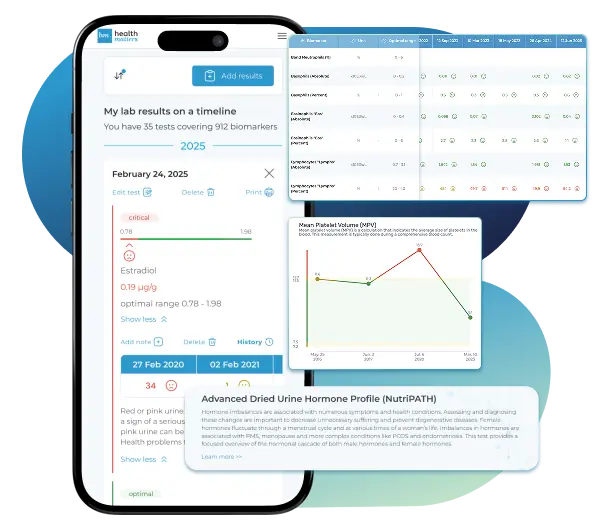
Import lab results from multiple providers, track changes over time, customize your reference ranges, and get clear explanations for each result. Everything is stored securely, exportable in one organized file, and shareable with your doctor—or anyone you choose.
Cancel or upgrade anytime
Article Review & Sources
All our content is backed by peer-reviewed studies, academic research, and trusted medical sources. We're committed to accuracy and transparency — see our editorial policy for details.
Laboratories
Bring All Your Lab Results Together — In One Place
We accept reports from any lab, so you can easily collect and organize all your health information in one secure spot.











Pricing Table
Gather Your Lab History — and Finally Make Sense of It
Finally, Your Lab Results Organized and Clear

Personal plans

$79/ year
Advanced Plan
Access your lab reports, explanations, and tracking tools.
- Import lab results from any provider
- Track all results with visual tools
- Customize your reference ranges
- Export your full lab history anytime
- Share results securely with anyone
- Receive 5 reports entered for you
- Cancel or upgrade anytime
$250/ once
Unlimited Account
Pay once, access everything—no monthly fees, no limits.
- Import lab results from any provider
- Track all results with visual tools
- Customize your reference ranges
- Export your full lab history anytime
- Share results securely with anyone
- Receive 10 reports entered for you
- No subscriptions. No extra fees.
$45/ month
Pro Monthly
Designed for professionals managing their clients' lab reports
- Import lab results from any provider
- Track lab results for multiple clients
- Customize reference ranges per client
- Export lab histories and reports
- Begin with first report entered by us
- Cancel or upgrade anytime
About membership
What's included in a Healthmatters membership
 Import Lab Results from Any Source
 See Your Health Timeline
 Understand What Your Results Mean

 Visualize Your Results

 Data Entry Service for Your Reports
 Securely Share With Anyone You Trust
Let Your Lab Results Tell the Full Story
Once your results are in one place, see the bigger picture — track trends over time, compare data side by side, export your full history, and share securely with anyone you trust.




Bring all your results together to compare, track progress, export your history, and share securely.
What Healthmatters Members Are Saying

I have been using Healthmatters.io since 2021. I travel all over the world and use different doctors and health facilities. This site has allowed me to consolidate all my various test results over 14 years in one place. And every doctor that I show this to has been impressed. Because with any health professional I talk to, I can pull up historical results in seconds. It is invaluable. Even going back to the same doctor, they usually do not have the historical results from their facility in a graph format. That has been very helpful.
Anthony
Unlimited Plan Member since 2021
What fantastic service and great, easy-to-follow layouts! I love your website; it makes it so helpful to see patterns in my health data. It's truly a pleasure to use. I only wish the NHS was as organized and quick as Healthmatters.io. You've set a new standard for health tracking!
Karin
Advanced Plan Member since 2020
As a PRO member and medical practitioner, Healthmatters.io has been an invaluable tool for tracking my clients' data. The layout is intuitive, making it easy to monitor trends and spot patterns over time. The ability to customize reports and charts helps me present information clearly to my clients, improving communication and outcomes. It's streamlined my workflow, saving me time and providing insights at a glance. Highly recommended for any practitioner looking for a comprehensive and user-friendly solution to track patient labs!
Paul
Healthmatters Pro Member since 2024

We implement proven measures to keep your data safe.
At HealthMatters, we're committed to maintaining the security and confidentiality of your personal information. We've put industry-leading security standards in place to help protect against the loss, misuse, or alteration of the information under our control. We use procedural, physical, and electronic security methods designed to prevent unauthorized people from getting access to this information. Our internal code of conduct adds additional privacy protection. All data is backed up multiple times a day and encrypted using SSL certificates. See our Privacy Policy for more details.