
 Optimal Result:
5 - 92.4 umol/g Cr.
Optimal Result:
5 - 92.4 umol/g Cr.

Glutamate is a vital neurotransmitter in the central nervous system, involved in almost all significant excitatory brain functions. It is the primary and most abundant excitatory neurotransmitter, and it's estimated that over half of all neural synapses release glutamate, making it a critical player in neural circuit communication.
Glutamic acid and glutamate are essentially interchangeable terms. The two molecules are almost identical, except that glutamic acid has an additional proton, or hydrogen atom. In physiological conditions, glutamic acid sheds this extra proton and becomes glutamate, the abundant form of the amino acid in the human body.
Glutamate is a crucial excitatory neurotransmitter that plays a vital role in maintaining healthy brain and nervous system function. It enables us to learn, remember, feel, sense, and coordinate our movements effectively.
Excitatory neurotransmitters are essential in activating the next neuron in a chemical message chain, ensuring that the signal, also known as an action potential or nerve impulse, continues uninterrupted. This communication occurs through action potentials, and glutamate is one of the critical neurotransmitters that facilitate this process. Without adequate levels of glutamate, the chemical message cannot continue, and communication between neurons is disrupted.
Glutamate is also the precursor amino acid for its counterpart, the inhibitory neurotransmitter GABA (gamma-aminobutyric acid), which happens to be the most abundant amino acid in the human body. 1
Glutamate serves as an important building block for proteins in the body and is crucial for nutrition and metabolism. Additionally, it forms a crucial part of the "master antioxidant" tri-peptide glutathione as glutamic acid. The interaction between glutamate and specific taste cells in the tongue is a significant component of the umami taste experience. 2
Glutamate and GABA levels are interconnected because GABA is synthesized from glutamate with the assistance of vitamin B6. While glutamate has excitatory effects, the inhibitory effects of GABA balance them out. Glutamate increases the probability of an action potential, while GABA decreases it.
Maintaining a balance between inhibitory neuronal transmission through GABA and excitatory neuronal transmission through glutamate is crucial for maintaining cell membrane stability and optimal neurological function. This balance is necessary to ensure that our nervous system functions smoothly and effectively. 3
The glutamate-glutamine cycle is responsible for the synthesis of glutamate from glutamine. 4
In the pre-synaptic neuron, phosphate-activated glutaminase (GA) converts glutamine into glutamate, which is then stored in synaptic vesicles until it is released into the synapse.
Once glutamate is released into the synaptic cleft, it is taken up by astrocytes, a type of glial cell that provides support to the central and peripheral nervous systems.
With the help of mineral cofactors magnesium and manganese, the enzyme glutamine synthetase (GS) converts glutamate into glutamine in the astrocytes. Eventually, glutamine returns to the neuron where it is converted back into glutamate, thus restarting the cycle. 5
Glutamate, the central nervous system's most abundant and critical excitatory neurotransmitter, is widely distributed throughout the brain and spinal cord in neurons and glia and is present in more than 90% of synapses. 6
However, glutamate is also a non-essential amino acid that can be found in protein-containing foods, but its ingestion has no relationship with the glutamate circulating in the brain. This is because glutamate from high glutamate foods cannot pass through the blood-brain barrier 7 , which is a specialized system of brain microvascular endothelial cells that protects the brain from toxic substances in the blood, supplies brain tissues with nutrients, and filters harmful compounds from the brain back to the bloodstream. Instead, ingested glutamate is rapidly metabolized as oxidative fuel for the intestinal lining. 8, 26
Glutamate serves as the primary driver of neuronal excitation, playing a crucial role in a wide range of cognitive, emotional, sensory, and motor functions. Its influence extends to the activity of numerous other neurotransmitter systems, such as dopamine and serotonin. 9,10
Long-term potentiation (LTP), the primary mechanism for synaptic plasticity, is essential for learning and memory. 11, 12 Glutamate, as the primary mediator of neuronal excitation, plays a critical role in LTP. In other words, glutamate enables nerve cells to link related information, which forms the basis of memory. 9 Rather than generating new neurons to store new memories, our brain reinforces connections between existing neurons to form new memories, a process known as long-term potentiation (LTP).
- The brain can serve glutamate as a backup energy source when glucose levels are depleted.
- Glutamate levels tend to be elevated during wakefulness and the REM (rapid eye movement) phase of sleep, as noted in research. However, there is an exception to this pattern in the thalamus, where glutamate levels reach their peak during non-REM sleep. 13
- Elevated levels of glutamate in the nervous system have been linked to an escalation in the severity of pain experienced by an individual.
- Glutamate is the precursor of GABA, which is a critical inhibitory neurotransmitter that counteracts glutamate's excitatory effects.
References:
- Petroff OA. GABA and glutamate in the human brain. Neuroscientist. 2002 Dec;8(6):562-73. doi: 10.1177/1073858402238515. PMID: 12467378.
- Brosnan JT, Brosnan ME. Glutamate: a truly functional amino acid. Amino Acids. 2013 Sep;45(3):413-8. doi: 10.1007/s00726-012-1280-4. Epub 2012 Apr 18. PMID: 22526238.
- Allen MJ, Sabir S, Sharma S. GABA Receptor. [Updated 2023 Feb 13]. In: StatPearls [Internet]. Treasure Island (FL): StatPearls Publishing; 2023 Jan-. Available from: https://www.ncbi.nlm.nih.gov/books/NBK526124/
- Waxman SG, ed Molecular Neurology. New York: Elsevier, Inc.; 2007.
- Lemberg A, Fernandez MA. Annals of hepatology. 2009;8(2):95-102.
- Meldrum BS. J Nutr. 2000;130(4S Suppl):1007s-1015s.
- Hawkins RA. Am J Clin Nutr. 2009;90(3):867S-874S.
- Persidsky Y, Ramirez SH, Haorah J, Kanmogne GD. Blood-brain barrier: structural components and function under physiologic and pathologic conditions. J Neuroimmune Pharmacol. 2006 Sep;1(3):223-36. doi: 10.1007/s11481-006-9025-3. Epub 2006 Jul 6. PMID: 18040800.
- Purves D, ed Neuroscience. 5th ed: Sinauer Associates; 2012.
- Koles L, Kato E, et al. Purinergic Signal. 2016;12(1):1-24.
- Lüscher C, Malenka RC. NMDA receptor-dependent long-term potentiation and long-term depression (LTP/LTD). Cold Spring Harb Perspect Biol. 2012 Jun 1;4(6):a005710. doi: 10.1101/cshperspect.a005710. PMID: 22510460; PMCID: PMC3367554.
- Peng S, Zhang Y, Zhang J, Wang H, Ren B. Glutamate receptors and signal transduction in learning and memory. Mol Biol Rep. 2011 Jan;38(1):453-60. doi: 10.1007/s11033-010-0128-9. Epub 2010 Apr 3. PMID: 20364330.
- Watson CJ, Lydic R, Baghdoyan HA. Sleep duration varies as a function of glutamate and GABA in rat pontine reticular formation. J Neurochem. 2011 Aug;118(4):571-80. doi: 10.1111/j.1471-4159.2011.07350.x. Epub 2011 Jul 1. PMID: 21679185; PMCID: PMC3144159.
- Choi DW. Glutamate receptors and the induction of excitotoxic neuronal death. Prog Brain Res. 1994;100:47-51. doi: 10.1016/s0079-6123(08)60767-0. PMID: 7938533.
- Pang B, Zhu Y, Lu L, Gu F, Chen H. The Applications and Features of Liquid Chromatography-Mass Spectrometry in the Analysis of Traditional Chinese Medicine. Evid Based Complement Alternat Med. 2016;2016:3837270. doi: 10.1155/2016/3837270. Epub 2016 Nov 10. PMID: 27956918; PMCID: PMC5121459.
- Chan CY, Sun HS, et al. Advances in experimental medicine and biology. 2013;775:45-52.
- Llansola M, Erceg S, et al. Metab Brain Dis. 2002;17(4):389-397.
- Aizenman E, Hartnett K, et al. The Journal of Neuroscience. 1992;12(6):2362-2369.
- Gagne J, Giguere C, et al. Brain Res. 1996;740(1-2):337-345.
- Wang X, Zhao X, et al. Neuroreport. 2003;14(18):2457-2461.
- Godkar PB, Gordon RK, et al. Journal of ethnopharmacology. 2004;93(2-3):213-219.
- Godkar PB, Gordon RK, et al. Phytomedicine. 2006;13(1-2):29-36.
- Zhang JM, Hu GY. Neuroscience. 2001;105(3):663-669.
- Zhu L, Wu J, et al. Zhongguo yao li xue bao = Acta pharmacologica Sinica. 1997;18(4):344-347.
- Palumbo DR, Occhiuto F, et al. Phytother Res. 2012;26(6):878-883.
- Burrin DG, Stoll B. The American Journal of Clinical Nutrition, Volume 90, Issue 3, September 2009, Pages 850S–856S
- Guerriero RM, Giza CC, Rotenberg A. Curr Neurol Neurosci Rep. 2015 May; 15(5): 27.
- El-Ansary A, Al-Ayadhi L. J Neuroinflammation11, 189 (2014).
- Prentice H, Modi JP, Wu JY. Mechanisms of Neuronal Protection against Excitotoxicity, Endoplasmic Reticulum Stress, and Mitochondrial Dysfunction in Stroke and Neurodegenerative Diseases. Oxid Med Cell Longev. 2015;2015:964518. doi: 10.1155/2015/964518. Epub 2015 Oct 20. PMID: 26576229; PMCID: PMC4630664.
- Maddock RJ, Casazza GA, Fernandez DH, Maddock MI. Acute Modulation of Cortical Glutamate and GABA Content by Physical Activity. J Neurosci. 2016 Feb 24;36(8):2449-57. doi: 10.1523/JNEUROSCI.3455-15.2016. PMID: 26911692; PMCID: PMC6705493.
Lab Results Explained and Tracked
What does it mean if your Glutamate result is too high?
Too much glutamate becomes excitotoxic. Excessive activation of glutamate receptors – caused by prolonged exposure to high glutamate levels – can lead to the activation of cell death pathways, resulting in excitotoxic neurodegeneration and apoptosis (aka “cell death”).14
High glutamate is associated with conditions of brain cell death or neurodegenerative diseases.
Glutamate is an amino acid. If amino acid levels are imbalanced, glutamine, glutamate, and GABA levels could be affected. Although glutamate is non-essential, meaning the body can produce glutamate from other sources, amino acid precursors such as glutamine are needed to make glutamate.
Low levels of cofactors involved in glutamate metabolism (such as magnesium, manganese, and vitamin B6) could lead to imbalanced glutamate levels.
Glutamate and glutamine are used in high quantities by the body. Illness (such as a burn) could deplete tissue levels and lead to imbalances of glutamate.
Injuries to the brain can cause an imbalance between glutamate and GABA function, resulting in excitotoxicity. 27
Neuroinflammation has also been shown to imbalance the important glutamate/GABA relationship. 28
Supplements and exercise can positively impact glutamate levels. Nutritional supplements such as vitamins B3, B6, magnesium, and manganese, amino acids, and protein may improve glutamate metabolism and balance levels. Taurine and carnitine may be beneficial in situations of glutamate excess. Pyrroloquinoline quinone (PQQ), phosphatidylserine, and docosahexaenoic acid (DHA) may provide cellular protection and balance glutamate receptor signaling. Herbal supplements, including Celastrus paniculatus, Huperzine A, Ginkgo biloba, and Rhodiola rosea, are believed to have neuroprotective effects by modulating glutamate receptor activity or decreasing glutamate-induced calcium mobilization. 18, 19, 20, 21, 22, 23, 24, 25, 29, 30
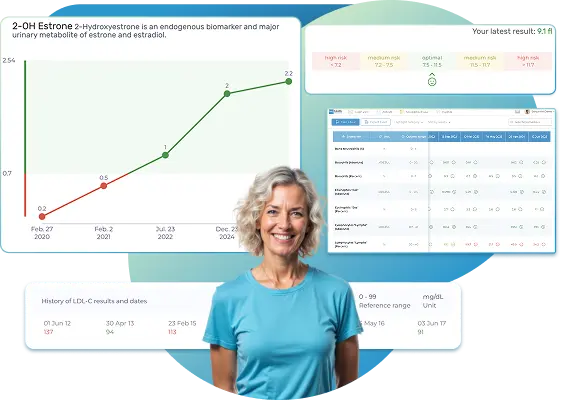
All Your Lab Results.
One Simple Dashboard.
Import, Track, and Share Your Lab Results Easily
Import, Track, and Share Your Lab Results
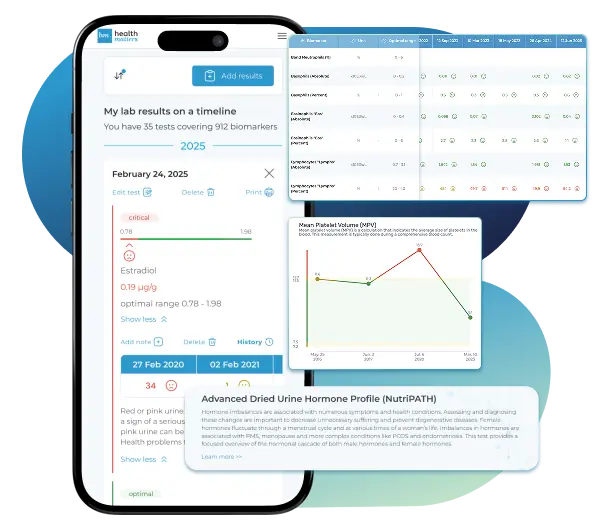
Import lab results from multiple providers, track changes over time, customize your reference ranges, and get clear explanations for each result. Everything is stored securely, exportable in one organized file, and shareable with your doctor—or anyone you choose.
Cancel or upgrade anytime
What does it mean if your Glutamate result is too low?
Glutamate levels are very tightly controlled. Too little glutamate, and neural impulses will be slow, resulting in trouble concentrating and a feeling of mental exhaustion. 9
Some conditions are also believed to be associated with the brain having low glutamate levels:
- Behavioral or social difficulties
- Confusion and disorientation
- Low mood
- Nervousness
- Obsessional thoughts
Glutamate is an amino acid. If amino acid levels are imbalanced, glutamine, glutamate, and GABA levels could be affected. Although glutamate is non-essential, meaning the body can produce glutamate from other sources, amino acid precursors such as glutamine are needed to make glutamate.
Low levels of cofactors involved in glutamate metabolism (such as magnesium, manganese, and vitamin B6) could lead to imbalanced glutamate levels.
Glutamate and glutamine are used in high quantities by the body. Illness (such as a burn) could deplete tissue levels and lead to imbalances of glutamate.
Injuries to the brain can cause an imbalance between glutamate and GABA function, resulting in excitotoxicity. 27
Neuroinflammation has also been shown to imbalance the important glutamate/GABA relationship. 28
Supplements and exercise can positively impact glutamate levels. Nutritional supplements such as vitamins B3, B6, magnesium, and manganese, amino acids, and protein may improve glutamate metabolism and balance levels. Taurine and carnitine may be beneficial in situations of glutamate excess. Pyrroloquinoline quinone (PQQ), phosphatidylserine, and docosahexaenoic acid (DHA) may provide cellular protection and balance glutamate receptor signaling. Herbal supplements, including Celastrus paniculatus, Huperzine A, Ginkgo biloba, and Rhodiola rosea, are believed to have neuroprotective effects by modulating glutamate receptor activity or decreasing glutamate-induced calcium mobilization. 18, 19, 20, 21, 22, 23, 24, 25, 29, 30
Article Review & Sources
All our content is backed by peer-reviewed studies, academic research, and trusted medical sources. We're committed to accuracy and transparency — see our editorial policy for details.
Laboratories
Bring All Your Lab Results Together — In One Place
We accept reports from any lab, so you can easily collect and organize all your health information in one secure spot.











Pricing Table
Gather Your Lab History — and Finally Make Sense of It
Finally, Your Lab Results Organized and Clear

Personal plans

$79/ year
Advanced Plan
Access your lab reports, explanations, and tracking tools.
- Import lab results from any provider
- Track all results with visual tools
- Customize your reference ranges
- Export your full lab history anytime
- Share results securely with anyone
- Receive 5 reports entered for you
- Cancel or upgrade anytime
$250/ once
Unlimited Account
Pay once, access everything—no monthly fees, no limits.
- Import lab results from any provider
- Track all results with visual tools
- Customize your reference ranges
- Export your full lab history anytime
- Share results securely with anyone
- Receive 10 reports entered for you
- No subscriptions. No extra fees.
$45/ month
Pro Monthly
Designed for professionals managing their clients' lab reports
- Import lab results from any provider
- Track lab results for multiple clients
- Customize reference ranges per client
- Export lab histories and reports
- Begin with first report entered by us
- Cancel or upgrade anytime
About membership
What's included in a Healthmatters membership
 Import Lab Results from Any Source
 See Your Health Timeline
 Understand What Your Results Mean

 Visualize Your Results

 Data Entry Service for Your Reports
 Securely Share With Anyone You Trust
Let Your Lab Results Tell the Full Story
Once your results are in one place, see the bigger picture — track trends over time, compare data side by side, export your full history, and share securely with anyone you trust.




Bring all your results together to compare, track progress, export your history, and share securely.
What Healthmatters Members Are Saying

I have been using Healthmatters.io since 2021. I travel all over the world and use different doctors and health facilities. This site has allowed me to consolidate all my various test results over 14 years in one place. And every doctor that I show this to has been impressed. Because with any health professional I talk to, I can pull up historical results in seconds. It is invaluable. Even going back to the same doctor, they usually do not have the historical results from their facility in a graph format. That has been very helpful.
Anthony
Unlimited Plan Member since 2021
What fantastic service and great, easy-to-follow layouts! I love your website; it makes it so helpful to see patterns in my health data. It's truly a pleasure to use. I only wish the NHS was as organized and quick as Healthmatters.io. You've set a new standard for health tracking!
Karin
Advanced Plan Member since 2020
As a PRO member and medical practitioner, Healthmatters.io has been an invaluable tool for tracking my clients' data. The layout is intuitive, making it easy to monitor trends and spot patterns over time. The ability to customize reports and charts helps me present information clearly to my clients, improving communication and outcomes. It's streamlined my workflow, saving me time and providing insights at a glance. Highly recommended for any practitioner looking for a comprehensive and user-friendly solution to track patient labs!
Paul
Healthmatters Pro Member since 2024

We implement proven measures to keep your data safe.
At HealthMatters, we're committed to maintaining the security and confidentiality of your personal information. We've put industry-leading security standards in place to help protect against the loss, misuse, or alteration of the information under our control. We use procedural, physical, and electronic security methods designed to prevent unauthorized people from getting access to this information. Our internal code of conduct adds additional privacy protection. All data is backed up multiple times a day and encrypted using SSL certificates. See our Privacy Policy for more details.