Optimal Result:
0 - 10 ppm.
Optimal Result:
0 - 10 ppm.

Methane is produced when archaea (single-celled organisms similar to bacteria) consume hydrogen.
Methane levels are considered abnormal if they reach ≥10 ppm (parts per million) at any point during the breath test.
Utilization of breath methane levels for SIBO assessment is controversial largely due to a lack of validation related to diagnostic specifics such as timing and magnitude of increase; however, CH4 measurements are increasingly obtained to address other clinical questions. Recent evidence has associated CH4 production with the pathogenesis of common clinical conditions, such as obesity, irritable bowel syndrome (IBS), and constipation.
- The peer-reviewed literature suggests an association with certain clinical conditions and methanogen overgrowth at levels as low as 3 ppm, CH4 values between 3 and 9 may indicate the need for clinical intervention in the symptomatic patient.
- ELEVATED BASELINE - An elevated baseline may be a more common pattern with CH4 positive tests primarily due to the ability of methanogenic organisms to ferment in the absence of an ingested carbohydrate substrate.
Methane gas itself may slow intestinal transit, and patients with CH4-predominant bacterial overgrowth have been found to be five times more likely to have constipation compared to individuals with H2 - predominant overgrowth. Moreover, the severity of constipation has been found to directly correlate with the CH4 level.
Risk factors:
Decreased intestinal motility is a key factor in the development of SIBO and its recurrence. Out of all the diseases and disorders associated with SIBO, 90% of cases involve either small intestinal motility disorders and/or chronic pancreatitis.
The migrating motor complex (MMC) describes the waves of electromechanical activity that sweep through the intestines in regular cycles between meals. The MMC triggers waves that move non-digestible substances through the gastrointestinal tract from the stomach distally to the terminal ileum. In addition, the MMC is responsible for moving bacteria from the small intestine to the large intestine, as well as inhibiting the migration of colonic bacteria into the terminal ileum. Any disorder that impairs MMC function can be a risk factor for SIBO. Gastroenteritis that leads to post-infectious IBS-D is thought to be a risk factor for SIBO. Campylobacter jejuni, Salmonella, E. coli, and Shigella produce cytolethal distending toxin (CDT), and the host can produce an autoimmune response that damages the pacemaker cells for the MMC, resulting in decreased MMC activity. Other key SIBO risk factors include conditions that result in immunocompromise, decreased bacteriostatic digestive secretions (HCl, pancreatic enzymes, bile acids), and ileocecal valve dysfunction.
Complications of SIBO:
Because SIBO is not consistently characterized by the same species, different symptoms or complications may result, depending on the organisms that are present and their specific function in the GI tract. SIBO can result in damage to the small intestinal mucosa leading to malabsorption and intestinal permeability. Microscopic inflammatory changes in the lamina propria and villous atrophy are common. Destruction of the intestinal mucosa can result in reduced disaccharidase function and increased intraluminal bacterial carbohydrate degradation, causing SIBO symptoms. The bacteria themselves can consume nutrients, leading to micronutrient deficiencies, and deconjugate bile acids, leading to fat and fat-soluble vitamin malabsorption. Bacteria can produce toxic substances resulting in increased serum endotoxin, stimulating inflammatory cytokine production.
SIBO complications include:
- Weight loss
- Steatorrhea
- Vitamin/mineral deficiency
» Fat-soluble vitamins (A,D,E,K)
» Vitamin B12
» Iron
- Hypoproteinemia/hypoalbuminemia
- Bile acid deficiency
- Anemia
- Osteoporosis
- Neuropathies
------------------
References:
Rezaie A, Buresi M, Lembo A, et al. Hydrogen and Methane-Based Breath Testing in Gastrointestinal Disorders: The North American Consensus. The American journal of gastroenterology. May 2017;112(5):775-784. [PubMed]
Chatterjee S, Park S, Low K et al. The degree of breath methane production in IBS correlates with the severity of constipation. Am J Gastroenterol 2007;102:837–841. [PubMed]
Attaluri A, Jackson M, Valestin J et al. Methanogenic flora is associated with altered colonic transit but not stool characteristics in constipation without IBS. Am J Gastroenterol 2010;105:1407–1411. [PubMed]
Hwang L, Low K, Khoshini R et al. Evaluating breath methane as a diagnostic test for constipation-predominant IBS. Dig Dis Sci 2010;55:398–403. [PubMed]
Kunkel D, Basseri RJ, Makhani MD et al. Methane on breath testing is associated with constipation: a systematic review and meta-analysis. Dig Dis Sci 2011;56:1612–1618. [PubMed]
Low K, Hwang L, Hua J et al. A combination of rifaximin and neomycin is most effective in treating irritable bowel syndrome patients with methane on lactulose breath test. J Clin Gastroenterol 2010;44:547–550. [PubMed]
Pimentel M, Chang C, Chua KS et al. Antibiotic treatment of constipation-predominant irritable bowel syndrome. Dig Dis Sci 2014;59:1278–1285. [PubMed]
Rezaie A, Pimentel M, Rao SS. How to test and treat small intestinal bacterial overgrowth: an evidence-based approach. Curr Gastroenterol Rep 2016;18:8. [PubMed]
Lab Results Explained and Tracked
What does it mean if your CH4 result is too high?
Elevated levels of methane are indicative of IMO.
IMO, or intestinal methanogenic overgrowth, is an overgrowth of methane-producing archaea in the small and large intestines. Methanogens are not bacteria (the “B” in SIBO) but are archaea and may also overgrow in the colon and not just the small intestine (the “SI'' in SIBO). In humans, excess methane production appears to be caused by Methanobrevibacter smithii, which is the predominant methanogen in the human gut.
A peak methane level > 10 ppm at any point is indicative of a methane-positive result.
Methane gas itself may slow intestinal transit, and patients with CH4-predominant bacterial overgrowth have been found to be five times more likely to have constipation compared to individuals with H2 - predominant overgrowth. Moreover, the severity of constipation has been found to directly correlate with the CH4 level.
- The peer-reviewed literature suggests an association with certain clinical conditions and methanogen overgrowth at levels as low as 3 ppm, CH4 values between 3 and 9 may indicate the need for clinical intervention in the symptomatic patient.
- ELEVATED BASELINE - An elevated baseline may be a more common pattern with CH4 positive tests primarily due to the ability of methanogenic organisms to ferment in the absence of an ingested carbohydrate substrate.
-------------------
It may be useful to discuss your results with a healthcare practitioner who is familiar with the management of intestinal methanogen overgrowth, such as a gastroenterologist or registered dietitian. If you undergo treatment for methane, it is easy to repeat the Methane Breath CH4ECK regularly to see if your methane has been reduced/eradicated.
-------------------
Methane (CH4) positivity on breath test has been associated with constipation. Patients with CH4-predominant bacterial overgrowth usually present with bloating and abdominal distention. However, they are 5 times more likely to have constipation as opposed to H2-predominant overgrowth. Moreover, the severity of constipation directly correlated with the methane level and the choice of antibiotics for the treatment of SIBO differs between these two groups as the predominant methanogen in the human gut, Methanobrevibacter smithii, is resistant to many antibiotics.
Conditions in which a high prevalence of overgrowth are commonly observed include, but are not limited to:
- Functional GI disorders (such as irritable bowel syndrome and gastroparesis)
- Hypothyroidism
- Neuromuscular diseases (such as restless leg syndrome)
- Inflammatory bowel disease (IBD)
- Pancreatic disease
- Celiac disease
- Liver disease
- Diabetes
- Fibromyalgia
- Rosacea
- Parkinson’s disease
- Obesity
- Interstitial cystitis
Treatment considerations:
Antibiotics are commonly used to treat SIBO, and studies show normalized breath tests as well as symptomatic relief. The underlying causes of SIBO must be treated properly. Otherwise, the likelihood of SIBO recurrence is very high, even after antibiotic therapy.
In general, clinical management of the SIBO patient involves antibiotics and/or natural antimicrobial agents, promotility/prokinetic agents, nutrient supplementation for depleted nutrients and/ or for brush border healing, dietary interventions, meal spacing, and treatment of comorbid conditions.
Antibiotics
- Rifaximin is a non-absorbable antibiotic that has been FDA-approved for IBS-D, traveler’s diarrhea, and hepatic encephalopathy. It has been extensively studied in functional bowel disorders.8 It is efficacious against Grampositive and Gram-negative aerobic and anaerobic bacteria.4 It can target common SIBO organisms including E. coli, Klebsiella spp., Enterobacter spp., and E. faecalis. In addition to its direct antibiotic effects, rifaximin may also modulate the host inflammatory response with its anti-inflammatory effect. It is best used for hydrogenpredominant SIBO.
- While rifaximin can be used as an individual agent in patients with methane positive breath-testing, an additional agent may be a more effective treatment in instances of constipation-predominant symptomology or when both H2 and CH4 are present. Rifaximin plus neomycin, both non-absorbable antibiotics, have been described as an effective treatment for constipation-predominant cases.
- A variety of other antibiotics have been studied for SIBO with varying efficacy. These include metronidazole, ciprofloxacin, norfloxacin, amoxicillin-clavulanic acid, cefoxitin, and doxycycline.
Natural Agents
In addition to pharmaceutical agents, limited evidence suggests a possible role for natural anti-microbial agents such as berberine, allicin (a component of garlic), oregano oil, and/or neem. One study showed that herbal therapies are at least as effective as rifaximin for SIBO resolution confirmed by lactulose breath test. The herbal products used in this study were a combination of Dysbiocide and FC Cidal (Biotics Research Laboratories) or Candibactin-AR and Candibactin-BR (Metagenics, Inc.).
Elemental Diet
Elemental formulas are medical foods that provide nutrition that is absorbed in the proximal small intestine, thus limiting the delivery to the bacteria residing in the distal small intestine.
This diet may be an alternative to antibiotics in patients with allergies to antibiotics or who cannot tolerate antibiotics.
Provide Nutritional Support
Numerous nutritional consequences have been associated with SIBO including: weight loss, fat soluble vitamin deficiency, vitamin B12 deficiency, iron deficiency, hypoproteinemia, and low serum bile acids. Any patient with such secondary consequences may warrant nutraceutical support until SIBO has been addressed. Dietary adjustments to support the management of bacterial overgrowth are also commonly utilized in SIBO.
Because no dietary approach has been found to be uniformly effective for the management of symptoms, ongoing dietary modifications, based on patient feedback, is imperative. Common dietary SIBO interventions include the Specific Carbohydrate Diet (SCD), Low FODMAPs, SIBO Specific Diet (a combination of low FODMAPs and SCD designed by Allison Siebecker, ND), SIBO Bi-Phasic Diet (designed by Australian clinician Nirala Jacobi, ND), a liquid elemental diet, GAPS Diet, the Cedars-Sinai Medical Center’s Low Fermentation/SIBO Diet (Mark Pimentel, MD), and the Fast Tract Diet (designed by Norman Robillard, PhD).
Probiotics may be beneficial, but further studies are needed to determine the dose and strain. Prebiotics, often added to probiotic supplements, are fermentable foods for bacteria and can encourage overgrowth; these should be avoided during treatment.
Other supplements used by functional medicine key opinion leaders include hydrochloric acid, digestive enzymes, and brush border healing supplements, including mucilaginous herbs (licorice, slippery elm, aloe vera, marshmallow), colostrum, L-glutamine, zinc carnosine, vitamins A and D, curcumin, resveratrol, glutathione, and N-acetylcysteine.
Correct the Underlying Cause
While it may not always be possible, depending on the condition, treatment should include strategies to minimize any risk factors or comorbid conditions for SIBO. Patients with impaired GI motility that affects the migrating motor complex (MMC), or anatomical abnormalities of the digestive tract, are particularly susceptible to SIBO.
Optimal functioning of the MMC may be supported in the following ways:
- Meal spacing every 4 – 5 hours and an overnight fast. The MMC is active during fasting states and is stopped by feedings.
- Use of prokinetic/promotility agents:
» Pharmaceutical agents include low-dose erythromycin, low-dose naltrexone (LDN), and others. Erythromycin is a motilin agonist and can increase the frequency of phase III of the MMC. LDN is an opioid antagonist and can stimulate peristalsis and increase transit.
» Natural agents include the botanical product Iberogast, ginger, and others. Iberogast consists of 9 herbs and, when compared with the prokinetics metoclopramide and cisapride, there was comparable effectiveness in the treatment of dyspepsia. Ginger increases motility during phase III of the MMC.
Retesting
In a patient treated for SIBO, many variables affect the decision of when to retest, including the patient’s underlying condition and its severity, and the length and type of treatment. The North American consensus group suggests that breath tests may be performed shortly after cessation of antibiotic therapy to confirm eradication.

All Your Lab Results.
One Simple Dashboard.
Import, Track, and Share Your Lab Results Easily
Import, Track, and Share Your Lab Results
Import lab results from multiple providers, track changes over time, customize your reference ranges, and get clear explanations for each result. Everything is stored securely, exportable in one organized file, and shareable with your doctor—or anyone you choose.
Cancel or upgrade anytime
Article Review & Sources
All our content is backed by peer-reviewed studies, academic research, and trusted medical sources. We're committed to accuracy and transparency — see our editorial policy for details.
Laboratories
Bring All Your Lab Results Together — In One Place
We accept reports from any lab, so you can easily collect and organize all your health information in one secure spot.











Pricing Table
Gather Your Lab History — and Finally Make Sense of It
Finally, Your Lab Results Organized and Clear

Personal plans

$79/ year
Advanced Plan
Access your lab reports, explanations, and tracking tools.
- Import lab results from any provider
- Track all results with visual tools
- Customize your reference ranges
- Export your full lab history anytime
- Share results securely with anyone
- Receive 5 reports entered for you
- Cancel or upgrade anytime
$250/ once
Unlimited Account
Pay once, access everything—no monthly fees, no limits.
- Import lab results from any provider
- Track all results with visual tools
- Customize your reference ranges
- Export your full lab history anytime
- Share results securely with anyone
- Receive 10 reports entered for you
- No subscriptions. No extra fees.
$45/ month
Pro Monthly
Designed for professionals managing their clients' lab reports
- Import lab results from any provider
- Track lab results for multiple clients
- Customize reference ranges per client
- Export lab histories and reports
- Begin with first report entered by us
- Cancel or upgrade anytime
About membership
What's included in a Healthmatters membership
 Import Lab Results from Any Source
 See Your Health Timeline
 Understand What Your Results Mean

 Visualize Your Results

 Data Entry Service for Your Reports
 Securely Share With Anyone You Trust
Let Your Lab Results Tell the Full Story
Once your results are in one place, see the bigger picture — track trends over time, compare data side by side, export your full history, and share securely with anyone you trust.




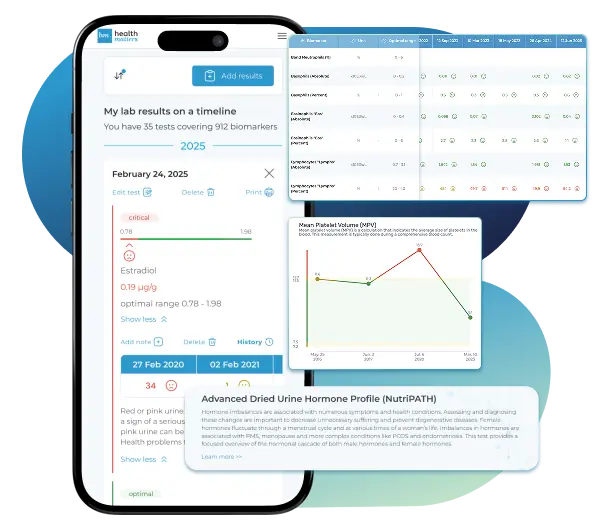
Bring all your results together to compare, track progress, export your history, and share securely.
What Healthmatters Members Are Saying

I have been using Healthmatters.io since 2021. I travel all over the world and use different doctors and health facilities. This site has allowed me to consolidate all my various test results over 14 years in one place. And every doctor that I show this to has been impressed. Because with any health professional I talk to, I can pull up historical results in seconds. It is invaluable. Even going back to the same doctor, they usually do not have the historical results from their facility in a graph format. That has been very helpful.
Anthony
Unlimited Plan Member since 2021
What fantastic service and great, easy-to-follow layouts! I love your website; it makes it so helpful to see patterns in my health data. It's truly a pleasure to use. I only wish the NHS was as organized and quick as Healthmatters.io. You've set a new standard for health tracking!
Karin
Advanced Plan Member since 2020
As a PRO member and medical practitioner, Healthmatters.io has been an invaluable tool for tracking my clients' data. The layout is intuitive, making it easy to monitor trends and spot patterns over time. The ability to customize reports and charts helps me present information clearly to my clients, improving communication and outcomes. It's streamlined my workflow, saving me time and providing insights at a glance. Highly recommended for any practitioner looking for a comprehensive and user-friendly solution to track patient labs!
Paul
Healthmatters Pro Member since 2024

We implement proven measures to keep your data safe.
At HealthMatters, we're committed to maintaining the security and confidentiality of your personal information. We've put industry-leading security standards in place to help protect against the loss, misuse, or alteration of the information under our control. We use procedural, physical, and electronic security methods designed to prevent unauthorized people from getting access to this information. Our internal code of conduct adds additional privacy protection. All data is backed up multiple times a day and encrypted using SSL certificates. See our Privacy Policy for more details.