
 Optimal Result:
11.4 - 185.6 mcg/g.
Optimal Result:
11.4 - 185.6 mcg/g.

5-HTP (also called oxitriptan) is a naturally occurring amino acid and the direct precursor to serotonin (5-HT). Your body makes 5-HTP from the dietary amino acid tryptophan using an enzyme called tryptophan hydroxylase. Another enzyme, aromatic L-amino acid decarboxylase (AADC), quickly converts 5-HTP into serotonin. Because of this, 5-HTP in blood or urine is usually low and short-lived.
Why It Matters
Serotonin helps regulate mood, sleep, appetite, gut movement, pain perception, and even platelet activity. Measuring 5-HTP (along with metabolites like 5-HIAA, the main serotonin breakdown product) gives insight into:
-
Serotonin pathway activity
-
Effects of supplements
-
How your body processes serotonin outside the brain
Importantly, 5-HTP is often sold over-the-counter as a supplement for mood, appetite, and sleep. This means test results can be strongly influenced by recent use.
Biochemistry in Brief
Tryptophan → (tryptophan hydroxylase) → 5-HTP → (AADC) → Serotonin (5-HT) → 5-HIAA (urinary metabolite)
After taking 5-HTP by mouth, labs often see higher urinary 5-HIAA. This shows that 5-HTP is converted to serotonin in the body (outside the brain) and then broken down.
How the Test is Reported
-
Some labs use urine, others blood.
-
Related markers (like serotonin or 5-HIAA) may also be included.
-
First-morning urine, normalized to creatinine, is best for consistent comparisons.
Interpreting Results
In-range / typical
-
Reflects usual diet and normal 5-HTP metabolism.
-
If you feel well, no special action is usually needed.
Elevated
-
Most often due to recent 5-HTP or tryptophan supplements.
-
May also occur with:
-
Non–first-morning urine samples
-
Very protein-rich meals
-
Hydration or collection factors
-
-
Often paired with higher urinary 5-HIAA.
What to do:
-
If safe, consider stopping supplements for 3–5 days and repeat a morning, creatinine-normalized test.
-
Talk to your doctor about any medications or other supplements that affect serotonin.
Low
-
May simply mean that 5-HTP was quickly converted into serotonin, which is normal.
-
Can also reflect low protein intake or fasting.
-
Should always be interpreted together with serotonin, 5-HIAA, and your symptoms.
Important Context & Cautions
-
Brain vs. body: A blood or urine 5-HTP level does not directly show brain serotonin. The brain tightly controls neurotransmitter levels.
-
Drug/supplement interactions: 5-HTP can combine with SSRIs, SNRIs, MAO inhibitors, tricyclics, buspirone, triptans, St. John’s wort, and other serotonergic agents. Taking these together can increase the risk of serotonin toxicity.
-
Digestive effects: Because much serotonin is made in the gut, high peripheral conversion of 5-HTP may cause nausea or GI symptoms.
-
Collection factors: Hydration, meals, timing of the sample, and supplement use within 72 hours all influence results.
Tips for a Clearer Test Result
-
Use a first-morning urine sample (if urine test).
-
Check that results are creatinine-normalized.
-
Record a 3–5 day diary of your diet, supplement doses/timing, caffeine, alcohol, sleep, and exercise.
-
If results are unclear or unexpectedly high, repeat after a safe supplement washout (3–5 days).
When to Follow Up
-
Persistently high results without supplements
-
Elevated values with symptoms such as headaches, flushing, GI upset, agitation, or sleep changes
-
Any suspected supplement–medication interaction
Speak with your doctor for guidance, especially if you use prescription medications that affect serotonin.
Bottom Line
5-HTP is the direct precursor to serotonin and is usually kept low in the body. Test results are strongly influenced by supplement use. Elevated values most often reflect recent intake of 5-HTP or tryptophan and may show up alongside higher urinary 5-HIAA. Always use consistent sample collection, interpret results together with related markers and your symptoms, and discuss any changes in supplements or medications with your healthcare provider.
Lab Results Explained and Tracked
What does it mean if your 5-HTP result is too high?
Finding a higher-than-expected 5-HTP level in urine or blood is most often linked to supplement use. Because 5-HTP is available over the counter for mood, sleep, or appetite, recent intake—even within the last day or two—can raise results.
Common Reasons for Elevated 5-HTP
-
Recent 5-HTP supplementation (most frequent cause)
-
High-dose tryptophan products (can convert into 5-HTP)
-
Timing of collection (non–first-morning urine samples often run higher)
-
Dietary factors (very protein-rich meals)
-
Hydration and specimen handling issues
Elevated urinary 5-HTP is often paired with higher 5-HIAA levels, which is the main serotonin breakdown product. This confirms that some of the excess 5-HTP was converted to serotonin outside the brain (peripherally).
Why It Matters
-
5-HTP outside the brain does not directly reflect brain serotonin but may still affect body systems like the gut.
-
Elevated results highlight the strong impact of supplements or diet on this pathway.
-
Persistently high levels in people not using supplements may warrant further review.
Next Steps
If your 5-HTP is elevated:
-
Check your supplements and diet: Did you take 5-HTP or tryptophan in the past 72 hours?
-
If safe, consider a washout: Pausing supplements for 3–5 days, then retesting with a first-morning urine sample can show your baseline.
-
Discuss medications with your doctor: Combining 5-HTP with SSRIs, SNRIs, MAOIs, tricyclics, buspirone, St. John’s wort, triptans, or other serotonergic agents can increase the risk of serotonin overload (serotonin syndrome).
-
Look at related markers: Elevated serotonin or 5-HIAA may provide additional context.
When to Contact Your Clinician
Seek medical review if:
-
Elevated levels persist even when off supplements
-
You notice new or worsening symptoms such as nausea, GI upset, flushing, headaches, agitation, or sleep problems
-
You are using medications that also increase serotonin
Key Takeaway
High 5-HTP levels usually come from recent supplement use or diet rather than a medical condition. Because 5-HTP rapidly converts to serotonin in the body, test results should always be interpreted with related markers and your clinical picture in mind. A consistent collection method and open discussion with your healthcare provider are the best ways to clarify elevated results.
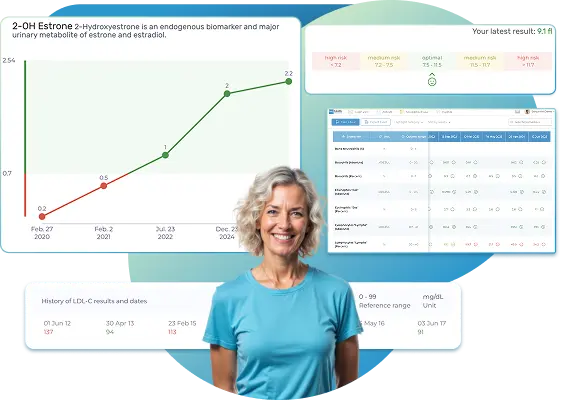
All Your Lab Results.
One Simple Dashboard.
Import, Track, and Share Your Lab Results Easily
Import, Track, and Share Your Lab Results
Import lab results from multiple providers, track changes over time, customize your reference ranges, and get clear explanations for each result. Everything is stored securely, exportable in one organized file, and shareable with your doctor—or anyone you choose.
Cancel or upgrade anytime
Article Review & Sources
All our content is backed by peer-reviewed studies, academic research, and trusted medical sources. We're committed to accuracy and transparency — see our editorial policy for details.
Laboratories
Bring All Your Lab Results Together — In One Place
We accept reports from any lab, so you can easily collect and organize all your health information in one secure spot.











Pricing Table
Gather Your Lab History — and Finally Make Sense of It
Finally, Your Lab Results Organized and Clear

Personal plans

$79/ year
Advanced Plan
Access your lab reports, explanations, and tracking tools.
- Import lab results from any provider
- Track all results with visual tools
- Customize your reference ranges
- Export your full lab history anytime
- Share results securely with anyone
- Receive 5 reports entered for you
- Cancel or upgrade anytime
$250/ once
Unlimited Account
Pay once, access everything—no monthly fees, no limits.
- Import lab results from any provider
- Track all results with visual tools
- Customize your reference ranges
- Export your full lab history anytime
- Share results securely with anyone
- Receive 10 reports entered for you
- No subscriptions. No extra fees.
$45/ month
Pro Monthly
Designed for professionals managing their clients' lab reports
- Import lab results from any provider
- Track lab results for multiple clients
- Customize reference ranges per client
- Export lab histories and reports
- Begin with first report entered by us
- Cancel or upgrade anytime
About membership
What's included in a Healthmatters membership
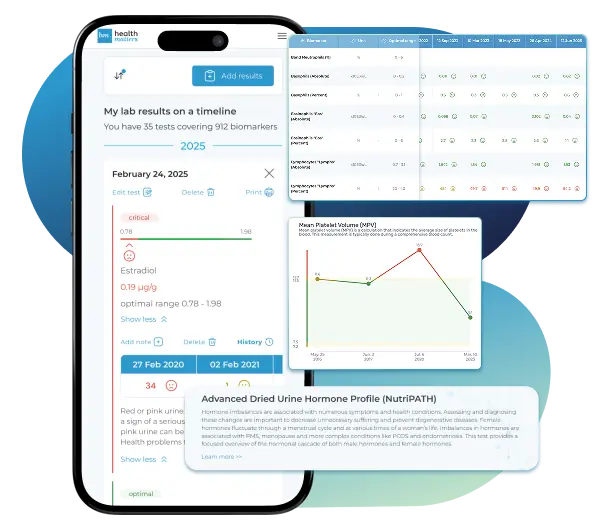
 Import Lab Results from Any Source
 See Your Health Timeline
 Understand What Your Results Mean

 Visualize Your Results

 Data Entry Service for Your Reports
 Securely Share With Anyone You Trust
Let Your Lab Results Tell the Full Story
Once your results are in one place, see the bigger picture — track trends over time, compare data side by side, export your full history, and share securely with anyone you trust.




Bring all your results together to compare, track progress, export your history, and share securely.
What Healthmatters Members Are Saying

I have been using Healthmatters.io since 2021. I travel all over the world and use different doctors and health facilities. This site has allowed me to consolidate all my various test results over 14 years in one place. And every doctor that I show this to has been impressed. Because with any health professional I talk to, I can pull up historical results in seconds. It is invaluable. Even going back to the same doctor, they usually do not have the historical results from their facility in a graph format. That has been very helpful.
Anthony
Unlimited Plan Member since 2021
What fantastic service and great, easy-to-follow layouts! I love your website; it makes it so helpful to see patterns in my health data. It's truly a pleasure to use. I only wish the NHS was as organized and quick as Healthmatters.io. You've set a new standard for health tracking!
Karin
Advanced Plan Member since 2020
As a PRO member and medical practitioner, Healthmatters.io has been an invaluable tool for tracking my clients' data. The layout is intuitive, making it easy to monitor trends and spot patterns over time. The ability to customize reports and charts helps me present information clearly to my clients, improving communication and outcomes. It's streamlined my workflow, saving me time and providing insights at a glance. Highly recommended for any practitioner looking for a comprehensive and user-friendly solution to track patient labs!
Paul
Healthmatters Pro Member since 2024

We implement proven measures to keep your data safe.
At HealthMatters, we're committed to maintaining the security and confidentiality of your personal information. We've put industry-leading security standards in place to help protect against the loss, misuse, or alteration of the information under our control. We use procedural, physical, and electronic security methods designed to prevent unauthorized people from getting access to this information. Our internal code of conduct adds additional privacy protection. All data is backed up multiple times a day and encrypted using SSL certificates. See our Privacy Policy for more details.