Optimal Result:
0 - 28 ug/L.
Optimal Result:
0 - 28 ug/L.

Nickel is a highly abundant element with a silvery-white appearance. Nickel is frequently combined with other metals to form alloys and is essential for the catalytic activity of some plant and bacterial enzymes but has no known role in humans.
Nickel and its compounds have no characteristic odor or taste. Nickel compounds are used for Nickel plating, to color ceramics, to make some batteries, and as substances known as catalysts that increase the rate of chemical reactions. One of the most toxic Nickel compounds is nickel carbonyl, Ni(CO)4, which is used as a catalyst in petroleum refining and in the plastics industry, is frequently employed in the production of metal alloys (which are popular for their anticorrosive and hardness properties), in nickel-cadmium rechargeable batteries, and is used as a catalyst in hydrogenation of oils. Ni(CO)4 is very toxic.
Occupational exposure to Nickel occurs primarily via inhalation of Nickel compounds. Inhalation of dust high in Nickel content has been associated with development of lung and nasal cancer.
Food is the major source of exposure to Ni.
Foods naturally high in Nickel include chocolate, soybeans, nuts, and oatmeal. Individuals may also be exposed to nickel by breathing air, drinking water, or smoking tobacco containing Nickel. Stainless steel and coins contain Nickel. Some jewelry is plated with Nickel or made from Nickel alloys. Patients may be exposed to Nickel in artificial body parts made from Nickel-containing alloys.
The most common harmful health effect of Nickel in humans is an allergic reaction. Approximately 10% to 20% of the population is sensitive to Nickel. The most serious harmful health effects from exposure to Nickel, such as chronic bronchitis, reduced lung function, and cancer of the lung and nasal sinus, have occurred in people who have breathed dust containing certain Nickel compounds while working in Nickel refineries or nickel-processing plants.
Patients undergoing dialysis are exposed to Nickel and accumulate Nickel in blood and other organs; there appear to be no adverse health effects from this exposure. Hypernickelemia has been observed in patients undergoing renal dialysis. At the present time, this is considered to be an incidental finding as no correlation with toxic events has been identified. Routine monitoring of patients undergoing dialysis is currently not recommended.
Lab Results Explained and Tracked
What does it mean if your Nickel result is too high?
Food is the major source of exposure to Ni.
Foods naturally high in Nickel include chocolate, soybeans, nuts, and oatmeal. Individuals may also be exposed to nickel by breathing air, drinking water, or smoking tobacco containing Nickel. Stainless steel and coins contain Nickel. Some jewelry is plated with Nickel or made from Nickel alloys. Patients may be exposed to Nickel in artificial body parts made from Nickel-containing alloys.
The most common harmful health effect of Nickel in humans is an allergic reaction. Approximately 10% to 20% of the population is sensitive to Nickel. The most serious harmful health effects from exposure to Nickel, such as chronic bronchitis, reduced lung function, and cancer of the lung and nasal sinus, have occurred in people who have breathed dust containing certain Nickel compounds while working in Nickel refineries or nickel-processing plants.
----------------------
There is substantial evidence that Nickel is an essential element which is required in extremely low amounts. However, excess Nickel has been well established to be nephrotoxic, and carcinogenic. Elevated Nickel is often found in individuals who work in the electronic and plating, mining, and steel manufacture industries. A cigarette typically contains from 2 to 6 mcg of Nickel; Nickel is absorbed more efficiently in the lungs than in the gastrointestinal tract. Symptoms of chronic Nickel exposure include dermatitis, chronic rhinitis, and hypersensitivity reactions. Nickel can hypersensitize the immune system, subsequently causing hyper allergenic responses to many different substances.
Symptoms of Nickel toxicity are dermatitis and pulmonary inflammation (following exposure to Nickel dust, smoke). Long term or chronic Nickel toxicity may lead to liver necrosis and carcinoma.
Routes of exposure:
The main routes of nickel intake for humans are inhalation, ingestion and absorption through the skin.
Air:
About 0.04–0.58 µg of nickel is released with the mainstream smoke of one cigarette. Smoking 40 cigarettes per day may thus lead to inhalation of 2–23 µg of nickel.
Drinking-water:
Nickel may be leached from nickel-containing plumbing fittings, and levels of up to 500 µg/litre have been recorded in water left overnight in such fittings. In areas with nickel mining, levels of up to 200 µg/litre have been recorded in drinking-water. The average level of nickel in drinking-water in public water supply systems in the United States was 4.8 µg/litre in 1969.
Food:
In most food products, the nickel content is less than 0.5 mg/kg fresh weight. Cacao products and nuts may, however, contain as much as 10 and 3 mg/kg, respectively.
------------------------
References:
https://www.euro.who.int/__data/assets/pdf_file/0014/123080/AQG2ndEd_6_10Nickel.pdf

All Your Lab Results.
One Simple Dashboard.
Import, Track, and Share Your Lab Results Easily
Import, Track, and Share Your Lab Results
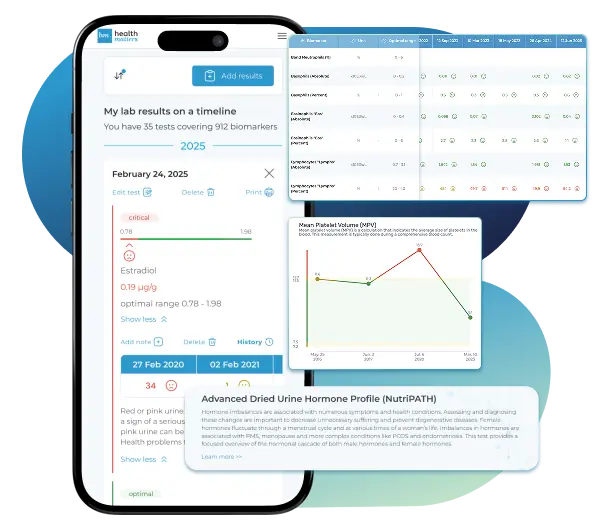
Import lab results from multiple providers, track changes over time, customize your reference ranges, and get clear explanations for each result. Everything is stored securely, exportable in one organized file, and shareable with your doctor—or anyone you choose.
Cancel or upgrade anytime
Article Review & Sources
All our content is backed by peer-reviewed studies, academic research, and trusted medical sources. We're committed to accuracy and transparency — see our editorial policy for details.
Laboratories
Bring All Your Lab Results Together — In One Place
We accept reports from any lab, so you can easily collect and organize all your health information in one secure spot.










Pricing Table
Gather Your Lab History — and Finally Make Sense of It
Finally, Your Lab Results Organized and Clear

Personal plans

$79/ year
Advanced Plan
Access your lab reports, explanations, and tracking tools.
- Import lab results from any provider
- Track all results with visual tools
- Customize your reference ranges
- Export your full lab history anytime
- Share results securely with anyone
- Receive 5 reports entered for you
- Cancel or upgrade anytime
$250/ once
Unlimited Account
Pay once, access everything—no monthly fees, no limits.
- Import lab results from any provider
- Track all results with visual tools
- Customize your reference ranges
- Export your full lab history anytime
- Share results securely with anyone
- Receive 10 reports entered for you
- No subscriptions. No extra fees.
$45/ month
Pro Monthly
Designed for professionals managing their clients' lab reports
- Import lab results from any provider
- Track lab results for multiple clients
- Customize reference ranges per client
- Export lab histories and reports
- Begin with first report entered by us
- Cancel or upgrade anytime
About membership
What's included in a Healthmatters membership
 Import Lab Results from Any Source
 See Your Health Timeline
 Understand What Your Results Mean

 Visualize Your Results

 Data Entry Service for Your Reports
 Securely Share With Anyone You Trust
Let Your Lab Results Tell the Full Story
Once your results are in one place, see the bigger picture — track trends over time, compare data side by side, export your full history, and share securely with anyone you trust.




Bring all your results together to compare, track progress, export your history, and share securely.
What Healthmatters Members Are Saying

I have been using Healthmatters.io since 2021. I travel all over the world and use different doctors and health facilities. This site has allowed me to consolidate all my various test results over 14 years in one place. And every doctor that I show this to has been impressed. Because with any health professional I talk to, I can pull up historical results in seconds. It is invaluable. Even going back to the same doctor, they usually do not have the historical results from their facility in a graph format. That has been very helpful.
Anthony
Unlimited Plan Member since 2021
What fantastic service and great, easy-to-follow layouts! I love your website; it makes it so helpful to see patterns in my health data. It's truly a pleasure to use. I only wish the NHS was as organized and quick as Healthmatters.io. You've set a new standard for health tracking!
Karin
Advanced Plan Member since 2020
As a PRO member and medical practitioner, Healthmatters.io has been an invaluable tool for tracking my clients' data. The layout is intuitive, making it easy to monitor trends and spot patterns over time. The ability to customize reports and charts helps me present information clearly to my clients, improving communication and outcomes. It's streamlined my workflow, saving me time and providing insights at a glance. Highly recommended for any practitioner looking for a comprehensive and user-friendly solution to track patient labs!
Paul
Healthmatters Pro Member since 2024

We implement proven measures to keep your data safe.
At HealthMatters, we're committed to maintaining the security and confidentiality of your personal information. We've put industry-leading security standards in place to help protect against the loss, misuse, or alteration of the information under our control. We use procedural, physical, and electronic security methods designed to prevent unauthorized people from getting access to this information. Our internal code of conduct adds additional privacy protection. All data is backed up multiple times a day and encrypted using SSL certificates. See our Privacy Policy for more details.