
Lentil Lectin + Pea Lectin
 Optimal Result:
0.4 - 1.2 ELISA Index.
Optimal Result:
0.4 - 1.2 ELISA Index.

Lectins are naturally occurring proteins found in many plants, including legumes such as lentils and peas. These proteins can bind to carbohydrates and play a role in plant defense mechanisms. Most lectins are significantly reduced through soaking, cooking, and food preparation, but they remain an area of interest in immune-reactivity research.
The Lentil Lectin + Pea Lectin marker in the Alzheimer's LINX™ panel does not measure food intolerance, food allergy, or dietary sensitivity in the traditional sense. Instead, it evaluates whether the immune system has developed IgG antibodies against lectin-related proteins found in lentils and peas.
Cyrex includes this marker as part of its investigation into potential food-derived immune triggers that may contribute to broader patterns of immune activation. Researchers continue to explore whether certain dietary proteins may influence inflammation, intestinal barrier function, immune regulation, or molecular cross-reactivity in susceptible individuals.
A positive result does not prove that lentils or peas are causing symptoms, cognitive decline, neurological disease, or inflammation. Likewise, a normal result does not exclude food-related immune responses. Results should be interpreted alongside the rest of the Alzheimer's LINX™ panel, clinical symptoms, dietary history, and other laboratory findings.
Because this marker is part of an immune-reactivity panel rather than a food allergy test, elevated results are generally considered hypothesis-generating and may warrant further discussion with a healthcare professional.
Lab Results Explained and Tracked
What does it mean if your Lentil Lectin + Pea Lectin result is too high?
Elevated Lentil Lectin + Pea Lectin antibodies may indicate increased immune recognition of lectin proteins found in lentils and peas. Within the Alzheimer's LINX™ panel, this marker is intended to help identify potential dietary immune-reactivity patterns that may exist alongside other neurological, inflammatory, infectious, or environmental immune responses.
Importantly, an elevated result does not mean that lentils or peas are harmful to everyone, nor does it establish a direct cause of neurological symptoms or cognitive decline. The marker measures immune reactivity rather than disease activity.
Healthcare professionals typically evaluate this finding in the context of the broader Alzheimer's LINX™ profile. When multiple food-reactivity markers are elevated alongside neurological or inflammatory targets, the overall pattern may provide additional insight into immune processes that could be relevant to brain health.
Results are best interpreted as one component of a comprehensive assessment rather than as a standalone indicator of disease or dietary intolerance.
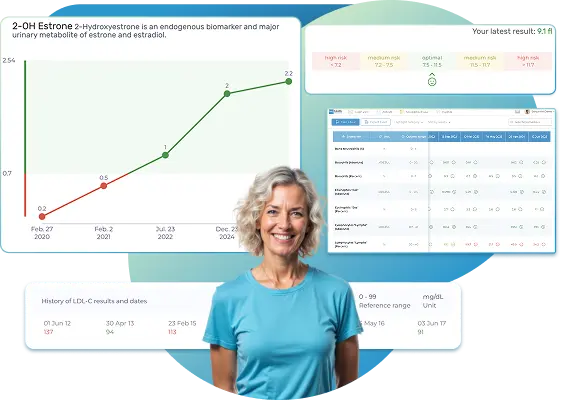
All Your Lab Results.
One Simple Dashboard.
Import, Track, and Share Your Lab Results Easily
Import, Track, and Share Your Lab Results
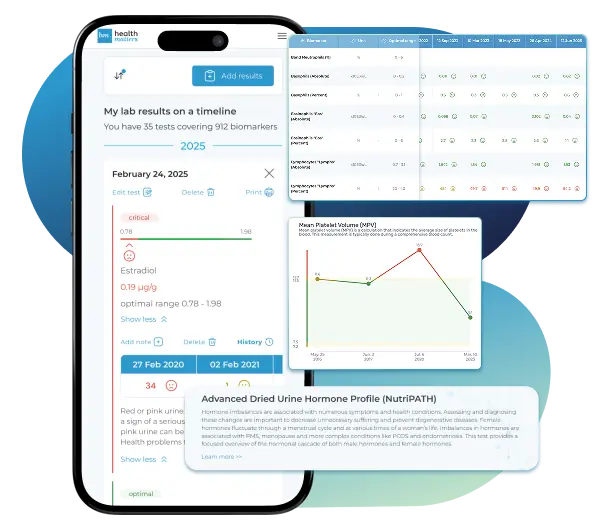
Import lab results from multiple providers, track changes over time, customize your reference ranges, and get clear explanations for each result. Everything is stored securely, exportable in one organized file, and shareable with your doctor—or anyone you choose.
Cancel or upgrade anytime
Article Review & Sources
All our content is backed by peer-reviewed studies, academic research, and trusted medical sources. We're committed to accuracy and transparency — see our editorial policy for details.
Laboratories
Bring All Your Lab Results Together — In One Place
We accept reports from any lab, so you can easily collect and organize all your health information in one secure spot.











Pricing Table
Gather Your Lab History — and Finally Make Sense of It
Finally, Your Lab Results Organized and Clear

Personal plans

$79/ year
Advanced Plan
Access your lab reports, explanations, and tracking tools.
- Import lab results from any provider
- Track all results with visual tools
- Customize your reference ranges
- Export your full lab history anytime
- Share results securely with anyone
- Receive 5 reports entered for you
- Cancel or upgrade anytime
$250/ once
Unlimited Account
Pay once, access everything—no monthly fees, no limits.
- Import lab results from any provider
- Track all results with visual tools
- Customize your reference ranges
- Export your full lab history anytime
- Share results securely with anyone
- Receive 10 reports entered for you
- No subscriptions. No extra fees.
$45/ month
Pro Monthly
Designed for professionals managing their clients' lab reports
- Import lab results from any provider
- Track lab results for multiple clients
- Customize reference ranges per client
- Export lab histories and reports
- Begin with first report entered by us
- Cancel or upgrade anytime
About membership
What's included in a Healthmatters membership
 Import Lab Results from Any Source
 See Your Health Timeline
 Understand What Your Results Mean

 Visualize Your Results

 Data Entry Service for Your Reports
 Securely Share With Anyone You Trust
Let Your Lab Results Tell the Full Story
Once your results are in one place, see the bigger picture — track trends over time, compare data side by side, export your full history, and share securely with anyone you trust.




Bring all your results together to compare, track progress, export your history, and share securely.
What Healthmatters Members Are Saying

I have been using Healthmatters.io since 2021. I travel all over the world and use different doctors and health facilities. This site has allowed me to consolidate all my various test results over 14 years in one place. And every doctor that I show this to has been impressed. Because with any health professional I talk to, I can pull up historical results in seconds. It is invaluable. Even going back to the same doctor, they usually do not have the historical results from their facility in a graph format. That has been very helpful.
Anthony
Unlimited Plan Member since 2021
What fantastic service and great, easy-to-follow layouts! I love your website; it makes it so helpful to see patterns in my health data. It's truly a pleasure to use. I only wish the NHS was as organized and quick as Healthmatters.io. You've set a new standard for health tracking!
Karin
Advanced Plan Member since 2020
As a PRO member and medical practitioner, Healthmatters.io has been an invaluable tool for tracking my clients' data. The layout is intuitive, making it easy to monitor trends and spot patterns over time. The ability to customize reports and charts helps me present information clearly to my clients, improving communication and outcomes. It's streamlined my workflow, saving me time and providing insights at a glance. Highly recommended for any practitioner looking for a comprehensive and user-friendly solution to track patient labs!
Paul
Healthmatters Pro Member since 2024

We implement proven measures to keep your data safe.
At HealthMatters, we're committed to maintaining the security and confidentiality of your personal information. We've put industry-leading security standards in place to help protect against the loss, misuse, or alteration of the information under our control. We use procedural, physical, and electronic security methods designed to prevent unauthorized people from getting access to this information. Our internal code of conduct adds additional privacy protection. All data is backed up multiple times a day and encrypted using SSL certificates. See our Privacy Policy for more details.