
LD 4 (or LDH-4)
Other names: (LD) Fraction 4
 Optimal Result:
5 - 13 %.
Optimal Result:
5 - 13 %.

When illness or injury damages your cells, LDH may be released into the bloodstream, causing the level of LDH in your blood to rise.
LDH-4: liver and skeletal muscle
---------------------
Measuring LDH acan be a useful tool for doctors when evaluating and treating certain medical conditions. Normal ranges vary with age. As scientists continue to learn more about the role of LDH in the body, the usefulness of monitoring LDH levels in certain diseases and conditions will likely increase.
What is lactate dehydrogenase?
Lactate dehydrogenase (LDH) is an enzyme required during the process of turning sugar into energy for your cells. LDH is present in many kinds of organs and tissues throughout the body, including the liver, heart, pancreas, kidneys, skeletal muscles, lymph tissue, and blood cells.
When illness or injury damages your cells, LDH may be released into the bloodstream, causing the level of LDH in your blood to rise. High levels of LDH in the blood point to acute or chronic cell damage, but additional tests are necessary to discover its cause. Abnormally low LDH levels only rarely occur and usually aren’t considered harmful.
What are the types of LDH isoenzymes?
There are five different forms of LDH that are called isoenzymes. They are distinguished by slight differences in their structure.
The isoenzymes of LDH are LDH-1, LDH-2, LDH-3, LDH-4, and LDH-5.
Different LDH isoenzymes are found in different body tissues.
The areas of highest concentration for each type of isoenzyme are:
LDH-1: heart and red blood cells
LDH-2: heart and red blood cells
LDH-3: lymph tissue, lungs, platelets, pancreas
LDH-4: liver and skeletal muscle
LDH-5: liver and skeletal muscle
Typical ranges for LDH levels:
LDH levels vary based on age and the individual laboratory. Infants and young children will have much higher normal LDH levels than older children or adults. LDH is often reported in units per liter (U/L). In general, normal ranges for LDH levels in the blood are as follows:
| Age | Normal LDH level |
| 0 to 10 days | 290–2000 U/L |
| 10 days to 2 years | 180–430 U/L |
| 2 to 12 years | 110–295 U/L |
| Older than 12 years | 100–190 U/L |
Links:
Clinical laboratory tests: Normal values. (2017). apps.mcc.ca/objectives_online/objectives.pl?lang=english&loc=values
Faloppi L, et al. (2016). The correlation between LDH serum levels and clinical outcome in advanced biliary tract cancer patients treated with first line chemotherapy. -- ncbi.nlm.nih.gov/pmc/articles/PMC4827080/
Lactate dehydrogenase deficiency. (2015). ghr.nlm.nih.gov/condition/lactate-dehydrogenase-deficiency
Lactate dehydrogenase isoenzymes. (n.d.). urmc.rochester.edu/encyclopedia/content.aspx?ContentTypeID=167&ContentID=lactate_dehydrogenase_isoenzymes
LD. (2016). labtestsonline.org/understanding/analytes/ldh/tab/test
Mecabo G, et al. (2015). Lactate dehydrogenase isoenzyme 3 and hemolysis in sickle cell anemia: a possible correlation? bloodjournal.org/content/125/24/3821?sso-checked=true
TABLE 27.1: REFERENCE VALUES | Harriet Lane Handbook. (n.d.). unboundmedicine.com/harrietlane/view/Harriet_Lane_Handbook/309269/all/TABLE_27_1:_Reference_Values
References:
Rotenberg Z, Davidson E, Weinberger I, Fuchs J, Sperling O, Agmon J. The efficiency of lactate dehydrogenase isoenzyme determination for the diagnosis of acute myocardial infarction. Arch Pathol Lab Med. 1988; 112(9):895-897. PubMed 3415440
Loughlin JF, Krijnen PM, Jablonsky G, Leung FY, Henderson AR. Diagnostic efficiency of four lactate dehydrogenase isoenzyme-1 ratios in serum after myocardial infarction. Clin Chem. 1988 Oct; 34(2):1960-1965. PubMed 3168204
Rotenberg Z, Weinberger I, Sagie A, Fuchs J, Sperling O, Agmon J. Lactate dehydrogenase isoenzymes in serum during unstable angina. Clin Chem. 1986 Aug; 32(8):1566-1567. PubMed 3731454
Jablonsky G, Leung FY, Henderson AR. Changes in the ratio of lactate dehydrogenase isoenzymes 1 and 2 during the first day after acute myocardial infarction. Clin Chem. 1985 Oct; 31(10):1621-1624. PubMed 4042327
Rotenberg Z, Weinberger I, Sagie A, Fuchs J, Sperling O, Agmon J. Lactate dehydrogenase isoenzymes in serum during recent acute myocardial infarction. Clin Chem. 1987 Aug; 33(8):1419-1420. PubMed 3608159
Rotenberg Z, Weinberger I, Davidson E, Fuchs J, Sperling O, Agmon J. Atypical patterns of lactate dehydrogenase isoenzymes in acute myocardial infarction. Clin Chem. 1988 Jun, 34(6):1096-1098. PubMed 3378325
Jacobs DS, Robinson RA, Clark GM, Tucker JM. Clinical significance of the isomorphic pattern of the isoenzymes of serum lactate dehydrogenase. Ann Clin Lab Sci. 1977 Sep-Oct; 7(5):411-421. PubMed 900865
Rotenberg Z, Weinberger I, Davidson E, Fuchs J, Sperling O, Agmon J. Patterns of lactate dehydrogenase isoenzymes in serum of patients with acute pulmonary edema. Clin Chem. 1988 Sep; 34(9):1882-1884. PubMed 3416439
Rotenberg Z, Weinberger I, Davidson E, Fuchs J, Sperling O, Agmon J. Significance of isolated increases in total lactate dehydrogenase and its isoenzymes in serum of patients with bacterial pneumonia. Clin Chem. 1988 Jul; 34(7):1503-1505. PubMed 3390929
Gorus F, Aelbrecht W, Van Camp B. Circulating IgG-LD complex, dissociable by addition of NAD.+. Clin Chem. 1982 Jan; 28(1):236-239. PubMed 7055917
Pesce MA. The CK and LD macroenzymes. Lab Management. 1984 Nov 29; 22:29-41.
Podlasek SJ, Dufour DR, McPherson RA. Alterations in lactate dehydrogenase isoenzyme patterns after therapy with streptokinase or streptococcal infection. Clin Chem. 1989 Aug; 35(8):1763-1766. PubMed 2758647
Vladutiu AO. Cathodic lactate dehydrogenase (LDH 6): A sign of ominous prognosis? Arch Pathol Lab Med. 1983 Nov; 107(11):612-613. PubMed 6688723
Wolf PL. Lactate dehydrogenase-6: A biochemical sign of serious hepatic circulatory disturbance. Arch Intern Med. 1985 Aug; 145(8):1396-1397. PubMed 4026470
Von Eyben FE, Blaabjerg O, Petersen PH, et al. Serum lactate dehydrogenase isoenzyme 1 as a marker of testicular germ cell tumor. J Urol. 1988 Nov; 140(5):986-990. PubMed 2845154
Schwartz PE, Morris JM. Serum lactic dehydrogenase: a tumor marker for dysgerminoma. Obstet Gynecol. 1988 Sep; 72(3 Pt 2):511-515. PubMed 3405571
Yoshimura T, Takemori K, Okazaki T, Suzuki A. Serum lactic dehydrogenase and its isoenzymes in patients with ovarian dysgerminoma. Int J Gynaecol Obstet. 1988 Dec; 27(3):459-465. PubMed 2904916
Rotenberg Z, Weinberger I, Sagie A, et al. Total lactate dehydrogenase and its isoenzymes in serum of patients with non-small-cell lung cancer. Clin Chem. 1988 Apr; 34(4):668-670. PubMed 2834116
Manzo V, Sun T, Lien YY. Misdiagnosis of acute myocardial infarction. Ann Clin Lab Sci. 1990 Sep-Oct; 20(5):324-328. PubMed 2256660
Galbraith LV, Leung FY, Jablonsky G, Henderson AR. Time-related changes in the diagnostic utility of total lactate dehydrogenase, lactate dehydrogenase isoenzyme-1, and two lactate dehydrogenase isoenzyme-1 ratios in serum after myocardial infarction. Clin Chem. 1990 Jul; 36(7):1317-1322. PubMed 2372944
Clark CP 3rd, Foreman ML, Peters GN, Cheek JH, Sparkman RS. Efficacy of preoperative liver function tests and ultrasound in detecting hepatic metastasis in carcinoma of the breast. Surg Gynecol Obstet. 1988 Dec; 167(6):510-514. PubMed 3055370
Giannoulaki EE, Kalpaxis DL, Tentas C, Fessas P. Lactate dehydrogenase isoenzyme pattern in sera of patients with malignant diseases. Clin Chem. 1989 Mar; 35(3):396-399. PubMed 2920405
Lab Results Explained and Tracked
What does it mean if your LD 4 (or LDH-4) result is too high?
Because LDH is present in so many types of cells, high levels of LDH may indicate a number of conditions.
Elevated levels of LDH can include:
- blood flow deficiency
- cerebrovascular accident, also known as a stroke
- certain cancers
- heart attack
- hemolytic anemia
- infectious mononucleosis
- liver disease, such as hepatitis
- muscle injury
- muscular dystrophy
- pancreatitis
- tissue death
- use of alcohol or certain drugs
- sepsis and septic shock
High levels of LDH indicate some form of tissue damage. High levels of more than one isoenzyme may indicate more than one cause of tissue damage. For example, a patient with pneumonia could also have a heart attack. Extremely high levels of LDH could indicate severe disease or multiple organ failure.
Because LDH is in so many tissues throughout the body, LDH levels alone won’t be enough to determine the location and cause of tissue damage. A diagnosis will also require the use of other tests and images in addition to measuring the levels of LDH. For example, high LDH-4 and LDH-5 may mean either liver damage or muscle damage, but liver disease can’t be confirmed without a full liver panel.
Before the discovery of other blood markers for heart injury, LDH was used to monitor people with heart attacks. Now, troponin, a protein produced more specifically in heart cells, is often a more accurate indicator of a heart attack.
Once your doctor diagnoses your particular condition, they may measure your LDH levels regularly to track the progress of your treatment.
LDH levels are also often used during the treatment of certain cancers to predict outcomes and monitor the body’s response to medications.
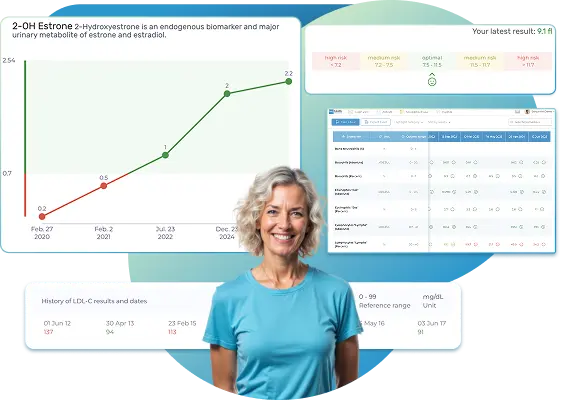
All Your Lab Results.
One Simple Dashboard.
Import, Track, and Share Your Lab Results Easily
Import, Track, and Share Your Lab Results
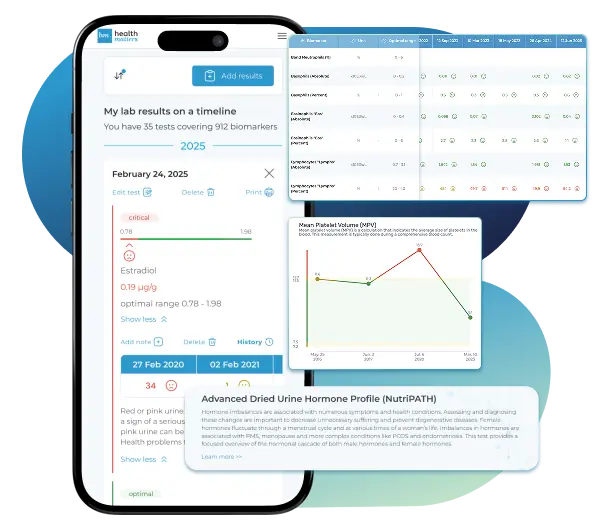
Import lab results from multiple providers, track changes over time, customize your reference ranges, and get clear explanations for each result. Everything is stored securely, exportable in one organized file, and shareable with your doctor—or anyone you choose.
Cancel or upgrade anytime
What does it mean if your LD 4 (or LDH-4) result is too low?
LDH deficiency affects how the body breaks down sugar for use as energy in cells, particularly muscle cells. It’s very rare for a person to have low LDH levels.
Two types of genetic mutations cause low LDH levels. People with the first type will experience fatigue and muscle pain, especially during exercise. While those with the second type may have no symptoms at all. You may also have low LDH levels if you’ve consumed a large amount of ascorbic acid (vitamin C).
Article Review & Sources
All our content is backed by peer-reviewed studies, academic research, and trusted medical sources. We're committed to accuracy and transparency — see our editorial policy for details.
Laboratories
Bring All Your Lab Results Together — In One Place
We accept reports from any lab, so you can easily collect and organize all your health information in one secure spot.











Pricing Table
Gather Your Lab History — and Finally Make Sense of It
Finally, Your Lab Results Organized and Clear

Personal plans

$79/ year
Advanced Plan
Access your lab reports, explanations, and tracking tools.
- Import lab results from any provider
- Track all results with visual tools
- Customize your reference ranges
- Export your full lab history anytime
- Share results securely with anyone
- Receive 5 reports entered for you
- Cancel or upgrade anytime
$250/ once
Unlimited Account
Pay once, access everything—no monthly fees, no limits.
- Import lab results from any provider
- Track all results with visual tools
- Customize your reference ranges
- Export your full lab history anytime
- Share results securely with anyone
- Receive 10 reports entered for you
- No subscriptions. No extra fees.
$45/ month
Pro Monthly
Designed for professionals managing their clients' lab reports
- Import lab results from any provider
- Track lab results for multiple clients
- Customize reference ranges per client
- Export lab histories and reports
- Begin with first report entered by us
- Cancel or upgrade anytime
About membership
What's included in a Healthmatters membership
 Import Lab Results from Any Source
 See Your Health Timeline
 Understand What Your Results Mean

 Visualize Your Results

 Data Entry Service for Your Reports
 Securely Share With Anyone You Trust
Let Your Lab Results Tell the Full Story
Once your results are in one place, see the bigger picture — track trends over time, compare data side by side, export your full history, and share securely with anyone you trust.




Bring all your results together to compare, track progress, export your history, and share securely.
What Healthmatters Members Are Saying

I have been using Healthmatters.io since 2021. I travel all over the world and use different doctors and health facilities. This site has allowed me to consolidate all my various test results over 14 years in one place. And every doctor that I show this to has been impressed. Because with any health professional I talk to, I can pull up historical results in seconds. It is invaluable. Even going back to the same doctor, they usually do not have the historical results from their facility in a graph format. That has been very helpful.
Anthony
Unlimited Plan Member since 2021
What fantastic service and great, easy-to-follow layouts! I love your website; it makes it so helpful to see patterns in my health data. It's truly a pleasure to use. I only wish the NHS was as organized and quick as Healthmatters.io. You've set a new standard for health tracking!
Karin
Advanced Plan Member since 2020
As a PRO member and medical practitioner, Healthmatters.io has been an invaluable tool for tracking my clients' data. The layout is intuitive, making it easy to monitor trends and spot patterns over time. The ability to customize reports and charts helps me present information clearly to my clients, improving communication and outcomes. It's streamlined my workflow, saving me time and providing insights at a glance. Highly recommended for any practitioner looking for a comprehensive and user-friendly solution to track patient labs!
Paul
Healthmatters Pro Member since 2024

We implement proven measures to keep your data safe.
At HealthMatters, we're committed to maintaining the security and confidentiality of your personal information. We've put industry-leading security standards in place to help protect against the loss, misuse, or alteration of the information under our control. We use procedural, physical, and electronic security methods designed to prevent unauthorized people from getting access to this information. Our internal code of conduct adds additional privacy protection. All data is backed up multiple times a day and encrypted using SSL certificates. See our Privacy Policy for more details.