
Lactic Acid
 Optimal Result:
1.9 - 19.8 mmol/mol creatinine.
Optimal Result:
1.9 - 19.8 mmol/mol creatinine.

Lactic Acid and Pyruvic Acid are byproducts of glycolysis. Carbohydrates, which contain glucose, are broken down through glycolysis to form pyruvate and two ATP molecules. Pyruvate can also be generated through the catabolism of various amino acids, including alanine, serine, cysteine, glycine, tryptophan and threonine. Magnesium is an important cofactor for a number of glycolytic enzymes necessary to produce pyruvate. Optimally, pyruvic acid is oxidized to form Acetyl-CoA to be used aerobically via the Citric Acid Cycle to produce energy. In an anaerobic state, lactic acid is formed instead.
References:
- ieczenik SR, Neustadt J. Mitochondrial dysfunction and molecular pathways of disease. Exp Mol Pathol. 2007;83(1):84-92.
- Depeint F, Bruce WR, Shangari N, Mehta R, O'Brien PJ. Mitochondrial function and toxicity: role of the B vitamin family on mitochondrial energy metabolism. Chemico-biol Interact. 2006;163(1-2):94-112.
- Gray LR, Tompkins SC, Taylor EB. Regulation of pyruvate metabolism and human disease. Cell Mol Life Sci. 2014;71(14):2577-2604.
- Garfinkel L, Garfinkel D. Magnesium regulation of the glycolytic pathway and the enzymes involved. Magnesium. 1985;4(2-3):60- 72.
- Mayes PA, Bender DA. Glycolysis and the oxidation of pyruvate. Harper’s illustrated biochemistry (Eds RK Murray, DK Granner, PA Mayes, VW Rodwell) pp. 2003:136-144.
- Ravindran S, Radke GA, Guest JR, Roche TE. Lipoyl domainbased mechanism for the integrated feedback control of the pyruvate dehydrogenase complex by enhancement of pyruvate dehydrogenase kinase activity. J Biol Chem. 1996;271(2):653-662.
- Shipman K. Clinical biochemistry: Metabolic and clinical aspects (3rd edn). In: SAGE Publications Sage UK; 2015.
- Tirmenstein MA, Mathias PI, Snawder JE, Wey HE, Toraason M. Antimony-induced alterations in thiol homeostasis and adenine nucleotide status in cultured cardiac myocytes. Toxicology. 1997;119(3):203-211.
- Chapatwala KD, Rajanna B, Desaiah D. Cadmium induced changes in gluconeogenic enzymes in rat kidney and liver. Drug Chem Toxicol. 1980;3(4):407-420.
- Schlecht I, Gronwald W, Behrens G, et al. Visceral adipose tissue but not subcutaneous adipose tissue is associated with urine and serum metabolites. PloS one. 2017;12(4):e0175133.
- Friedrich N, Skaaby T, Pietzner M, et al. Identification of urine metabolites associated with 5-year changes in biomarkers of glucose homoeostasis. Diab Metab. 2017.
- Mostafa H, Amin AM, Teh CH, Murugaiyah V, Arif NH, Ibrahim B. Metabolic phenotyping of urine for discriminating alcoholdependent from social drinkers and alcohol-naive subjects. Drug Alc Depend. 2016;169:80-84.
- Hira HS, Shukla A, Kaur A, Kapoor S. Serum uric acid and lactate levels among patients with obstructive sleep apnea syndrome: which is a better marker of hypoxemia? Ann Saudi Med. 2012;32(1):37-42.
- Nikolaidis S, Kosmidis I, Sougioultzis M, Kabasakalis A, Mougios V. Diurnal variation and reliability of the urine lactate concentration after maximal exercise. Chronobiol Int. 2018;35(1):24-34.
- Tamaki N, Ikeda T, Funatsuka A. Zinc as activating cation for muscle glycolysis. J Nutr Sci Vitaminol. 1983;29(6):655-662.
- Ikeda T, Kimura K, Morioka S, Tamaki N. Inhibitory effects of Zn2+ on muscle glycolysis and their reversal by histidine. J Nutr Sci Vitaminol. 1980;26(4):357-366.
- Kaplan RS, Mayor JA, Blackwell R, Maughon RH, Wilson GL. The effect of insulin supplementation on diabetes-induced alterations in the extractable levels of functional mitochondrial anion transport proteins. Arch Biochem Biophys. 1991;287(2):305-311.
Lab Results Explained and Tracked
What does it mean if your Lactic Acid result is too high?
An elevated pyruvic acid would reflect an inability to form Acetyl-CoA to feed the Citric Acid Cycle. Pyruvate uses the pyruvate dehydrogenase complex to form Acetyl-CoA. A different enzyme, pyruvate carboxylase, is responsible for the conversion of pyruvate into oxaloacetate. Nutrient cofactors, such as vitamin-B1, B2, B3, B7, magnesium, and lipoate are needed to support the pyruvate dehydrogenase and pyruvate carboxylase enzymes.
Insufficiency in any of these nutrients can raise levels of pyruvic acid. In vitro studies have shown there are some toxins that can also affect these enzymes, such as antimony, mercury, and cadmium.
Pyruvate elevations can also be seen with a high intake of carbohydrates, as well as rare genetic forms of pyruvate dehydrogenase deficiency.
Any anerobic or low oxygen state, including pulmonary disease, anemia, sleep apnea, among others can lead to elevations of lactic acid.
Elevations of urinary lactic acid can also be the result of strenuous exercise, insulin resistance, dysglycemia, and alcohol dependence.
Zinc is an essential component in the enzymes which regulate glycolysis, such as lactate dehydrogenase (LDH). LDH converts lactate back to pyruvate in the liver via the Cori cycle. Elevations may be seen with a functional need for zinc.
Clinical Associations: Pyruvate metabolism abnormalities play important roles in cancer, heart failure, and neurodegeneration.

All Your Lab Results.
One Simple Dashboard.
Import, Track, and Share Your Lab Results Easily
Import, Track, and Share Your Lab Results
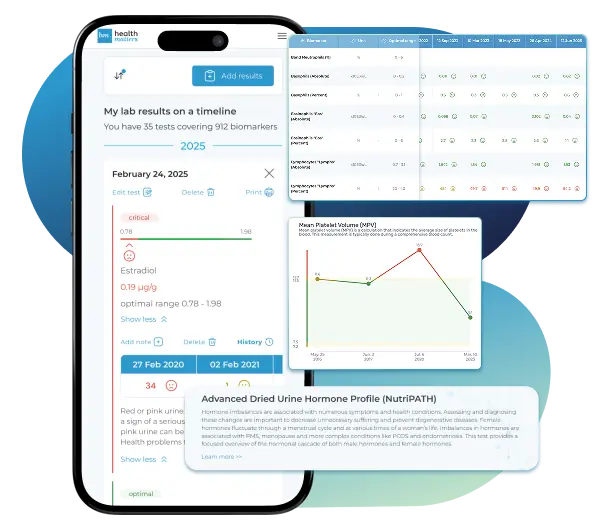
Import lab results from multiple providers, track changes over time, customize your reference ranges, and get clear explanations for each result. Everything is stored securely, exportable in one organized file, and shareable with your doctor—or anyone you choose.
Cancel or upgrade anytime
What does it mean if your Lactic Acid result is too low?
Low levels of pyruvic acid might imply low carbohydrate intake, lack of magnesium cofactors for glycolytic enzymes, or lack of insulin.
Article Review & Sources
All our content is backed by peer-reviewed studies, academic research, and trusted medical sources. We're committed to accuracy and transparency — see our editorial policy for details.
Laboratories
Bring All Your Lab Results Together — In One Place
We accept reports from any lab, so you can easily collect and organize all your health information in one secure spot.











Pricing Table
Gather Your Lab History — and Finally Make Sense of It
Finally, Your Lab Results Organized and Clear

Personal plans

$79/ year
Advanced Plan
Access your lab reports, explanations, and tracking tools.
- Import lab results from any provider
- Track all results with visual tools
- Customize your reference ranges
- Export your full lab history anytime
- Share results securely with anyone
- Receive 5 reports entered for you
- Cancel or upgrade anytime
$250/ once
Unlimited Account
Pay once, access everything—no monthly fees, no limits.
- Import lab results from any provider
- Track all results with visual tools
- Customize your reference ranges
- Export your full lab history anytime
- Share results securely with anyone
- Receive 10 reports entered for you
- No subscriptions. No extra fees.
$45/ month
Pro Monthly
Designed for professionals managing their clients' lab reports
- Import lab results from any provider
- Track lab results for multiple clients
- Customize reference ranges per client
- Export lab histories and reports
- Begin with first report entered by us
- Cancel or upgrade anytime
About membership
What's included in a Healthmatters membership
 Import Lab Results from Any Source
 See Your Health Timeline
 Understand What Your Results Mean

 Visualize Your Results

 Data Entry Service for Your Reports
 Securely Share With Anyone You Trust
Let Your Lab Results Tell the Full Story
Once your results are in one place, see the bigger picture — track trends over time, compare data side by side, export your full history, and share securely with anyone you trust.




Bring all your results together to compare, track progress, export your history, and share securely.
What Healthmatters Members Are Saying

I have been using Healthmatters.io since 2021. I travel all over the world and use different doctors and health facilities. This site has allowed me to consolidate all my various test results over 14 years in one place. And every doctor that I show this to has been impressed. Because with any health professional I talk to, I can pull up historical results in seconds. It is invaluable. Even going back to the same doctor, they usually do not have the historical results from their facility in a graph format. That has been very helpful.
Anthony
Unlimited Plan Member since 2021
What fantastic service and great, easy-to-follow layouts! I love your website; it makes it so helpful to see patterns in my health data. It's truly a pleasure to use. I only wish the NHS was as organized and quick as Healthmatters.io. You've set a new standard for health tracking!
Karin
Advanced Plan Member since 2020
As a PRO member and medical practitioner, Healthmatters.io has been an invaluable tool for tracking my clients' data. The layout is intuitive, making it easy to monitor trends and spot patterns over time. The ability to customize reports and charts helps me present information clearly to my clients, improving communication and outcomes. It's streamlined my workflow, saving me time and providing insights at a glance. Highly recommended for any practitioner looking for a comprehensive and user-friendly solution to track patient labs!
Paul
Healthmatters Pro Member since 2024

We implement proven measures to keep your data safe.
At HealthMatters, we're committed to maintaining the security and confidentiality of your personal information. We've put industry-leading security standards in place to help protect against the loss, misuse, or alteration of the information under our control. We use procedural, physical, and electronic security methods designed to prevent unauthorized people from getting access to this information. Our internal code of conduct adds additional privacy protection. All data is backed up multiple times a day and encrypted using SSL certificates. See our Privacy Policy for more details.