
 Optimal Result:
0 - 0.27 Score.
Optimal Result:
0 - 0.27 Score.

A Fibrosis Score estimates how much scarring (fibrosis) is present in your liver without a biopsy. It combines routine blood tests (and sometimes age/height/weight) in a validated formula to classify your risk of advanced fibrosis (significant scarring that can progress to cirrhosis). Clinicians use it to rule out low risk, flag high risk, and decide who needs imaging (e.g., transient elastography/FibroScan®), specialist referral, or closer follow-up.
When it’s ordered
-
Suspected or known fatty liver disease (NAFLD/MASLD or NASH)
-
Chronic hepatitis B or C
-
Alcohol-related liver disease
-
Metabolic risk (obesity, type 2 diabetes, dyslipidemia)
-
Persistently abnormal ALT/AST
-
To monitor change in fibrosis risk over time
How it’s calculated (the common scores)
Different “fibrosis scores” exist. Your report may name one specifically, or simply list “Fibrosis Score.” The most common are:
1) FIB-4 Index
Inputs: Age, AST, ALT, Platelets
Typical cutoffs (age <65):
-
< 1.3 → Low risk of advanced fibrosis
-
1.3–2.67 → Indeterminate
-
> 2.67 → High risk of advanced fibrosis
Note: In adults ≥65, the low-risk threshold is often raised to < 2.0 to reduce false positives.
2) NAFLD Fibrosis Score (NFS)
Inputs: Age, BMI, Diabetes/Impaired fasting glucose, AST, ALT, Platelets, Albumin
Cutoffs:
-
< −1.455 → Low risk
-
−1.455 to 0.676 → Indeterminate
-
> 0.676 → High risk
3) APRI (AST-to-Platelet Ratio Index)
Inputs: AST, AST upper limit of normal (ULN), Platelets
Common interpretive anchors:
-
Around 0.5 → low probability of significant fibrosis
-
Around 1.5 → higher probability of significant fibrosis
(Programs may use slightly different cutoffs for “significant” vs “advanced” fibrosis.)
4) ELF® (Enhanced Liver Fibrosis) Score
Inputs: Hyaluronic acid, P3NP, TIMP-1 (specialized markers)
Risk tiers (lab-specific): values typically ~9.8–10.5 indicate increasing fibrosis risk; higher numbers suggest higher probability of advanced fibrosis. Exact thresholds vary by lab and clinical setting.
Always interpret your number using the reference ranges printed on your report, because cutoffs and units can differ by laboratory and clinical guideline.
Understanding your result
Low-risk range
-
Suggests little to no advanced fibrosis right now.
-
Usual plan: reinforce liver-healthy habits and periodic re-check (e.g., every 1–3 years, sooner if risk changes).
Indeterminate range
-
Means uncertain: cannot confidently exclude or confirm advanced fibrosis.
-
Usual plan: second-line testing, often a FibroScan® (liver stiffness) or another fibrosis score, review medications, and repeat labs after addressing reversible factors.
High-risk range
-
Indicates a higher probability of advanced fibrosis (possible stage F3–F4).
-
Usual plan: hepatology referral, liver stiffness measurement, imaging, evaluation for complications, and a treatment plan specific to the cause (metabolic, viral, alcohol-related, etc.).
What can skew the score?
-
Acute illness or flares (AST/ALT temporarily high)
-
Recent strenuous exercise (can raise AST)
-
Alcohol use in the last days/weeks
-
Medications or supplements affecting liver enzymes or platelets
-
Thrombocytopenia from non-liver causes
-
Age ≥65 (raises FIB-4 even with modest enzyme changes)
-
Pregnancy, hemolysis, or lab variability
If any of these apply, your clinician may repeat testing after stabilization.
What to do next
If Low Risk
-
Maintain or adopt liver-healthy habits:
-
Weight management; aim for 7–10% weight loss if overweight
-
Mediterranean-style eating pattern; limit fructose-sweetened drinks and ultra-processed foods
-
Alcohol: avoid or minimize
-
Regular physical activity (aerobic + resistance)
-
-
Reassess the score and liver enzymes periodically.
If Indeterminate
-
Ask about FibroScan®, repeat labs in 3–6 months after lifestyle optimization, and evaluation for other causes (viral hepatitis, medications, autoimmune hepatitis, hemochromatosis, Wilson disease if indicated).
-
Consider a second score (e.g., FIB-4 + NFS) to improve confidence.
If High Risk
-
Specialist referral and confirmatory liver stiffness assessment.
-
Cause-specific therapy:
-
Metabolic dysfunction (MASLD/NASH): structured weight loss, diabetes control (consider GLP-1 RA/SGLT2i where appropriate), lipid management.
-
Viral hepatitis: antiviral evaluation/treatment.
-
Alcohol-related: cessation support programs and nutritional care.
-
-
Vaccinate against HAV/HBV if non-immune; manage cardiovascular and renal risks.
FAQs
Does a low score mean my liver is normal?
It means advanced scarring is unlikely right now. You can still have fat accumulation or inflammation; keep working on liver-healthy habits and follow up as advised.
Can fibrosis scores replace liver biopsy?
They are excellent triage tools. In unclear or high-risk cases, clinicians may still use elastography or occasionally biopsy to confirm stage and guide treatment.
How fast can scores change?
With meaningful lifestyle or disease-specific treatment, scores can improve over months. Re-testing intervals depend on your risk and care plan.
Key takeaways
-
“Fibrosis Score” is a non-invasive estimate of liver scarring using routine blood tests.
-
Results are grouped into low, indeterminate, or high risk for advanced fibrosis.
-
Use your lab’s exact cutoffs and confirm indeterminate/high results with liver stiffness testing.
-
Address the root cause (metabolic, viral, alcohol-related) to slow, stop, or even reverse early disease.
Lab Results Explained and Tracked
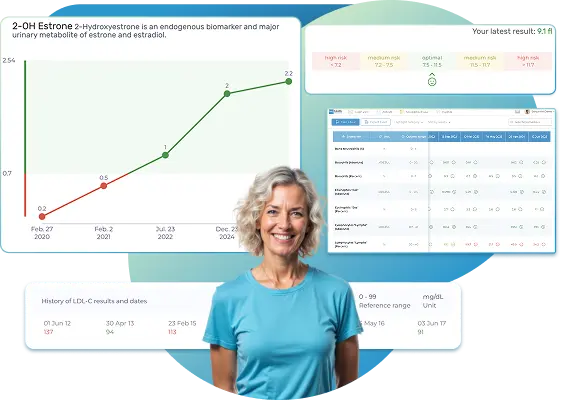
All Your Lab Results.
One Simple Dashboard.
Import, Track, and Share Your Lab Results Easily
Import, Track, and Share Your Lab Results
Import lab results from multiple providers, track changes over time, customize your reference ranges, and get clear explanations for each result. Everything is stored securely, exportable in one organized file, and shareable with your doctor—or anyone you choose.
Cancel or upgrade anytime
Article Review & Sources
All our content is backed by peer-reviewed studies, academic research, and trusted medical sources. We're committed to accuracy and transparency — see our editorial policy for details.
Laboratories
Bring All Your Lab Results Together — In One Place
We accept reports from any lab, so you can easily collect and organize all your health information in one secure spot.











Pricing Table
Gather Your Lab History — and Finally Make Sense of It
Finally, Your Lab Results Organized and Clear

Personal plans

$79/ year
Advanced Plan
Access your lab reports, explanations, and tracking tools.
- Import lab results from any provider
- Track all results with visual tools
- Customize your reference ranges
- Export your full lab history anytime
- Share results securely with anyone
- Receive 5 reports entered for you
- Cancel or upgrade anytime
$250/ once
Unlimited Account
Pay once, access everything—no monthly fees, no limits.
- Import lab results from any provider
- Track all results with visual tools
- Customize your reference ranges
- Export your full lab history anytime
- Share results securely with anyone
- Receive 10 reports entered for you
- No subscriptions. No extra fees.
$45/ month
Pro Monthly
Designed for professionals managing their clients' lab reports
- Import lab results from any provider
- Track lab results for multiple clients
- Customize reference ranges per client
- Export lab histories and reports
- Begin with first report entered by us
- Cancel or upgrade anytime
About membership
What's included in a Healthmatters membership
 Import Lab Results from Any Source
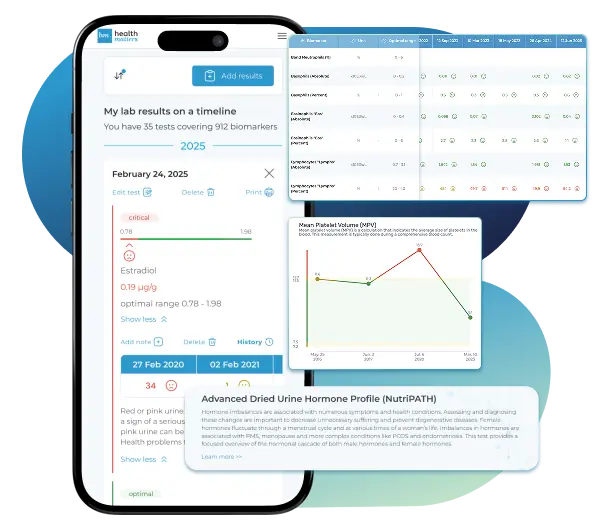
 See Your Health Timeline
 Understand What Your Results Mean

 Visualize Your Results

 Data Entry Service for Your Reports
 Securely Share With Anyone You Trust
Let Your Lab Results Tell the Full Story
Once your results are in one place, see the bigger picture — track trends over time, compare data side by side, export your full history, and share securely with anyone you trust.




Bring all your results together to compare, track progress, export your history, and share securely.
What Healthmatters Members Are Saying

I have been using Healthmatters.io since 2021. I travel all over the world and use different doctors and health facilities. This site has allowed me to consolidate all my various test results over 14 years in one place. And every doctor that I show this to has been impressed. Because with any health professional I talk to, I can pull up historical results in seconds. It is invaluable. Even going back to the same doctor, they usually do not have the historical results from their facility in a graph format. That has been very helpful.
Anthony
Unlimited Plan Member since 2021
What fantastic service and great, easy-to-follow layouts! I love your website; it makes it so helpful to see patterns in my health data. It's truly a pleasure to use. I only wish the NHS was as organized and quick as Healthmatters.io. You've set a new standard for health tracking!
Karin
Advanced Plan Member since 2020
As a PRO member and medical practitioner, Healthmatters.io has been an invaluable tool for tracking my clients' data. The layout is intuitive, making it easy to monitor trends and spot patterns over time. The ability to customize reports and charts helps me present information clearly to my clients, improving communication and outcomes. It's streamlined my workflow, saving me time and providing insights at a glance. Highly recommended for any practitioner looking for a comprehensive and user-friendly solution to track patient labs!
Paul
Healthmatters Pro Member since 2024

We implement proven measures to keep your data safe.
At HealthMatters, we're committed to maintaining the security and confidentiality of your personal information. We've put industry-leading security standards in place to help protect against the loss, misuse, or alteration of the information under our control. We use procedural, physical, and electronic security methods designed to prevent unauthorized people from getting access to this information. Our internal code of conduct adds additional privacy protection. All data is backed up multiple times a day and encrypted using SSL certificates. See our Privacy Policy for more details.