
 Optimal Result:
44 - 215 RU/mL.
Optimal Result:
44 - 215 RU/mL.

FGF-23 (Fibroblast Growth Factor 23)
What is FGF-23?
FGF-23, or fibroblast growth factor 23, is a hormone-like protein that plays a critical role in phosphate and vitamin D metabolism. It is primarily produced by bone cells (osteocytes and osteoblasts) and acts mainly on the kidneys to regulate:
-
Phosphate excretion in urine
-
Vitamin D activation
-
Calcium-phosphate balance
FGF-23 is part of a feedback system that helps maintain normal blood phosphate levels. When phosphate levels rise, FGF-23 secretion increases to help eliminate excess phosphate through the urine and reduce vitamin D activation.
Why is FGF-23 Measured?
Testing FGF-23 levels is especially useful in diagnosing and monitoring disorders involving abnormal phosphate metabolism, bone health, or kidney function.
FGF-23 is most commonly used to evaluate:
-
Hypophosphatemia (low phosphate levels)
-
Chronic kidney disease–mineral and bone disorder (CKD-MBD)
-
Hereditary or acquired rickets/osteomalacia
-
Rare phosphate-wasting disorders
-
Tumor-induced osteomalacia (TIO)
By measuring FGF-23, healthcare providers can determine whether phosphate loss is due to overproduction of this hormone or other factors.
How FGF-23 Works in the Body
FGF-23 reduces blood phosphate by:
-
Decreasing phosphate reabsorption in the kidneys — promoting phosphate excretion in urine.
-
Inhibiting 1α-hydroxylase, an enzyme needed to activate vitamin D (which normally helps absorb calcium and phosphate from the gut).
-
Suppressing PTH (parathyroid hormone) under certain conditions.
In essence, FGF-23 works as a phosphate-lowering hormone. When levels are too high or too low, the result is disruption of mineral homeostasis, which can negatively affect bone health, kidney function, and cardiovascular risk.
What Conditions Are Associated With Abnormal FGF-23 Levels?
Elevated FGF-23 Levels
High FGF-23 levels are seen in conditions that involve excess phosphate loss, disrupted bone remodeling, or impaired kidney function.
Common causes include:
-
Chronic Kidney Disease (CKD)
-
FGF-23 rises early in CKD to compensate for reduced phosphate excretion.
-
Very high FGF-23 is associated with vascular calcification, left ventricular hypertrophy, and poor cardiovascular outcomes.
-
-
Tumor-Induced Osteomalacia (TIO)
-
Rare tumors (usually benign) produce excess FGF-23, causing bone pain, muscle weakness, and fractures.
-
-
X-linked Hypophosphatemia (XLH) or Autosomal Dominant Hypophosphatemic Rickets (ADHR)
-
Genetic disorders where FGF-23 is inappropriately elevated, leading to chronic phosphate wasting and defective bone mineralization.
-
-
Oncogenic or genetic causes of phosphate wasting
Low FGF-23 Levels
Less commonly, low FGF-23 levels may be associated with:
-
Hyperphosphatemia (high phosphate) due to inadequate renal excretion
-
Familial tumoral calcinosis (a rare condition marked by soft tissue calcifications and hyperphosphatemia)
-
Low phosphate excretion despite high phosphate levels, often due to impaired FGF-23 production or function
Symptoms of FGF-23–Related Disorders
High or dysregulated FGF-23 levels may contribute to symptoms such as:
-
Bone pain
-
Muscle weakness
-
Fatigue
-
Recurrent fractures
-
Short stature (in genetic conditions)
-
Joint stiffness or deformities (in rickets or osteomalacia)
-
Abnormal lab findings: low phosphate, low/normal vitamin D, high ALP
In CKD patients, elevated FGF-23 may correlate with:
-
Anemia
-
Increased cardiovascular risk
-
Poorer outcomes in dialysis patients
How Is the FGF-23 Test Performed?
-
Sample type: Blood (usually serum or plasma)
-
Special considerations:
-
Some labs measure intact FGF-23, while others measure C-terminal fragments. Be sure to interpret results in the context of the assay used.
-
FGF-23 levels may fluctuate based on kidney function, iron status, and time of day.
-
Reference Ranges
Reference ranges vary depending on the testing method (intact vs. C-terminal assay) and laboratory. Typical intact FGF-23 levels in healthy individuals are approximately:
-
<100 RU/mL (for intact assay)
-
Some labs use pg/mL with normal ranges typically <50 pg/mL
Elevated values must always be interpreted alongside:
-
Serum phosphate
-
Vitamin D
-
Parathyroid hormone (PTH)
-
Creatinine/eGFR (to assess kidney function)
-
Alkaline phosphatase (ALP) and bone markers (for bone health)
Clinical Applications and Monitoring
In CKD
-
Monitoring FGF-23 can help track phosphate retention and mineral-bone disorder progression.
-
It may serve as an early marker of disordered phosphate handling—often rising before phosphate and PTH.
In Rare Bone or Tumor Disorders
-
Helps confirm a diagnosis of hereditary hypophosphatemic rickets or tumor-induced osteomalacia
-
Used to guide imaging and treatment decisions
In Phosphate Disorders
-
Differentiates between renal phosphate wasting and other causes of hypophosphatemia
-
Helps determine if the body is inappropriately excreting phosphate
Summary
FGF-23 is a key regulator of phosphate balance and vitamin D metabolism, with rising clinical importance in conditions like chronic kidney disease, osteomalacia, rickets, and rare phosphate-wasting disorders. Abnormal levels may lead to significant complications in bone health, cardiovascular function, and mineral metabolism. Measuring FGF-23 provides valuable insight when investigating unexplained hypophosphatemia, bone pain, or CKD-related mineral disturbances.
Lab Results Explained and Tracked
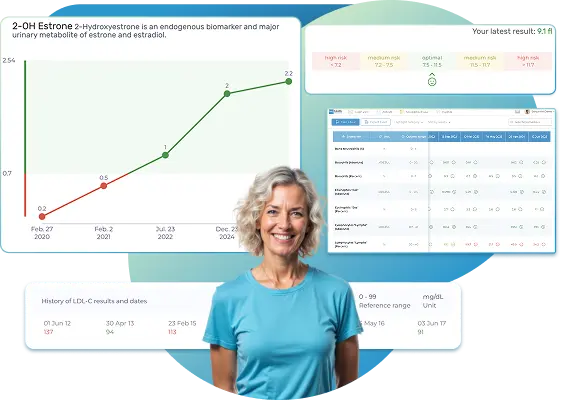
All Your Lab Results.
One Simple Dashboard.
Import, Track, and Share Your Lab Results Easily
Import, Track, and Share Your Lab Results
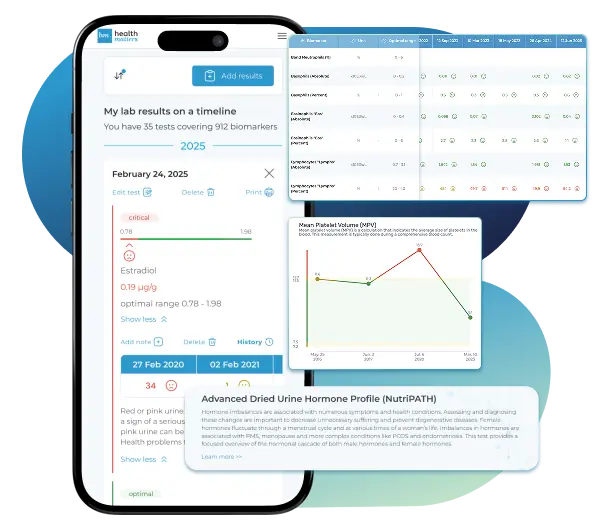
Import lab results from multiple providers, track changes over time, customize your reference ranges, and get clear explanations for each result. Everything is stored securely, exportable in one organized file, and shareable with your doctor—or anyone you choose.
Cancel or upgrade anytime
Article Review & Sources
All our content is backed by peer-reviewed studies, academic research, and trusted medical sources. We're committed to accuracy and transparency — see our editorial policy for details.
Laboratories
Bring All Your Lab Results Together — In One Place
We accept reports from any lab, so you can easily collect and organize all your health information in one secure spot.











Pricing Table
Gather Your Lab History — and Finally Make Sense of It
Finally, Your Lab Results Organized and Clear

Personal plans

$79/ year
Advanced Plan
Access your lab reports, explanations, and tracking tools.
- Import lab results from any provider
- Track all results with visual tools
- Customize your reference ranges
- Export your full lab history anytime
- Share results securely with anyone
- Receive 5 reports entered for you
- Cancel or upgrade anytime
$250/ once
Unlimited Account
Pay once, access everything—no monthly fees, no limits.
- Import lab results from any provider
- Track all results with visual tools
- Customize your reference ranges
- Export your full lab history anytime
- Share results securely with anyone
- Receive 10 reports entered for you
- No subscriptions. No extra fees.
$45/ month
Pro Monthly
Designed for professionals managing their clients' lab reports
- Import lab results from any provider
- Track lab results for multiple clients
- Customize reference ranges per client
- Export lab histories and reports
- Begin with first report entered by us
- Cancel or upgrade anytime
About membership
What's included in a Healthmatters membership
 Import Lab Results from Any Source
 See Your Health Timeline
 Understand What Your Results Mean

 Visualize Your Results

 Data Entry Service for Your Reports
 Securely Share With Anyone You Trust
Let Your Lab Results Tell the Full Story
Once your results are in one place, see the bigger picture — track trends over time, compare data side by side, export your full history, and share securely with anyone you trust.




Bring all your results together to compare, track progress, export your history, and share securely.
What Healthmatters Members Are Saying

I have been using Healthmatters.io since 2021. I travel all over the world and use different doctors and health facilities. This site has allowed me to consolidate all my various test results over 14 years in one place. And every doctor that I show this to has been impressed. Because with any health professional I talk to, I can pull up historical results in seconds. It is invaluable. Even going back to the same doctor, they usually do not have the historical results from their facility in a graph format. That has been very helpful.
Anthony
Unlimited Plan Member since 2021
What fantastic service and great, easy-to-follow layouts! I love your website; it makes it so helpful to see patterns in my health data. It's truly a pleasure to use. I only wish the NHS was as organized and quick as Healthmatters.io. You've set a new standard for health tracking!
Karin
Advanced Plan Member since 2020
As a PRO member and medical practitioner, Healthmatters.io has been an invaluable tool for tracking my clients' data. The layout is intuitive, making it easy to monitor trends and spot patterns over time. The ability to customize reports and charts helps me present information clearly to my clients, improving communication and outcomes. It's streamlined my workflow, saving me time and providing insights at a glance. Highly recommended for any practitioner looking for a comprehensive and user-friendly solution to track patient labs!
Paul
Healthmatters Pro Member since 2024

We implement proven measures to keep your data safe.
At HealthMatters, we're committed to maintaining the security and confidentiality of your personal information. We've put industry-leading security standards in place to help protect against the loss, misuse, or alteration of the information under our control. We use procedural, physical, and electronic security methods designed to prevent unauthorized people from getting access to this information. Our internal code of conduct adds additional privacy protection. All data is backed up multiple times a day and encrypted using SSL certificates. See our Privacy Policy for more details.