
 Reference range:

The EBV EliSpot (lytic) detects the number of T-cells in your blood that produce interferon-gamma (IFN-γ) when exposed to lytic-phase Epstein–Barr virus (EBV) antigens—the proteins EBV expresses when it is actively replicating.
-
It is a cellular immunity assay (T-cell function), not an antibody (IgG/IgM) test.
-
Results are reported as a Stimulation Index (SI), which compares the response to EBV peptides against a negative control.
Reference interpretation (ArminLabs):
-
0–1 SI: Negative
-
2–3 SI: Weak positive
-
>3 SI: Positive
In plain language: a higher SI means more EBV-reactive T-cells were detected during the test.
Why “lytic” matters
EBV has two major life-cycle states:
-
Lytic phase: the virus is replicating and producing new virions (often associated with recent infection or reactivation).
-
Latent phase: the virus lies mostly “quiet,” expressing a different set of proteins.
This test targets lytic antigens, so it’s most informative when you’re assessing recent activity or reactivation rather than long-standing latent carriage alone.
How to interpret results
Negative (0–1 SI)
-
Meaning: No significant EBV-specific T-cell response to lytic antigens was detected.
-
Clinical context: In an otherwise healthy person, this lowers the likelihood of current lytic-phase activity. It does not rule out past EBV infection (most adults have been exposed) and does not exclude latency.
-
Next steps: If symptoms strongly suggest EBV (fever, sore throat, lymph node swelling, hepatitis-like labs), consider EBV serology (VCA-IgM/IgG, EBNA-1 IgG, EA-IgG) and/or EBV DNA PCR to check for viral replication. Re-test if symptoms persist or evolve.
Weak positive (2–3 SI)
-
Meaning: A low-level T-cell response to lytic antigens.
-
Clinical context: Could reflect very recent or resolving activity, mild reactivation, or immune memory; interpretation relies heavily on symptoms and other labs.
-
Next steps: Correlate clinically. If you’re symptomatic, pair with EBV DNA PCR and a complete EBV serology panel. Recheck in 4–6 weeks to see if the signal is rising or settling.
Positive (>3 SI)
-
Meaning: A clear T-cell response to lytic-phase EBV antigens.
-
Clinical context: Supports recent infection or reactivation, especially if you have compatible symptoms or supportive serology (e.g., rising EA-IgG or VCA-IgM in acute settings). That said, some individuals maintain strong memory responses even when clinically well—hence the need for context.
-
Next steps: If symptomatic, consider EBV DNA PCR (viral load), CBC with differential (look for atypical lymphocytes/lymphocytosis), and liver enzymes (ALT/AST, ALP, bilirubin). Track symptoms and consider repeating the EliSpot and/or PCR in 4–6 weeks.
What this test does not show by itself
-
It does not provide a viral load (use EBV DNA PCR for that).
-
It does not stage infection on its own; pairing with serology clarifies whether infection is acute, recent, reactivated, or past/latent.
-
A positive result doesn’t automatically mean disease—many adults have robust EBV memory responses without symptoms.
How this complements other EBV tests
-
Serology (antibodies):
-
VCA-IgM: often rises in acute infection.
-
VCA-IgG & EBNA-1 IgG: help determine past vs. recent infection.
-
EA-IgG: can rise in acute/reactivation, but may persist in a subset of healthy individuals.
-
-
EBV DNA PCR (blood/plasma): best direct marker of ongoing replication and viral load.
-
EliSpot (latent): measures T-cell responses to latent antigens; combining lytic and latent EliSpots can give a broader view of EBV-specific cellular immunity.
When clinicians might order this test
-
Persistent, mono-like illness (fatigue, sore throat, lymphadenopathy), hepatitis-like enzyme elevations, or prolonged convalescence after suspected EBV.
-
Suspected reactivation in contexts such as stress, other infections, or immunomodulatory therapies.
-
Complex, multisystem symptoms where EBV activity is part of a differential and cellular immunity insight would add value.
-
Monitoring a previously positive case to see if cellular responses are trending down as symptoms resolve (use alongside clinical status and, when appropriate, PCR).
Factors that can influence results
-
Immune status & medications: Immunosuppression (e.g., high-dose steroids, biologics, chemotherapy) can blunt T-cell responses and yield falsely low SI.
-
Acute intercurrent illness: Other infections or systemic inflammation can modulate T-cell reactivity.
-
Pre-analytical variables: Delays in processing or improper handling can reduce spot counts/SI.
-
Biological variability: Cellular assays naturally vary; trends over time are often more informative than a single value.
Practical follow-up algorithm
-
Start with symptoms + EBV EliSpot (lytic) result.
-
If >3 SI and symptoms fit: add EBV DNA PCR, serology panel, and basic labs (CBC, LFTs).
-
If 2–3 SI and uncertain: repeat in 4–6 weeks and pair with serology ± PCR.
-
If 0–1 SI but suspicion remains high: order serology and consider PCR; reassess alternative diagnoses.
-
Use trends (clinical + lab) to guide management rather than any single test.
Frequently asked questions
Is a high SI dangerous by itself?
Not necessarily. It means your T-cells are reacting strongly to EBV lytic antigens. Whether that’s harmful depends on your symptoms, exam, and other labs.
Can I be positive here but have negative antibodies?
Yes. Cellular and humoral immunity don’t always move together, especially at different time points of infection or recovery.
Should I treat based on this test alone?
No. Management decisions should integrate clinical picture + serology + (when indicated) PCR + routine labs.
How soon can I re-test?
For most clinical questions, 4–6 weeks is a sensible interval to understand directionality.
Reporting notes & ranges
-
Reference intervals (ArminLabs): 0–1 negative; 2–3 weak positive; >3 positive (SI).
-
Suggested color mapping for clarity:
-
Negative:
#0072B2 -
Weak positive:
#E69F00 -
Positive:
#D55E00
(Choose the dark-mode equivalents if your report supports dark themes.)
-
Key limitations
-
Does not quantify virus (no viral load).
-
Not a stand-alone diagnostic for “chronic active EBV” or other complex syndromes.
-
Cut-offs and performance are lab-specific; always interpret with the performing lab’s reference data and your clinical context.
Lab Results Explained and Tracked
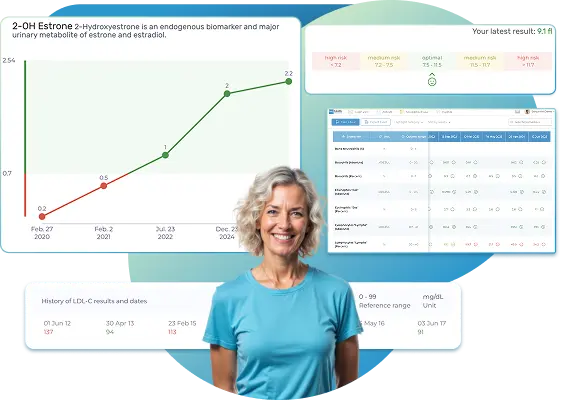
All Your Lab Results.
One Simple Dashboard.
Import, Track, and Share Your Lab Results Easily
Import, Track, and Share Your Lab Results
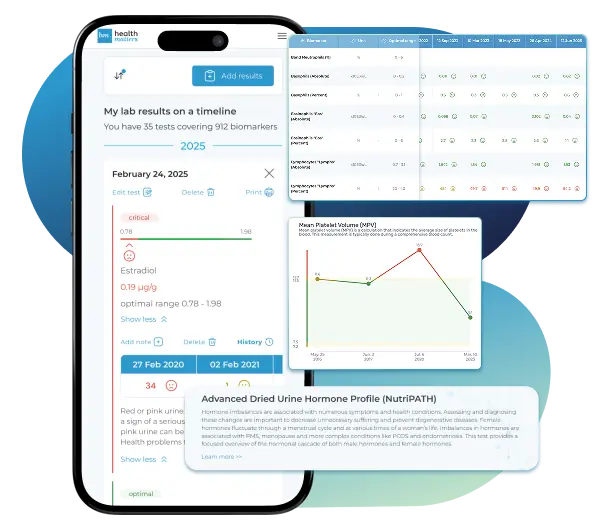
Import lab results from multiple providers, track changes over time, customize your reference ranges, and get clear explanations for each result. Everything is stored securely, exportable in one organized file, and shareable with your doctor—or anyone you choose.
Cancel or upgrade anytime
Article Review & Sources
All our content is backed by peer-reviewed studies, academic research, and trusted medical sources. We're committed to accuracy and transparency — see our editorial policy for details.
Laboratories
Bring All Your Lab Results Together — In One Place
We accept reports from any lab, so you can easily collect and organize all your health information in one secure spot.











Pricing Table
Gather Your Lab History — and Finally Make Sense of It
Finally, Your Lab Results Organized and Clear

Personal plans

$79/ year
Advanced Plan
Access your lab reports, explanations, and tracking tools.
- Import lab results from any provider
- Track all results with visual tools
- Customize your reference ranges
- Export your full lab history anytime
- Share results securely with anyone
- Receive 5 reports entered for you
- Cancel or upgrade anytime
$250/ once
Unlimited Account
Pay once, access everything—no monthly fees, no limits.
- Import lab results from any provider
- Track all results with visual tools
- Customize your reference ranges
- Export your full lab history anytime
- Share results securely with anyone
- Receive 10 reports entered for you
- No subscriptions. No extra fees.
$45/ month
Pro Monthly
Designed for professionals managing their clients' lab reports
- Import lab results from any provider
- Track lab results for multiple clients
- Customize reference ranges per client
- Export lab histories and reports
- Begin with first report entered by us
- Cancel or upgrade anytime
About membership
What's included in a Healthmatters membership
 Import Lab Results from Any Source
 See Your Health Timeline
 Understand What Your Results Mean

 Visualize Your Results

 Data Entry Service for Your Reports
 Securely Share With Anyone You Trust
Let Your Lab Results Tell the Full Story
Once your results are in one place, see the bigger picture — track trends over time, compare data side by side, export your full history, and share securely with anyone you trust.




Bring all your results together to compare, track progress, export your history, and share securely.
What Healthmatters Members Are Saying

I have been using Healthmatters.io since 2021. I travel all over the world and use different doctors and health facilities. This site has allowed me to consolidate all my various test results over 14 years in one place. And every doctor that I show this to has been impressed. Because with any health professional I talk to, I can pull up historical results in seconds. It is invaluable. Even going back to the same doctor, they usually do not have the historical results from their facility in a graph format. That has been very helpful.
Anthony
Unlimited Plan Member since 2021
What fantastic service and great, easy-to-follow layouts! I love your website; it makes it so helpful to see patterns in my health data. It's truly a pleasure to use. I only wish the NHS was as organized and quick as Healthmatters.io. You've set a new standard for health tracking!
Karin
Advanced Plan Member since 2020
As a PRO member and medical practitioner, Healthmatters.io has been an invaluable tool for tracking my clients' data. The layout is intuitive, making it easy to monitor trends and spot patterns over time. The ability to customize reports and charts helps me present information clearly to my clients, improving communication and outcomes. It's streamlined my workflow, saving me time and providing insights at a glance. Highly recommended for any practitioner looking for a comprehensive and user-friendly solution to track patient labs!
Paul
Healthmatters Pro Member since 2024

We implement proven measures to keep your data safe.
At HealthMatters, we're committed to maintaining the security and confidentiality of your personal information. We've put industry-leading security standards in place to help protect against the loss, misuse, or alteration of the information under our control. We use procedural, physical, and electronic security methods designed to prevent unauthorized people from getting access to this information. Our internal code of conduct adds additional privacy protection. All data is backed up multiple times a day and encrypted using SSL certificates. See our Privacy Policy for more details.