
 Optimal Result:
74 - 369 nanomol/L.
Optimal Result:
74 - 369 nanomol/L.

Cystathionine: A Key Biomarker of Transsulfuration and Methylation Balance
What is Cystathionine?
Cystathionine is a metabolic intermediate in the transsulfuration pathway, which serves as the primary irreversible route for homocysteine clearance. It is formed when cystathionine β-synthase (CBS) catalyzes the conversion of homocysteine and serine into cystathionine, a reaction that depends on vitamin B6 and iron as cofactors.
Once formed, cystathionine is converted into cysteine by the enzyme cystathionine gamma-lyase (CTH). Cysteine then serves as a precursor for glutathione synthesis, playing a critical role in antioxidant defense, detoxification, and cellular redox balance.
Why is Cystathionine an Important Biomarker?
Because cystathionine is a transient metabolite in the transsulfuration pathway, its levels can provide valuable insights into methylation function, homocysteine clearance, and antioxidant capacity.
Elevated Cystathionine: What Does It Indicate?
An increase in plasma cystathionine levels may suggest:
- A backup in the transsulfuration pathway, possibly due to impaired CBS or CTH activity.
- Vitamin B6 deficiency, which disrupts the conversion of homocysteine to cystathionine and cystathionine to cysteine.
- A functional need for key cofactors, including zinc, magnesium, and glycine, which support glutathione production and antioxidant defenses.
- A metabolic response to oxidative stress, as some research suggests that cystathionine may help mitigate endoplasmic reticulum (ER) stress and cellular damage, though this function is not fully understood [1].
Low Cystathionine: Potential Implications
Although less common, low cystathionine levels may indicate:
- Reduced CBS enzyme activity, potentially due to genetic variations (CBS SNPs) or methylation imbalances.
- Limited homocysteine clearance, leading to increased circulating homocysteine and SAH levels, both of which are markers of methylation dysfunction and cardiovascular risk.
- Deficient sulfur metabolism, affecting cysteine and glutathione availability, which can contribute to oxidative stress and impaired detoxification.
Clinical Applications of Cystathionine Testing
Since cystathionine serves as a metabolic bridge between homocysteine and cysteine, it can be a useful biomarker for:
- Assessing methylation efficiency and transsulfuration function.
- Detecting early signs of vitamin B6 insufficiency.
- Identifying metabolic dysfunctions linked to oxidative stress, inflammation, and detoxification impairments.
How to Optimize Cystathionine Levels
If cystathionine is elevated, consider:
- Supplementing with vitamin B6 (P5P) to support enzymatic conversion.
- Ensuring adequate levels of zinc, magnesium, and glycine for optimal glutathione synthesis.
- Addressing oxidative stress with antioxidants like N-acetylcysteine (NAC), glutathione, and taurine.
If cystathionine is low, consider:
- Investigating potential CBS genetic variations affecting enzyme function.
- Evaluating overall sulfur metabolism and homocysteine clearance efficiency.
References
- Maclean KN, Greiner LS, Evans JR, et al. Cystathionine protects against endoplasmic reticulum stress-induced lipid accumulation, tissue injury, and apoptotic cell death. J Biol Chem. 2012;287(38):31994-32005. PMID: 22843631
- Blom HJ, Smulders Y. Overview of homocysteine and folate metabolism, with special references to cardiovascular disease and neural tube defects. J Inherit Metab Dis. 2011;34(1):75-81. PMID: 21080271
- DeStefano V, et al. Linkage disequilibrium at the cystathionine beta-synthase (CBS) locus and the association between genetic variation at the CBS locus and plasma levels of homocysteine. Ann Hum Genet. 1998;62(6):481-490. PMID: 10070191
- Obeid R. The metabolic burden of methyl donor deficiency with focus on the betaine homocysteine methyltransferase pathway. Nutrients. 2013;5(9):3481-3495. PMID: 24022817
- Stabler S, et al. Elevation of serum cystathionine levels in patients with cobalamin and folate deficiency. Blood. 1993;81(12):3404-3413. PMID: 8507886
- Wu X-Y, Lu L. Vitamin B6 deficiency, genome instability and cancer. Asian Pac J Cancer Prev. 2012;13(11):5333-5338. PMID: 23464338
Lab Results Explained and Tracked
What does it mean if your Cystathionine result is too high?
- Elevated SAM which directly upregulates CBS enzyme [L]
- DMG,Betaine supplementation [L]
- High oxidative stress or inflammation [L]
- Vitamin B6 cofactor need for CTH enzyme [L]
-----------------------
What Do Elevated Cystathionine Levels Indicate?
Cystathionine is a key intermediate in the transsulfuration pathway, where homocysteine is converted into cysteine. Since cystathionine has no major physiological role beyond this pathway, elevated levels often indicate a functional bottleneck in homocysteine clearance and sulfur metabolism.
Possible Causes of Elevated Cystathionine
1. Vitamin B6 Deficiency or Functional Need
- The cystathionine β-synthase (CBS) enzyme requires pyridoxal-5’-phosphate (P5P), the active form of vitamin B6, to convert homocysteine into cystathionine.
- The next enzyme in the pathway, cystathionine gamma-lyase (CTH), also requires vitamin B6 to convert cystathionine into cysteine.
- Deficiency in B6 leads to cystathionine buildup, as it cannot be efficiently metabolized into cysteine.
- Clinical signs of B6 deficiency include fatigue, irritability, neurological symptoms, and anemia.
2. Impaired CBS or CTH Enzyme Activity
- Genetic variations (SNPs) in CBS or CTH genes can reduce enzyme efficiency, slowing down cystathionine metabolism.
- CBS enzyme upregulation (such as in Down syndrome) can lead to increased flux through this pathway, potentially affecting sulfur metabolism.
3. Impaired Homocysteine Clearance & Transsulfuration Blockage
- When the transsulfuration pathway is overwhelmed, homocysteine cannot efficiently be cleared, leading to cystathionine accumulation as a metabolic bottleneck.
- This can occur in high oxidative stress states, where the body prioritizes glutathione production but lacks sufficient cofactors.
4. Increased Demand for Glutathione Production
- If cysteine demand for glutathione synthesis is high, the body may increase transsulfuration flux, causing a temporary cystathionine buildup.
- This is commonly seen in chronic inflammation, oxidative stress, and toxin exposure.
5. Kidney Dysfunction & Impaired Clearance
- The kidneys help regulate cystathionine metabolism and excretion.
- Chronic kidney disease (CKD) or renal dysfunction can lead to cystathionine accumulation, as clearance is impaired.
Clinical Implications of Elevated Cystathionine
Elevated cystathionine may indicate:
- Vitamin B6 deficiency – One of the most common causes.
- Reduced CBS or CTH enzyme activity – Due to genetics or functional impairment.
- Blocked transsulfuration pathway – Excess cystathionine without conversion to cysteine.
- High oxidative stress & glutathione depletion – Demand for detoxification may overwhelm transsulfuration.
- Kidney dysfunction – Reduced clearance leads to accumulation.
How to Address Elevated Cystathionine Levels
- Check vitamin B6 (P5P) levels – Consider supplementation if low.
- Assess homocysteine and SAM-SAH ratio – To determine if methylation or sulfur metabolism is impaired.
- Support transsulfuration with key cofactors – Zinc, magnesium, and glycine help cystathionine conversion.
- Monitor kidney function – If cystathionine remains high, assess renal health.
- Reduce oxidative stress – Glutathione, NAC, and antioxidants may help lower demand on transsulfuration.
Conclusion
Elevated cystathionine is a marker of dysfunction in the transsulfuration pathway, most commonly caused by vitamin B6 deficiency, enzyme inefficiency (CBS/CTH), or high oxidative stress. Since cystathionine is an intermediate, high levels indicate a metabolic bottleneck, making it a valuable biomarker for assessing homocysteine clearance, methylation balance, and sulfur metabolism.
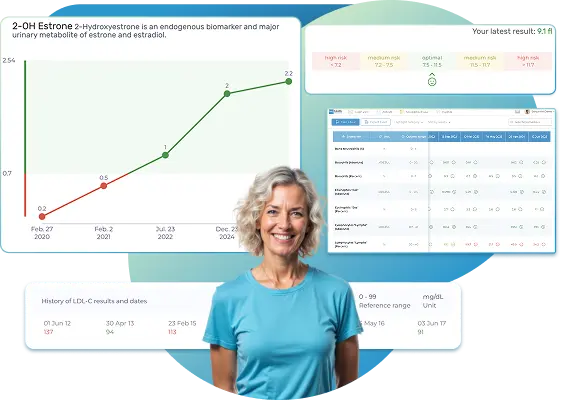
All Your Lab Results.
One Simple Dashboard.
Import, Track, and Share Your Lab Results Easily
Import, Track, and Share Your Lab Results
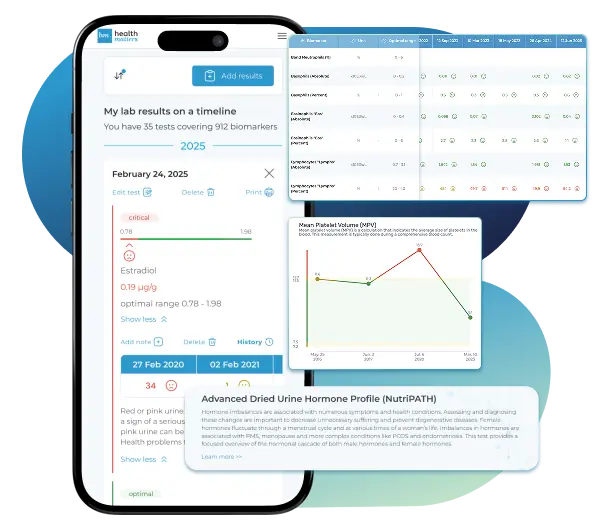
Import lab results from multiple providers, track changes over time, customize your reference ranges, and get clear explanations for each result. Everything is stored securely, exportable in one organized file, and shareable with your doctor—or anyone you choose.
Cancel or upgrade anytime
What does it mean if your Cystathionine result is too low?
- Vitamin B6 cofactor need for the CBS enzyme [L]
Article Review & Sources
All our content is backed by peer-reviewed studies, academic research, and trusted medical sources. We're committed to accuracy and transparency — see our editorial policy for details.
Laboratories
Bring All Your Lab Results Together — In One Place
We accept reports from any lab, so you can easily collect and organize all your health information in one secure spot.










Pricing Table
Gather Your Lab History — and Finally Make Sense of It
Finally, Your Lab Results Organized and Clear

Personal plans

$79/ year
Advanced Plan
Access your lab reports, explanations, and tracking tools.
- Import lab results from any provider
- Track all results with visual tools
- Customize your reference ranges
- Export your full lab history anytime
- Share results securely with anyone
- Receive 5 reports entered for you
- Cancel or upgrade anytime
$250/ once
Unlimited Account
Pay once, access everything—no monthly fees, no limits.
- Import lab results from any provider
- Track all results with visual tools
- Customize your reference ranges
- Export your full lab history anytime
- Share results securely with anyone
- Receive 10 reports entered for you
- No subscriptions. No extra fees.
$45/ month
Pro Monthly
Designed for professionals managing their clients' lab reports
- Import lab results from any provider
- Track lab results for multiple clients
- Customize reference ranges per client
- Export lab histories and reports
- Begin with first report entered by us
- Cancel or upgrade anytime
About membership
What's included in a Healthmatters membership
 Import Lab Results from Any Source
 See Your Health Timeline
 Understand What Your Results Mean

 Visualize Your Results

 Data Entry Service for Your Reports
 Securely Share With Anyone You Trust
Let Your Lab Results Tell the Full Story
Once your results are in one place, see the bigger picture — track trends over time, compare data side by side, export your full history, and share securely with anyone you trust.




Bring all your results together to compare, track progress, export your history, and share securely.
What Healthmatters Members Are Saying

I have been using Healthmatters.io since 2021. I travel all over the world and use different doctors and health facilities. This site has allowed me to consolidate all my various test results over 14 years in one place. And every doctor that I show this to has been impressed. Because with any health professional I talk to, I can pull up historical results in seconds. It is invaluable. Even going back to the same doctor, they usually do not have the historical results from their facility in a graph format. That has been very helpful.
Anthony
Unlimited Plan Member since 2021
What fantastic service and great, easy-to-follow layouts! I love your website; it makes it so helpful to see patterns in my health data. It's truly a pleasure to use. I only wish the NHS was as organized and quick as Healthmatters.io. You've set a new standard for health tracking!
Karin
Advanced Plan Member since 2020
As a PRO member and medical practitioner, Healthmatters.io has been an invaluable tool for tracking my clients' data. The layout is intuitive, making it easy to monitor trends and spot patterns over time. The ability to customize reports and charts helps me present information clearly to my clients, improving communication and outcomes. It's streamlined my workflow, saving me time and providing insights at a glance. Highly recommended for any practitioner looking for a comprehensive and user-friendly solution to track patient labs!
Paul
Healthmatters Pro Member since 2024

We implement proven measures to keep your data safe.
At HealthMatters, we're committed to maintaining the security and confidentiality of your personal information. We've put industry-leading security standards in place to help protect against the loss, misuse, or alteration of the information under our control. We use procedural, physical, and electronic security methods designed to prevent unauthorized people from getting access to this information. Our internal code of conduct adds additional privacy protection. All data is backed up multiple times a day and encrypted using SSL certificates. See our Privacy Policy for more details.