
Citrobacter freundii complex
 Optimal Result:
0 - 5 x10^4 CFU/g.
Optimal Result:
0 - 5 x10^4 CFU/g.

Lab Results Explained and Tracked
What does it mean if your Citrobacter freundii complex result is too high?
Citrobacter freundii Complex Elevated
Taxonomic Classification
- Domain: Bacteria
- Phylum: Proteobacteria
- Class: Gammaproteobacteria
- Order: Enterobacterales
- Family: Enterobacteriaceae
- Genus: Citrobacter
- Species Complex: C. freundii complex
Description
The Citrobacter freundii complex is a group of closely related, facultatively anaerobic, gram-negative bacteria within the Enterobacteriaceae family. These organisms are widely distributed in nature, commonly found in soil, water, sewage, food, and the gastrointestinal tracts of humans and animals. The complex includes multiple species, with the most notable being:
- Citrobacter freundii
- Citrobacter youngae
- Citrobacter braakii
- Citrobacter werkmanii
- Citrobacter gillenii
Key Characteristics
- Rod-shaped bacteria
- Motile due to peritrichous flagella
- Non-spore-forming
- Capable of fermenting glucose and other carbohydrates
- Citrate-positive (can utilize citrate as a sole carbon source)
Clinical Significance
The C. freundii complex is an opportunistic pathogen, particularly in healthcare settings, where it can cause various infections.
Nosocomial Infections
- Urinary tract infections (UTIs)
- Respiratory tract infections
- Wound infections
- Bloodstream infections (bacteremia)
Gastrointestinal Disturbances
- Can cause diarrheal diseases, particularly in immunocompromised individuals.
- May have a potential role in inflammatory bowel conditions.
Neonatal Infections
- Neonatal meningitis (rare but severe)
- Neonatal sepsis
Antimicrobial Resistance
- Increasing prevalence of multidrug-resistant (MDR) strains.
- Some strains produce extended-spectrum β-lactamases (ESBLs), making them resistant to multiple beta-lactam antibiotics.
- Carbapenem resistance has been reported in certain isolates, complicating treatment options.
Diagnosis
- Culture and biochemical identification
- MALDI-TOF mass spectrometry for rapid species identification
- Molecular methods (e.g., 16S rRNA sequencing) for precise species differentiation
Treatment Considerations
Management should be tailored based on infection site, severity, and antimicrobial susceptibility results.
Antibiotic Therapy
- Fluoroquinolones: Ciprofloxacin, Levofloxacin
- Carbapenems: Meropenem, Imipenem (reserved for resistant strains)
- Cephalosporins (Third/Fourth-Generation): Ceftriaxone, Cefepime
- Aminoglycosides: Gentamicin, Amikacin (often used in combination therapy)
Duration of Treatment
- Typically 7–14 days, depending on the site and severity of infection.
Alternative Approaches
- Herbal Antimicrobials: Some plant-derived compounds have demonstrated activity against Citrobacter spp. in vitro, though clinical evidence remains limited.
- Probiotics: May aid in restoring gut microbiome balance, particularly after antibiotic treatment.
Precautions
- Check for antibiotic allergies before prescribing.
- Monitor for side effects and drug interactions.
- Practice antibiotic stewardship to prevent resistance development.
Prevention and Control
Infection Control Measures
- Strict hand hygiene in healthcare settings.
- Thorough environmental cleaning and disinfection to prevent cross-contamination.
- Appropriate use of personal protective equipment (PPE) for healthcare workers.
Water and Food Safety
- Ensure proper treatment of drinking water to prevent bacterial contamination.
- Follow food safety protocols to reduce the risk of foodborne transmission.
Antibiotic Stewardship
- Implement programs to optimize antibiotic use and limit unnecessary prescriptions to reduce resistance development.
Surveillance
- Monitor outbreaks, particularly in hospital settings.
- Track antimicrobial resistance patterns to adjust treatment protocols accordingly.
Conclusion
The Citrobacter freundii complex consists of opportunistic pathogens that have become increasingly relevant in clinical settings, particularly due to their growing antibiotic resistance. Proper identification, targeted treatment, and strict infection control measures are essential in managing these infections effectively. Ongoing research and surveillance are crucial for understanding their pathogenic mechanisms and developing improved strategies for treatment and prevention.

All Your Lab Results.
One Simple Dashboard.
Import, Track, and Share Your Lab Results Easily
Import, Track, and Share Your Lab Results
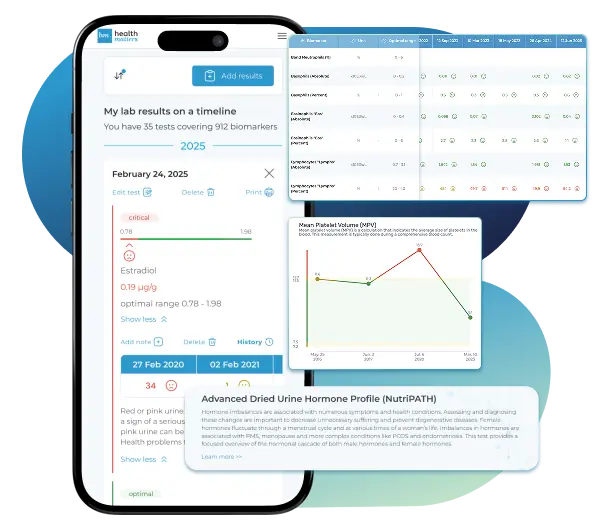
Import lab results from multiple providers, track changes over time, customize your reference ranges, and get clear explanations for each result. Everything is stored securely, exportable in one organized file, and shareable with your doctor—or anyone you choose.
Cancel or upgrade anytime
Article Review & Sources
All our content is backed by peer-reviewed studies, academic research, and trusted medical sources. We're committed to accuracy and transparency — see our editorial policy for details.
Laboratories
Bring All Your Lab Results Together — In One Place
We accept reports from any lab, so you can easily collect and organize all your health information in one secure spot.











Pricing Table
Gather Your Lab History — and Finally Make Sense of It
Finally, Your Lab Results Organized and Clear

Personal plans

$79/ year
Advanced Plan
Access your lab reports, explanations, and tracking tools.
- Import lab results from any provider
- Track all results with visual tools
- Customize your reference ranges
- Export your full lab history anytime
- Share results securely with anyone
- Receive 5 reports entered for you
- Cancel or upgrade anytime
$250/ once
Unlimited Account
Pay once, access everything—no monthly fees, no limits.
- Import lab results from any provider
- Track all results with visual tools
- Customize your reference ranges
- Export your full lab history anytime
- Share results securely with anyone
- Receive 10 reports entered for you
- No subscriptions. No extra fees.
$45/ month
Pro Monthly
Designed for professionals managing their clients' lab reports
- Import lab results from any provider
- Track lab results for multiple clients
- Customize reference ranges per client
- Export lab histories and reports
- Begin with first report entered by us
- Cancel or upgrade anytime
About membership
What's included in a Healthmatters membership
 Import Lab Results from Any Source
 See Your Health Timeline
 Understand What Your Results Mean

 Visualize Your Results

 Data Entry Service for Your Reports
 Securely Share With Anyone You Trust
Let Your Lab Results Tell the Full Story
Once your results are in one place, see the bigger picture — track trends over time, compare data side by side, export your full history, and share securely with anyone you trust.




Bring all your results together to compare, track progress, export your history, and share securely.
What Healthmatters Members Are Saying

I have been using Healthmatters.io since 2021. I travel all over the world and use different doctors and health facilities. This site has allowed me to consolidate all my various test results over 14 years in one place. And every doctor that I show this to has been impressed. Because with any health professional I talk to, I can pull up historical results in seconds. It is invaluable. Even going back to the same doctor, they usually do not have the historical results from their facility in a graph format. That has been very helpful.
Anthony
Unlimited Plan Member since 2021
What fantastic service and great, easy-to-follow layouts! I love your website; it makes it so helpful to see patterns in my health data. It's truly a pleasure to use. I only wish the NHS was as organized and quick as Healthmatters.io. You've set a new standard for health tracking!
Karin
Advanced Plan Member since 2020
As a PRO member and medical practitioner, Healthmatters.io has been an invaluable tool for tracking my clients' data. The layout is intuitive, making it easy to monitor trends and spot patterns over time. The ability to customize reports and charts helps me present information clearly to my clients, improving communication and outcomes. It's streamlined my workflow, saving me time and providing insights at a glance. Highly recommended for any practitioner looking for a comprehensive and user-friendly solution to track patient labs!
Paul
Healthmatters Pro Member since 2024

We implement proven measures to keep your data safe.
At HealthMatters, we're committed to maintaining the security and confidentiality of your personal information. We've put industry-leading security standards in place to help protect against the loss, misuse, or alteration of the information under our control. We use procedural, physical, and electronic security methods designed to prevent unauthorized people from getting access to this information. Our internal code of conduct adds additional privacy protection. All data is backed up multiple times a day and encrypted using SSL certificates. See our Privacy Policy for more details.